
Granite is among the hardest and most abrasive rock types in the natural aggregate market, boasting a Mohs hardness of 6–7, a compressive strength typically ranging from 100 to 250 MPa, and an SiO₂ content usually exceeding 65%. Consequently, the choice of granite crushing equipment directly dictates the cost per ton and the lifespan of wear parts: the wrong equipment leads to reduced capacity, doubled electricity costs, and liner failure within three months; the right configuration allows a 200 TPH production line to keep the cost per ton stably within the 8–12 RMB range. Based on material characteristics, this article presents a comprehensive equipment selection plan—covering primary, secondary/tertiary crushing, and sand making—along with parameter tables and real-world case studies.
I. Why Granite Crushing Equipment Must Be Selected Based on Hardness
1.1 Material Characteristics of Granite Dictate the Equipment Configuration
| Physical Parameter | Typical Value | Impact on Equipment Selection |
| Mohs Hardness | 6-7 | Compression-based crushing (jaw/cone crushers) is mandatory; impact crushers are suitable only for soft rock. |
| Compressive Strength | 100–250 MPa | Cone crushers outperform impact crushers in secondary/tertiary crushing; liner lifespan can differ by a factor of 3–5. |
| Bulk Density | 2.6–2.8 t/m³ | Capacity requires density conversion: nominal capacity is based on limestone (1.6 t/m³); actual granite capacity is ~70–85% of nominal. |
| SiO₂ Content | >65% | High abrasiveness index; high-manganese steel liners are standard; wear part replacement cycles must be factored in. |
The Bottom Line: Why does equipment selection result in annual cost differences of hundreds of thousands of RMB? For a 200 TPH line operating 6,000 hours annually, doubling the liner lifespan saves 150,000–300,000 RMB in wear part procurement costs per year; reducing power consumption by 1 kWh/t saves approximately 300,000 RMB in annual electricity costs. Ultimately, equipment selection is a choice about profitability.
1.2 Two Proven Process Routes

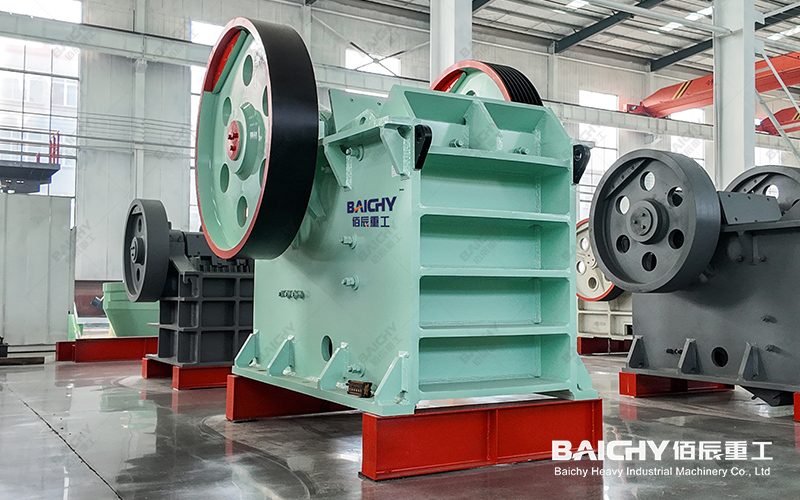
Granite crusher - Cone Crusher
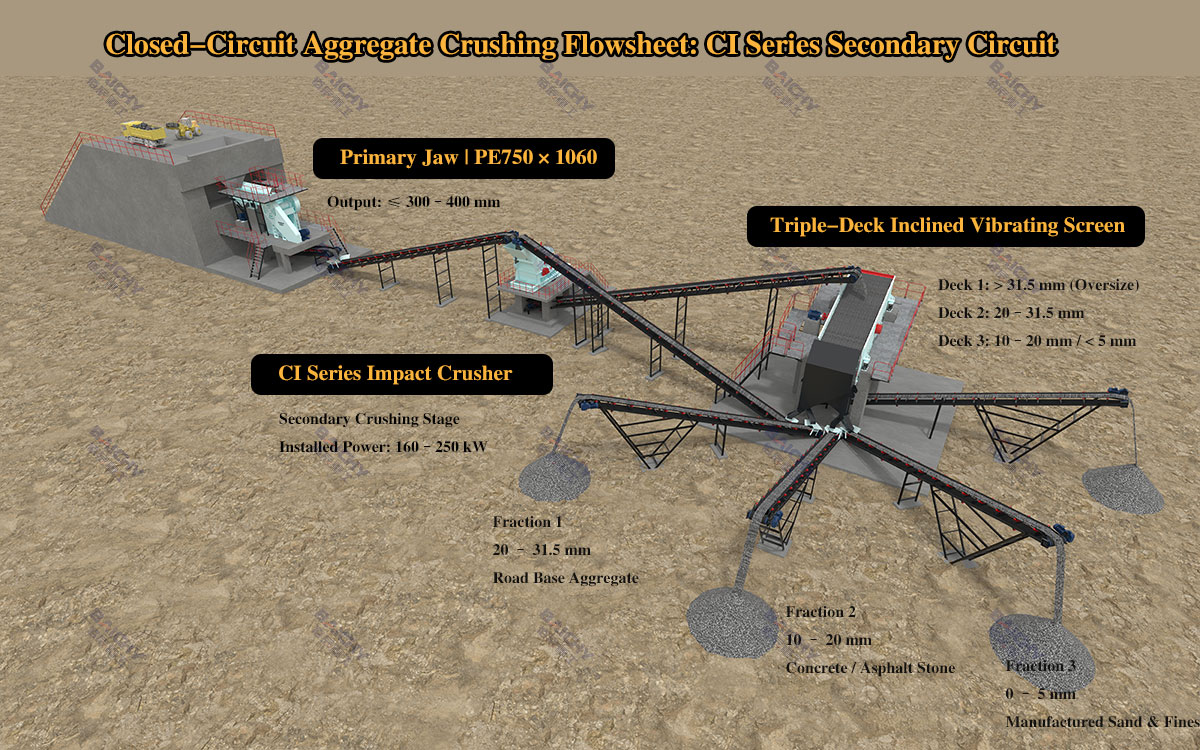
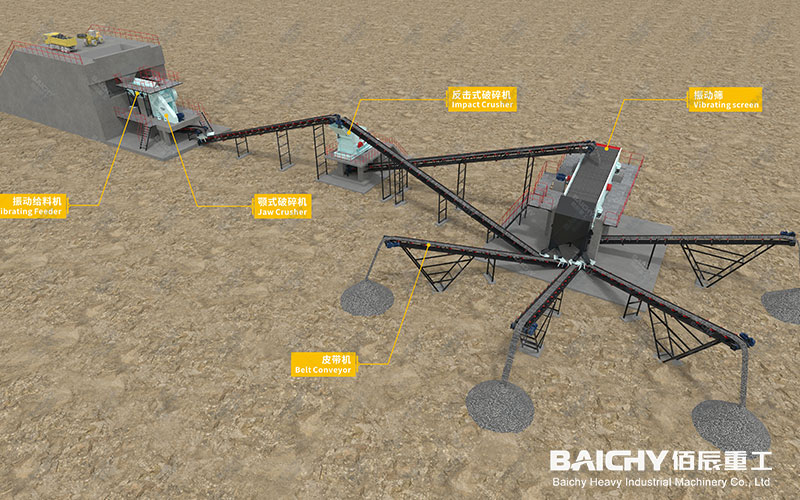
Route A (Mainstream Aggregate Production): Jaw Crusher (Primary Crushing) → Cone Crusher (Secondary/Tertiary Crushing) → Vibrating Screen → Sand Washer/Sand-Making Machine. Suitable for commercial concrete plants and high-speed rail or airport projects requiring precise aggregate gradation.
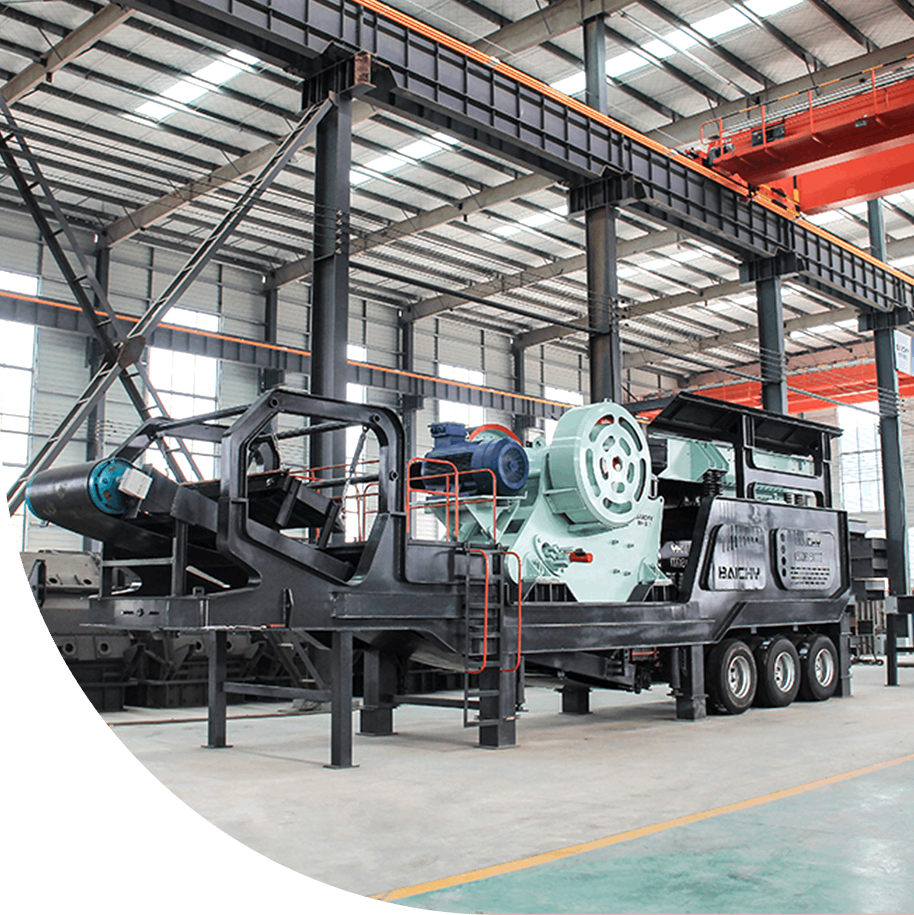
Route B (Mobile/Temporary Projects): Mobile Jaw Crushing Station + Mobile Cone Crushing Station. Suitable for mine demolition, emergency supply, and space-constrained sites; eliminates the 2–3 month infrastructure construction period.

Mobile Jaw Crusher for crushing granite
II. Typical Application Scenarios
2.1 Commercial Aggregate Production Lines (50–400 TPH)
The most common application for granite crushing equipment is in aggregate lines supporting commercial concrete plants, requiring output gradations of 0–5mm, 5–10mm, 10–20mm, and 20–31.5mm. A closed-circuit cone crushing system ensures a flaky and elongated particle content of less than 10%, meeting GB/T 14685 and ASTM C33 standards.
2.2 Highway and Airport Infrastructure
Aggregates for highway roadbases and airport runways demand high crush resistance (Los Angeles Abrasion value < 25%), making granite the preferred material. Recent airport expansion projects in the Philippines, Vietnam, and Ethiopia have all utilized this type of configuration.
2.3 Manufactured Sand Replacing Natural Sand
As regulations banning river sand extraction tighten, granite-based sand making has become a primary source of manufactured sand. VSI sand-making machines can shape 5–25mm crushed stone into 0–5mm manufactured sand with excellent gradation, keeping stone powder content controllable within the 3–10% range.
2.4 Mobile Mine Crushing
Mobile stations are used in remote mining areas or for short-term projects; they require no civil engineering or permanent foundations and take only 2–3 days to relocate, making them the mainstream choice in South American and African markets.
III. Core Equipment Advantages and Parameter Comparison
3.1 Recommended Configuration for Main Equipment (200 TPH Standard Production Line)
| Process | Recommended Model | Feed Size | Output Size | Capacity (t/h) | Main Motor Power |
| Primary Crushing | PE750×1060 Jaw Crusher | ≤630mm | 80-140mm | 130-260 | 110kW |
| Secondary Crushing | CS160 Cone Crusher | ≤160mm | 25-60mm | 120-250 | 160kW |
| Fine Crushing/Shaping | VSI-9526 Sand Maker | ≤45mm | 0-5mm | 150-380 | 264kW |
| Screening | 3YK2460 Circular Vibrating Screen | -- | 4-Deck Grading | 150-400 | 30kW |
Note: The capacities listed above are actual reference values based on granite processing (adjusted for material density). A material petrographic analysis report should be provided during equipment selection, allowing Baichy engineers to generate a customized configuration plan.
3.2 Three Core Advantages
Advantage 1: Compression crushing with industry-leading wear part longevity. The compression crushing principle—utilizing a combination of jaw and cone crushers—offers far superior adaptability to highly abrasive granite compared to impact-based equipment. Taking the PE750×1060 Jaw Crusher as an example, the high-manganese steel jaw plates achieve a service life of 6,000–8,000 hours when processing granite; additionally, the hydraulic discharge opening adjustment allows for output size modification without halting operations.
Advantage 2: Controllable power consumption and transparent cost-per-ton. The production line employs a "crush-before-screen" and "closed-circuit" design to prevent over-crushing. Power consumption is controlled at 2.5–3.5 kWh/t, which is 15–20% lower than traditional open-circuit processes. Users can directly calculate annual operating costs based on electricity rates and production capacity.
Advantage 3: Modular delivery; ready for production within 60 days. Baichy provides turnkey services for the entire production line, covering everything from equipment manufacturing and shipping to on-site installation and commissioning. The standard production line features a modular design, with an on-site installation period of just 20–30 days, thereby minimizing losses associated with production downtime.
IV. Real-World Case Study: 200 TPH Granite Aggregate Line in Southeast Asia
Project Background: A ready-mix concrete group in Southeast Asia established a new aggregate production base. The raw material is moderately weathered granite; requirements included producing four grades of aggregate and incorporating a sand-making process.

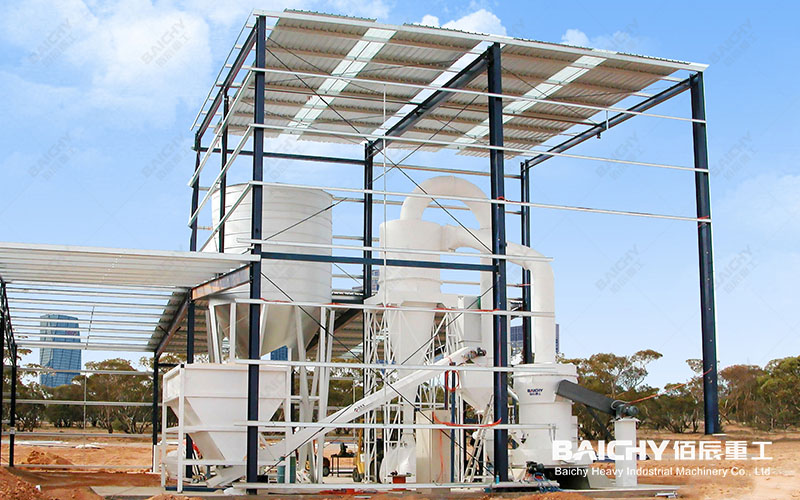
Granite crushing plant
Configuration: ZSW490×110 Vibrating Feeder + PE750×1060 Jaw Crusher + CS160 Cone Crusher + 3YK2460 Vibrating Screen + VSI-9526 Sand-Making Machine + Integrated Sand Washing and Recovery Unit.
Operational Data:
• Actual capacity: 200–220 TPH (100–110% of design capacity);
• Stable output gradation; needle-and-flake particle content: 8–10% (below the 10% acceptance threshold);
• Service life of the first set of jaw plates: 7,200 hours; cone crusher liners: 4,500 hours;
• Total project investment payback period: approx. 18 months; primary revenue driven by the price difference between manufactured sand and natural sand.
V. Recommended Equipment Based on Operating Conditions
• Feeding: ZSW Series Vibrating Feeder; handles large feed sizes (0–630 mm) and features pre-screening to separate soil/fines beforehand.
• Conveying & Screening: Belt Conveyor + 3YK/4YK Circular Vibrating Screen; supports 3–4 grading decks; screen mesh replacement completed within 30 minutes.
• Sand Washing & Recovery: XSD Wheel-type Sand Washer + Fine Sand Recovery Machine; recovery rate increased to over 90%, minimizing fine sand loss.
• Environmental Protection: Pulse Bag Dust Collector + Spray Dust Suppression System; meets local environmental compliance standards. • Mobile Solution: YDPZ series mobile jaw crushing station + mobile cone crushing station; suitable for sites with space constraints or short-term projects.
VI. FAQ
Q1: Why is a jaw crusher + cone crusher combination recommended for granite instead of a jaw crusher + impact crusher?
Granite has high SiO₂ content and is highly abrasive. When processing granite, the service life of impact crusher blow bars is typically less than one-third that of cone crusher liners; frequent replacement of blow bars directly drives up the cost per ton. Cone crushers utilize a compression crushing method, offering longer liner life and superior product particle shape, making them the optimal choice for medium and fine crushing of granite. Impact crushers are better suited for soft rock (such as limestone).
Q2: Why is there a difference between nominal capacity and actual capacity?
Nominal equipment capacity is usually based on limestone (bulk density of 1.6 t/m³). Granite has a density of approximately 2.6–2.8 t/m³, meaning it is heavier for the same volume; consequently, actual capacity is roughly 70–85% of the nominal value. It is essential to provide a petrographic analysis of the material during equipment selection to avoid insufficient capacity.
Q3: What is the approximate investment cost for a 200 TPH granite production line?
The total investment for a complete line—including main machinery, auxiliary equipment, steel structures, and installation/commissioning—typically ranges from 2.5 million to 4 million RMB (varying based on the level of automation and brand configuration). We recommend requesting a detailed itemized quote from Baichy and comparing the Total Cost of Ownership (TCO)—factoring in equipment price, annual wear-part costs, and electricity consumption—rather than focusing solely on the initial purchase price.
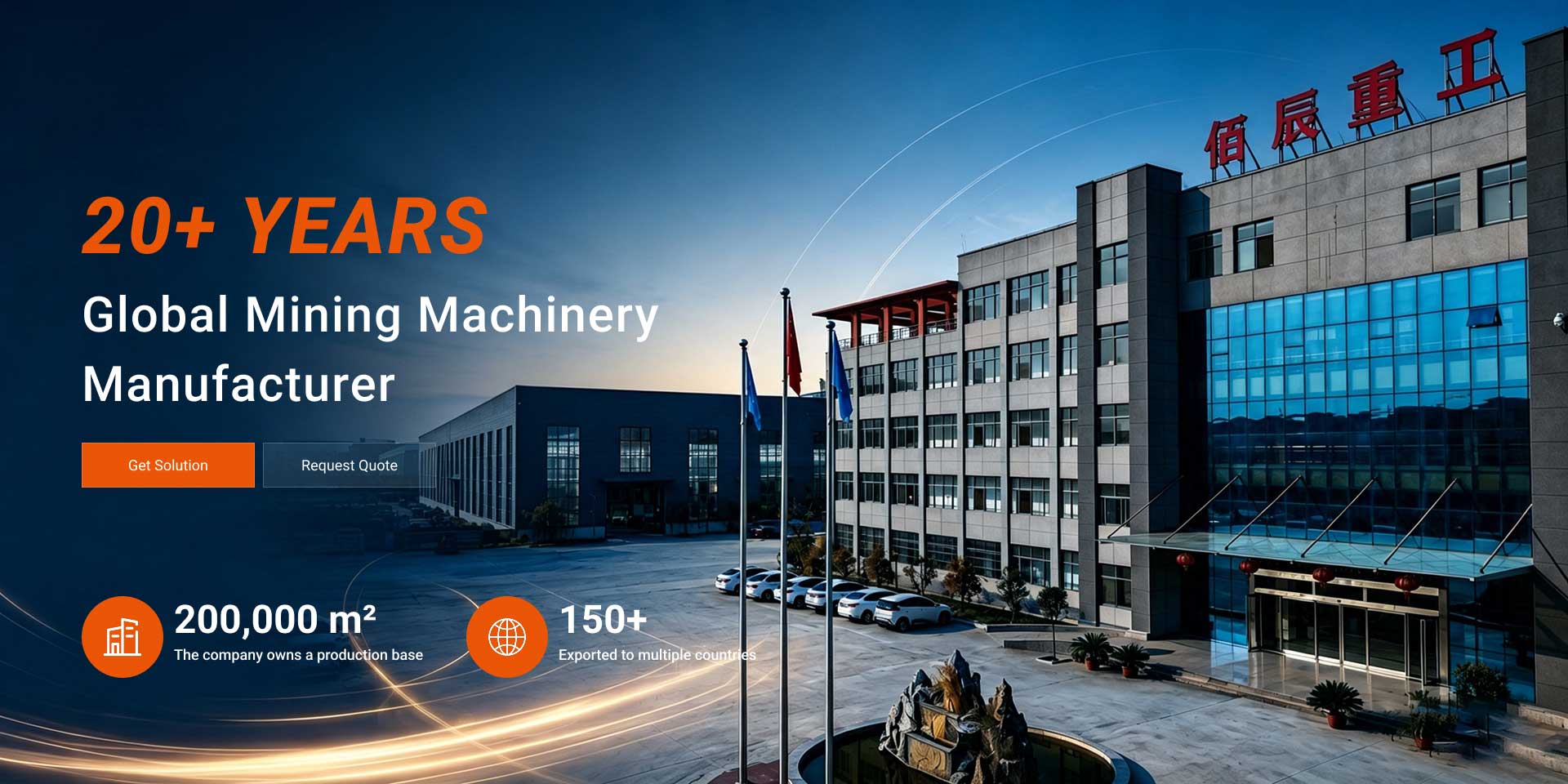
Baichy Heavy Industry
Baichy Heavy Industry is a high-tech mining equipment company integrating R&D, manufacturing, sales, and after-sales service. Focusing on crushing, grinding, and mineral processing equipment, we provide professional solutions to our customers. We are ISO9001:2015 、certified, and our products include mobile crushing palnts, crawler crushing plant, construction waste crushing plants, jaw crushers, sand making machines, cone crushers, fine crushers, grinding mills, ball mills, etc., all with reliable performance to meet diverse project needs.
Baichy Heavy Industry – Your Trusted Partner
To ensure optimal performance of your equipment, Baichy Heavy Industry offers:
- Professional on-site installation guidance
- Comprehensive operator training
- 24/7 technical support & maintenance services
Our complete after-sales service system guarantees long-term, stable operation of your machinery with minimal downtime.
Protect Your Rights – Only Use Official Channels
To avoid scams and ensure authentic support, contact us exclusively through:
• Official Website: www.baichychina.com
• WhatsApp: +8615093222637
• Email: [email protected]
Your satisfaction is our priority – expect prompt, professional service every time.
(Note: Beware of unauthorized third parties claiming to represent Baichy. Always verify through official contacts.)