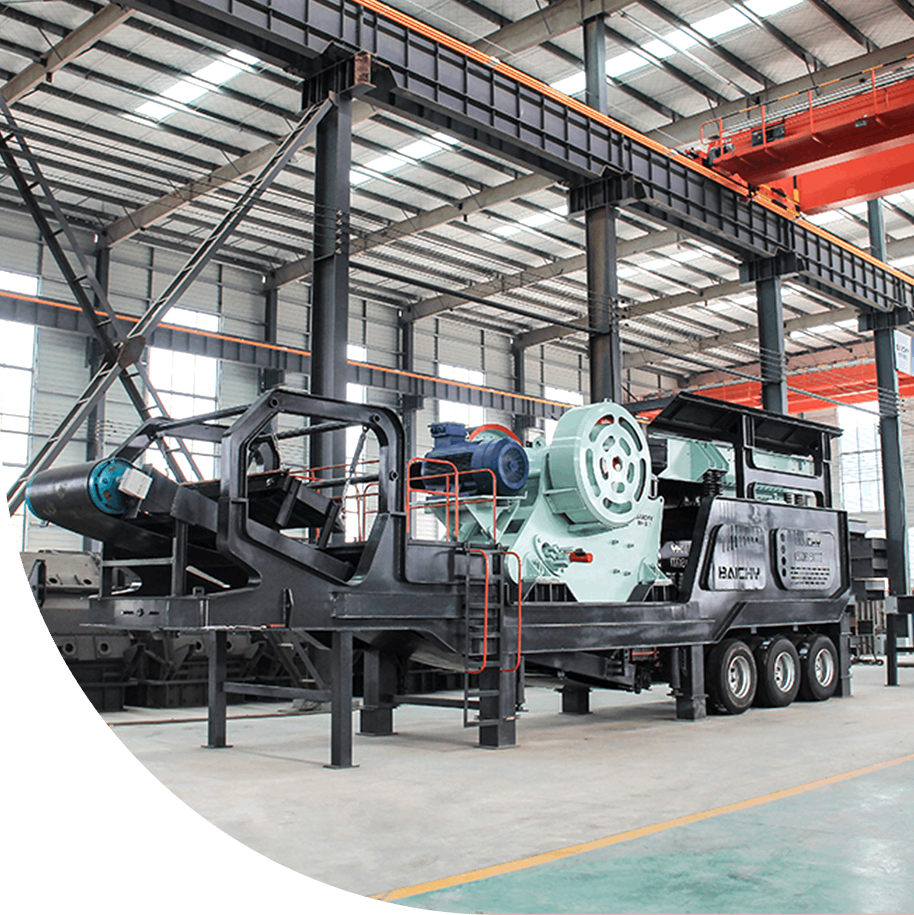

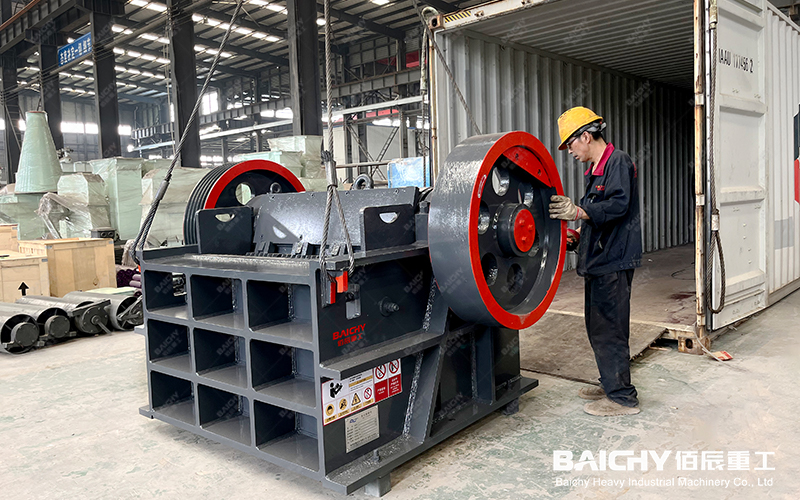
250x1200 Fine Jaw Crusher for Iron Ore
When selecting iron ore crushing equipment, the core consideration is not merely "can it crush the material," but rather "is the output particle size consistent, and is the rate of over-crushing (excessive fines generation) low?" The 250x1200 fine-crushing jaw crusher has long been the primary choice for the secondary crushing stage in small- and medium-sized iron ore operations because it meets three critical operational requirements: it utilizes inter-particle (lamination) crushing to minimize fines generation; it delivers a stable, controllable output size of 25–60mm; and it features a simple, robust structure capable of withstanding harsh mining environments. When paired with a closed-circuit screening system, it locks the feed size for the grinding mill at the target value, directly realizing the energy-saving benefits of the "crush more, grind less" strategy—for every 1mm reduction in particle size achieved during crushing, both the mill's electricity and steel media consumption decrease.
I. Overview: Why Fine-Crushing Jaw Crushers Are Commonly Used for Iron Ore
In the cost structure of an iron ore processing plant, the grinding stage typically accounts for 40–60% of total energy consumption. Reducing the particle size by even one grade during the crushing stage leads to a significant increase in the mill's hourly throughput—this is the fundamental logic behind the "crush more, grind less" approach. However, finer crushing is not always better; over-crushing (generating excessive amounts of -0.074mm fines) impairs separation performance in magnetic and gravity separation processes and increases the burden of handling ore slimes.
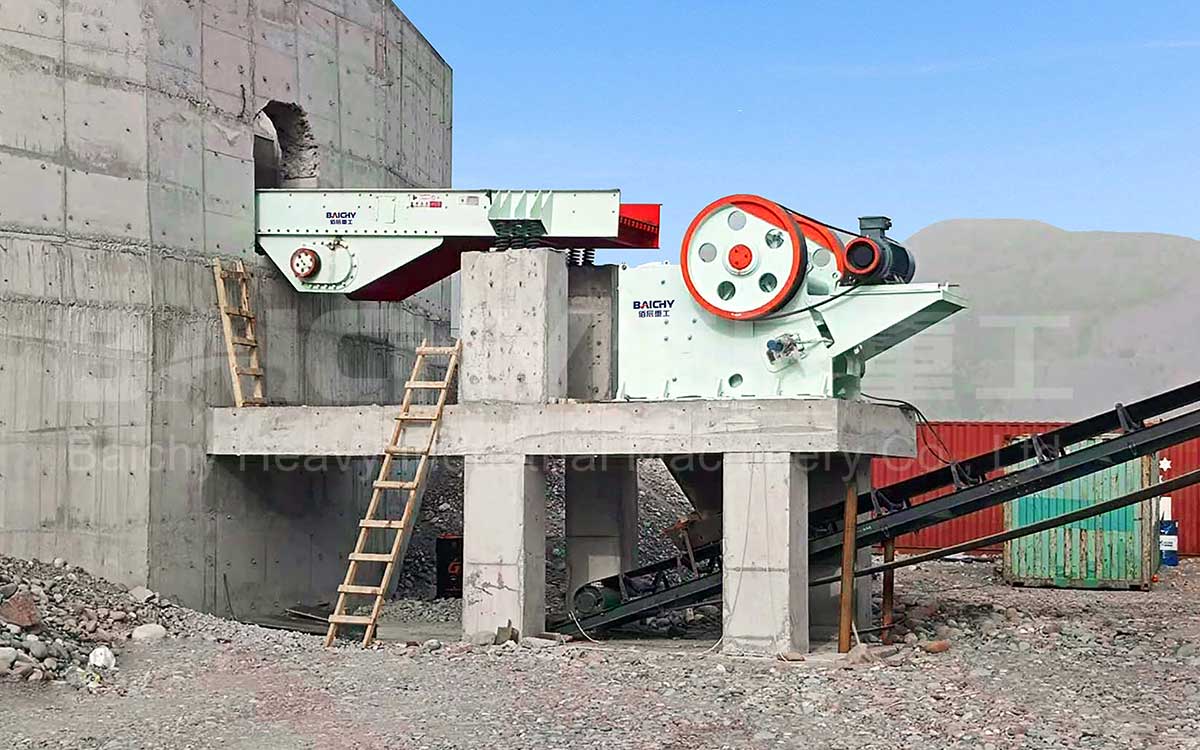
The 250x1200 fine-crushing jaw crusher occupies the ideal balance point between "crush more, grind less" and "controlling over-crushing" in iron ore processing lines. It employs inter-particle crushing—relying on compression rather than impact—resulting in a lower fines yield compared to impact crushers or roll crushers. Its elongated 250×1200mm feed opening ensures uniform intake of lump iron ore, while the discharge size is continuously adjustable (25–60mm); when used in a closed circuit with a vibrating screen, it yields a consistent feed size for the grinding mill. For independent small-scale processing plants and collective mining operations with hourly capacities of 20–60 tons, it represents a practical choice: it requires half the investment of a cone crusher and offers superior wear resistance compared to an impact crusher.
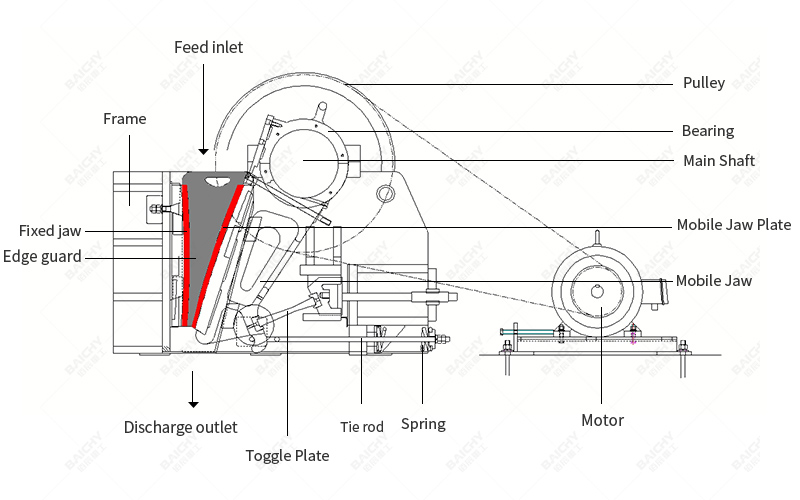
PEX-jaw-crusher-structure-diagram
II. Core Specifications (Iron Ore Application)
| Parameter Item | Specification | Iron Ore Application Notes |
| Equipment Model | PEX-250×1200 Fine Jaw Crusher | Secondary fine crushing model |
| Feed Opening Size | 250×1200 mm | Elongated crushing chamber; ensures uniform intake of lump ore |
| Max. Feed Size | ≤210 mm | Accepts discharge from primary crushing (PE Jaw Crusher) |
| Discharge Setting Range | 25–60 mm | Continuously adjustable; locks in particle size for milling |
| Processing Capacity | 20–61 t/h (Limestone rating) | Adjusted by factor of 0.7–0.8 for iron ore; approx. 14–48 t/h |
| Motor Power | 37 kW (6-pole) | Low power consumption; compatible with mining site power grids |
| Material Compressive Strength | ≤320 MPa | Suitable for both raw magnetite and hematite ores |
| Crushing Principle | Inter-particle compression (lamination) | Low over-crushing rate; preserves downstream beneficiation performance |
Note: Iron ore has higher bulk density and hardness than limestone; capacity is adjusted by a factor of 0.7–0.8. Actual selection should include a 10–15% safety margin and a closed-circuit screening configuration.
III. Application Scenarios
3.1 Secondary Crushing for Small Iron Ore Beneficiation Plants (Two-stage, One-closed-circuit)
For small magnetic separation plants with an hourly output of 20–50 tons, the standard configuration is: "PE Primary Jaw Crusher → 250x1200 Fine Jaw Crusher → Vibrating Screen (Closed-circuit) → Ball Mill." The fine jaw crusher's discharge is screened; oversized material is automatically recirculated for re-crushing, while properly sized material enters the mill, creating a stable closed loop. This setup requires minimal equipment and light civil engineering, making it the mainstream solution for clustered mining areas and independent small-scale plants.
3.2 Technical Upgrades for Existing Plants: Adding or Replacing Fine Crushing Stages
Many older plants operate with only two stages—primary crushing and ball milling—resulting in mill feed sizes as large as 80–120 mm and high consumption of both electricity and grinding media (steel balls). By adding a fine-crushing jaw crusher and a closed-circuit screen, the feed size to the mill is reduced to 25–40 mm, typically boosting mill productivity by 15–30%. This represents one of the most cost-effective technical upgrades for processing plants, with an investment payback period usually under one year.
3.3 Ensuring Feed Size for Magnetic and Gravity Separation
Magnetic separators have specific feed size requirements that directly determine separation performance. The fine-crushing jaw crusher delivers a stable, controllable output size; when paired with screening, it ensures a uniform feed for magnetic and gravity separation stages, preventing grade fluctuations caused by oversized particles and reducing losses in the tailings.
3.4 Pre-crushing for Iron Ore Grinding and Drying
Iron concentrate processing and iron ore drying lines also benefit from the "crushing instead of grinding" approach. By using a fine-crushing jaw crusher to reduce ore to 25–60 mm before it enters the mill or dryer, hourly throughput increases significantly while both thermal and electrical energy consumption decrease. This configuration has become a standard process in iron ore projects across regions like South America.
IV. Equipment Advantages (Iron Ore Processing Context)
4.1 Inter-particle Crushing with Low Over-grinding Rates
Jaw-based inter-particle crushing applies pressure to the ore mass as a whole, resulting in a significantly lower yield of fines compared to impact crushing. This ensures uniform mineral liberation and minimal slime formation, thereby safeguarding grade and recovery rates for downstream magnetic and gravity separation.
4.2 Stable Discharge Size, Realizing "More Crushing, Less Grinding"
The discharge opening is mechanically adjustable (25–60 mm); combined with closed-circuit screening, the mill feed size remains consistent and predictable. The mill avoids processing oversized material, leading to simultaneous improvements in hourly throughput and grinding fineness.
4.3 High-Manganese Steel Jaw Plates Resistant to Iron Ore Abrasion
Both the swing and fixed jaw plates are cast from high-manganese steel, offering a typical service life of 6–10 months in iron ore applications. The plates are reversible and can be replaced in pairs; the cost per ton for wear parts is lower than that of cone crusher liners, and spare parts are readily available with short lead times. 4.4 Simple structure, adapted to harsh mining environments
No hydraulic systems or oil stations are required, and bearings and drive components are standardized. This allows for independent operation and maintenance even in mining areas characterized by unstable power grids, heavy dust, and limited maintenance resources; downtime is measured in hours.
V. Real-world Case Studies
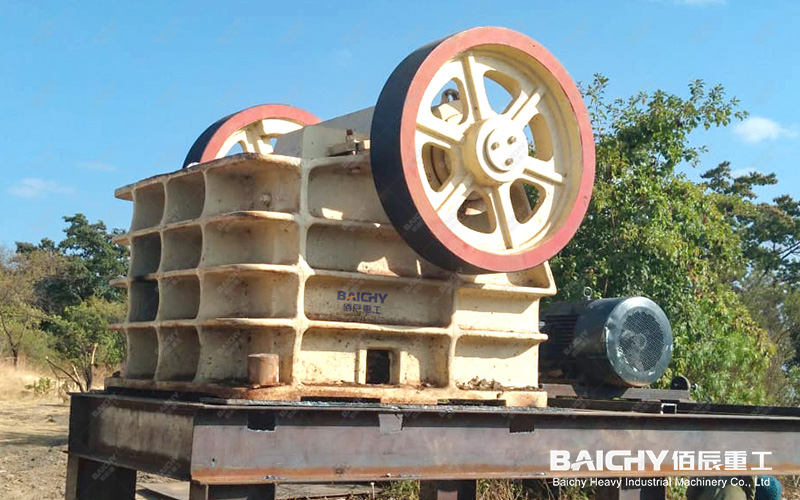
Fine Jaw Crusher Customer Site
Case 1: Small-scale magnetite processing plant in East Africa.
Hourly capacity: 40 tons. Process flow: PE-400×600 primary jaw crusher + fine jaw crusher (250×1200) in closed circuit with a vibrating screen + ball mill + wet magnetic separator. The fine jaw crusher limits discharge size to 25–35 mm for mill feed; the mill's hourly capacity increased by approximately 20% compared to the pre-retrofit setup. Grinding fineness (-200 mesh) remained stable, magnetic concentrate grade met specifications, and the entire line went from contract signing to commissioning in about 7 weeks.
Case 2: Pre-crushing for an iron ore drying line in South America.
Originally, run-of-mine ore was fed directly into the dryer, where large lumps caused an imbalance between heat consumption and throughput. After installing a fine jaw crusher to reduce feed size to ≤40 mm, the dryer's hourly throughput increased by approximately 25% and heat consumption decreased, providing a stable feed for the subsequent grinding process.
Case 3: Technical upgrade of an aging processing plant in Central Asia.
The original process involved direct grinding of 80–100 mm lumps ("primary crushing + ball mill"), resulting in consistently high power consumption. After adding a fine jaw crusher and a closed-circuit screen, the mill feed size was reduced to 30 mm; mill power consumption dropped by approximately 12% and steel media consumption decreased simultaneously. The investment for the upgrade was recouped in about 8 months.
VI. Recommended Auxiliary Equipment
| Station | Recommended Equipment | Selection Criteria |
| Feeding | ZSW-380×96 Vibrating Feeder | Uniform feeding; pre-screening to remove soil |
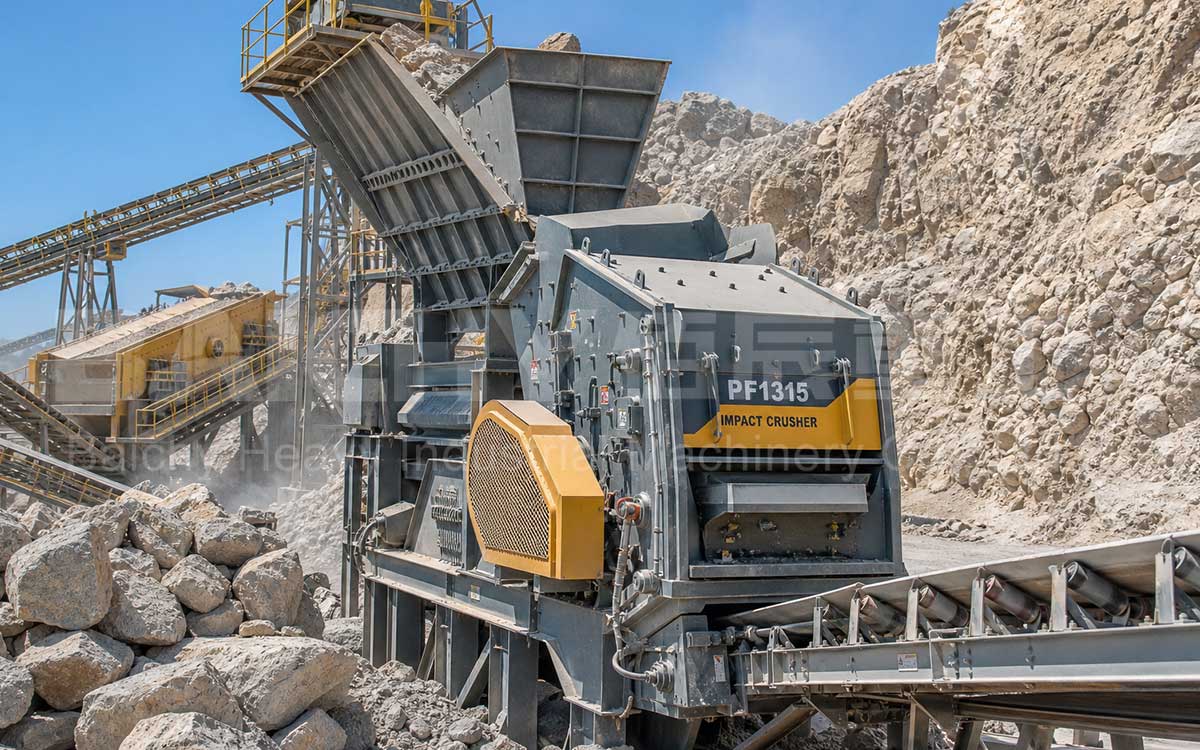
| Primary Crushing | PE-400×600 / PE-500×750 Jaw Crusher | Output ≤210mm; compatible with fine jaw crusher |
| Fine Crushing (This Unit) | PEX-250×1200 Fine Jaw Crusher | Main secondary crusher; output 25–60mm |
| Screening | YA Series Vibrating Screen | Closed-circuit material return; ensures stable feed size for the mill |
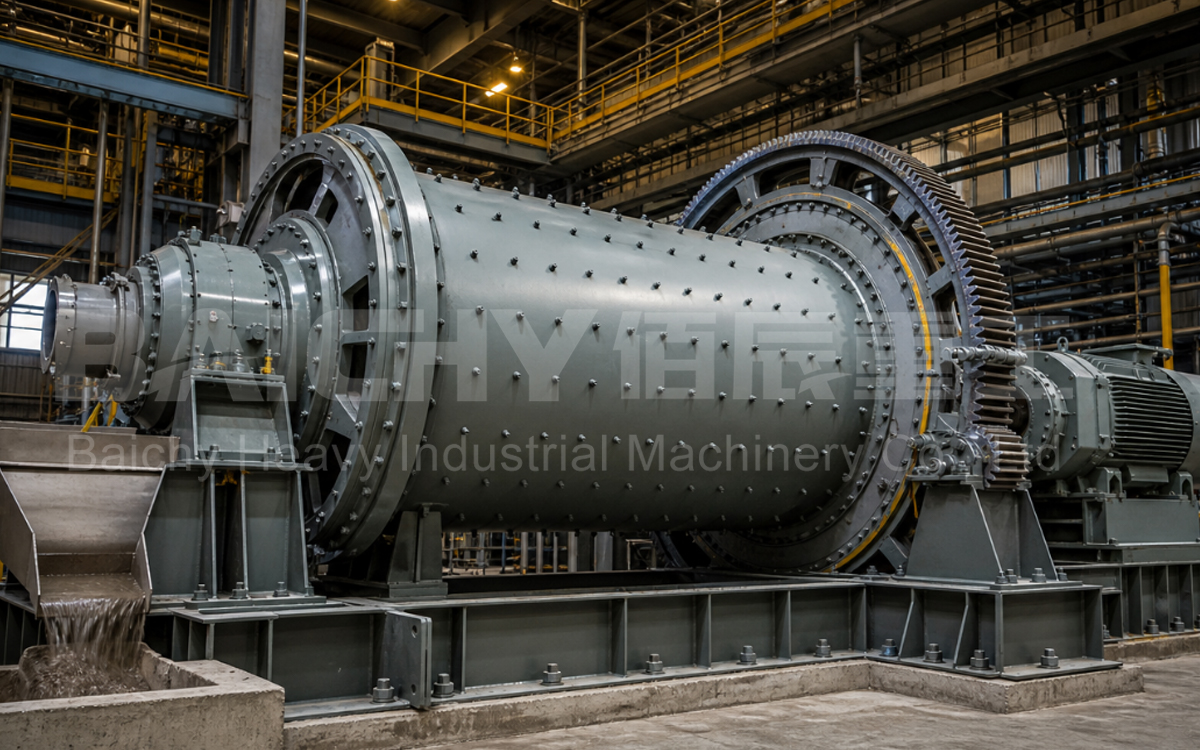
| Grinding Ball Mill (Overflow Type) | Uniform feed particle size; | lower wear rate |
| Beneficiation | Wet Magnetic Separator / Flotation Machine | For magnetite and hematite separation |
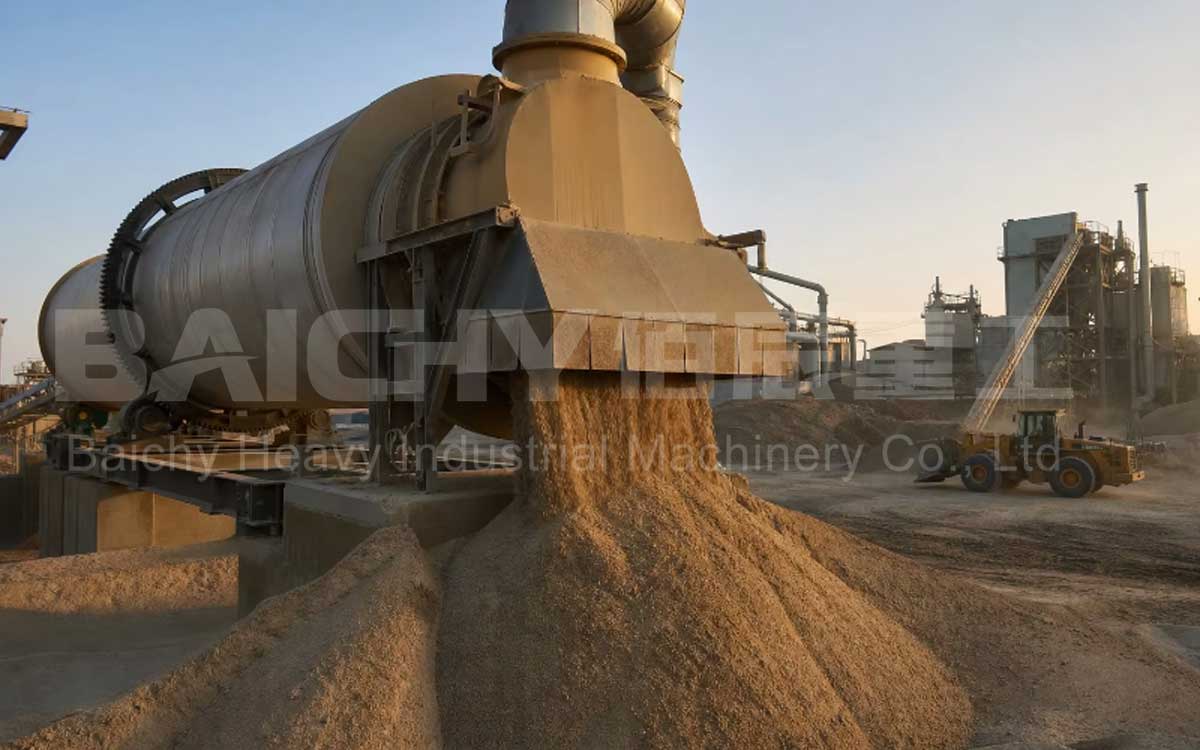
| Drying (Optional) | Iron Ore Dryer | Drying of iron concentrate or ore |
VII. FAQ
Q1: What is the hourly capacity of the 250x1200 fine jaw crusher when processing iron ore?
Rated capacity is 20–61 t/h (based on limestone at 1.6 t/m³); for iron ore, a conversion factor of 0.7–0.8 applies, resulting in an actual capacity of approximately 14–48 t/h. It is recommended to allow a 10–15% margin during selection and to use closed-circuit screening to ensure stable feed size for the mill.
Q2: Iron ore is hard; can the fine jaw crusher handle it?
The compressive strength of raw magnetite and hematite is generally ≤320 MPa, which falls within the operating range of the fine jaw crusher. The jaw plates are made of high-manganese steel and are reversible; service life under iron ore processing conditions is approximately 6–10 months. For high-grade, dense magnetite with a throughput exceeding 60 t/h, a cone crusher solution is recommended.
Q3: How is the fine jaw crusher configured in an iron ore processing line? Can it connect directly to the ball mill?
The standard configuration is "coarse jaw crusher → fine jaw crusher → vibrating screen (closed-circuit) → ball mill." The discharge from the fine jaw crusher must be screened; oversized material is returned for reprocessing, while only material of the required size enters the mill. Feeding the crusher discharge directly into the mill is not recommended, as the inclusion of large particles would compromise grinding fineness and separation performance.
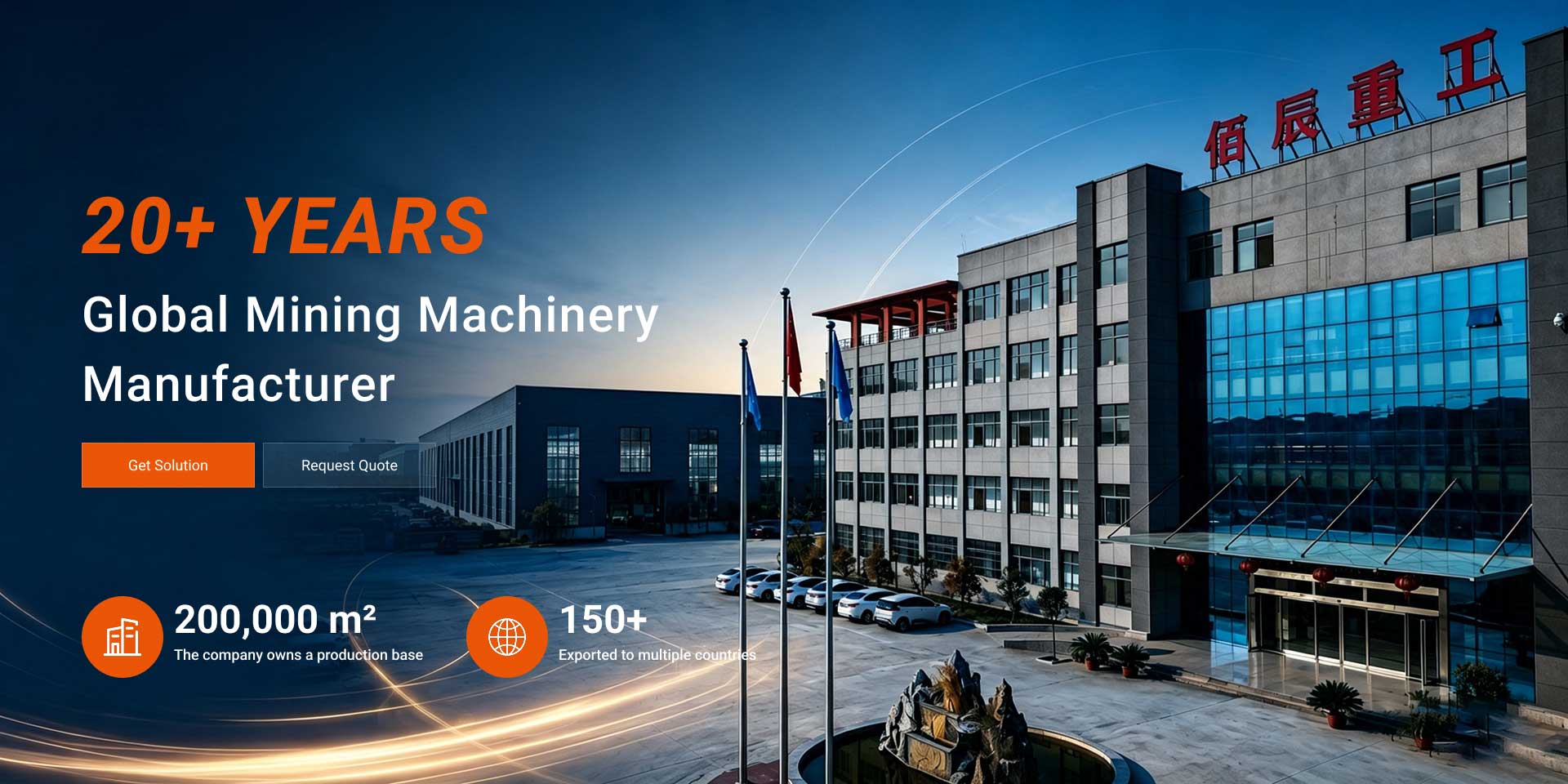
Baichy Heavy Industry
Baichy Heavy Industry is a high-tech mining equipment company integrating R&D, manufacturing, sales, and after-sales service. Focusing on crushing, grinding, and mineral processing equipment, we provide professional solutions to our customers. We are ISO9001:2015 、certified, and our products include mobile crushing palnts, crawler crushing plant, construction waste crushing plants, jaw crushers, sand making machines, cone crushers, fine crushers, grinding mills, ball mills, etc., all with reliable performance to meet diverse project needs.
Baichy Heavy Industry – Your Trusted Partner
To ensure optimal performance of your equipment, Baichy Heavy Industry offers:
- Professional on-site installation guidance
- Comprehensive operator training
- 24/7 technical support & maintenance services
Our complete after-sales service system guarantees long-term, stable operation of your machinery with minimal downtime.
Protect Your Rights – Only Use Official Channels
To avoid scams and ensure authentic support, contact us exclusively through:
• Official Website: www.baichychina.com
• WhatsApp: +8615093222637
• Email: [email protected]
Your satisfaction is our priority – expect prompt, professional service every time.
(Note: Beware of unauthorized third parties claiming to represent Baichy. Always verify through official contacts.)