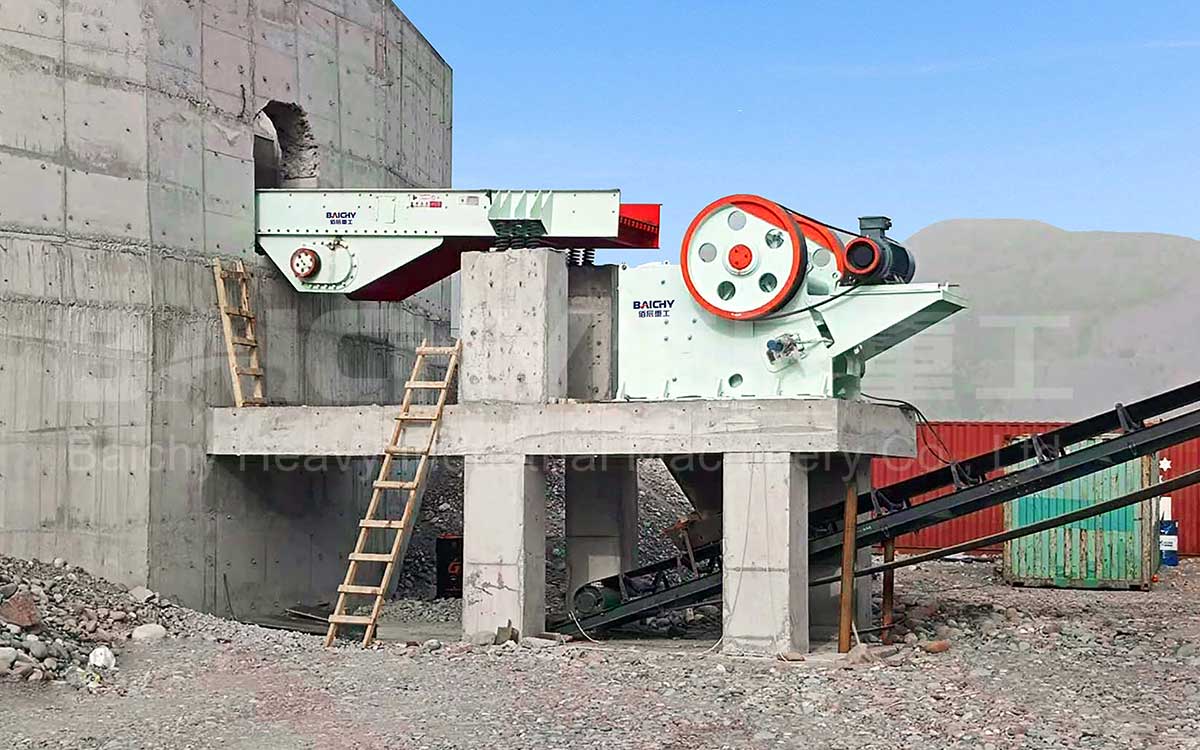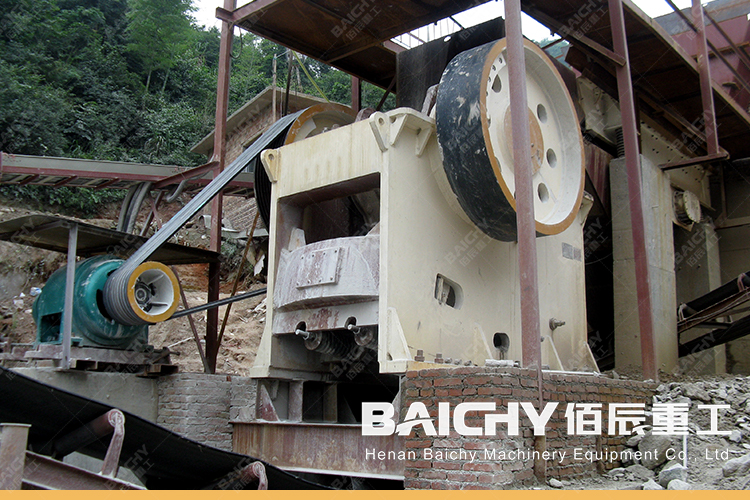
Jaw crusher working site
As a manufacturer of mining crushing equipment with 20 years of professional experience, we deeply understand the challenges that different rock properties pose to crushing processes. The high hardness of granite, the abrasion resistance of basalt, the brittleness of limestone, and the corrosiveness of quartz all place stringent requirements on crushing equipment.
Jaw crushers, with their robust structure, high crushing ratio, and wide adaptability, are the ideal choice for processing these materials. This article will delve into the performance of jaw crushers in processing these four common rock types, key selection points, and maintenance techniques.
Working Principle and Core Advantages of Jaw Crusher
Jaw crushers use the squeezing motion between the moving jaw and the stationary jaw to crush materials. Their working cycle includes three stages: forward, backward, and discharge. They have a simple and reliable structure and enormous crushing force.
Key advantages include:
- High crushing ratio: Typically reaches 4-6, resulting in high primary crushing efficiency.
- Rugged structure: Capable of handling high-hardness, large materials.
- Easy maintenance: Core components are easy to inspect and replace.
- High Adaptability: Product particle size can be flexibly controlled by adjusting the discharge port.
Crushing Characteristics of Different Rocks and Jaw Crusher Selection Guide
Different rocks have significantly different physical and chemical properties, directly affecting the selection of crushers, process configuration, and the lifespan of wearing parts.
Comparison of Characteristics of Common Crushed Materials
| Rock Type | Mohs Hardness | Compressive Strength (MPa) | Characteristic Description | Challenges to Crusher |
| Granite | 6-7 | 100-300 | High hardness, high wear resistance, crystalline structure | Extremely abrasive to jaw plates, requiring high wear-resistant materials |
| Basalt | 5-7 | 200-350 | High hardness, high toughness, wear resistance | High toughness leads to high power consumption, testing equipment rigidity |
| Limestone | 3-4 | 40-120 | Medium to low hardness, brittle, easily broken | High dust generation, requiring attention to sealing and environmental protection |
| Quartz/Quartzite | 7 | 150-300 | High hardness, high silicon content, strong abrasiveness | Severe equipment wear and high corrosion resistance requirements |
Twenty Years of Experience: Optimized Solutions for Different Rocks
Based on twenty years of manufacturing and service experience, we offer optimized configuration solutions for different materials to ensure our customers achieve the best production efficiency and return on investment.
1. Solutions for Granite and Basalt
Both are high-hardness, highly abrasive rocks. We recommend:
- Using a high-strength frame: Ensuring stable operation under continuous high loads.
- Optimizing jaw plate material: Using ZGMn18Cr2 or higher grade high-manganese steel with an optimized tooth profile design to enhance wear resistance and crushing efficiency.
- Increasing the spindle diameter: Providing stronger torsional resistance.
- Recommended configuration: Generally, choose a larger size model to ensure output while leaving a margin.
2. Solutions for Limestone
The key to limestone crushing is high output and dust control.
- Increasing the oscillation frequency: Improves crushing efficiency and increases throughput.
- Optimized Chamber Design: Utilizes a deeper, dead-zone-free crushing chamber to promote material flow.
- Enhanced Sealing and Dust Collection Interfaces: Reduces dust leakage at the source, meeting environmental protection requirements.
3. Solutions for Quartzite
The strong abrasiveness of quartzite is the biggest challenge.
- Comprehensive Wear-Resistant Protection: In addition to the jaw plates, the side guards and toggle plate seats are also treated with wear-resistant reinforcement.
- Recommended Slow Speed Operation: Appropriately reduce the rotational speed to reduce wear, and maintain output in conjunction with the optimized chamber design.
Key Component Material Selection and Maintenance Points
The lifespan of vulnerable parts directly affects operating costs. Our experience shows that scientific material selection and preventive maintenance are crucial.
| Core Components | Recommended Material (for Hard Rock) | Average Life (Reference) | Maintenance and Inspection Points |
| Moving/Fixed Jaw Plates | High Manganese Steel (ZGMn18Cr2) | 3-6 Months | Regularly rotate the jaws and check the tightening bolts |
| Side Guard Plates | High Manganese Steel or Wear-Resistant Alloy Steel | 6-12 Months | Check wear clearances to prevent material impact on the sidewalls |
| Toggle Plates | High-Quality Cast Steel | Replace as needed | Pay attention to any abnormal noises to prevent damage from iron buildup |
| Bearings | Internationally Renowned Brand Self-Aligning Roller Bearings | 2-3 Years | Regularly lubricate, monitor temperature and noise |
Daily Maintenance Recommendations:
- Check the lubrication system daily to ensure proper bearing lubrication.
- Regularly tighten all fasteners, especially the jaw plate fixing bolts.
- Pay attention to abnormal vibrations and noises, and promptly investigate the cause.
- Establish a record of vulnerable parts replacements and predict the next replacement time.
Choosing a suitable jaw crusher is not just about purchasing equipment, but also about choosing a reliable production partner. Our twenty years of professional experience are reflected in our meticulous attention to every detail from cavity design for different rocks to rigorous selection of core materials, and service support throughout the entire equipment lifecycle. We are committed to providing customers with jaw crushing solutions that not only crush effectively, but also crush economically and for a long time, helping your mining business achieve rock-solid stability and efficient development.