Baichy Heavy Industrial Machinery Co., Ltd
Phone/Wechat/Whatsapp:+008615093222637
24 hours online

Advantages of the Fine-Crushing Jaw Crusher: A Cost-Effective, Low-Maintenance, and Low-Fines Choice for Secondary Crushing

2024-07-28 18:24:15
Baichy Heavy Industry
plays
Warm Tip:

If you want to know more details about equipment, solutions, etc, please click the button below for free consultation, or leave your requirements!

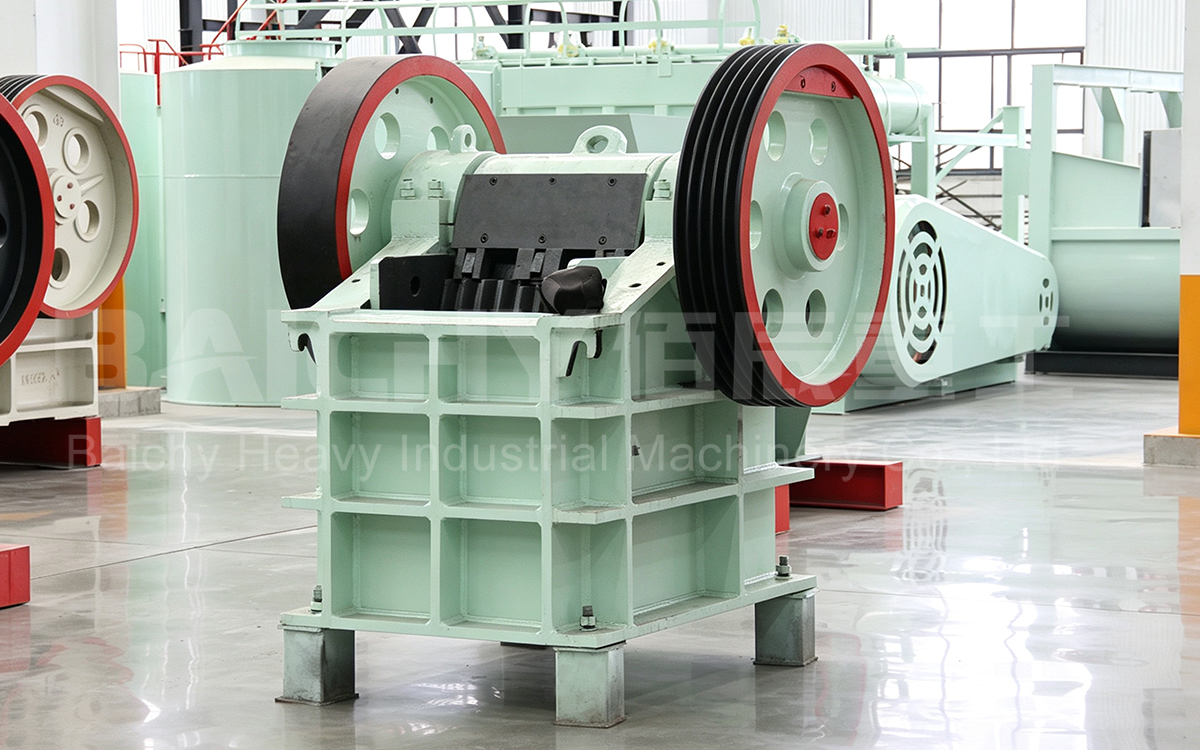
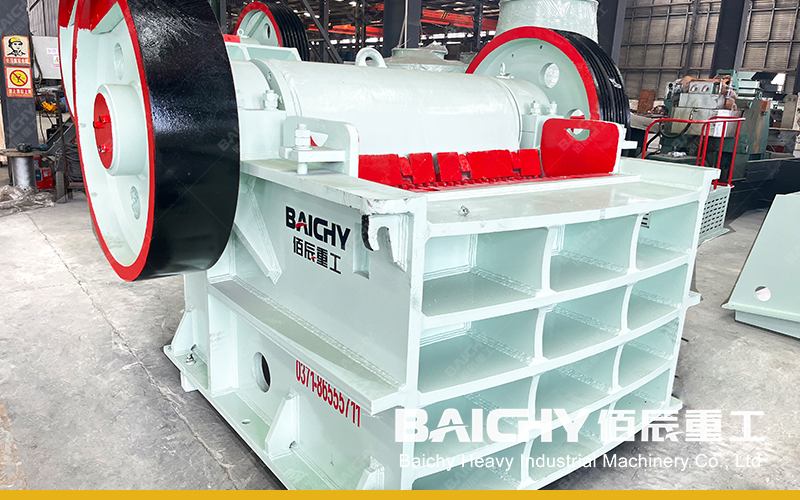
Fine-crushing jaw crusher

Fine-crushing jaw crusher

The advantages of the fine-crushing jaw crusher (PEX series) can be summarized in a single sentence: it delivers the performance of a secondary/tertiary crusher with the simplicity of a primary crusher, all at the lowest investment cost for this stage of the process. Compared to cone crushers, the initial investment is 40–55% lower, there is no hydraulic station, and maintenance primarily involves replacing jaw plates. Compared to impact crushers, it handles hard or contaminated materials with ease and offers a lower cost-per-ton for wear parts. For operations requiring a capacity of 20–60 t/h and handling materials with a compressive strength of up to 320 MPa, the fine-crushing jaw crusher offers the most reliable cost-performance ratio for the secondary crushing stage.

I. Overview: What is a fine-crushing jaw crusher, and why does it deserve special attention?

Standard industry practice dictates using jaw crushers for primary crushing and cone or impact crushers for secondary and tertiary crushing; however, this approach is only valid for high-volume, high-standard production lines. Small-scale aggregate plants, mineral processing facilities, and recycling yards—with hourly capacities of 20–60 tons—often cannot fully utilize the capacity of a cone crusher, nor can they bear the high cost of replacing blow bars in an impact crusher. This is precisely the niche where the fine-crushing jaw crusher excels.

The fine-crushing jaw crusher belongs to the PEX series and shares the same lineage as the PE primary jaw crusher. While both utilize the principle of inter-particle (lamination) crushing, the fine-crushing model features a flatter, elongated feed opening and a higher reduction ratio, specifically designed for the secondary crushing stage—taking a feed size of 100–250 mm and reducing it to 25–60 mm. It does not aim for maximum throughput; instead, it prioritizes a simple structure, minimal failure points, and low cost-per-ton. For small and medium-sized operations, this value proposition aligns far better with the owner's bottom-line calculations than any cutting-edge technology.

PEX-jaw-crusher-structure-diagram

PEX-jaw-crusher-structure-diagram

II. Key Specifications (Representative PEX Series Models)

Model Feed Opening Size Max. Feed Size Discharge Opening Range Capacity Motor Power
PEX-250×750 250×750 mm ≤210 mm 25–60 mm 15–45 t/h 22–30 kW
PEX-250×1000 250×1000 mm ≤210 mm 25–60 mm 16–52 t/h 30–37 kW
PEX-250×1200 250×1200 mm ≤210 mm 25–60 mm 20–61 t/h 37 kW
PEX-300×1300 300×1300 mm ≤250 mm 25–90 mm 30–80 t/h 55 kW

Note: Capacity is rated based on limestone (density: 1.6 t/m³); for granite, multiply by 0.8–0.9; for iron ore, multiply by 0.7–0.8. Feed opening size is designated as "Width × Length"; for a given width, a greater length results in more uniform material intake.

III. Five Major Advantages of Fine-Crushing Jaw Crushers

3.1 Low Investment Cost: Best Value-for-Money in Secondary Crushing

For the same capacity, the total investment for a fine-crushing jaw crusher is approximately 40–55% of a cone crusher setup and 60–70% of an impact crusher setup. Additionally, it requires no heavy-duty foundations or hydraulic auxiliary systems, leading to reduced civil engineering costs. For budget-sensitive small-scale production lines, the cost savings are sufficient to cover the entire screening and conveying system.

3.2 Simple Structure, Low Maintenance Requirements

It operates without hydraulic systems or oil lubrication stations, and all bearings and transmission components are standardized. Routine maintenance involves simply checking the jaw plates and fasteners; replacing wear parts takes only hours and can be performed by local maintenance personnel. Eliminating a hydraulic system means eliminating a potential source of failure—a feature of immense value in remote mining areas.

3.3 Inter-particle crushing with low over-crushing rates

Jaw crushing relies on compression rather than impact, resulting in a significantly lower yield of fines compared to impact crushers or double-roll crushers. For mineral processing lines, reduced over-crushing means less sludge formation and stable separation performance; for aggregate lines, the fines content in the finished product is controllable, and the screening load is reduced.

3.4 Adjustable discharge size; one machine, multiple products

The discharge opening is continuously adjustable between 25–60 mm (or 25–90 mm for the PEX-300×1300 model). Switching between specifications—such as aggregates, road base materials, or pre-grinding feed—requires no disassembly or downtime, with adjustments completed in minutes. A single machine handles multiple product types, ensuring high capacity and capital utilization.

3.5 Strong material adaptability; versatile processing

It handles medium-hard rock, iron-bearing materials, wet or muddy gravel, and construction waste fragments. It adapts better to flaky or platy materials (such as shale or gneiss) than machines with square feed openings. Essentially, any material accepted by a primary jaw crusher can also be processed by this fine-crushing jaw crusher.

IV. Application Scenarios

4.1 Secondary crushing in aggregate lines

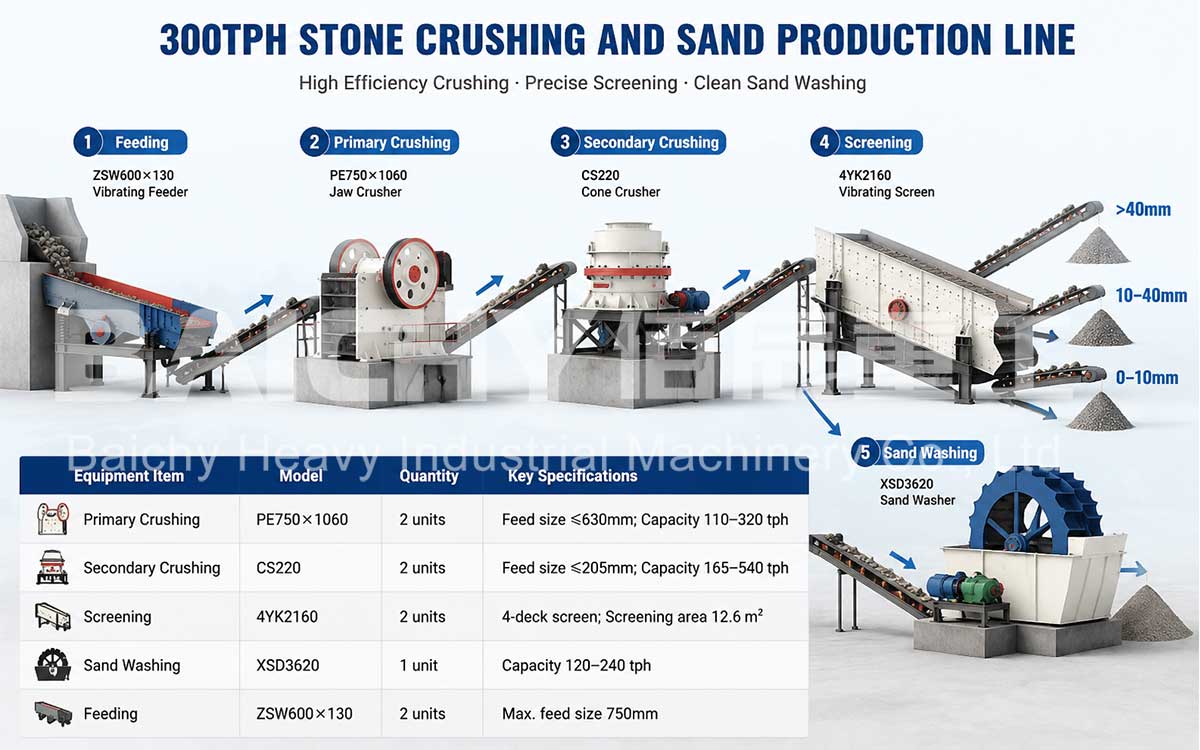
The "PE primary jaw crusher + fine-crushing jaw crusher + vibrating screen" configuration (two-stage crushing with one screening stage) is the standard model for small-scale aggregate plants. The 25–60 mm output is graded and supplied directly to concrete mixing stations and road base projects, offering low investment costs and rapid commissioning.

4.2 Pre-crushing in mineral processing plants

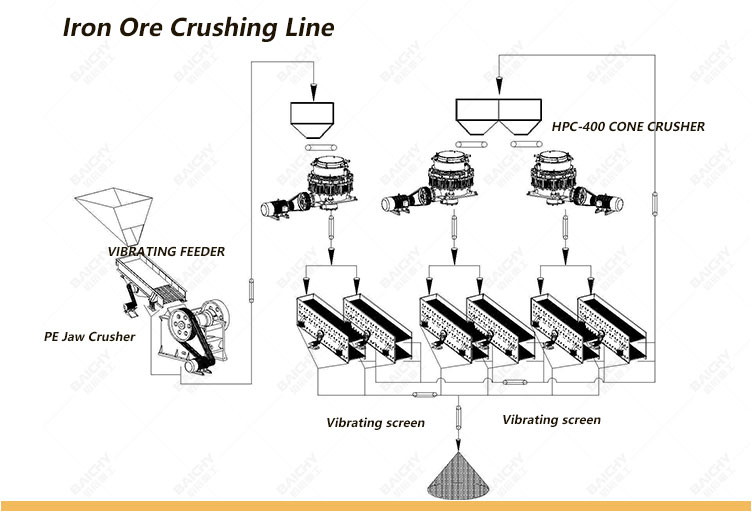
Gold, iron, and manganese processing plants use fine-crushing jaw crushers in a closed-circuit setup to provide uniformly sized feed to ball mills. This increases the mill's hourly throughput and reduces power consumption, effectively implementing the "crush more, grind less" process strategy.

4.3 Construction waste recycling

The jaw crusher structure is far more resilient to rebar and brick-concrete fragments than impact-based equipment, resulting in fewer stoppages due to jamming. The output can be used as recycled aggregate or as raw material for brick manufacturing. 4.4 Pre-crushing for Grinding Lines

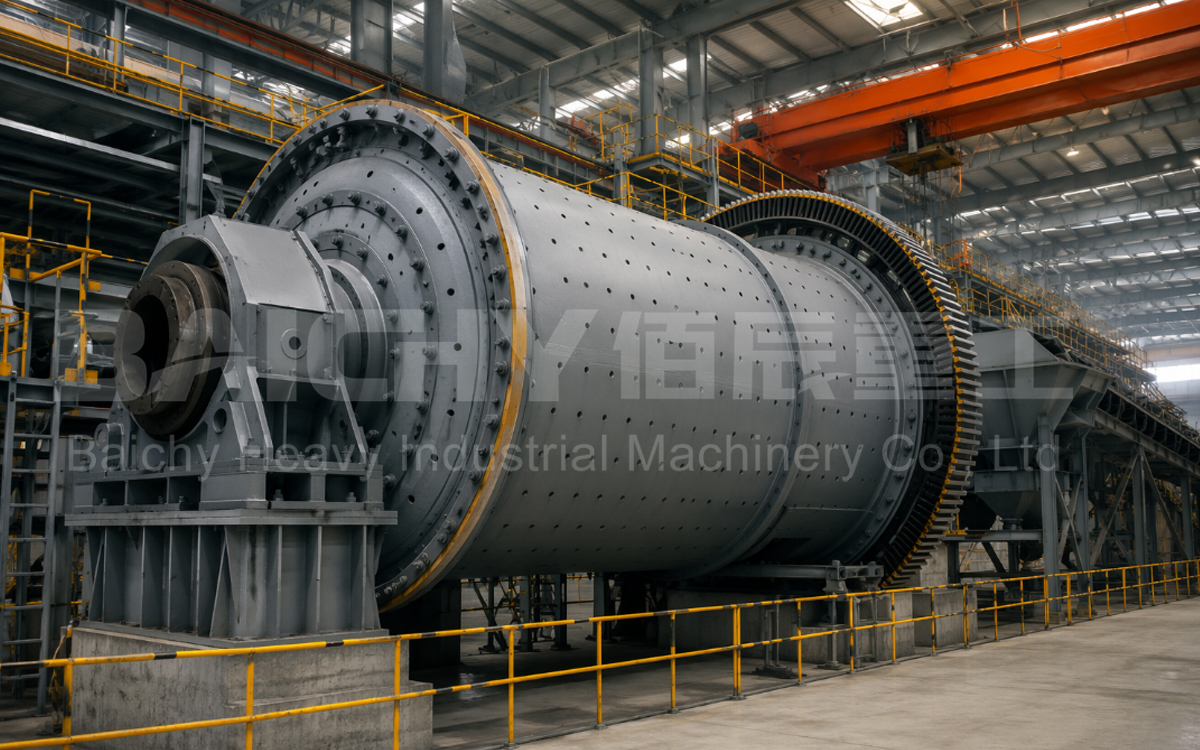
Installing a fine-crushing jaw crusher ahead of a Raymond mill or ball mill to reduce large feed blocks to 25–60 mm before grinding improves both mill throughput and wear rates—representing the most direct path to energy conservation through "replacing grinding with crushing."

V. Practical Case Studies

Fine Jaw Crusher Customer Site

Fine Jaw Crusher Customer Site

Case 1: Limestone aggregate line in Southeast Asia.

Hourly capacity of 40 tons; configuration includes a PE primary jaw crusher, a PEX-250×1000 fine-crushing jaw crusher, and a vibrating screen. The total investment was approximately half that of a cone crusher-based setup with equivalent capacity, and the project moved from contract signing to commissioning in six weeks. The 25–40 mm graded aggregate product is supplied directly to a commercial concrete plant, and the initial set of jaw plates lasted approximately nine months.

Case 2: Pre-crushing at an African gold CIL (Carbon-in-Leach) processing plant.

Run-of-mine ore (≤210 mm) is crushed in a closed circuit using a fine-crushing jaw crusher to ≤60 mm before entering the ball mill. The proportion of -200 mesh material increased by approximately 5 percentage points, and mill power consumption dropped by about 12%; the consistent feed particle size provided reproducible conditions for the leaching process.

Case 3: Multi-specification production at a small Latin American quarry.

A single fine-crushing jaw crusher is used to switch between three product specifications: aggregate, base course material, and pre-grind feed. Discharge opening adjustments are completed within five minutes, and annual capacity utilization exceeds 85%—a classic example of "one machine, multiple products."

VI. Recommended Auxiliary Equipment

Stage Selection Criteria
Feeding ZSW Series Vibrating Feeder Uniform feeding; pre-screening to remove soil
Primary Crushing PE-400×600 / PE-500×750 Jaw Crusher Output ≤210mm; matches fine-crushing jaw crusher
Fine Crushing (This Unit) PEX Series Fine-Crushing Jaw Crusher Select model (750/1000/1200/1300) based on capacity
Screening YA Series Vibrating Screen Closed-circuit material return; stable gradation
Sand Making Extension VSI Sand-Making Machine Aggregate line also produces manufactured sand
Grinding Extension Ball Mill / Raymond Mill Pre-crushed feed; lower wear rate

VII. FAQ

Q1: What is the difference between the fine-crushing jaw crusher and the PE primary jaw crusher?

The PE series features a large feed opening (500–1000mm) and a low reduction ratio, handling primary crushing; the PEX fine-crushing series has a wide, shallow feed opening and a high reduction ratio, handling secondary fine crushing with a controllable output size of 25–60mm. Both share the same design principles and are often used in series within a production line.

Q2: How does the fine-crushing jaw crusher compare to cone crushers and impact crushers in terms of pros and cons?

Fine-crushing jaw crushers excel in low investment costs, simple maintenance, and tolerance for materials containing impurities, but have limitations regarding maximum capacity (approx. 60–80 t/h) and particle shape (tendency for more flaky particles). Cone crushers offer high capacity and excellent particle shape but require 1.8–2.5 times the investment and rely on an oil lubrication station. Impact crushers produce good particle shapes, but their blow bars are vulnerable to hard materials, and wear costs per ton increase with material hardness. Choose the fine-crushing jaw crusher for small-scale operations, materials with impurities, or tight budgets.

Q3: How hard a material can the fine-crushing jaw crusher process?

Suitable for materials with a compressive strength of ≤320 MPa, including limestone, dolomite, moderately weathered granite, river pebbles, and most raw iron ores; however, for the large-scale crushing of fresh, dense granite or basalt, the use of a cone crusher is recommended to avoid excessive wear costs.

Baichy Heavy Industry

Baichy Heavy Industry

Baichy Heavy Industry is a high-tech mining equipment company integrating R&D, manufacturing, sales, and after-sales service. Focusing on crushing, grinding, and mineral processing equipment, we provide professional solutions to our customers. We are ISO9001:2015 、certified, and our products include mobile crushing palnts, crawler crushing plant, construction waste crushing plants, jaw crushers, sand making machines, cone crushers, fine crushers, grinding mills, ball mills, etc., all with reliable performance to meet diverse project needs.

Baichy Heavy Industry – Your Trusted Partner ​​

To ensure optimal performance of your equipment, Baichy Heavy Industry offers:

  • ​​Professional on-site installation guidance​​
  • Comprehensive operator training​​
  • ​​24/7 technical support & maintenance services​​

Our ​​complete after-sales service system​​ guarantees long-term, stable operation of your machinery with minimal downtime.

Protect Your Rights – Only Use Official Channels

To avoid scams and ensure authentic support, contact us exclusively through:

• Official Website​​: www.baichychina.com

• WhatsApp​​: +8615093222637

• Email​​: [email protected]

Your satisfaction is our priority – expect prompt, professional service every time.

(Note: Beware of unauthorized third parties claiming to represent Baichy. Always verify through official contacts.)

logo.png
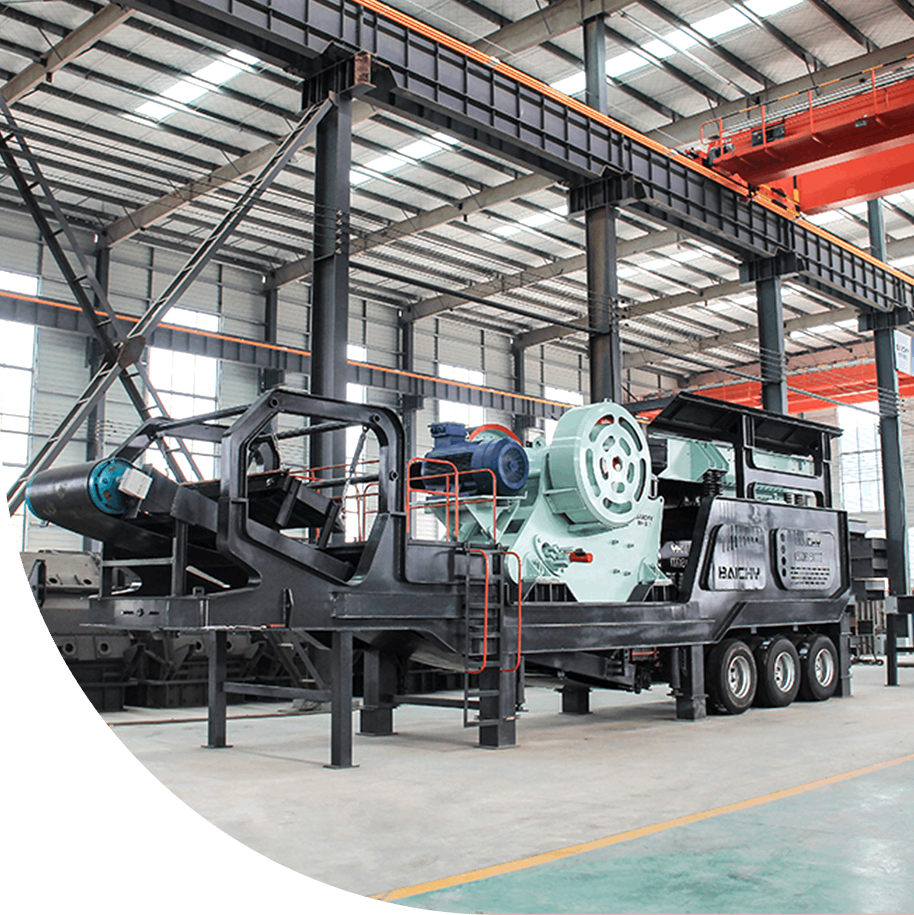
Baichy Mobile Jaw Crusher Finished Goods Workshop