
Application-Guide-for-Manufactured-Sand-Dewatering-Screens
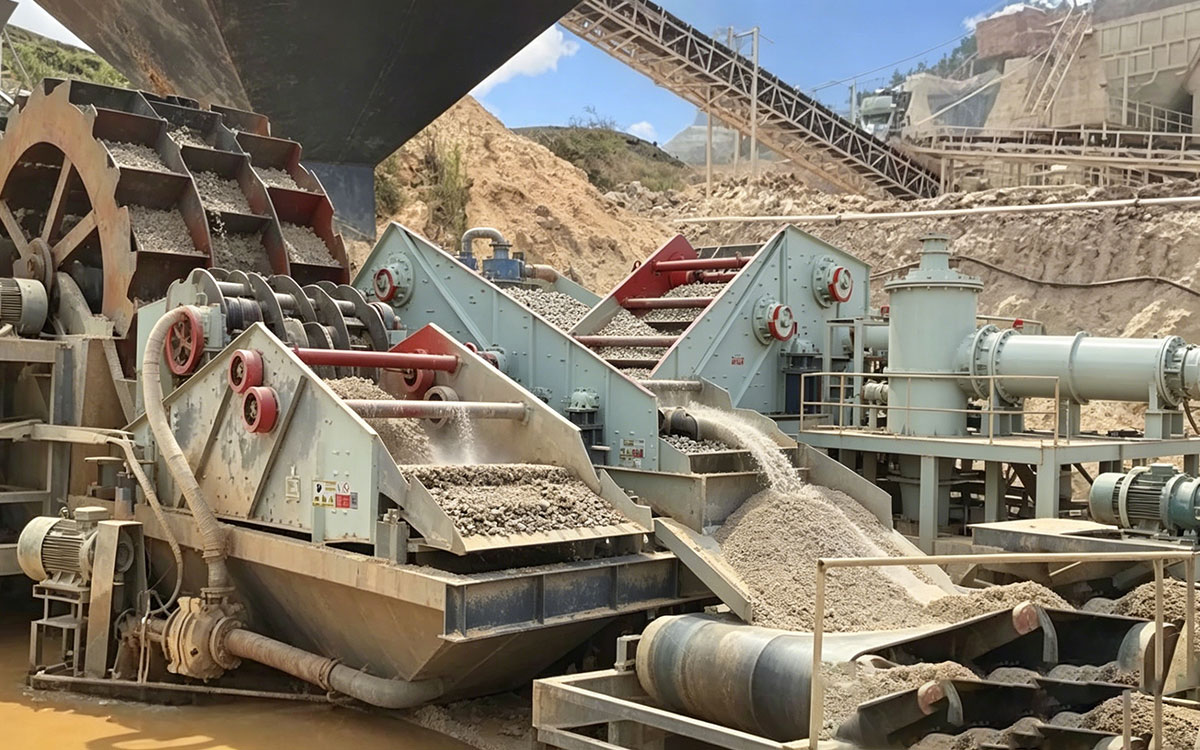
The dewatering vibrating screen is by no means an optional accessory; rather, it is the absolute core component that determines whether manufactured sand can be sold at a premium immediately after loading. Manufactured sand washed by spiral or wheel-bucket sand washers initially has a moisture content as high as 20%–30%. After processing through a high-frequency dewatering vibrating screen, surface moisture drops sharply to around 5%–8%, enabling immediate transport after screening. Furthermore, when integrated with a hydrocyclone cluster to form a "fine sand recovery system," it can recover over 95% of the 0.075–2mm fine sand that would otherwise be discarded in the settling pond, fundamentally transforming the production line's profit model.
I. Its "Irreplaceability" in Sand and Aggregate Production Lines
In wet-process production lines for manufactured sand and aggregates, the dewatering vibrating screen addresses two major industry pain points:
Pain Point 1: Sand discharged from washers is "too wet" for direct transport.
Sand discharged from wheel-bucket or spiral washers resembles slurry; if stockpiled directly, it requires significant space and 2–3 days of air-drying. This slows capital turnover and risks environmental fines due to water runoff.
Solution: Use a dewatering screen.
The dewatering screen is installed with a negative inclination angle (typically -2° to -5°). Combined with high-frequency vibration, this creates a filtering "mud cake" layer on the screen surface. Water is removed through the mesh under the influence of gravity and high-frequency excitation forces, reducing the finished sand's moisture content to 5%–8%. The sand does not drip during loading, allowing for immediate monetization.
Pain Point 2: Significant loss of high-quality fine sand (finer than 120 mesh) in the wastewater.
Wastewater from the washing process contains large quantities of high-quality, well-graded fine sand (0.075mm–2mm). Discharging this directly into settling ponds not only causes rapid siltation—incurring massive manual desilting costs—but also results in a 10%–15% loss of yield, while causing the manufactured sand's fineness modulus to skew coarse and its gradation to become suboptimal.
Solution: Integration of Dewatering Screens, Slurry Pumps, and Hydrocyclones
By linking the dewatering screen with a slurry pump and hydrocyclone, an integrated fine sand recovery and dewatering unit is created. Tailings water enters the hydrocyclone for thickening; the concentrated fine sand is then discharged onto the dewatering screen to mix with coarse sand for simultaneous dewatering. This process turns waste into a valuable product, achieves optimal coarse-fine sand gradation, and results in concrete with higher strength and superior visual quality.
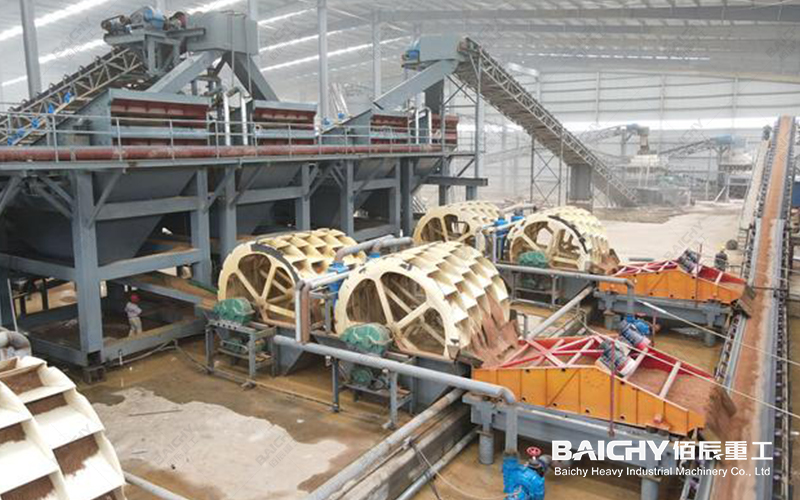
Dewatering Vibrating Screen
II. How does every vibration help you "save and generate money"?
Investments in industrial equipment must demonstrate clear value on the operational balance sheet. Here is how the core technologies of the dewatering screen translate into direct financial gains for mine owners:
| Core Technology / Feature | What it means for the mine owner |
| Negative-angle (-2° to -5°) uphill screening | Forced water control: A "sludge cake layer" forms at the discharge end of the screen, acting as a natural filter; this boosts dewatering efficiency by over 30% compared to standard flat screens. |
| Highly wear-resistant polyurethane (PU) screen panels | Ultra-low maintenance costs: PU screens last 3–10 times longer than manganese steel wire screens and resist clogging, preventing production losses caused by frequent downtime for screen replacement. |
| Dual-exciter self-synchronizing counter-rotation | Stable operation: Generates linear excitation force, causing material to move in a straight-line bouncing motion across the screen surface without lateral drift; this reduces frame fatigue and extends equipment lifespan by over 5 years. |
| Closed-loop fine sand recovery (paired with hydrocyclone) | 15% surge in output: Directly recovers lost manufactured sand (finer than 120 mesh) and eliminates labor and equipment rental costs associated with desilting sedimentation ponds; equipment costs can be recouped within 1–2 months. |
III. Baichen Heavy Industry TS Series Dewatering Vibrating Screen: Key Specifications Comparison
To assist on-site engineers and investors in making precise model selections, we have outlined the performance characteristics of two typical, best-selling models:
| Parameter Name | TS1225 (Small/Medium-scale Line) | TS1836 (Large-scale High-output Line) | Industrial & Environmental Standard Reference |
| Screen Surface Area (m²) | 3.0 | 6.48 | Determines maximum hourly processing capacity |
| Processing Capacity (t/h) | 30 - 60 | 120 - 200 | Perfectly suited for 100–300 tph manufactured sand lines |
| Max. Feed Particle Size (mm) | ≤ 10 | ≤ 10 | Specifically designed for fine-particle dewatering |
| Dual Motor Power (kW) | 3.7 × 2 | 11 × 2 | Power source for amplitude and frequency |
| Post-dewatering Moisture Content (%) | 5% - 8% (depending on raw material properties) | 5% - 8% (depending on raw material properties) | Meets standards for direct truck loading/dry-mixed mortar |
| Fine Sand Recovery Rate (%) | -- | 95% (with FX250 hydrocyclone) | Industry-leading tailings water control |
IV. Avoiding Pitfalls: How to Avoid Buying a Dewatering Screen That "Looks Good but Performs Poorly"?
Recommended High-Configuration Scenarios
Downstream of Wheel-bucket or Spiral Sand Washers
1. Essential configuration; otherwise, the finished sand stockpile turns into a mud pond, making it impossible to pass environmental inspections.
Tailings Recovery and Slurry Dry Stacking
2. Dewatering of mineral processing tailings, coal plant sludge, etc., to meet environmental dry-stacking requirements.
Premium Manufactured Sand Production Lines
3. For sand used in bridges and high-speed rail projects with strict grading requirements, fine sand recovery is necessary to replenish the 0.15–0.3mm particle size fraction. Beware the Trap of Cheap, Inferior Products: Never Buy "Dewatering Screens" That Are Actually Just Standard Screens
• Standard screens may have high open-area ratios, but they lack the specific negative-angle structure and high-frequency excitation force unique to dewatering screens; consequently, sand slips across the surface without being effectively dewatered.
Pay Attention to Steel Plate Thickness and Welding Quality
• Because dewatering screens operate under high-frequency vibration, the frame will crack within three months if the steel plates haven't undergone integral heat treatment for stress relief or if the welding quality is poor. Baichen Heavy Industry utilizes integrally bent side plates with no weld seams, completely eliminating the persistent issue of side-plate cracking.
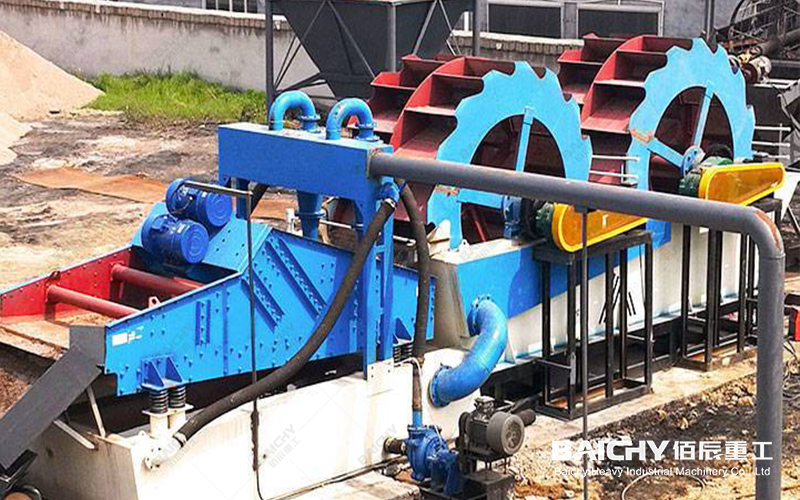
Dewatering Vibrating Screen
Frequently Asked Questions (FAQ)
Q1: Why is the sand output still very wet even though I have a dewatering screen installed after my sand washer?
A1: There are three main reasons: First, the screen mesh may be worn or the aperture size too large, preventing the formation of an effective mud-cake bedding layer; second, the exciter's vibration direction or amplitude is incorrectly adjusted, resulting in insufficient linear "jumping" force and a sand residence time on the screen that is too short; third, the feed rate is severely overloaded, exceeding the dewatering screen's maximum capacity for material bed thickness.
Q2: Which is more cost-effective: polyurethane (PU) screens or stainless steel wire screens?
A2: Polyurethane screens, without a doubt. Although the initial purchase cost of PU screens is slightly higher, their wear resistance is 5–8 times that of stainless steel. More importantly, PU screens possess excellent elasticity, enabling self-cleaning (preventing blinding/clogging) under high-frequency vibration; this ensures more stable dewatering performance for manufactured sand and delivers a very high overall ROI.
Q3: Can the cyclone fine-sand recovery system operate independently? Why must it be paired with a dewatering screen?
A3: Cyclones primarily serve to "concentrate and classify" material; the slurry they discharge still has a water content exceeding 50%, making it unusable in that state. The cyclone underflow (concentrated sand slurry) must be discharged onto a dewatering screen for secondary dewatering. This process utilizes the filter-press effect of coarse sand to trap fine sand and discharge a dry product; the two components are a perfect match—neither can function effectively without the other.
Q4: Is the daily maintenance of the manufactured sand dewatering screen complicated? What are the wear parts?
A4: It is very simple. The dewatering screen features a compact design; routine maintenance involves only periodically checking the lubrication of the two motors (applying specialized lithium-based grease for the vibrators approximately every 200 hours) and inspecting the screen plate mounting bolts for looseness. The primary wear parts are the polyurethane screen plates and the springs, both of which are very easy to replace.