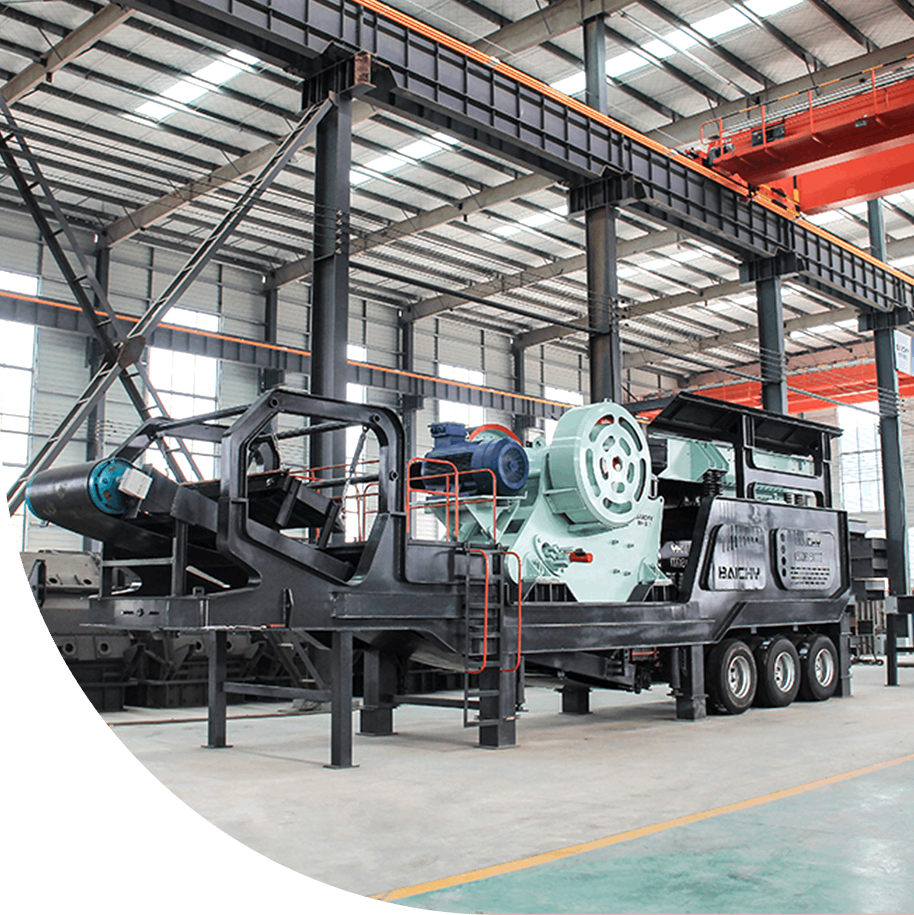


Double-roll crusher crushing rolls
The crushing rolls (roll shells) of a double-roll crusher are the only active components that come into direct contact with the material; their material composition, surface profile, and wear condition directly determine the output particle size, production capacity, and per-ton operating costs. Wear-resistant roll shells—manufactured from high-manganese steel, high-chromium alloys, or via hard-facing composite processes—combined with spring or hydraulic "tramp iron" protection and rapid roll-gap adjustment, can extend service life by 2–3 times and reduce roll-related costs per ton by 30%–50%. For fine crushing and granulation applications involving medium-hard materials such as coal, coke, limestone, slag, glass, and construction waste, selecting the right crushing roll is key to the economic efficiency of the entire production line.
I. Overview of Double-Roll Crusher Crushing Rolls: Working Principle and Structure
1.1 How Crushing Rolls Work
The core of a double-roll crusher consists of two crushing rolls rotating towards each other. Material enters the gap between the rolls from the top inlet and is crushed into granules through a combination of compression and shearing forces—occurring both between the roll surface and the material and between the material particles themselves. The final particle size is precisely controlled by the gap between the rolls (the discharge opening). Unlike hammer or impact crushers that rely on high-speed striking, double-roll crushers utilize low-pressure, slow-speed compression. This results in low over-crushing rates, minimal dust generation, and low energy consumption—defining the fundamental technical characteristics of this equipment.
1.2 Structure and Surface Profiles of Crushing Rolls
Each crushing roll consists of a roll core, a roll shell (wear-resistant lining), and a shaft assembly. They are categorized into three types based on the roll surface profile:
• Smooth Rolls: Feature a smooth surface; suitable for brittle materials like limestone and slag; produce uniform particle shapes with minimal fine powder.
• Toothed Rolls: Feature a toothed surface with strong material-grabbing capability; suitable for friable materials like coal and coke; offer high processing capacity.
• Grooved Rolls: Feature a grooved surface; balance material intake with particle shaping; suitable for medium-hard materials where specific particle size distribution is required.
II. Typical Application Scenarios for Double-Roll Crusher Rolls
• Coal and Coke Industry: Fine crushing and granulation of raw coal, coke, and coal gangue; the rolls feature strong material intake capabilities and produce minimal fines, yielding coal particles suitable for direct boiler co-firing or coking blends.
• Building Materials and Aggregates: Shaping of manufactured sand and aggregates from limestone, dolomite, and river pebbles; ensures stable output gradation, serving as a substitute for natural river sand.
• Metallurgy and Slag Processing: Crushing and recovery of sinter, furnace slag, and steel slag; wear-resistant roll shells withstand highly abrasive conditions, while hydraulic protection systems allow automatic retraction when encountering metal inclusions.
• Chemicals and Refractories: Precision granulation of materials such as glass, corundum, calcium carbide, and gypsum, meeting specific particle size requirements within the 2–30mm range.
• Construction Waste Recycling: Processing of waste concrete and brick rubble into recycled aggregates, aligning with circular economy policy objectives.
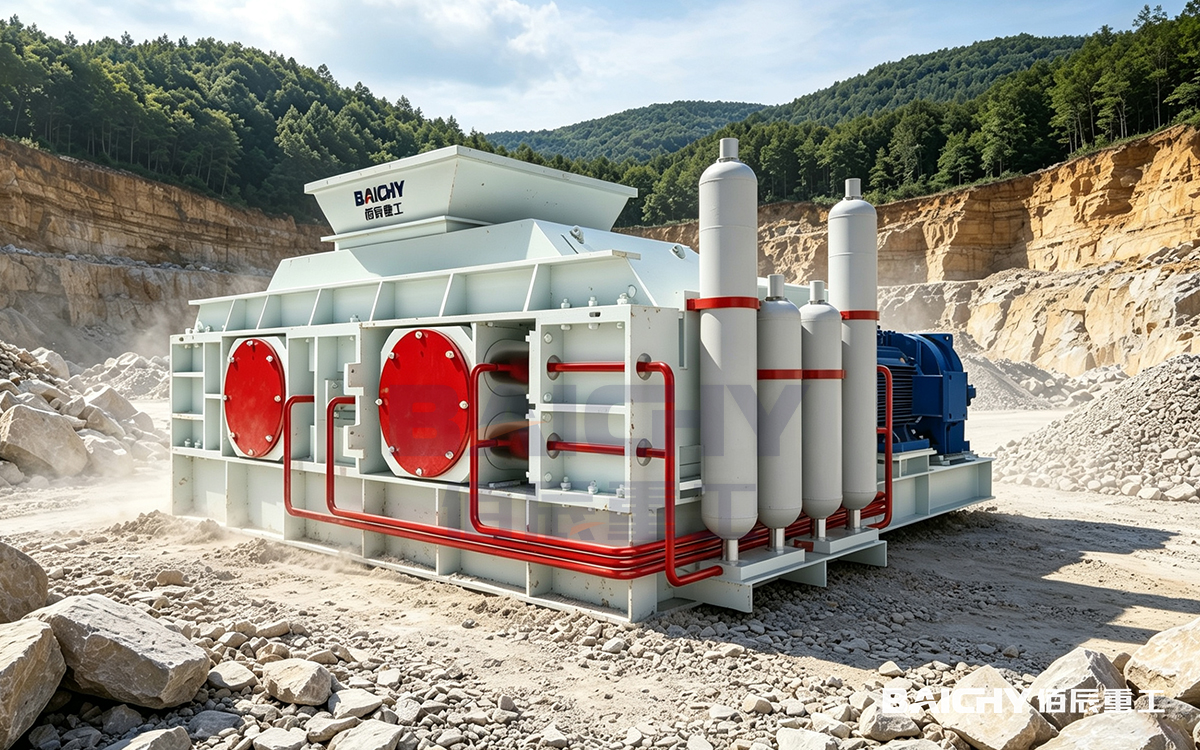
2PG double-roll crusher
III. Core Advantages of Double-Roll Crusher Rolls
1. Three Material Options for Roll Shells, Enabling Service Life Control: High-manganese steel shells offer impact resistance and handle large feed sizes; high-chromium alloy shells provide high hardness, suitable for highly abrasive materials; hard-faced composite shells allow for restoration via alloy welding layers at just 20%–30% of the cost of a new shell. Matching the material to the specific characteristics of the feed is the primary step in managing roll wear costs.
2. Tramp Iron Protection to Prevent Roll Surface Damage: Standard equipment includes spring or hydraulic buffering devices; upon encountering uncrushable objects like metal debris, the rolls automatically retract within 0.2 seconds and reset after the object passes, preventing surface cracking—a critical design feature for maximizing the crusher's service life.
3. Online Roll Gap Adjustment for Multi-Grade Output: Hydraulic or screw-based adjustment mechanisms allow for rapid changes to the gap between the two rolls without stopping the machine; output size can be freely switched between 2mm and 35mm, enabling a single production line to meet the demand for multiple product grades.
4. Low-speed crushing, low energy consumption per ton: The linear speed of the crushing rolls is far lower than that of impact-type equipment, resulting in over 30% lower power consumption for the same production capacity. Combined with a low over-grinding rate, this leads to a significant reduction in overall operating costs.
5. Segmented roll shells, cost-effective maintenance: Worn roll shells can be partially replaced or repaired via hardfacing, eliminating the need to scrap the entire unit. Routine maintenance involves only checking roll surface wear and bearing lubrication, ensuring minimal downtime and low spare parts costs.
IV. Technical Parameters (Typical Configuration for 2PG Series)
| Model | Roll Diameter × Width (mm) | Feed Size (mm) | Discharge Size (mm) | Capacity (t/h) | Motor Power (kW) | Crushing Roll Material |
|---|---|---|---|---|---|---|
| 2PG400×250 | 400×250 | ≤25 | 2–8 | 5–10 | 2×5.5 | High-manganese steel |
| 2PG610×400 | 610×400 | ≤40 | 2–10 | 13–35 | 2×15 | High-manganese steel / High-chromium alloy |
| 2PG750×500 | 750×500 | ≤40 | 2–20 | 20–60 | 2×22 | High-chromium alloy / Hardfaced composite |
| 2PG1000×700 | 1000×700 | ≤50 | 3–30 | 30–90 | 2×37 | Hardfaced composite |
Note: Capacity is calculated based on limestone (bulk density approx. 1.6 t/m³); actual output varies depending on material hardness, moisture content, and roll gap settings. Upon provision of material lithology and target particle size, Baichen Heavy Industry offers customized roll material selection and free trial testing support.
V. Customer Case Studies
Case 1: Crushing roll retrofit at an Indonesian coal washing plant. A coal preparation plant in Indonesia processing high-sulfur raw coal experienced average monthly wear of 40mm on the shells of its original toothed roll crushers, necessitating frequent replacements. After switching to Baichen’s 2PG750×500 hard-faced composite roll shells, the proportion of 0–13mm output stabilized above 92%. The service life of the roll shells extended from 2 months to 7 months, the roll consumption cost per ton dropped by approximately 45%, and annual downtime was reduced by over 60 hours.
Case Study 2: Construction Waste Recycling Line in Vietnam. A construction waste recycling project in Hanoi, Vietnam, processes approximately 400 tons of waste concrete daily, utilizing a 2PG610×400 smooth-roll crusher for secondary fine crushing. The smooth rolls produce material with uniform particle shape and low fines content, allowing the recycled aggregate to be used directly for road base layers. Routine inspections after six months showed even wear; the rolls could continue service after simple hard-facing repair, resulting in maintenance costs 30% lower than expected.
Note: The above are summaries of typical operating cases; specific parameters vary by project. Please contact us for detailed technical proposals tailored to specific rock types and production capacities.
VI. Related Recommended Equipment
Double-Roll Crusher (2PG Series): Complete unit including crushing rolls, drive system, and hydraulic protection system; ready for immediate use.
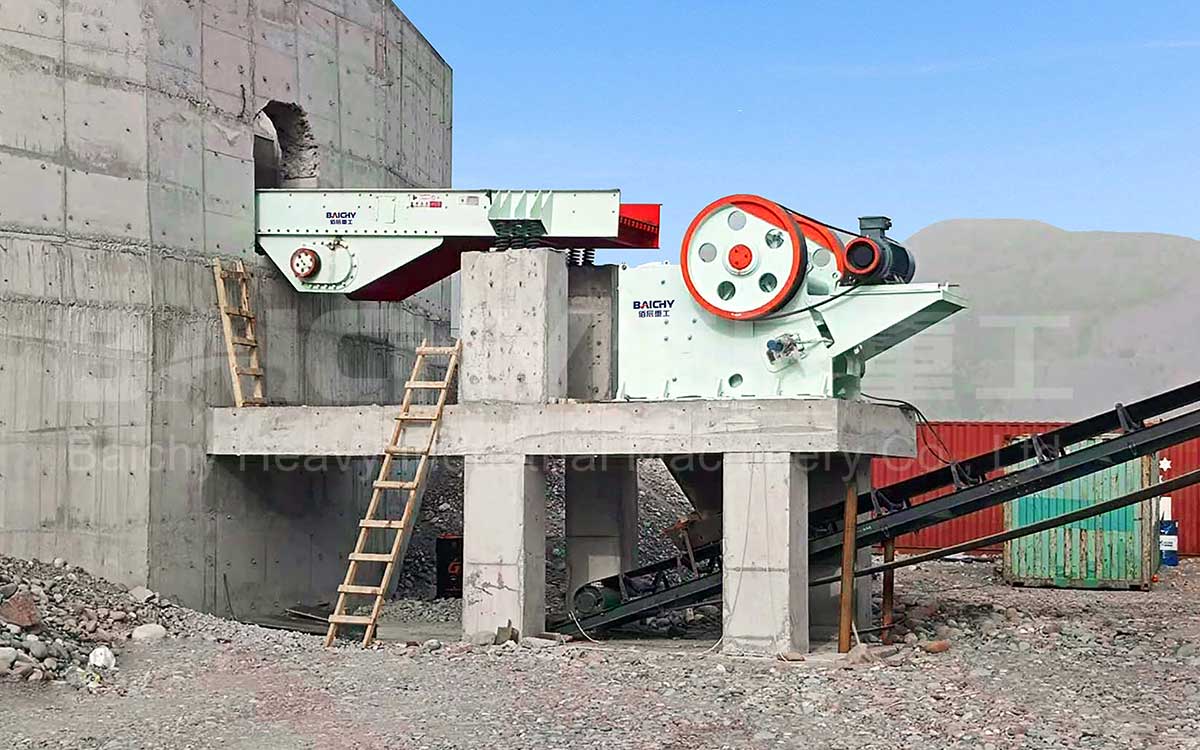
Jaw Crusher (PE/PEX/C Series): Primary coarse crushing to reduce raw material to the feed size required for the double-roll crusher.
Circular Vibrating Screen (YK Series): Closed-circuit screening to control product gradation and timely recirculate oversized material.
Vibrating Feeder (ZSW Series): Ensures uniform feeding and stable, full-load operation of the crushing rolls.
Belt Conveyor: Connects processing stages to form a "feeding-crushing-screening" closed-loop production line.
VII. FAQ (Frequently Asked Questions)
Q1: What is the best material for double-roll crusher rolls?
A: There is no single "best" material, only the "most suitable" one. High-manganese steel offers impact resistance, making it suitable for large lumps; high-chromium alloy offers high hardness, ideal for abrasive slag and river pebbles; hard-faced composite roll shells offer the best cost-performance ratio and are suitable for stable, long-term operations. Baichen Heavy Industry can recommend the optimal material combination based on the material's Mohs hardness, moisture content, and target particle size.
Q2: How often do the crushing rolls need to be replaced? Is the replacement cost high?
A: It depends on the material's abrasiveness and the roll surface design. Taking limestone as an example, the typical service life of smooth rolls is 6–12 months, whereas for abrasive materials (such as river pebbles or slag), it is approximately 3–6 months. The roll shells feature a modular design, allowing for partial replacement or repair via hardfacing; repair costs are only 20%–30% of the price of a new roll, making long-term maintenance expenses far lower than replacing a full set of hammer heads.
Q3: Will the crushing rolls be damaged if they encounter iron objects?
A: No. The double-roll crusher comes standard with a spring or hydraulic "tramp iron" protection system; when metal debris is encountered, the crushing rolls automatically retract, allow the object to pass within 0.2 seconds, and then reset, effectively protecting the roll surfaces. We recommend installing an iron remover at the feed inlet to further reduce the likelihood of uncrushable objects entering the machine and to extend the service life of the roll shells.
Baichy Heavy Industry
Baichy Heavy Industry is a high-tech mining equipment company integrating R&D, manufacturing, sales, and after-sales service. Focusing on crushing, grinding, and mineral processing equipment, we provide professional solutions to our customers. We are ISO9001:2015 、certified, and our products include mobile crushing palnts, crawler crushing plant, construction waste crushing plants, jaw crushers, sand making machines, cone crushers, fine crushers, grinding mills, ball mills, etc., all with reliable performance to meet diverse project needs.
Baichy Heavy Industry – Your Trusted Partner
To ensure optimal performance of your equipment, Baichy Heavy Industry offers:
- Professional on-site installation guidance
- Comprehensive operator training
- 24/7 technical support & maintenance services
Our complete after-sales service system guarantees long-term, stable operation of your machinery with minimal downtime.
Protect Your Rights – Only Use Official Channels
To avoid scams and ensure authentic support, contact us exclusively through:
• Official Website: www.baichychina.com
• WhatsApp: +8615093222637
• Email: [email protected]
Your satisfaction is our priority – expect prompt, professional service every time.
(Note: Beware of unauthorized third parties claiming to represent Baichy. Always verify through official contacts.)