
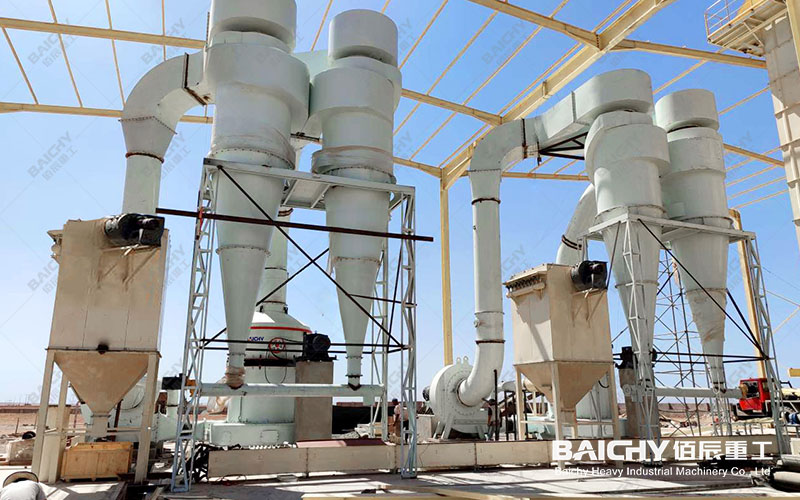
Calcium Carbonate Grinding Plant
Calcium carbonate, as one of the most widely distributed and utilized non-metallic minerals in nature, has powder products that serve as the industrial staple for industries such as plastics, papermaking, coatings, rubber, and building materials. From raw marble and limestone to the final fine powders of varying fineness and purity, the calcium carbonate grinding mill is the heart of the entire deep processing process, and its selection directly determines product quality, production capacity, and economic benefits.
As a manufacturer with 20 years of experience in mining crushing and grinding equipment manufacturing, we have witnessed the entire process of the calcium carbonate industry's development from rough processing to refined and functional development. Today, we will combine our years of industry experience to systematically review the core equipment for calcium carbonate grinding, helping you make informed selection decisions.
Part One: Understanding the Goal of Calcium Carbonate Grinding – Finished Product Fineness and Applications
Before selecting equipment, it is essential to clarify the production goals. The value of calcium carbonate powder is closely related to its fineness (mesh size) and particle morphology:
• 200-325 mesh: Used for feed additives, building materials, desulfurization, etc., with relatively loose fineness requirements.
• 325-800 mesh: This is the most common fineness range, widely used in plastics, rubber, coatings (primers, putty powder), papermaking (fillers), and other industries.
• 800-1500 mesh: Belongs to the fine powder range, used in high-end plastics, papermaking (coating grade), sealants, adhesives, etc., significantly improving product performance.
• 1500-2500 mesh and above: Reaches the ultra-fine powder level, used in high-end coatings, inks, PVC pipes, medicine, cosmetics, and other fields, with extremely high added value.
The goal determines the path; different fineness requirements correspond to completely different optimal grinding equipment solutions.
Part Two: In-depth Analysis of Mainstream Calcium Carbonate Grinding Mill Types
There are many types of equipment on the market; the following are some time-tested and technologically mature core equipment:
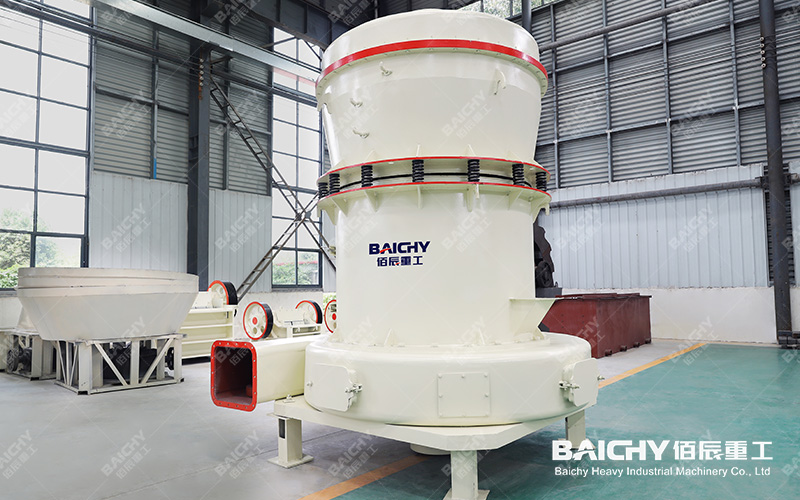
Raymond Mill (Suspension Roller Mill)
1. Raymond Mill (Suspension Roller Mill)
• Working principle: The material is crushed and ground by the rotation and revolution of the grinding rollers within the grinding ring. 1. Raymond Mill
• Built-in classifier for simultaneous grinding and classification.
• Applicable fineness: 80-400 mesh, a classic and economical choice for producing powders around 325 mesh.
• Advantages: Mature technology, stable operation, simple operation, relatively low investment cost, and high single-machine capacity.
• Applicable scenarios: Suitable for medium and large-scale mines and powder plants, producing building mortar powder, putty powder, ordinary plastic fillers, etc.
High-Pressure Suspension Roller Mill/European-style Mill
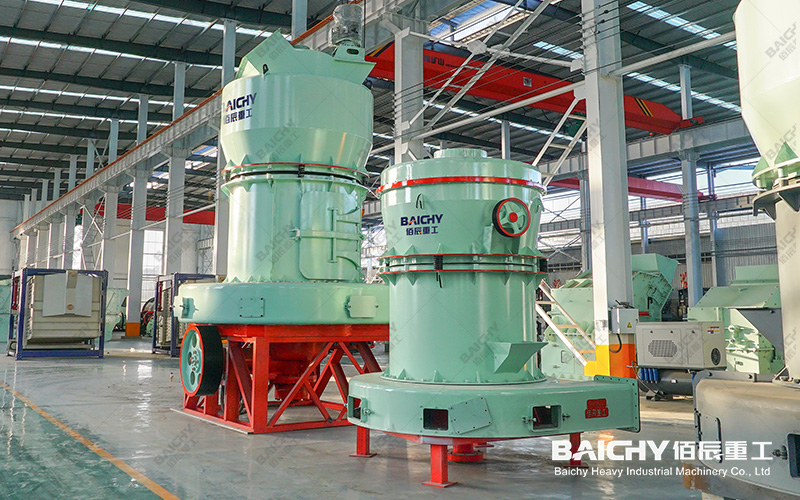
2. High-Pressure Suspension Roller Mill/European-style Mill
• Working principle: An upgraded and enhanced version of the Raymond mill, using conical grinding rollers and curved grinding rings, with a pressure spring or hydraulic system for greater grinding force.
• Applicable fineness: 80-600 mesh, with significant advantages in stable production of 400-600 mesh powders.
• Advantages: Compared with traditional Raymond mills, it has higher output and lower energy consumption under the same power, a higher fineness limit, and longer wear part life.
• Applicable scenarios: High-quality powder production lines with higher requirements for fineness and output in the 325-600 mesh range.
Vertical Grinding Mill (Vertical Mill)
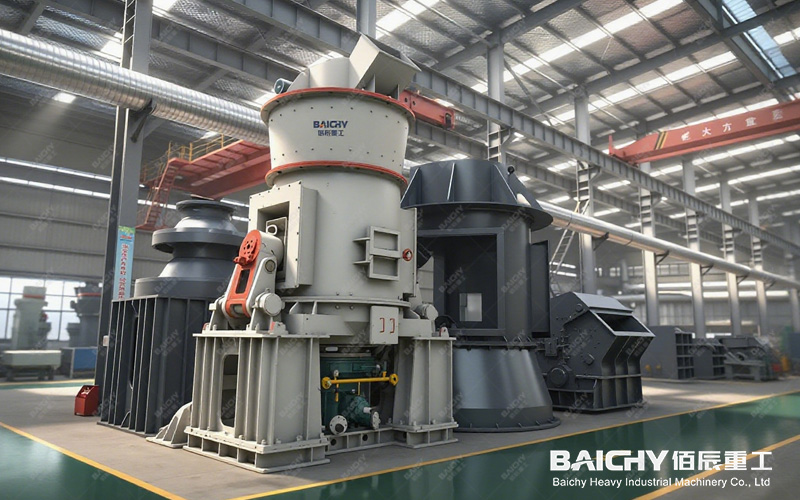
3. Vertical Grinding Mill (Vertical Mill)
• Working principle: The material falls onto the center of the rotating grinding disc, and under the action of centrifugal force, it spreads to the periphery and is crushed by the grinding rollers. Hot air is injected from the periphery, allowing for simultaneous drying and grinding.
• Applicable fineness: 150-2500 mesh, the main equipment for producing fine powders of 800-1500 mesh.
• Advantages: Integrates crushing, grinding, drying, classification, and conveying; high system integration; 20-30% lower power consumption than Raymond mills, significant energy saving effect; small footprint and low noise.
• Applicable scenarios: Large and medium-sized modern calcium carbonate deep processing projects, especially suitable for situations requiring the use of waste heat or raw materials containing trace amounts of moisture.
Ball Mill + Classifier System
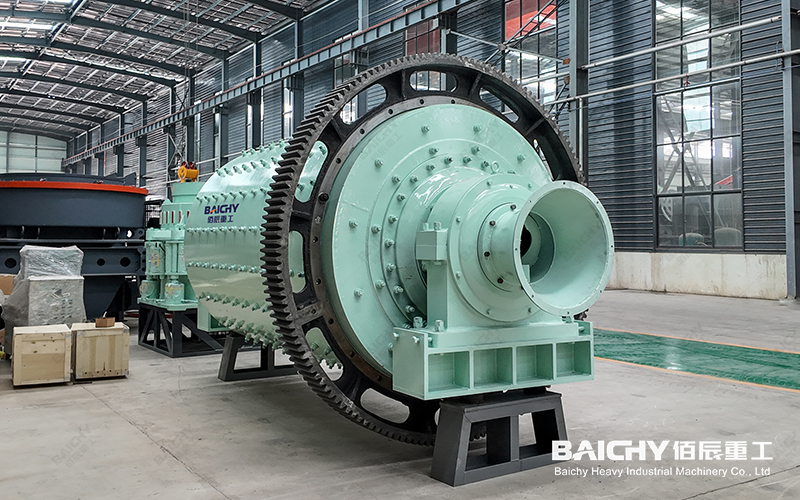
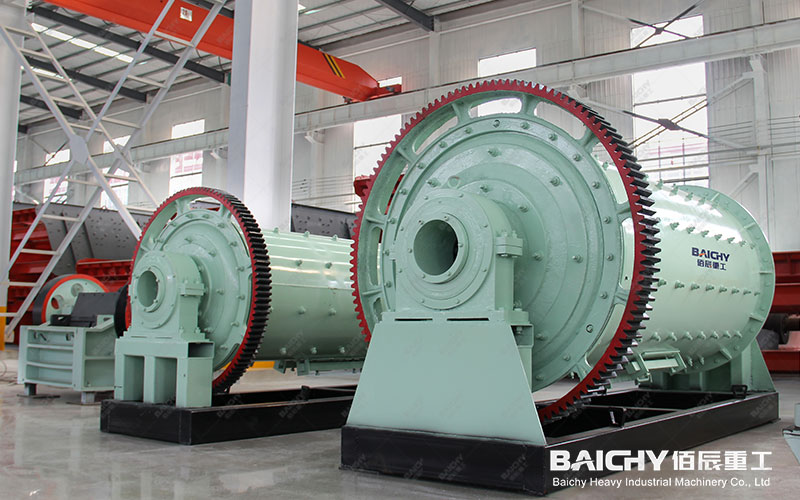
4. Ball Mill + Classifier System
• Working principle: The ball mill is responsible for grinding, and the external dynamic or static classifier is responsible for separating qualified fine powder, with coarse powder returned for further grinding, forming a closed-loop cycle. ◦ Applicable Fineness: Extremely flexible, adjustable from 200 mesh to 2500 mesh or even finer.
◦ Advantages: Concentrated particle size distribution, high sphericity, and high purity (no metal contamination), especially suitable for the production of high-value-added ultra-fine, ultra-white calcium carbonate.
◦ Applicable Scenarios: Production of high-end functional calcium carbonate, food-grade, and pharmaceutical-grade calcium carbonate.
Part Three: 20 Years of Experience Condensed – Key Selection Guidelines
Faced with these equipment options, how do you choose? Please consider the following four questions:
1. What are your core requirements? Are you pursuing maximum single-unit capacity (Raymond mill/vertical mill), or the ultimate fineness and purity of the final product (ball mill classification system), or seeking the lowest unit energy consumption and optimal overall cost (vertical mill)?
2. What are the characteristics of your raw materials? Feed particle size, moisture content, and Mohs hardness (calcite or dolomite) are the basis for selecting equipment models and wear-resistant materials.
3. What is your investment and operating budget? A comprehensive comparison of initial equipment investment, energy consumption, wear part consumption, labor, and maintenance complexity is necessary. Vertical mills have high initial investment but low operating costs, while Raymond mills are the opposite.
4. Do you have any future upgrade plans? If you plan to develop ultra-fine powders in the future, choosing a system with strong scalability (such as a vertical mill with an upgradeable classifier or a ball mill system with reserved interfaces) is wiser.
Our Recommendations:
• For producing 325 mesh ordinary powder: Raymond mill is the first choice, offering the best cost-effectiveness.
• For producing 400-800 mesh high-quality powder: High-pressure suspension roller mill or small and medium-sized vertical mill are ideal choices.
• For producing 800-2500 mesh ultra-fine powder: Vertical mill or ball mill classification system is the standard configuration; the former is more energy-efficient, and the latter offers superior product morphology.
• For producing high-value-added functional powders: A ball mill or wet grinding system with multi-stage classification protection must be used to ensure no contamination and precise classification. Trust in Expertise, Collaborate for Mutual Success
For twenty years, we have not only manufactured equipment but also dedicated ourselves to providing every calcium carbonate processing enterprise with a one-stop solution, from on-site surveys and laboratory testing to process design, equipment selection, installation and commissioning, and technical training. We understand that a suitable grinding mill is the cornerstone of a stable, efficient, and profitable production line.
If you are planning a new calcium carbonate powder project or wish to upgrade your existing production line, please feel free to contact us. Let us leverage our twenty years of professional experience to provide you with customized equipment solutions and technical support, and together explore the unlimited possibilities of calcium carbonate applications.
Further reading:
How To Choose A Suitable Industrial Grinding Mill?
Which Is Better Cement Vertical Roller Mill Or Ball Mill?
What Are the Differences between Dry and Wet Type Ball Mill?