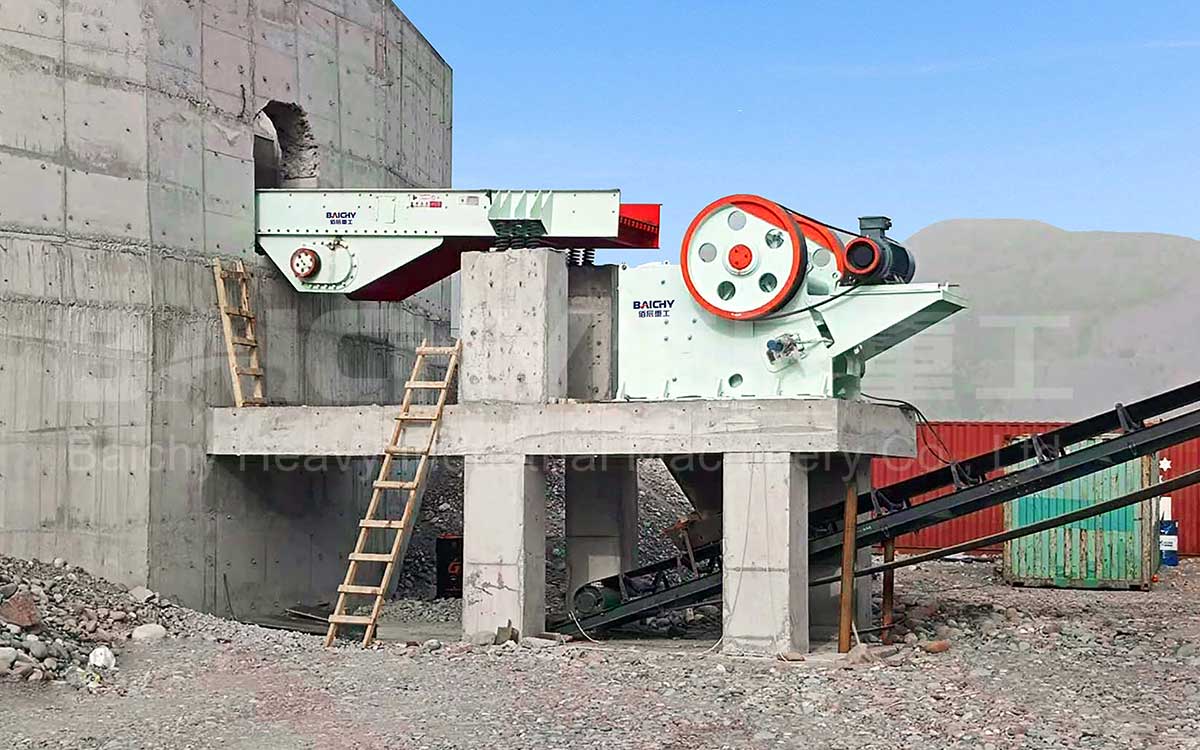
PE Jaw Crusher
The jaw crusher is the most widely used primary crushing equipment globally for mining and aggregate production lines. Offering a crushing ratio of 4–6:1 and capable of processing hard rock with a compressive strength of up to 320 MPa, it directly determines the maximum production capacity of the entire line. As a professional manufacturer of mining crushing, ore grinding, and mineral processing equipment, we supply stationary and mobile crushing solutions to over 150 countries, centered around our PE/PEX series jaw crushers. This article guides you through the selection process by covering four key aspects: an overview, application scenarios, equipment advantages, and real-world case studies.
I. Overview: Why the Jaw Crusher is the Top Choice for Primary Crushing
The jaw crusher utilizes the squeezing action between two jaw plates (a movable jaw and a fixed jaw) to break large ore chunks into sizes suitable for secondary crushing or grinding. It holds an irreplaceable position for three reasons:
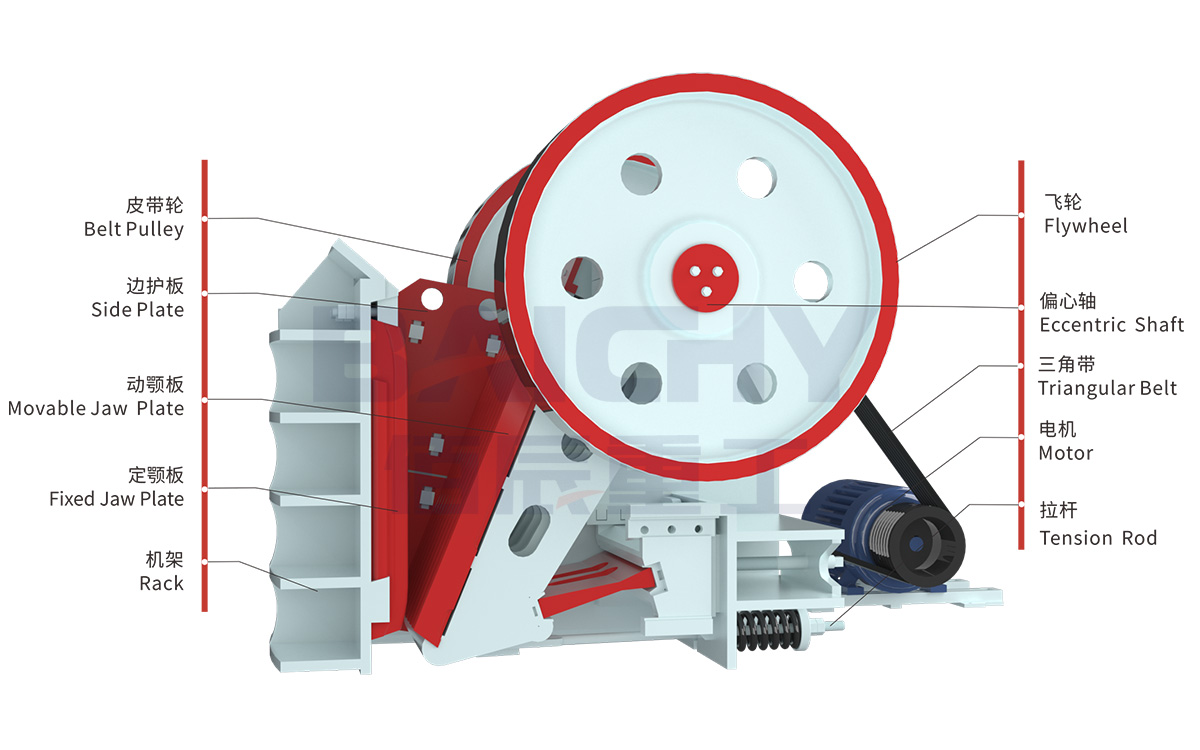
Structural-diagram-of-the-PE-series-jaw-crusher
• Large feed size: It accepts feed sizes exceeding 750 mm, allowing raw ore to be fed directly without secondary blasting, thereby reducing mining and loading costs;
• Simple and reliable structure: It lacks complex moving parts, resulting in a low failure rate and superior tolerance for raw ore containing impurities like soil or tramp iron compared to impact crushers and cone crushers;
• Low operating costs: Electricity consumption per ton and jaw plate wear in the primary crushing stage are controllable, resulting in the lowest Total Cost of Ownership (TCO) among similar primary crushing equipment.
Selecting a jaw crusher essentially comes down to three metrics: capacity compatibility, wear-part costs, and after-sales responsiveness. The parameter tables and case studies below focus on these three factors.
II. Key Application Scenarios
2.1 Primary Crushing of Raw Ore in Metal Mines
In the crushing and grinding circuits of iron, manganese, copper, and gold processing plants, the jaw crusher serves as the first stage: raw ore is crushed to 150–250 mm by the jaw crusher before proceeding to a cone crusher, impact crusher, or directly into a ball mill. Capable of processing ores with compressive strengths up to 320 MPa, it is the standard primary crushing equipment for mineral processing operations. 2.2 Sand, Gravel Aggregates, and Quarries
Aggregate production lines for expressways, railways, and hydropower stations typically employ a three-stage process: "jaw crusher + impact/cone crusher + sand-making machine." The jaw crusher handles over 70% of the primary crushing load, and its feed opening size directly determines the production line's maximum hourly output—for instance, the PE-750×1060 model corresponds to a 200 t/h class aggregate line.
2.3 Mobile Crushing Station Units
Mounting a jaw crusher onto a wheeled or tracked mobile station enables "production right at the quarry face." This setup is ideal for decentralized operations—such as infrastructure projects requiring frequent site relocation, river stone collection, and construction waste recycling—while eliminating the costs associated with pouring fixed foundations and obtaining project permits.
2.4 Construction Waste and Tailings Recycling
When coarsely crushing and reusing concrete blocks or old pavement materials, the feed often contains foreign objects like rebar. Jaw crushers offer superior tolerance for such impurities compared to impact crushers, making them the most reliable choice for the primary crushing stage in recycled aggregate production lines.
III. Core Specifications: PE/PEX Series Jaw Crushers
The table below lists the specifications for our flagship PE series jaw crushers and PEX fine-crushing models (capacities are rated based on medium-hard material with a density of approximately 1.6 t/m³):
| Model | Feed Opening Size (mm) | Max. Feed Size (mm) | Discharge Opening Range (mm) | Processing Capacity (t/h) | Motor Power (kW) |
|---|---|---|---|---|---|
| PE-400×600 | 400×600 | 340 | 40–100 | 16–65 | 30 |
| PE-500×750 | 500×750 | 425 | 50–100 | 45–100 | 55 |
| PE-600×900 | 600×900 | 500 | 65–160 | 60–180 | 75 |
| PE-750×1060 | 750×1060 | 630 | 80–140 | 110–320 | 90–110 |
| PE-900×1200 | 900×1200 | 750 | 95–165 | 220–450 | 110–132 |
| PEX-250×1200 | 250×1200 | 210 | 25–60 | 15–50 | 30 |
* Processing capacity is rated with medium-hard material (bulk density ≈ 1.6 t/m³); actual output for hard rock (granite, basalt) is typically 75%–85% of rated value.
Specification Interpretation: When crushing hard rock such as granite or basalt, actual capacity is approximately 75%–85% of the rated value; a 20% margin should be factored in during model selection. The 400×600 feed opening model suits small-to-medium production lines (40–80 t/h), while models sized 750×1060 and above are designed for large-scale projects with hourly outputs exceeding 200 tons. The discharge opening supports hydraulic wedge adjustment (optional), allowing for production specification changes in just minutes and directly reducing downtime losses. Motors can be customized to local grid standards (380V/50Hz, 400V/50Hz, 460V/60Hz), making them suitable for 60Hz markets such as Latin America and the Middle East.
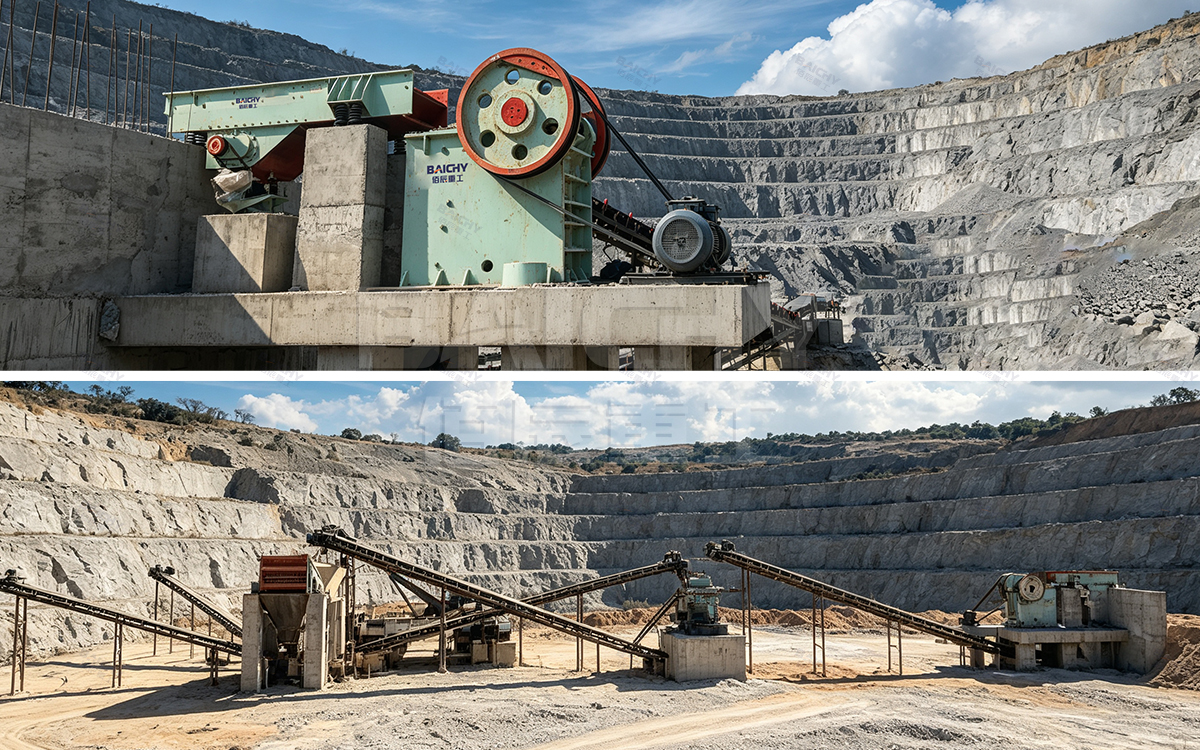
100–150 TPH Limestone Crushing Line in Zimbabwe
IV. Core Advantages of the Jaw Crusher
4.1 Deep-cavity structure with a 4–6:1 crushing ratio
The deep V-shaped crushing cavity, combined with an increased eccentric throw design, enables large rocks to be crushed in a single pass. This eliminates the need for secondary blasting in most mining operations, reducing extraction and loading costs by approximately 10%–15%.
4.2 High-manganese steel jaw plates with doubled service life
The jaw plates are made of Mn13Cr2 high-manganese steel, offering a service life of 6–12 months in hard-rock applications. The symmetrical design allows the plates to be flipped end-for-end after wear, effectively doubling the lifespan of a single set; annual consumable costs account for only 3%–5% of the total equipment price.
4.3 Hydraulic discharge opening adjustment for rapid production changes
Equipped with a standard hydraulic wedge adjustment mechanism (optional), the machine allows for changes in product specifications without manual downtime adjustments, cutting setup time by 30%–40%.
4.4 Controllable TCO and short payback period
Taking the PE-600×900 as an example: the 75kW motor consumes approximately 60 kWh at full load, with an energy consumption of about 0.42 kWh per ton. The cost per ton for the primary crushing stage is 15%–20% lower than alternative solutions with similar capacity, and most projects recoup their investment within 12–18 months.
V. Real-world Case Studies
Case Study 1: PE-500×750 Granite Crushing Line in Mexico
The customer previously used an older model jaw crusher that achieved only 60% of its design capacity. After switching to the PE-500×750 model—configured with a 460V/60Hz electrical system—hourly output stabilized at 90 tons, jaw plate service life reached 8 months, and energy consumption per ton dropped by 18%. The equipment investment was recovered within 12 months.
Case Study 2: Rwanda PE-600×900 + PF1214 Granite Processing Line
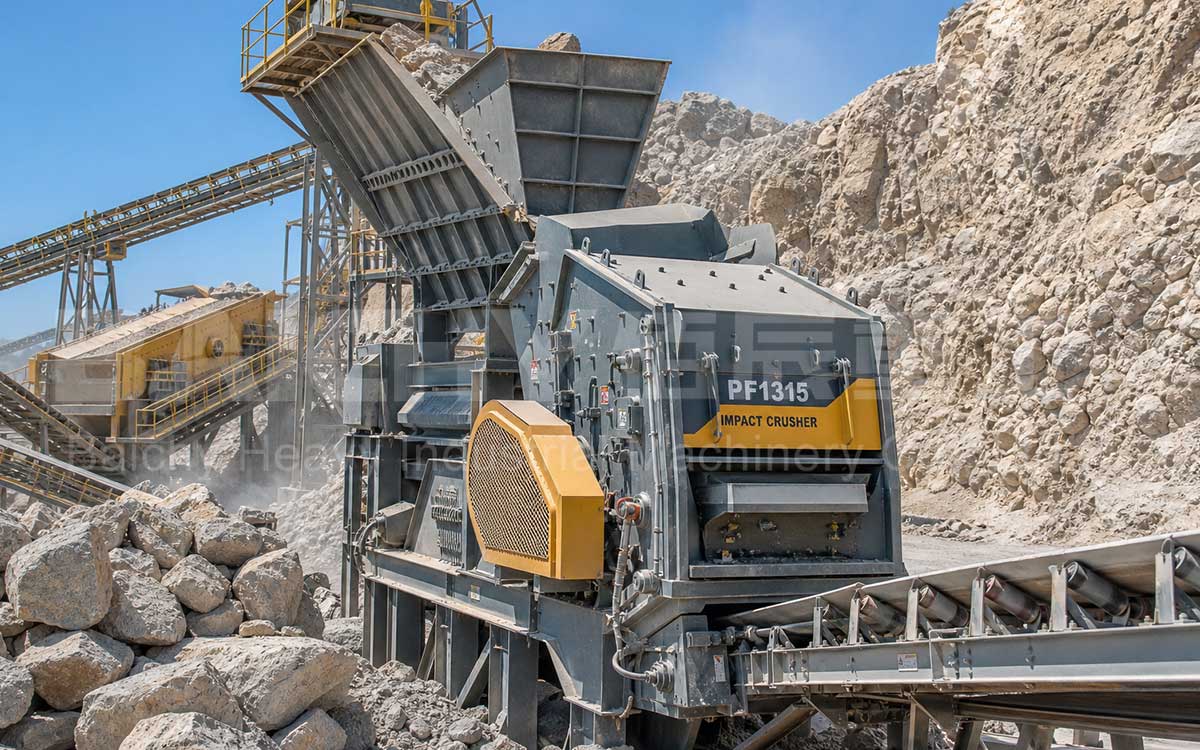
This line utilizes a two-stage process—PE-600×900 Jaw Crusher + PF1214 Impact Crusher—delivering an hourly output of 100–150 tons. The finished aggregate meets local road engineering gradation requirements. Installation and commissioning were completed within 45 days of equipment arrival, and capacity utilization reached 95% within six months of operation.
Case Study 3: Chile Mobile Jaw Crushing Station
For a copper mine waste rock recycling project, a wheeled mobile station equipped with a jaw crusher was selected. It was relocated three times to keep pace with the advancing mining face, eliminating the need for fixed foundation construction and resulting in a 12% lower comprehensive cost per ton compared to a stationary line.
VI. Recommended Related Equipment
Jaw crushers rarely operate in isolation; recommended supporting equipment based on process stages includes:
| Process Stage | Recommended Equipment | Application Scenario |
|---|---|---|
| Secondary Crushing | CS/HP Series Cone Crusher | Hard rock aggregate & metal ore secondary crushing; produces good particle shape |
| Secondary Crushing | PF Series Impact Crusher | Medium-soft rock & limestone aggregate; lower cost |
| Sand Making | VSI Series Sand Maker | Manufactured sand shaping; produces <5mm fines |
| Feeding | ZSW Vibrating Feeder | Uniform feeding; extends jaw crusher jaw plate lifespan |
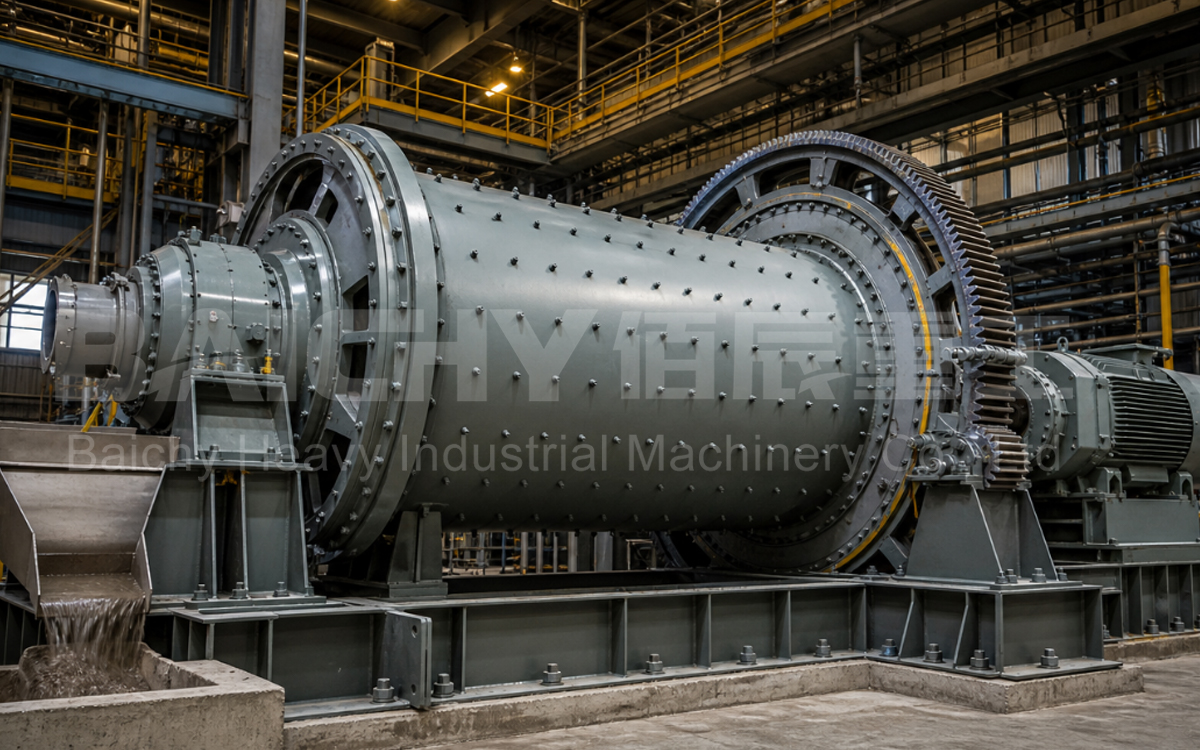
| Grinding | Ball Mill (Overflow/Wet Type) | Secondary grinding in gold & copper ore processing plants |
| Mobile Solution | YDPZ Wheeled/Tracked Mobile Station | Frequent relocation & dispersed operation scenarios |
For complete production lines, please refer to: *Quarry Medium-Fine Crushing Equipment Selection Guide* and *Gold Mine CIL Full-Process Equipment Configuration*.
VII. FAQ
Q1: How do I choose between a jaw crusher and an impact crusher?
Jaw crushers are used for primary crushing (coarse crushing); they handle large feed sizes, offer high reduction ratios, and are highly wear-resistant. Impact crushers are used for secondary crushing; they produce excellent particle shapes but have lower wear resistance. For hard rock, a "Jaw Crusher + Cone Crusher" combination is recommended; for medium-soft rock, a "Jaw Crusher + Impact Crusher" setup can be used to reduce costs.
Q2: What is the difference between the actual capacity and the nominal capacity of a jaw crusher?
Nominal capacity is rated based on medium-hard material (density approx. 1.6 t/m³). When crushing hard rock such as granite or basalt, actual capacity is approximately 75%–85% of the nominal rating; equipment selection should include a 20% margin over the target hourly output to prevent bottlenecks in the production line.
Q3: How often do the jaw plates need replacing? Is the cost high?
Under hard-rock operating conditions, the service life of Mn13Cr2 high-manganese steel jaw plates is approximately 6–12 months; this can be doubled by flipping the plates (swapping the top and bottom ends). Annual jaw plate replacement costs account for roughly 3%–5% of the total equipment price. Sourcing directly from a manufacturer with in-house casting capabilities can significantly reduce spare part procurement costs and lead times.
Baichy Heavy Industry
Baichy Heavy Industry is a high-tech mining equipment company integrating R&D, manufacturing, sales, and after-sales service. Focusing on crushing, grinding, and mineral processing equipment, we provide professional solutions to our customers. We are ISO9001:2015 、certified, and our products include mobile crushing palnts, crawler crushing plant, construction waste crushing plants, jaw crushers, sand making machines, cone crushers, fine crushers, grinding mills, ball mills, etc., all with reliable performance to meet diverse project needs.
Baichy Heavy Industry – Your Trusted Partner
To ensure optimal performance of your equipment, Baichy Heavy Industry offers:
- Professional on-site installation guidance
- Comprehensive operator training
- 24/7 technical support & maintenance services
Our complete after-sales service system guarantees long-term, stable operation of your machinery with minimal downtime.
Protect Your Rights – Only Use Official Channels
To avoid scams and ensure authentic support, contact us exclusively through:
• Official Website: www.baichychina.com
• WhatsApp: +8615093222637
• Email: [email protected]
Your satisfaction is our priority – expect prompt, professional service every time.
(Note: Beware of unauthorized third parties claiming to represent Baichy. Always verify through official contacts.)