
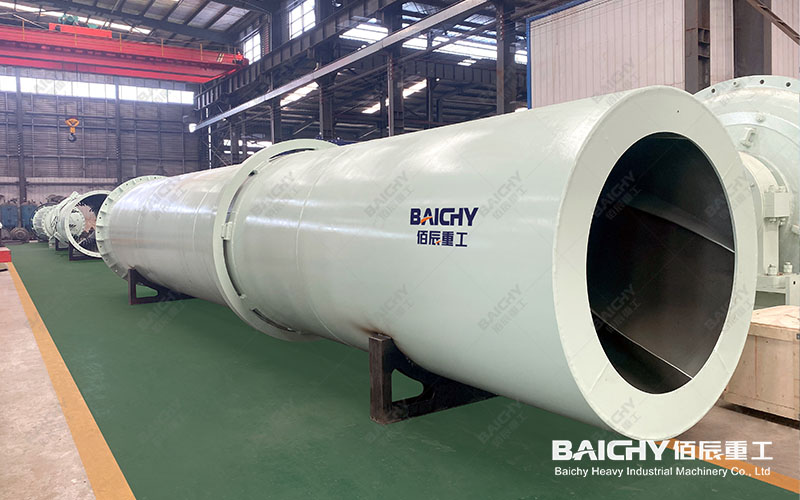
Single-Drum Rotary Dryer
Are you still struggling to process large volumes of wet materials? The Single-Drum Rotary Dryer is the ideal industrial solution for resolving common pain points such as inefficient processing, high energy consumption, and excessive space requirements. Does your production line face immense pressure every day, leaving you overwhelmed by mountains of accumulated wet materials?
• Inefficient drying performance, resulting in production capacity that consistently fails to meet demand;
• Exorbitant energy costs that continuously erode your profit margins;
• Uneven drying results, leading to significant fluctuations in product quality;
• Excessive footprint requirements, leaving your factory floor space constantly stretched thin.
If you are currently facing any of the challenges listed above, it is time to discover this powerful piece of industrial drying equipment.
I. What is a Single-Drum Rotary Dryer?
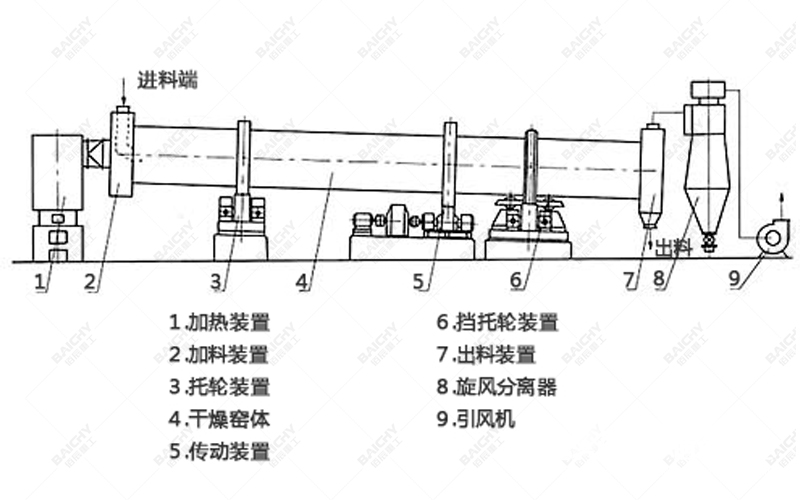
Structural Diagram of a Single-Drum Dryer
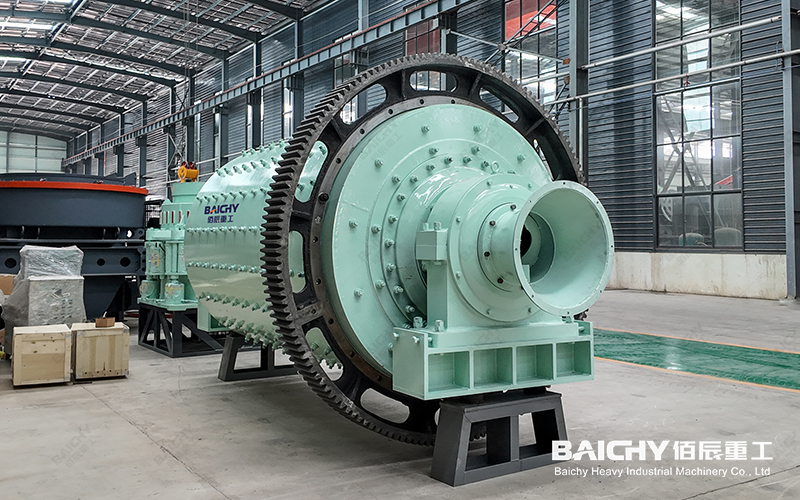
The Single-Drum Rotary Dryer is a highly efficient industrial machine specifically designed for large-scale, continuous drying operations. Its operating principle is as follows: wet materials enter through the feed end; as the cylindrical drum rotates slowly, gravity causes the materials to move toward the discharge end while simultaneously undergoing thorough heat exchange with a stream of high-temperature hot air. The drying process is thus completed, and the finished materials are discharged from the opposite end—a seamless, continuous operation requiring no repetitive manual intervention.
II. How Can It Revolutionize Your Production Line?
The core value of the Single-Drum Rotary Dryer lies in its high-efficiency processing capabilities and exceptional energy utilization. Here are the five key advantages this equipment offers within an industrial production environment:
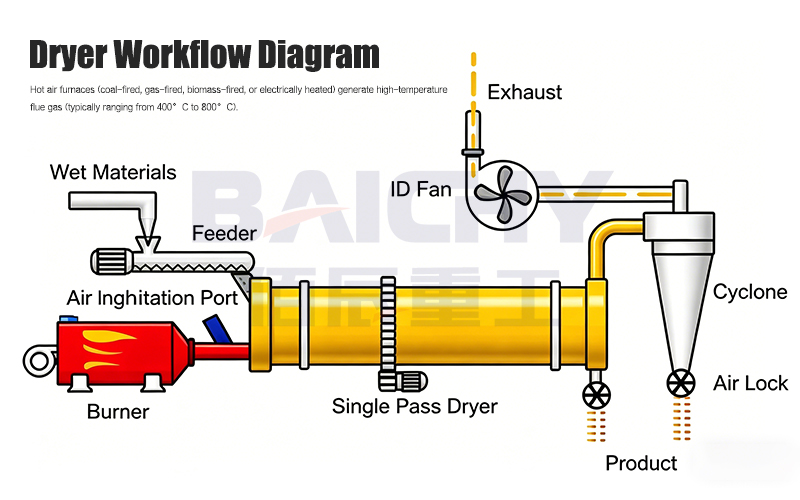
Dryer Workflow Diagram
1. Astonishing Processing Capacity: Enabling True Scaled Operations
The Single-Drum Rotary Dryer is capable of meeting the demands of large-scale, continuous production, handling throughputs ranging from several tons to tens of tons per hour. Whether processing slag, chemical raw materials, or biomass pellets, this equipment handles it all with ease. Compared to traditional batch-drying methods, it eliminates lengthy waiting periods, enabling a true assembly-line workflow.
2. Exceptional Energy Efficiency: Significantly Reducing Operating Costs
Its unique heat-exchange design and thermal insulation system reduce energy consumption by up to 30% compared to conventional methods. Every unit of thermal energy is utilized to its fullest potential; over the long term, these cost-saving effects translate into substantial economic benefits.
3. Uniform and Consistent Drying Results: Ensuring Product Quality
The continuous tumbling action of the materials inside the rotating drum ensures that the heat exchange process is thorough and comprehensive. This dynamic drying mode ensures that every single particle of material achieves the same moisture content standard, fundamentally resolving product quality fluctuations caused by uneven drying.
4. Exceptional Adaptability: One Machine, Multiple Applications
By adjusting the drum rotation speed, inclination angle, and temperature, a single unit can accommodate a wide variety of materials. Adjusting the production line no longer necessitates equipment replacement, thereby significantly boosting the Return on Investment (ROI) for equipment capital.
5. Robust and Durable Structural Design: Minimizing Downtime
Industrial-grade manufacturing standards guarantee the equipment's stability during continuous 24-hour operation. This translates to reduced maintenance frequency and an extended service life.
III. Field-Proven Results: A Case Study from a Fertilizer Manufacturer
Following the introduction of the single-drum rotary dryer, this fertilizer manufacturer achieved breakthrough improvements in both production efficiency and cost control. The specific performance metrics are as follows:
| Performance Indicator | Pre-Upgrade Status | Post-Upgrade Results | Improvement Margin |
| Daily Processing Capacity | 50 tons | 80 tons | +60% |
| Drying Uniformity Deviation Rate | 15% | < 3% | Reduced by 80% |
| Monthly Energy Costs | Baseline Value | Significantly Reduced | Savings of approx. 25% |
| Investment Payback Period | / | / | < 12 months |
Note: The data above is based on actual project feedback and complies with ISO industrial energy efficiency assessment standards.
IV. How to Scientifically Select the Right Model?
Selecting a dryer requires a customized match based on specific material characteristics and production objectives. The following are four key factors that must be carefully considered during the selection process:
1. Material Parameters: Specific values for initial moisture content and target moisture content;
2. Capacity Requirements: The required processing throughput per hour (t/h);
3. Material Characteristics: Is the material heat-sensitive (prone to degradation at high temperatures)?
4. Heat Source Conditions: The types of available fuel (natural gas, steam, coal, etc.).
V. FAQ: Common Questions About Single-Drum Rotary Dryers
Q1: What types of materials are best suited for processing with a single-drum rotary dryer?
A: This equipment is widely utilized across various sectors, including mining (slag, concentrates), chemicals (fertilizers, salts), building materials (river sand, clay), and agriculture (spent grains, wood chips). It is particularly well-suited for processing wet materials that possess good fluidity and exist in granular or small-lump forms.
Q2: What are the advantages of a single-drum rotary dryer compared to an airflow dryer?
A: A single-drum rotary dryer is better suited for processing materials with high moisture content and larger particle sizes. Compared to airflow drying, it results in a lower rate of material breakage and operates more smoothly, making it ideal for long-duration, continuous operation.
Q3: How much floor space is required for the installation of this equipment?
A: Although the dryer drum itself is quite long, the system can be configured in either a linear or a folded layout (connecting the two sections via an elevator) to accommodate the specific layout of your facility. The exact dimensions depend on the selected model; typically, we provide detailed foundation drawings to assist with planning.
Q4: How does the equipment perform in terms of environmental protection? How is dust handled?
A: Modern single-drum dryers are typically equipped with high-efficiency cyclone separators and bag filters. These systems effectively control dust emissions in the exhaust gas, ensuring full compliance with national environmental standards (GB 16297-1996).
Q5: Is the equipment noisy during operation?
A: The primary sources of noise are the electric motor and the speed reducer. By installing sound-insulating enclosures and optimizing the transmission system, noise levels can be kept below 85 dB, thereby meeting occupational health and safety standards for industrial environments.
High-quality equipment is more than just a tool; it is a tangible reflection of a company's competitiveness. In an increasingly fierce market environment, boosting production efficiency and reducing operating costs are no longer optional "bonus questions"—they have become mandatory "must-answer questions" for every enterprise.
The single-drum rotary dryer may be the very solution you have been searching for. It is not merely a machine, but a strategic partner designed to help you boost production capacity, ensure product quality, and effectively control costs.