
Chinese Jaw Crushers
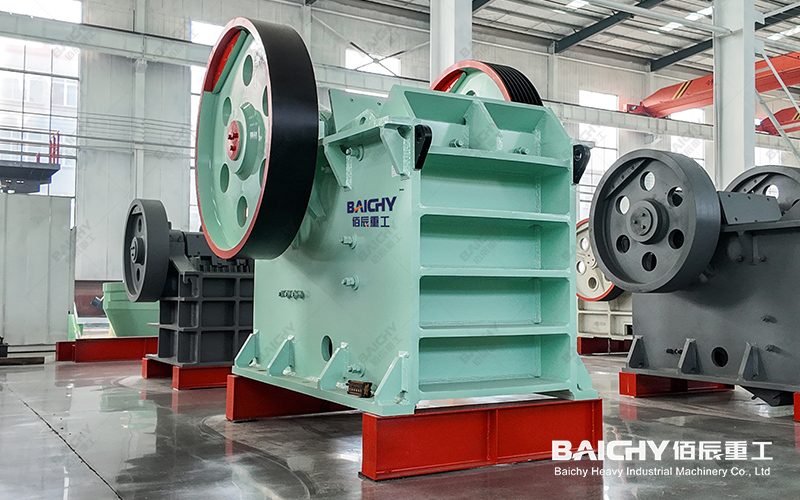
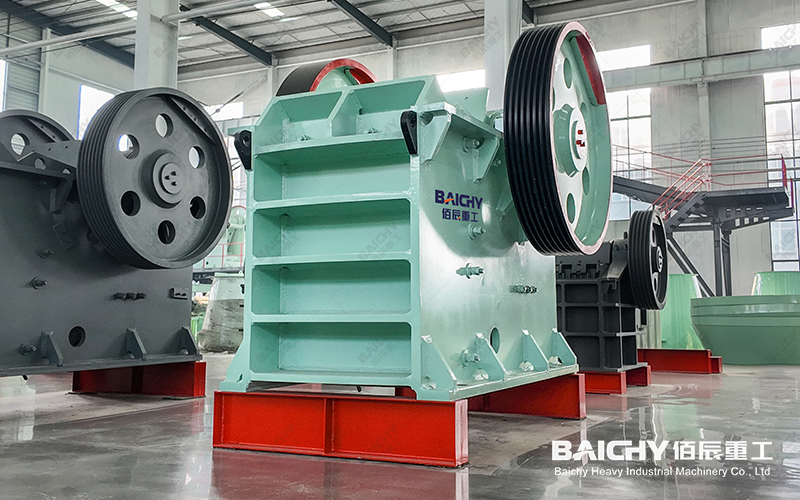
Chinese jaw crushers are the most widely used primary crushing equipment globally for small-to-medium-sized mines, sand and aggregate operations, and mineral processing lines. A single unit can reduce run-of-mine ore (500–630mm) to under 100mm in one pass, with a purchase cost just 60–70% of comparable Western-made equipment. This article guides you from equipment selection to final purchasing decisions by examining five key aspects: application scenarios, core advantages, parameter comparisons, real-world case studies, and equipment recommendations.
I. Overview of Chinese Jaw Crushers: The "First Gatekeeper" of Primary Crushing
Blasted run-of-mine ore typically ranges from 500mm to 750mm in size, whereas cone crushers and impact crushers generally have feed limits under 300mm. Primary crushing equipment is required to bridge this gap—and the Chinese jaw crusher serves as this "first gatekeeper." It is also the single most produced and sold category of crushing equipment worldwide.
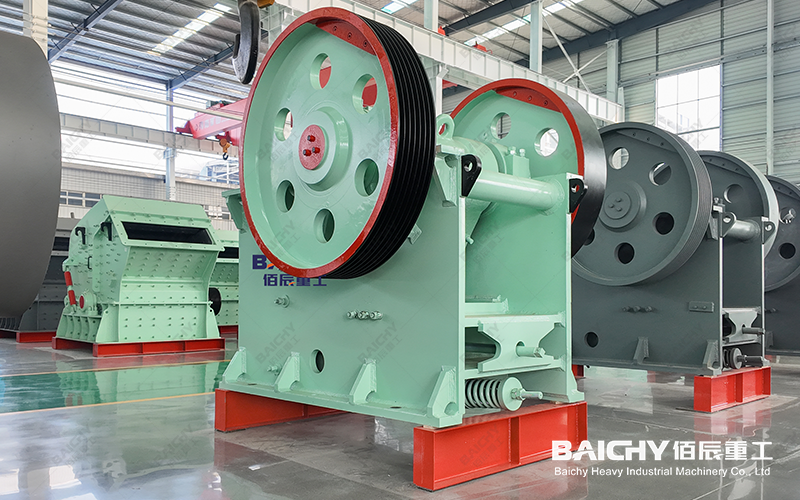
An electric motor drives an eccentric shaft, causing the movable jaw plate to reciprocate; material is gradually crushed and discharged through a combination of compression and splitting forces. Compared to gyratory crushers, jaw crushers feature a simpler structure, lower investment costs, and easier maintenance, offering exceptional cost-performance value for production capacities below 1,000 t/h.
1.1 Why Global Buyers Keep Their Eye on Chinese Jaw Crushers
China is the world's largest production hub for jaw crushers. Regions like Henan and Shandong host a complete industrial chain—spanning everything from steel castings to finished machines—resulting in three key advantages: price competitiveness (30–40% lower than Western equivalents), rapid delivery (standard models ship within 15–30 days), and customization capabilities (supporting various voltages like 380V/400V/440V and frequencies like 50Hz/60Hz). For mining investors in emerging markets, these factors often outweigh the value of a premium brand name.
Modern models typically utilize a deep-cavity, compound-pendulum structure that minimizes material clogging. They offer a single-stage reduction ratio of 4:1 to 6:1, allowing them to meet downstream feed requirements in a single pass. II. Typical Application Scenarios for Chinese Jaw Crushers
2.1 Primary Crushing of Run-of-Mine (ROM) Ore in Metal Mines
Jaw crushers are widely used as the first stage of crushing in mineral processing plants for gold, copper, iron, and manganese ores. Taking the gold CIL/CIP process as an example—primary crushing (jaw crusher) → secondary crushing → fine grinding (ball mill)—a more uniform discharge size results in lower electricity consumption during the grinding stage.
2.2 Production of Hard Rock Aggregates and Manufactured Sand
The production of aggregates for highways, railways, airports, and commercial concrete—using hard rocks such as granite, basalt, and river pebbles—also relies on jaw crushers for the initial crushing stage. These operating conditions involve high abrasiveness and demand long service life for jaw plates; they serve as a true test of deep-cavity and high-reduction-ratio designs.
2.3 Mobile Crushing and Construction Waste Recycling
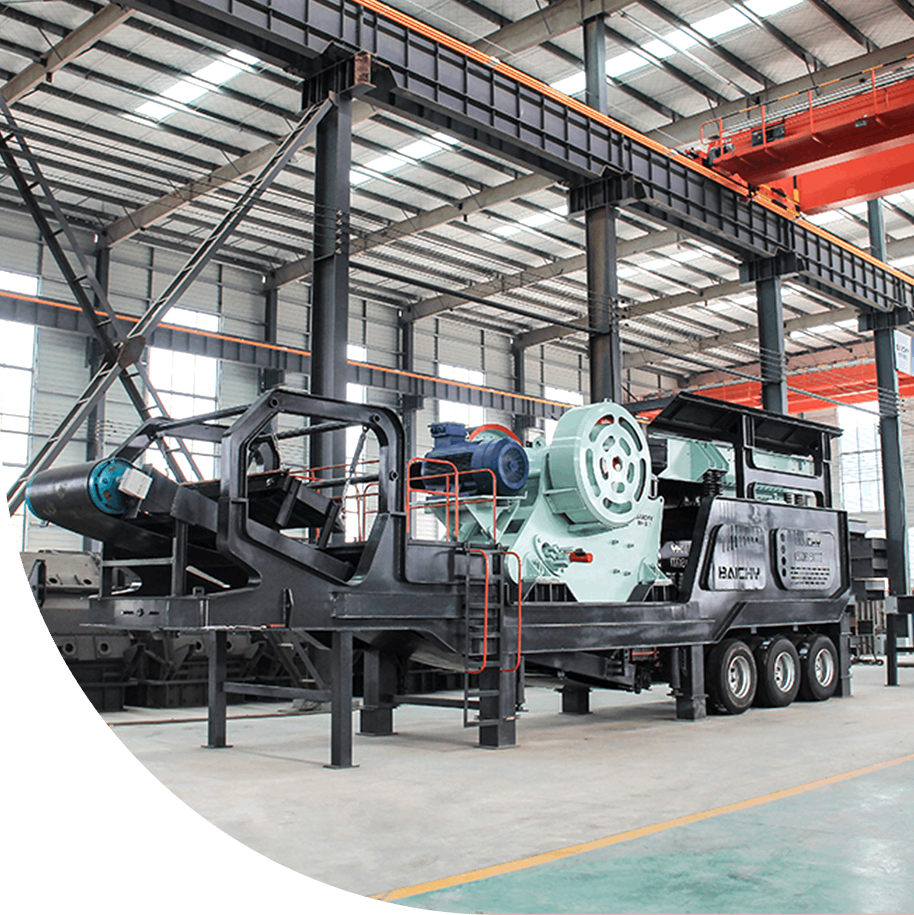
Integrating jaw crushers into tracked or wheeled mobile stations (such as the Baichy YDPZ series) allows for flexible relocation between mine overburden sites and construction waste stockpiles. This enables "mobile primary crushing and on-site processing," offering an optimal solution for projects with dispersed material sources to minimize logistics costs and accelerate production startup.
2.4 Pre-processing of Cement and Chemical Raw Materials
In cement clinker and chemical production lines processing materials like limestone, gypsum, and dolomite, jaw crushers control the feed size for downstream mills, thereby creating the necessary conditions for energy-efficient grinding.
III. Core Advantages: From Specifications to Profitability
3.1 High Reduction Ratio Simplifies the Production Line
A single-stage reduction ratio of 4:1 to 6:1 means that, in some scenarios, the secondary crushing stage can be eliminated; removing one piece of equipment reduces both potential failure points and power consumption. Calculations for a 50 t/h production line indicate annual savings of approximately 50,000 to 80,000 RMB in depreciation and maintenance costs.
3.2 Wear-Resistant Design Lowers Cost Per Ton
High-manganese steel (ZGMn13) jaw plates can last 6–12 months when processing moderately abrasive materials; in hard rock applications, periodically flipping the plates allows a single set to provide double the service life. As jaw plates represent the most significant consumable wear part, equipment selection should take into account the total cost of spare parts over a three-year period.
3.3 Hydraulic Adjustment and Tramp Iron Protection
The hydraulic discharge opening adjustment system allows for rapid width changes without the need to stop the machine or disassemble components. The tramp iron protection mechanism automatically retracts when uncrushable objects—such as drill rods or rock bolts—enter the crushing chamber, thereby preventing equipment damage and unplanned downtime.
3.4 Rapid Commissioning and Flexible Customization
The jaw crusher features a simple structure and a short installation cycle; its operation and maintenance do not require highly specialized labor, making it particularly suitable for overseas projects. The equipment can be customized with 380V/400V/440V and 50Hz/60Hz motors and is delivered as a complete package that includes the feeder, belt conveyor, and dust suppression system.
Jaw Crusher Manufacturers
IV. Comparison of Specifications for Typical Chinese Jaw Crusher Models
The table below lists typical models from the Baichy PE series, covering a capacity range of 16–450 t/h:
| Model | Feed Opening Size (mm) | Max. Feed Size (mm) | Discharge Opening Adjustment Range (mm) | Processing Capacity (t/h) | Motor Power (kW) |
|---|---|---|---|---|---|
| PE-400×600 | 400×600 | 340 | 40–100 | 16–65 | 30 |
| PE-500×750 | 500×750 | 425 | 50–100 | 45–100 | 55 |
| PE-600×900 | 600×900 | 500 | 65–160 | 50–160 | 55–75 |
| PE-750×1060 | 750×1060 | 630 | 80–140 | 110–320 | 90–110 |
| PE-900×1200 | 900×1200 | 750 | 95–165 | 220–450 | 110–132 |
Selection Tip: The capacities listed are based on medium-hardness limestone (bulk density approx. 1.6 t/m³). For hard rock applications such as granite or basalt, actual capacity is approximately 70–85% of the listed values. Disregarding the gap between nominal capacity and actual operational capacity is a common mistake made during equipment selection for overseas projects.
V. Application Case Study: Real-World Performance of Chinese Jaw Crushers
5.1 100–150 tph Granite Production Line in Rwanda
A fixed production line was established using a PE-600×900 jaw crusher paired with a PF-1214 impact crusher. The line achieved 100% of its rated capacity within six months of commissioning, and the service life of the initial set of jaw plates exceeded eight months; consequently, the client replicated the exact same configuration for their Phase II expansion. 5.2 River Pebble Crushing and Sand-Making Project (Philippines)
River pebbles are highly abrasive. The client selected a C90 stationary jaw crusher for primary crushing, paired with a cone crusher and a sand-making machine. The fineness modulus of the finished sand remains stable between 2.6 and 3.0, meeting the supply standards of local commercial concrete plants.
5.3 Mobile Crushing Station for Extreme Cold Conditions (Russia)
To handle extreme cold environments of -30°C, Baichy equipped the Chinese jaw crusher with low-temperature hydraulic oil and a heated lubrication system. The entire unit was delivered as an integrated mobile station, enabling continuous outdoor operation during winter.
VI. Recommended Auxiliary Equipment
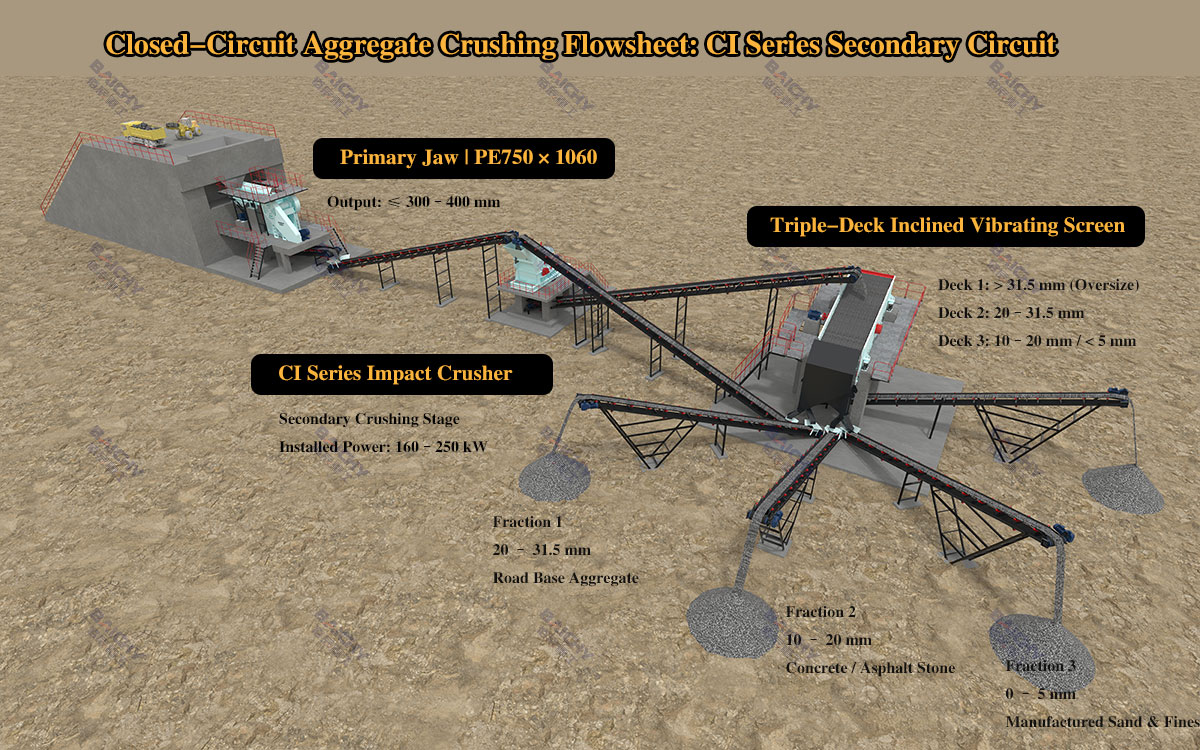
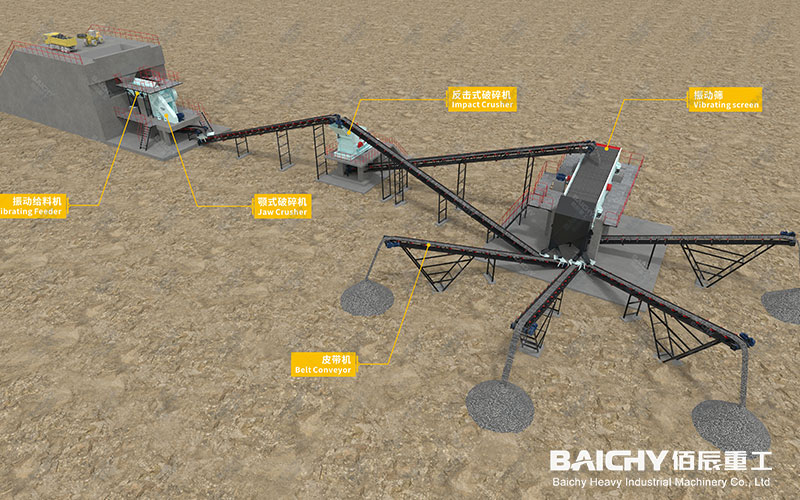
While the Chinese jaw crusher handles primary crushing, maximizing the production line's capacity requires a well-designed downstream configuration:
| Production Stage | Recommended Equipment | Suitable Applications |
|---|---|---|
| 01Secondary/Fine Crushing | PYB900/CS/HP Cone Crusher, PF Impact Crusher | Hard rock secondary crushing, aggregate shaping |
| 02Sand Making | VSI Sand-Making Machine, 2PG Double-Roll Crusher | Manufactured sand production, fineness modulus control |
| 03Mobile Solutions | YDPZ Series Crawler/Wheeled Mobile Stations | Scattered material sources, rapid site relocation |
| 04Grinding Integration | Ball Mill, Raymond Mill, HGM Ultrafine Mill | Mineral processing/grinding, non-metallic mineral powder processing |
If the project also requires ore grinding or powder processing, an overflow ball mill can be combined with the jaw crusher to create an integrated "crushing-grinding" workflow. Baichy offers complete delivery solutions ranging from inpidual machines to full EPC production lines.
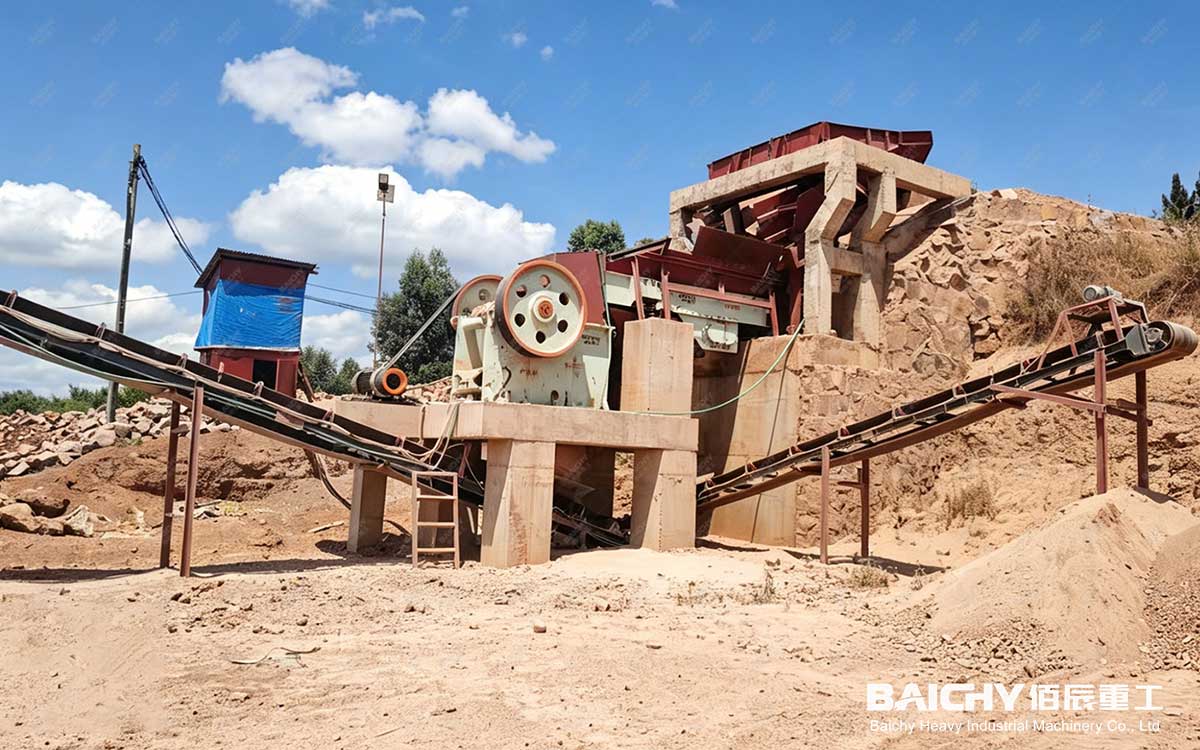
Primary Crushing Equipment
VII. FAQ
Q1: Is there a significant quality difference between Chinese jaw crushers and Western brands?
The difference lies primarily in brand premium rather than fundamental performance. Given identical specifications, Chinese jaw crushers utilize the same deep-cavity compound pendulum principle and high-manganese steel jaw plate standards; the core differences lie in steel grades and manufacturing precision. By selecting a manufacturer with export experience and clearly specifying standards for critical components (jaw plate material, bearing brand, motor certification), you can effectively bridge the quality gap while saving 30–40% on procurement costs.
Q2: What are the most important parameters to verify when purchasing a Chinese jaw crusher?
Five critical items to verify:
① whether the maximum feed size matches the blasted rock size;
② whether the discharge opening adjustment range meets downstream feed requirements;
③ processing capacity calculated based on material bulk density (apply a 15–30% reduction for hard rock);
④ voltage and frequency specifications (e.g., 380V/400V/440V, 50Hz/60Hz); and
⑤ lead times for wear parts and after-sales support. These five factors directly determine whether the equipment can achieve target production levels after commissioning.
Q3: Can Chinese jaw crushers be customized for specific voltages and sea-freight packaging?
Yes. Manufacturers can customize motor voltage and frequency based on the project location and provide packaging solutions designed for sea transport (including disassembly if necessary), with no-load test runs performed prior to shipment. The entire production line—including conveyors, feeders, and electrical control cabinets—can be delivered as a complete package, enabling immediate installation upon arrival and rapid startup of production.
Baichy Heavy Industry
Baichy Heavy Industry is a high-tech mining equipment company integrating R&D, manufacturing, sales, and after-sales service. Focusing on crushing, grinding, and mineral processing equipment, we provide professional solutions to our customers. We are ISO9001:2015 、certified, and our products include mobile crushing palnts, crawler crushing plant, construction waste crushing plants, jaw crushers, sand making machines, cone crushers, fine crushers, grinding mills, ball mills, etc., all with reliable performance to meet diverse project needs.
Baichy Heavy Industry – Your Trusted Partner
To ensure optimal performance of your equipment, Baichy Heavy Industry offers:
- Professional on-site installation guidance
- Comprehensive operator training
- 24/7 technical support & maintenance services
Our complete after-sales service system guarantees long-term, stable operation of your machinery with minimal downtime.
Protect Your Rights – Only Use Official Channels
To avoid scams and ensure authentic support, contact us exclusively through:
• Official Website: www.baichychina.com
• WhatsApp: +8615093222637
• Email: [email protected]
Your satisfaction is our priority – expect prompt, professional service every time.
(Note: Beware of unauthorized third parties claiming to represent Baichy. Always verify through official contacts.)