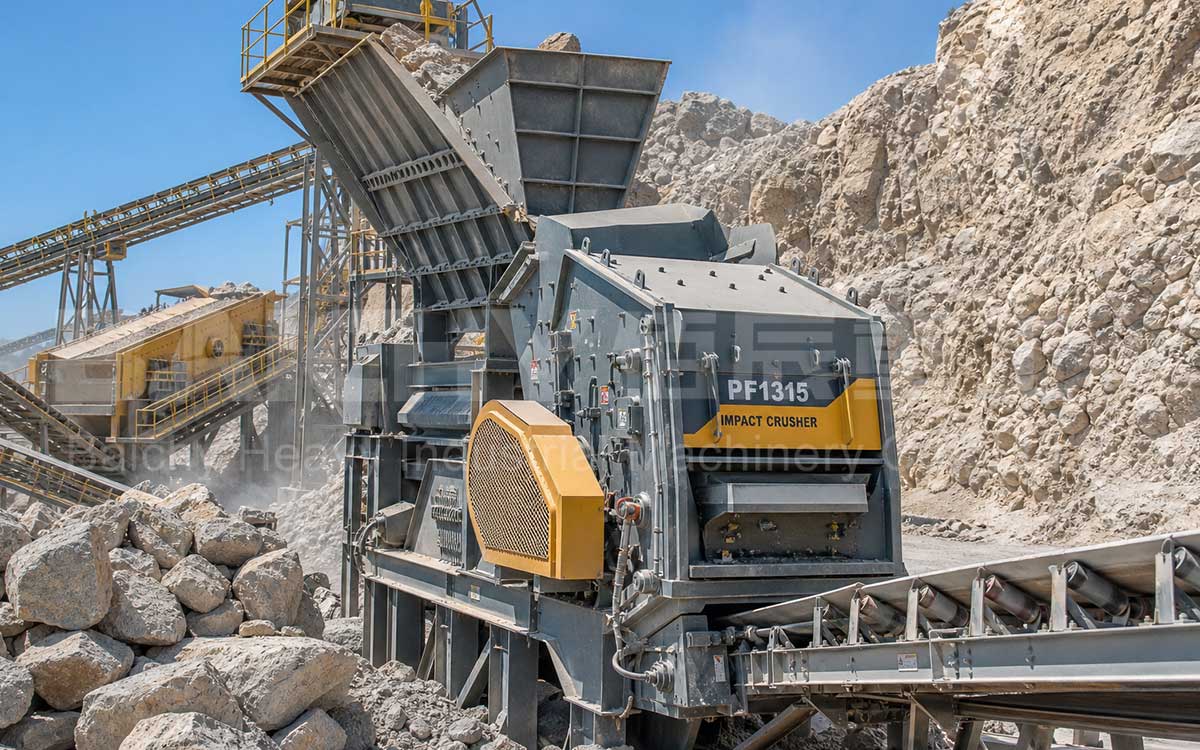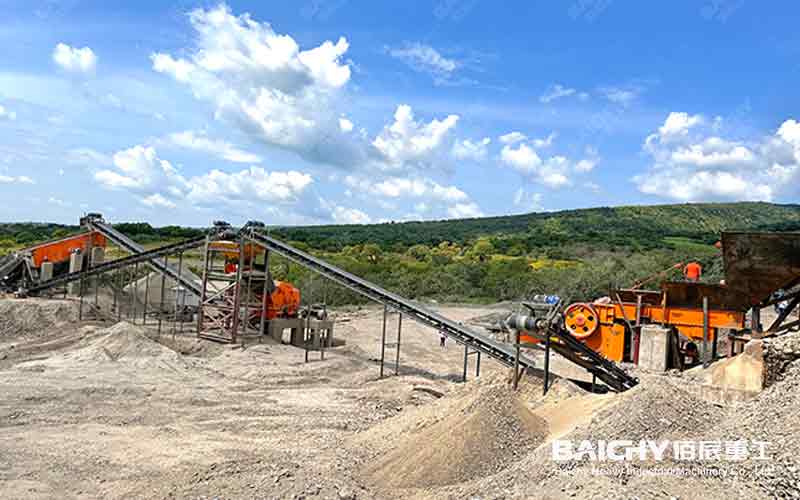
200 tph Basalt Crushing Plant Process Flow Diagram
1. Core Equipment Configuration: High-Hardness Ores Require a "Compression-Based" Crushing Process
To address the characteristics of basalt—specifically its high hardness and high abrasiveness—the standard configuration for this 200 t/h production line employs a two-stage, closed-circuit process featuring a "Jaw Crusher + Hydraulic Cone Crusher" combination. Basalt typically possesses a Mohs hardness rating of 5 to 7; by utilizing the compressive crushing principle of the cone crusher, wear part consumption can be reduced by over 60%, thereby ensuring a high rate of continuous operation. This solution strictly adheres to the national standard GB/T 14685-2022 Pebbles and Crushed Stones for Construction; the finished product features a rounded particle shape, with the content of needle-like and flaky particles controlled to within 8%.
| Configuration Stage | Equipment Name | Model/Specification | Key Technical Parameters |
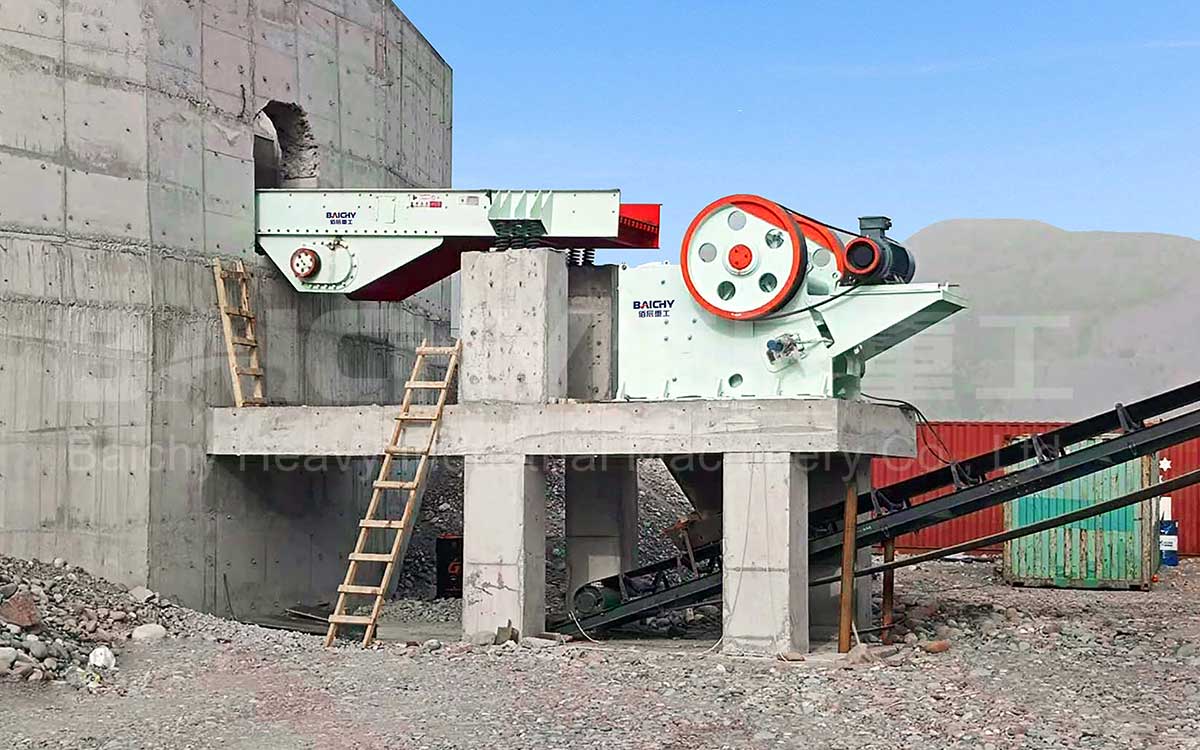
| Feeding | Vibrating Feeder | GZD-1100×4200 | Max. Feed Size: 750mm; Power: 11kW |
| Coarse Crushing | Jaw Crusher | PE-750×1060 | Feed Opening: 750×1060mm; Discharge Opening: 80–160mm |
| Medium/Fine Crushing | Single-Cylinder Hydraulic Cone Crusher | CH250 (F) | Installed Power: 250kW; Discharge Opening: 13–38mm |
| Screening | Circular Vibrating Screen | 3YZS2460 | Screen Surface Area: 14.4 m²; Number of Layers: 3 |
| Conveying | Belt Conveyor System | B800 / B1000 | Includes Main Conveyor, Return Conveyor, and Finished Product Conveyor |
2. Process Flow Description: Closed-Circuit System Ensures 100% Product Qualification Rate
Through an automated closed-circuit circulation system, this 200 t/h production unit achieves precise material classification and repetitive crushing. The entire production line is monitored via a centralized PLC control system, allowing for real-time adjustment of the cone crusher's discharge opening based on the hardness of the basalt.
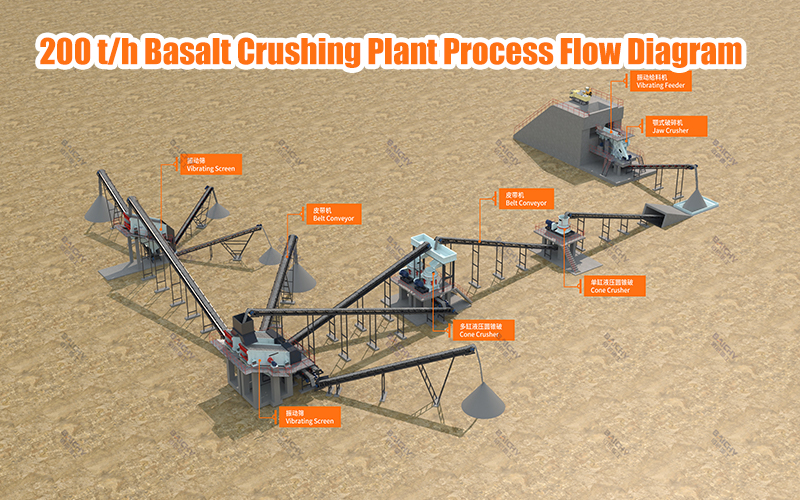
200 tph Basalt Crushing Plant Process Flow Diagram
1. Feeding and Pre-screening: A vibrating feeder pre-processes the raw stone, removing soil and fine materials smaller than 100mm.
2. Primary Crushing: Large blocks of basalt undergo initial crushing by a jaw crusher to a size of less than 150mm.
3. Secondary Crushing: The material enters an CH series cone crusher, where it is further refined using the principle of "laminated crushing."
4. Circulating Screening: A vibrating screen separates the material into four distinct size specifications: 0–5mm, 5–10mm, 10–20mm, and 20–31.5mm.
5. Recycling and Re-crushing: Material larger than 31.5mm is returned to the cone crusher via a return conveyor belt for further processing.
3. Technical Comparison: Why Cone Crushers Are the Preferred Choice for Basalt Crushing Over Impact Crushers
In the field of basalt processing, the overall operating costs of cone crushers are more than 45% lower than those of impact crushers. The table below presents a comparison based on long-term operational data for highly abrasive materials:
| Aspect | Hydraulic Cone Crusher (Recommended) | Impact Crusher (Traditional) |
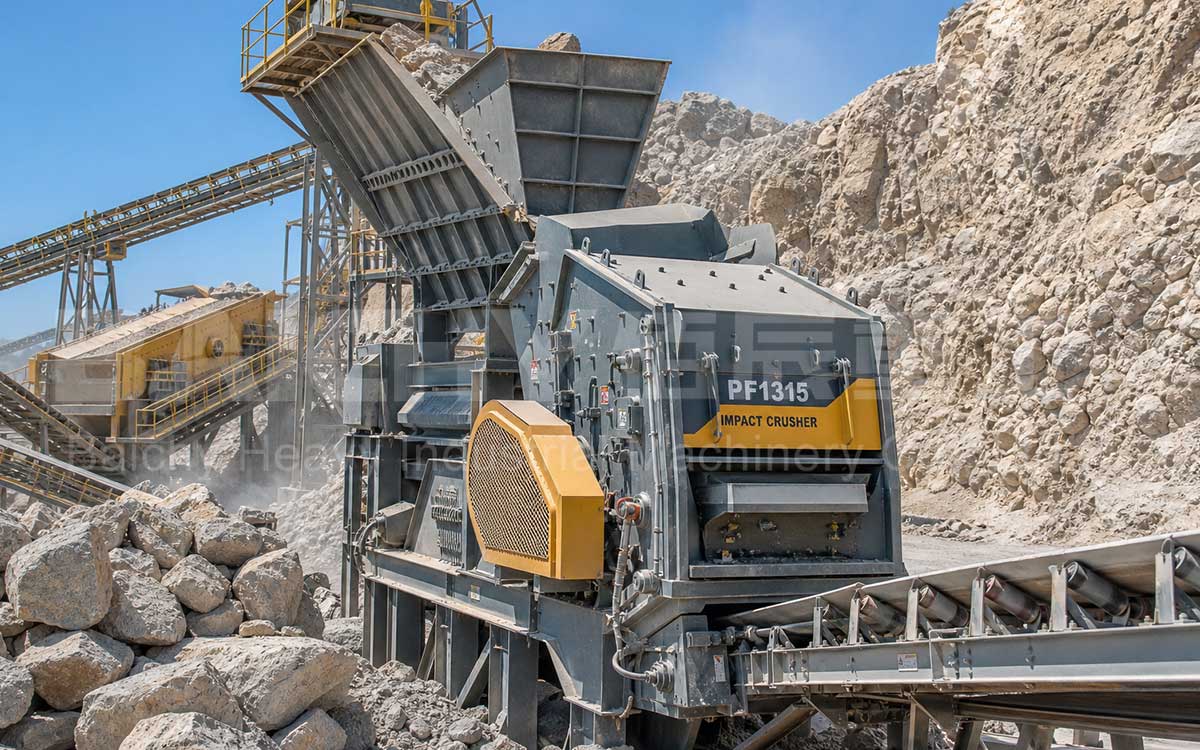
| Crushing Principle | Compression Crushing (Extremely low wear) | Impact Crushing (Blow bars wear out very quickly) |
| Wear Parts Lifespan | 4–6 months (Depending on material hardness) | 3–7 days (In basalt environments) |
| Finished Product Shape | High proportion of cubical particles; minimal flaky/elongated particles | Initially good, but particle shape deteriorates as blow bars wear down |
| Total Return on Investment | High upfront cost; extremely low long-term operation and maintenance costs | Low upfront cost; significant expenditure on wear parts in the long term |
4. Authoritative Case Study: 2021 Nairobi Outer Ring Road Basalt Project (Kenya)
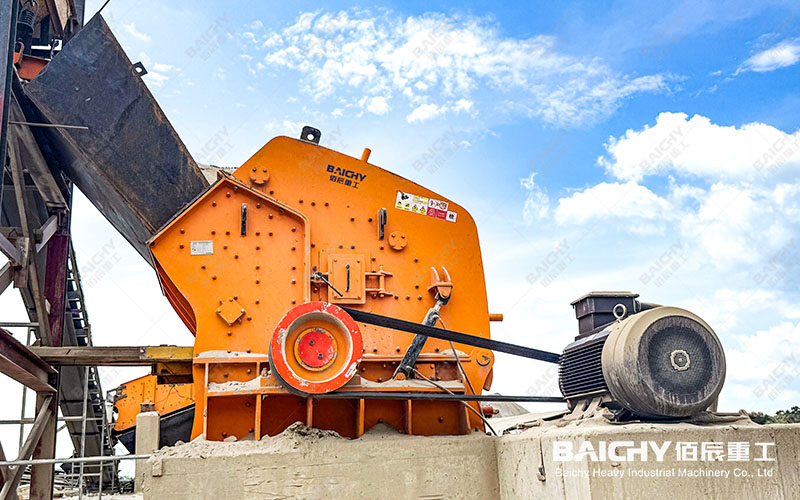
This project utilized a complete 200 t/h crushing plant supplied by BAICHY. Actual measured hourly output remained stable between 210 and 225 tons, and the finished product fully met international AASHTO standards.
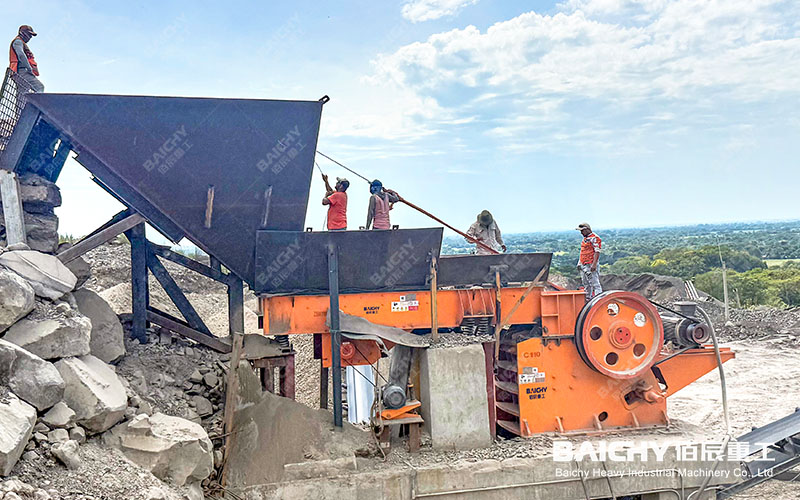
Basalt Production Line Configurations
Basalt Production Line Configurations
Project Name: Basalt Aggregate Production Line in Nairobi, Kenya
Compliance Standard: Equipment certified under the ISO 9001 Quality Management System
Operational Results: Operated continuously for 3,000 hours without major overhaul; overall energy consumption reduced by 12%; supplied high-quality asphalt concrete aggregates to the local market.

About of Baichy Heavy Industry
Baichy Heavy Industry is a high-tech mining equipment company integrating R&D, manufacturing, sales, and after-sales service. Focusing on crushing, grinding, and mineral processing equipment, we provide professional solutions to our customers. We are ISO9001:2015 、certified, and our products include mobile crushing palnts, crawler crushing plant, construction waste crushing plants, jaw crushers, sand making machines, cone crushers, fine crushers, grinding mills, ball mills, etc., all with reliable performance to meet diverse project needs.
Our advantages:
• Professional pre-sales support: Free project design and comprehensive solutions to help you accurately select the right equipment;
• Comprehensive on-site service: Providing installation guidance and worker training to ensure smooth equipment commissioning;
• Reliable after-sales guarantee: A complete after-sales system, timely response to technical inquiries and equipment maintenance, ensuring long-term stable operation.
To protect your rights, please contact us through the following official channels for professional service:
Official Website Customer Service
https://wa.me/+8615093222637
Email: [email protected]
We are committed to providing high-quality equipment and full-cycle services to deliver comprehensive intelligent solutions for the global mining industry!
Frequently Asked Questions (FAQ)
Q1: What motor power is required to crush 200 tons of basalt per hour?
A: A standard 200 t/h basalt crushing plant requires a total installed power capacity of approximately 400–450 kW. Specifically, the core equipment—the Jaw Crusher—requires 110 kW, while the Cone Crusher requires 250 kW.
Q2: What is the required footprint for a 200 t/h basalt crushing line?
A: A typical configuration scheme requires a level site of approximately 1,500–2,000 square meters, depending on the span of the conveyor belts and the number of aggregate stockpiles. Q3: Why is it not recommended to use an impact crusher for processing basalt?
A: Because basalt is rich in silica, the direct, hard-on-hard impact between the crusher's blow bars and the stone causes the blow bars to wear out extremely quickly; consequently, the maintenance cost per ton is 3 to 5 times higher than that of a cone crusher.
Q4: Can this crushing plant simultaneously produce manufactured sand?
A: Yes. By adding a VSI series impact crusher (shaping machine) downstream from the cone crusher, 10–20 mm gravel can be converted into high-quality construction sand.
Q5: What is the price range for a complete 200 t/h crushing plant?
A: Depending on the brand and level of automation, the reference price for the complete equipment set (including the electrical control system) ranges from 600,000 to 1.2 million RMB; the specific model of the cone crusher selected is the primary variable affecting the final price.
Q6: How can dust emissions be minimized during the basalt crushing process?
A: It is recommended to install high-pressure misting systems at the feed inlet and at conveyor transfer points, as well as to equip the vibrating screens with sealed covers, in order to comply with local environmental protection and impact assessment regulations.