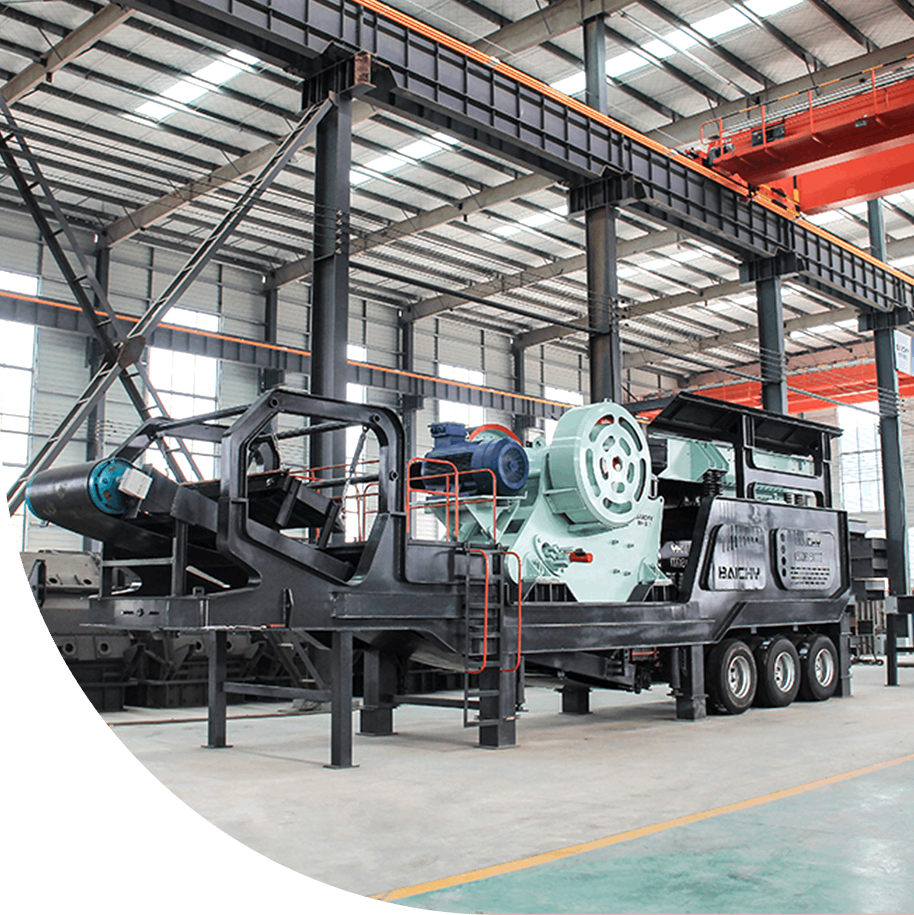

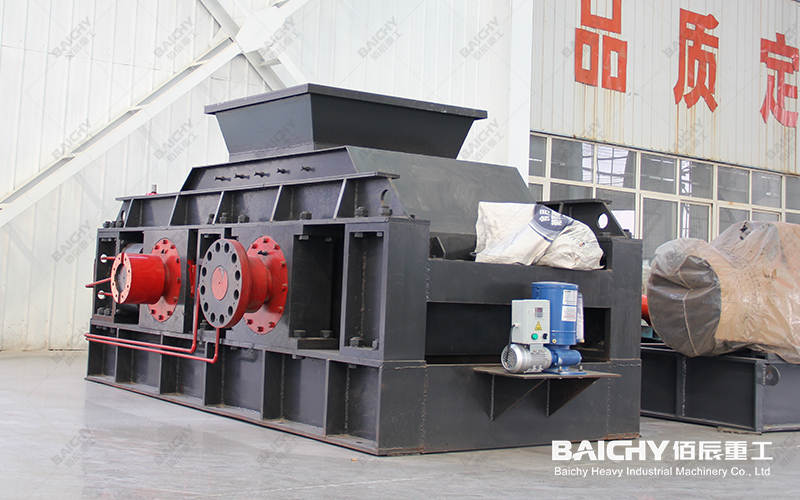
Roller Crusher for Sand Making
In the fields of mining, sand production, and mineral processing, selecting the appropriate crushing equipment is crucial to determining production efficiency and the quality of the finished product. Among the wide array of crushing machinery available, the double-roller crusher occupies an indispensable position—thanks to its unique structure and operating principles—for the crushing of medium-hard and softer materials in small-to-medium-scale operations. This article provides a comprehensive analysis of the double-roller crusher, covering its operating principles, key advantages, and application scenarios. Furthermore, through the inclusion of practical case studies and technical specifications, this guide aims to provide you with an in-depth understanding of this highly efficient roller-type crusher.
Overview: What is a Double-Roller Crusher?
As the name suggests, a double-roller crusher is a piece of equipment in which two counter-rotating rollers serve as the core crushing components. The minimum gap between these two rollers is referred to as the "discharge opening." Material is fed from above into the space between the rollers; driven by the combined forces of friction and gravity, it is drawn into the crushing chamber. Here, the material undergoes crushing through a combination of high-pressure compression and shearing forces, and the finished product—meeting the specified particle size requirements—is ultimately discharged from the bottom of the machine.
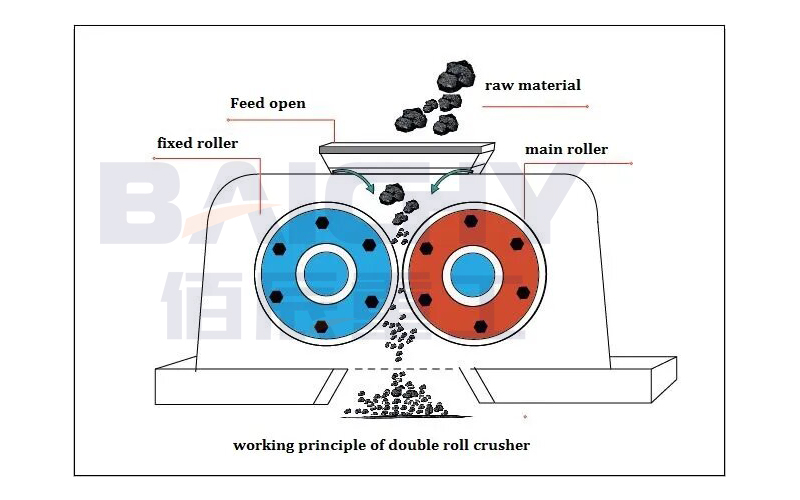
Working Principle Diagram of a Double-Roll Crusher
Its core operating principle is "compressive crushing." By adjusting the gap between the two rollers, the output particle size can be flexibly controlled, thereby enabling a strategy of "crushing instead of grinding." This approach effectively minimizes over-crushing—the excessive pulverization of material—making the double-roller crusher particularly well-suited for sand production or raw material processing applications where a cubical, granular finished product is required. Depending on the surface profile of the rollers, the equipment can be categorized into types featuring smooth surfaces, toothed surfaces, grooved surfaces, and others, allowing it to effectively handle materials with varying degrees of hardness, viscosity, and particle size requirements.
Overview of Key Operating Parameters
To provide you with a more quantitative understanding of the double-roller crusher, the following table presents the specifications for a typical model:
| Parameter | Specification | Remarks |
| Model | 2PG0806 | Named based on roller diameter (800 mm) and width (600 mm) |
| Roller Diameter | 800 mm | Determines nip angle and crushing ratio |
| Roller Width | 600 mm | Influences the unit's processing capacity |
| Max. Feed Size | ≤ 65 mm | Varies based on material hardness and roller surface characteristics |
| Discharge Size | 2–20 mm | Infinitely adjustable by modifying the roller gap |
| Processing Capacity | 20–60 t/h | Influenced by material properties, particle size, and moisture content |
| Motor Power | 2 × 45 kW | Dual-motor independent drive system provides robust power |
| Applicable Materials | Limestone, coal, coke, pebbles, slag, etc. | Materials of medium hardness or softer, including those with moderate moisture content |
Core Advantages: Why Choose a Double-Roller Crusher?
Compared to equipment such as jaw crushers and cone crushers, the double-roller crusher demonstrates significant advantages in specific application scenarios:
1. Superior Product Shape, Low Over-Crushing Rate: The principle of compressive crushing produces particles that are predominantly cubical in shape, with low content of needle-like or flaky particles. The resulting particle size distribution is well-graded, making it particularly suitable as a raw material for high-quality manufactured sand or as construction aggregate.
2. Simple Structure, Convenient Maintenance: The overall structure is compact; the primary wear parts are the roller shells, which are easy to replace. The equipment features a low failure rate, significantly reducing long-term operational and maintenance costs.
3. Sensitive Overload Protection, Safe and Reliable: Typically equipped with hydraulic or spring-based adjustment mechanisms. If uncrushable objects (such as iron blocks) enter the machine, the roller gap automatically widens to discharge them, thereby protecting the equipment's core components from damage.
4. Low Dust and Noise Emissions: The crushing process is relatively enclosed and relies primarily on static compression. Compared to impact-style crushing, it generates less dust and noise, making it easier to meet environmental protection standards.
5. Flexible Adjustment, Versatile Application: By simply adjusting the gap between the two rollers, the discharge particle size can be altered, enabling "multi-product production on a single line" and satisfying the perse product specification requirements of different clients.
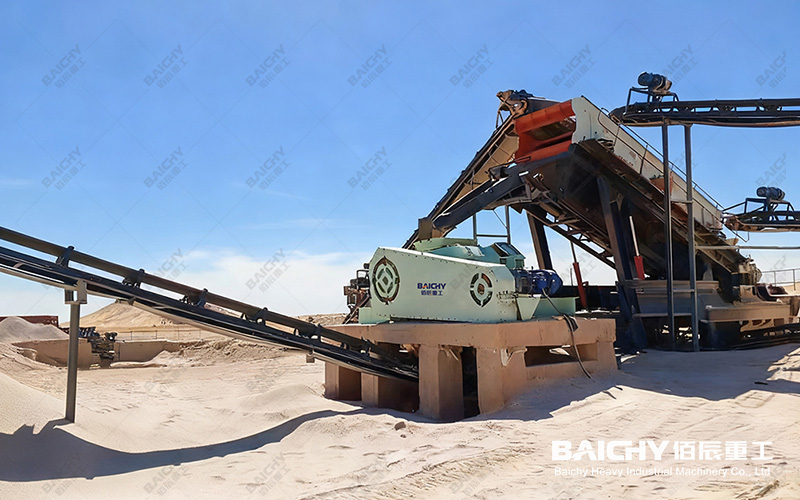
On-site view of the double-roller crusher in operation
Application Scenarios: Where are Double-Roller Crushers Used?
Double-roller crushers have a wide range of applications and are particularly adept at processing materials of medium-to-low hardness, as well as those that are sticky or possess moderate moisture levels:
• Sand Making: Used in the medium and fine crushing stages of sand production—processing materials such as pebbles, limestone, and construction waste—to produce manufactured sand with excellent gradation.
• Mining Operations: Employed for the secondary or tertiary crushing of raw ores, including coal, coke, limestone, marl, and sintered ore.
• Mineral Processing: Used in beneficiation plants to crush ores of medium-to-low hardness, providing a uniformly sized feed for subsequent grinding processes.
• Building Materials & Chemicals: Utilized for crushing gypsum, chemical raw materials, slag, and similar substances, supplying qualified raw materials for the production of bricks, tiles, cement, and fertilizers.
• Laboratory & Research: Small-scale double-roller crushers are frequently used in laboratory settings to conduct research on material crushability and for sample preparation.
Success Stories: Demonstrating Equipment Capability
Case Study 1: An Eco-Friendly Building Materials Company in Henan
◦ Requirement: To utilize construction waste to produce recycled aggregates and eco-friendly bricks.
◦ Solution: Adopted our company's 2PG1008 Toothed Double-Roller Crusher as the core equipment for the medium crushing stage.
◦ Result: Successfully crushed waste concrete blocks from demolition sites down to a size of less than 10mm. The finished product exhibited excellent particle shape, effectively resolving the issue of excessive needle-like and flaky particles in the raw material. The quality of the recycled aggregates received high recognition from downstream commercial concrete mixing plants, thereby realizing the goal of resource recycling.
Case Study 2: A Coal Preparation Plant in Shanxi
◦ Requirement: To crush raw coal while strictly controlling over-crushing (excessive pulverization) in order to increase the recovery rate of clean coal.
◦ Solution: Configured two 2PG0806 Double-Roller Crushers to operate in parallel. ◦ Results: The discharge particle size is consistently maintained within the 8–15 mm range. The rate of over-crushing (particles <3 mm) has been reduced by over 15% compared to the original hammer crushing system, significantly enhancing the efficiency and economic benefits of subsequent washing and beneficiation processes.
Recommended Related Equipment
Based on different crushing stages and process requirements, we recommend the following equipment options that can be paired with—or serve as alternatives to—the double-roller crusher:
1. Jaw Crusher (for Coarse Crushing): We recommend the PE series deep-cavity jaw crusher. Positioned as the upstream stage to the double-roller crusher, it processes large blocks of raw ore, providing a stable feed with an appropriate particle size for the double-roller unit.
2. Impact Sand Maker (for Shaping and Sand Production): We recommend the VSI series vertical shaft impact crusher. If there are higher requirements regarding the particle shape and fineness modulus of the finished sand product, a process flow involving "Jaw Crusher + Cone Crusher/Double-Roller Crusher + Impact Crusher" can be adopted; in this configuration, the impact crusher is used for final shaping to produce high-quality manufactured sand.
3. Double-Roller Crusher (for Fine Crushing): We recommend the 2PGC series double-toothed roller crusher. Designed specifically for the coarse crushing of wet, sticky materials (such as coal or marl), its toothed roller structure effectively prevents clogging and offers a higher crushing ratio.
Frequently Asked Questions (FAQ)
Q1: Can the double-roller crusher process very hard materials, such as granite?
A1: Generally, it is not recommended for crushing high-hardness materials (such as granite or basalt). The advantage of the double-roller crusher lies in processing materials of medium hardness or lower (with a compressive strength of ≤160 MPa). Crushing high-hardness materials would lead to drastically accelerated wear of the roller shells and skyrocketing maintenance costs; in such cases, a cone crusher—which utilizes the principle of laminated crushing—should be the preferred choice.
Q2: Is the double-roller crusher prone to clogging if the material has a high moisture content?
A2: Compared to certain other types of crushers, the double-roller crusher demonstrates better adaptability to materials containing a certain amount of moisture. However, for wet materials with extremely high viscosity, a risk of clogging still exists. The recommended solutions are to select a model featuring toothed or grooved roller surfaces—which enhances the tearing and pulling action on the material—or to ensure a uniform feed rate, avoiding the dumping of excessive material into the crusher at one time.
Q3: How is the discharge particle size of a double-roll crusher controlled?
A3: It is primarily controlled by adjusting the gap (discharge opening) between the two rollers. The equipment is fitted with either a mechanical (shim) or hydraulic adjustment mechanism. Increasing the gap results in coarser discharge, while decreasing the gap results in finer discharge. After making adjustments, it is essential to ensure that the two rollers remain parallel and to conduct a no-load test run. During daily operations, wear on the roller surfaces can also cause the discharge particle size to become coarser; therefore, periodic inspections and adjustments are required.
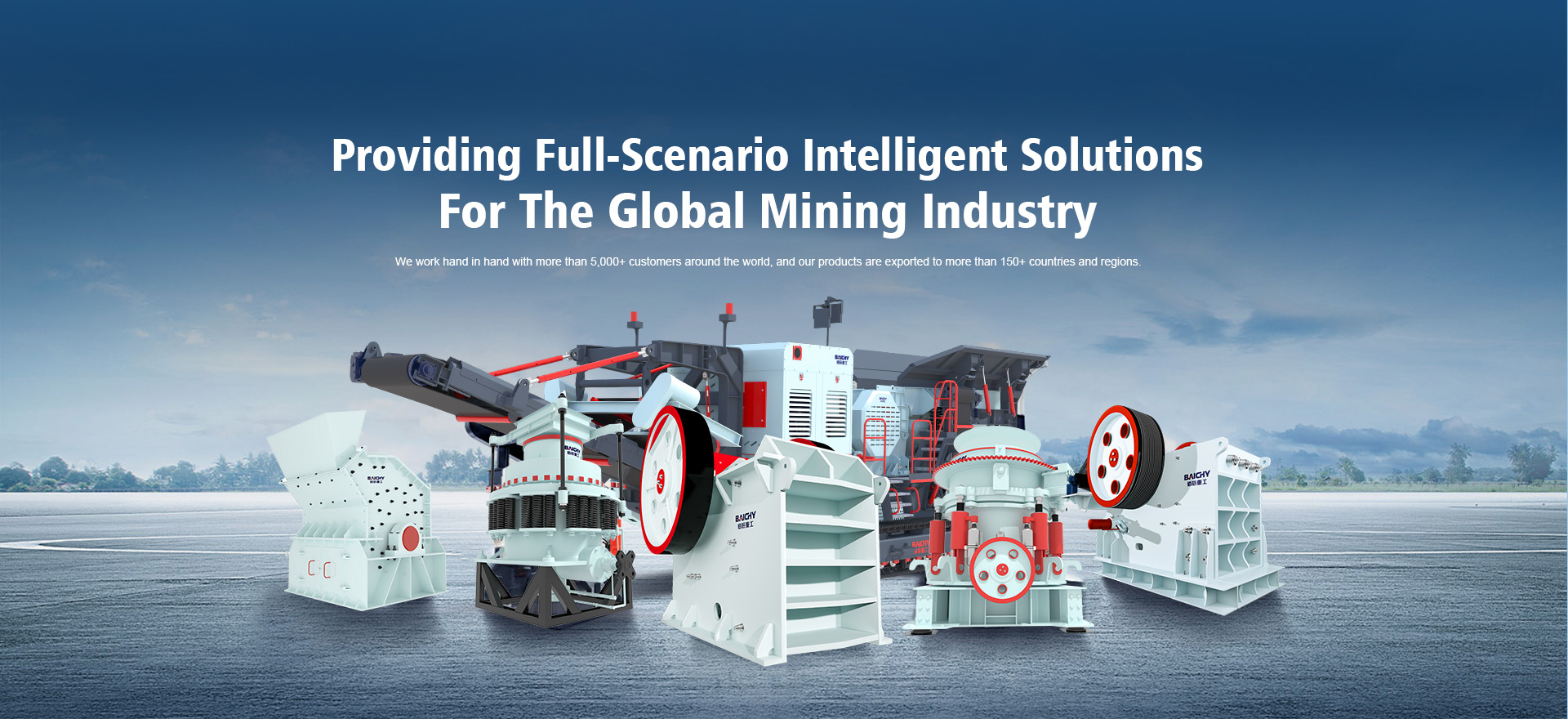
About of Baichy Heavy Industry
Baichy Heavy Industry is a high-tech mining equipment company integrating R&D, manufacturing, sales, and after-sales service. Focusing on crushing, grinding, and mineral processing equipment, we provide professional solutions to our customers. We are ISO9001:2015 、certified, and our products include mobile crushing palnts, crawler crushing plant, construction waste crushing plants, jaw crushers, sand making machines, cone crushers, fine crushers, grinding mills, ball mills, etc., all with reliable performance to meet diverse project needs.
Our advantages:
• Professional pre-sales support: Free project design and comprehensive solutions to help you accurately select the right equipment;
• Comprehensive on-site service: Providing installation guidance and worker training to ensure smooth equipment commissioning;
• Reliable after-sales guarantee: A complete after-sales system, timely response to technical inquiries and equipment maintenance, ensuring long-term stable operation.
To protect your rights, please contact us through the following official channels for professional service:
Official Website Customer Service
https://wa.me/+8615093222637
Email: [email protected]
We are committed to providing high-quality equipment and full-cycle services to deliver comprehensive intelligent solutions for the global mining industry!