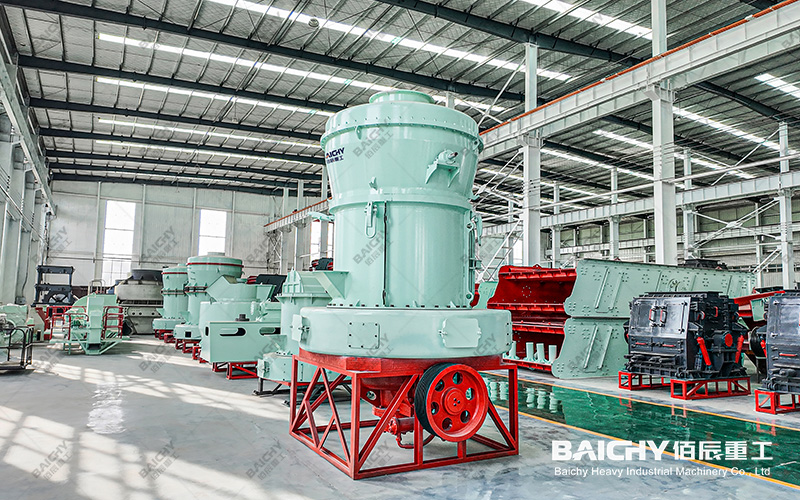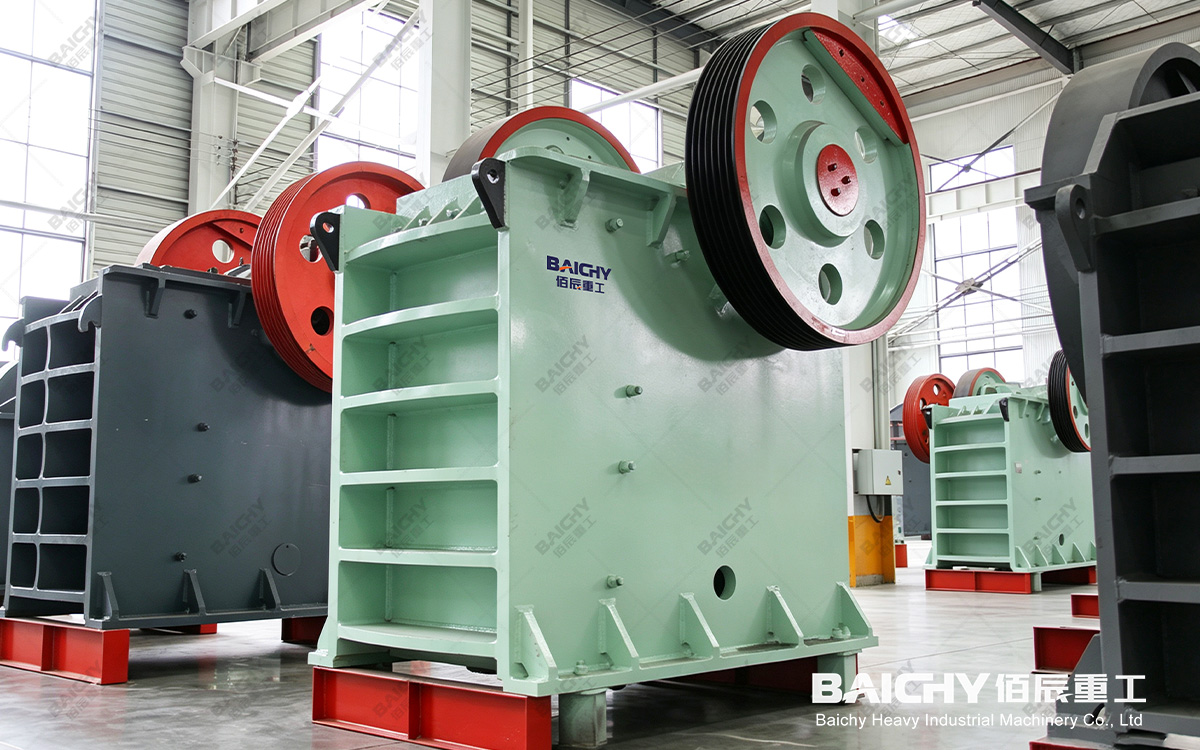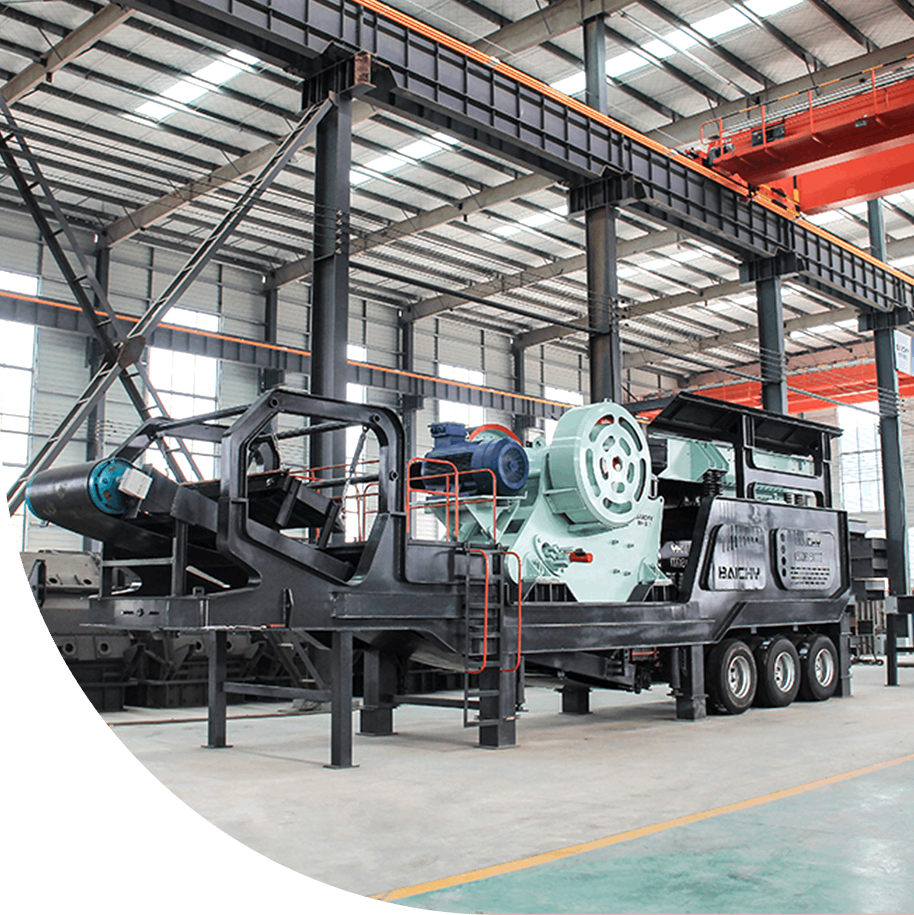

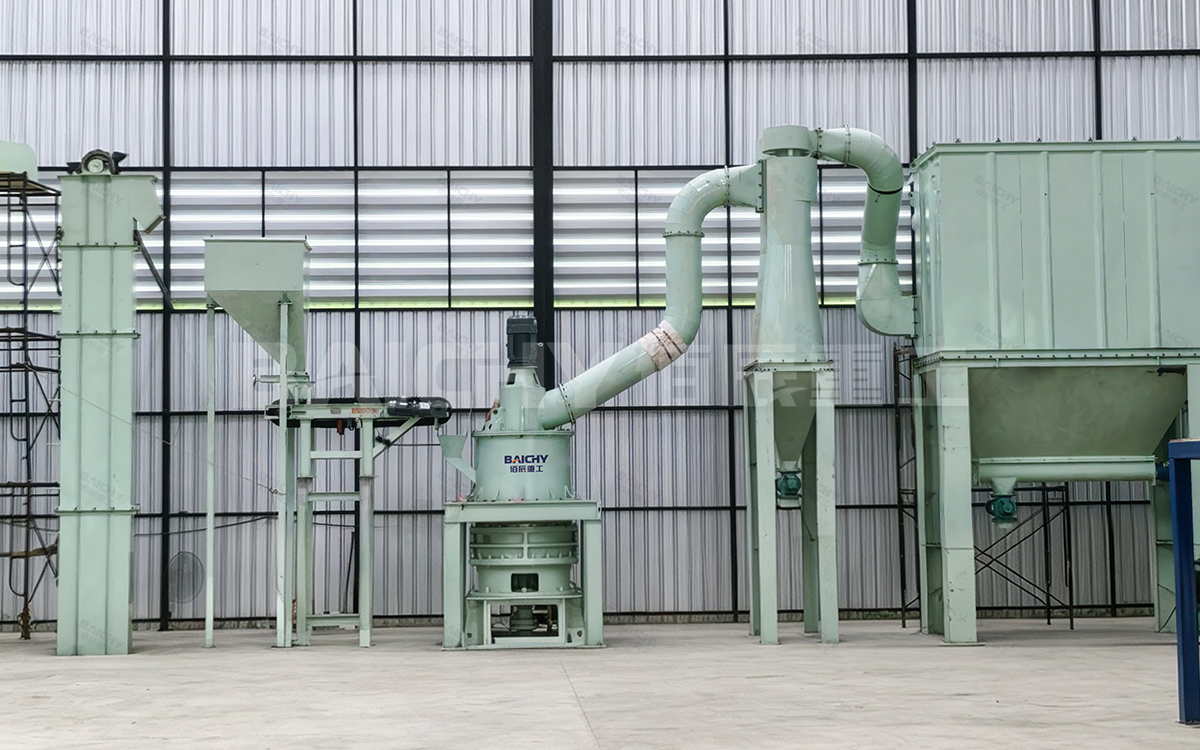
HGM Grinding Mill Customer Site
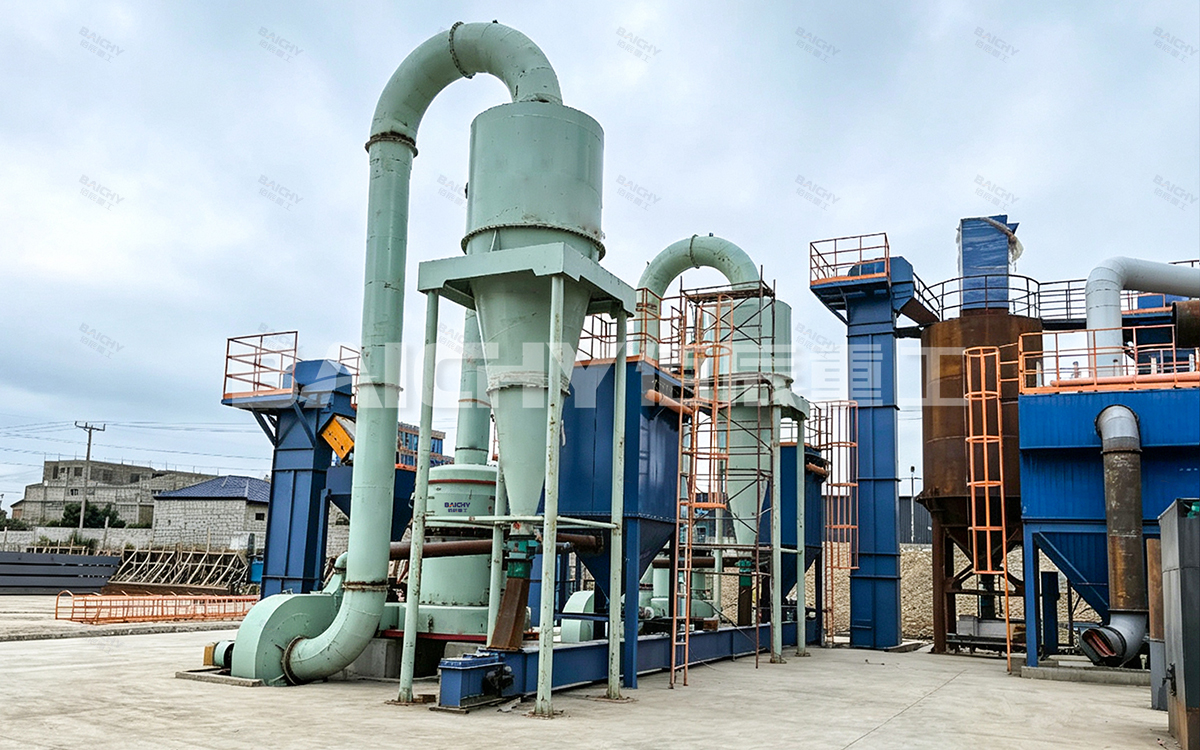
YGM Grinding Mill Customer Site
Choosing between an HGM ultrafine mill and a Raymond mill is one of the most common questions we receive from mining, mineral processing and powder manufacturers. Both are ring-and-roller grinding machines built by Baichy Heavy Industry, and both look similar from the outside — yet they are engineered for completely different fineness targets. Picking the wrong one means either overpaying for fineness you never use, or being unable to meet the powder grade your buyer demands.
In this guide, we break down the HGM ultrafine grinding mill vs Raymond mill difference across eight technical dimensions: working principle, feed size, fineness, capacity, power consumption, application, maintenance and investment. By the end, you will know exactly which powder grinding equipment fits your production line.
HGM Ultrafine Grinding Mill vs Raymond Mill: A Quick Overview
Both machines belong to the roller-mill family: a set of grinding rollers presses material against a stationary grinding ring while an internal air classifier separates the finished powder. That is where the similarity ends.
The Raymond mill (YGM series) is the classic workhorse for medium-fine powder, typically producing 80–600 mesh (180–44 μm). The HGM ultrafine mill (three-ring micro powder mill) is purpose-built for ultra-fine output, reaching 325–2500 mesh (down to D97 ≤ 5 μm). In short: Raymond mill for standard powder, HGM ultrafine mill for high-value micro powder.
Working Principle: How Each Mill Grinds
Raymond Mill Working Principle
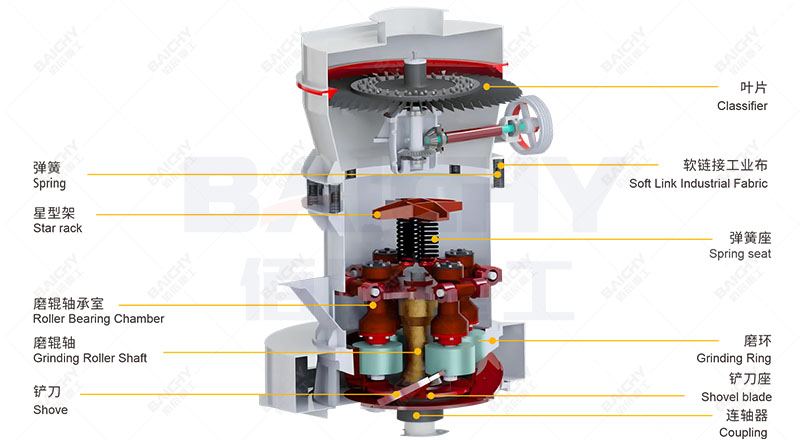
Structural diagram of the YGM grinding mill
Material is first crushed by a jaw crusher, then lifted by a bucket elevator into a storage hopper. A vibrating feeder meters the stone into the grinding chamber. Multiple rollers, suspended from a spider arm, swing outward under centrifugal force and press against the grinding ring. A shovel scoops the material between the rollers and the ring, where it is crushed and ground. A fan draws air upward, carrying the fine powder into a built-in turbine classifier; oversized particles fall back for regrinding, while the finished powder passes into a cyclone collector.
HGM Ultrafine Mill Working Principle
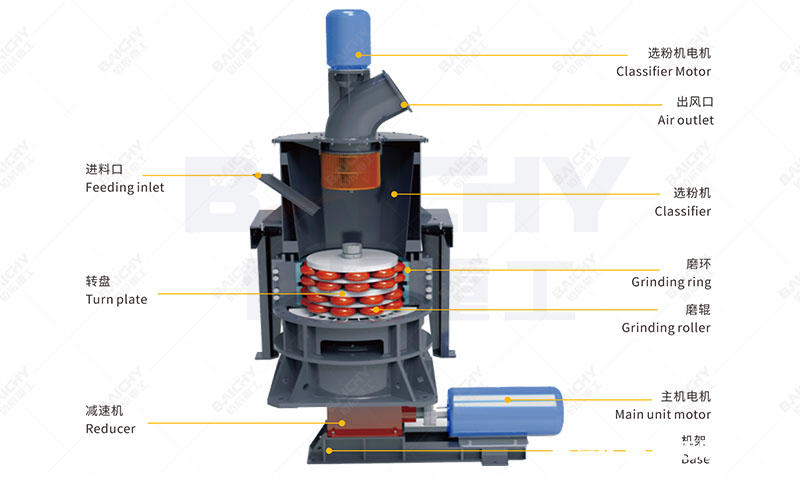
Structural diagram of the HGM grinding mill
The HGM ultrafine mill uses a three-ring / multi-layer grinding structure. Material falls onto the grinding disc and moves outward by centrifugal force into the raceways of three stacked rings, where it is crushed layer by layer — hence the "three-ring" name. After the first stage, the powder continues to the second and third stages for progressively finer grinding. A high-speed turbine classifier at the top produces a very sharp particle-size cut. This closed-circuit classification lets the ultrafine grinding mill hold a tight D97 distribution that a single-stage Raymond mill cannot match.
Parameter Comparison: HGM Ultrafine Mill vs Raymond Mill
Below is a representative comparison based on Baichy Heavy Industry standard models. Actual values depend on the model, feed material hardness and target fineness.
| Parameter | Raymond Mill (YGM Series) | HGM Ultrafine Mill (HGM Series) |
|---|---|---|
| Typical Model | 5R4119 / YGM160 / YGM190 | HGM100 / HGM1036 / HGM1250 |
| Working Principle | Pendulum rollers press grinding ring | Three-ring multi-layer compression + turbine classification |
| Max Feed Size | ≤30–40 mm | ≤20 mm |
| Finished Fineness | 80–600 mesh (180–44 μm), upgradeable to ~2500 mesh | 325–2500 mesh, D97 ≤5–10 μm |
| Production Capacity | 1–20 t/h (model-dependent) | 0.5–12 t/h (model-dependent) |
| Motor Power | 75–250 kW | 110–185 kW |
| Suitable Material Hardness | Mohs ≤9.3, moisture <6% | Mohs ≤7, moisture <6% |
| Energy Saving vs Ball Mill | 30–50% | 30–50% + lower unit energy per micron |
| Typical Applications | Gypsum, barite, feldspar, limestone, coal | Calcite, talc, kaolin, calcium carbonate, high-value minerals |
| Initial Investment | Lower | Higher |
| Maintenance | Simpler, larger wear parts | Finer parts, more skilled maintenance |
| Dust Collection | Bag filter + cyclone | Bag filter + cyclone (closed system) |
Fineness: The Deciding Factor
Fineness is the single most important difference between the HGM ultrafine mill and the Raymond mill. If your end product only needs 80–325 mesh — such as gypsum powder for building materials, barite for drilling mud, or feldspar for ceramics — a Raymond mill delivers it reliably at the lowest cost per ton.
But if your buyer requires 800–2500 mesh micro powder — such as heavy calcium carbonate for paper, talc for cosmetics, kaolin for coatings — only an ultrafine grinding mill can meet the spec. The HGM ultrafine mill achieves this with its three-ring structure and high-speed turbine classifier, which together yield a narrow particle-size distribution (D97 ≤ 5 μm on selected models). A Raymond mill simply cannot economically reach these grades.
Capacity and Feed Size
- Raymond mill: accepts larger feed (up to 40 mm), which means less pre-crushing, and produces higher tonnage per unit — typically 1–20 t/h.
- HGM ultrafine mill: requires feed ≤ 20 mm (jaw crusher is mandatory) and trades throughput for fineness, delivering 0.5–12 t/h.
Rule of thumb: for high-volume medium-fine powder, choose Raymond; for lower-volume high-fineness powder, choose HGM ultrafine mill.
Power Consumption and Energy Efficiency
Both machines save 30–50% energy versus traditional ball mills. However, when compared against each other, the ultrafine grinding mill consumes more power per ton because grinding to a smaller particle size requires exponentially more energy. That added cost is justified only by the higher market price of ultra-fine powder. For the same capacity at 200-mesh output, a Raymond mill is the more energy-efficient choice; at 1250-mesh output, only the HGM ultrafine mill can do the job at all.
Application Scenarios: Which Mineral Needs Which Mill
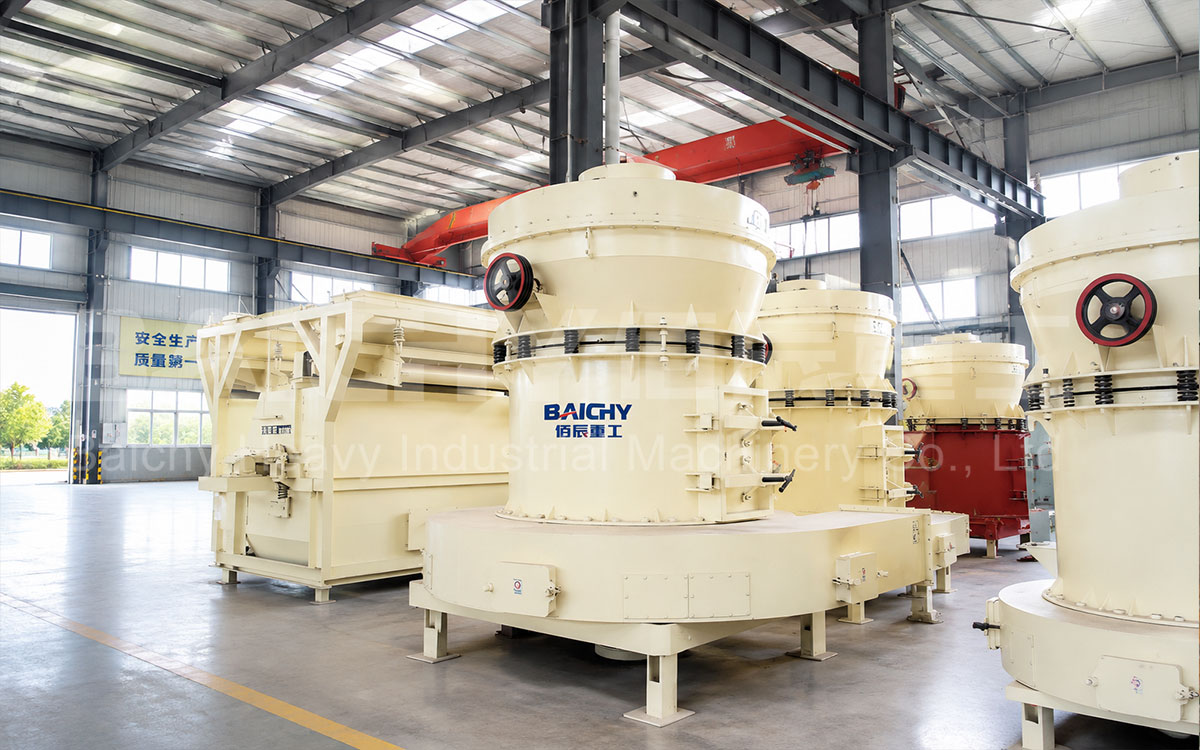
Raymond Mill
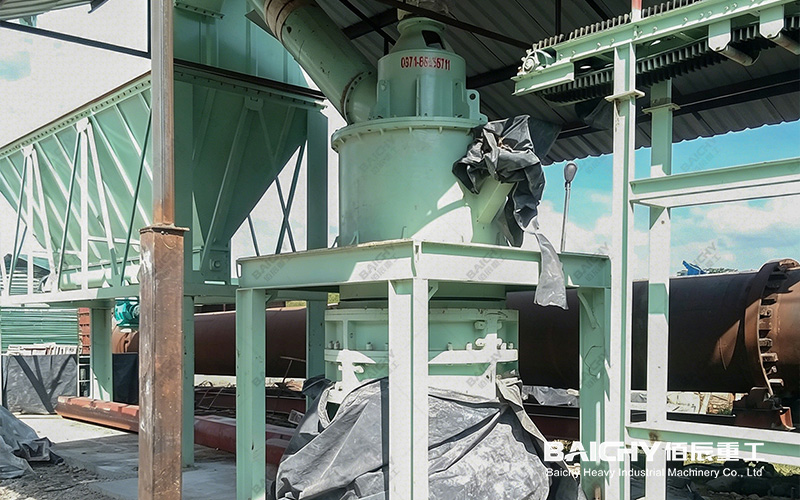
HGM Ultrafine Mill
Choose a Raymond Mill When
- You grind gypsum, barite, feldspar, limestone, phosphate rock or coal.
- The finished powder range is 80–325 mesh.
- You process large volumes and prioritize low unit cost.
- Your site has limited skilled maintenance staff.
Choose an HGM Ultrafine Mill When
- You grind calcite, talc, kaolin, calcium carbonate, wollastonite or other high-value non-metallic minerals.
- The buyer demands 800–2500 mesh or D97 ≤ 10 μm.
- You sell into premium markets: paper, plastics, coatings, cosmetics, rubber fillers.
- You can invest in pre-crushing and finer maintenance.
Investment, Maintenance and Operating Cost
The Raymond mill has a lower initial investment, simpler structure and larger, more accessible wear parts (rollers and rings in high-manganese steel or wear-resistant alloy), making it easier and cheaper to maintain in remote sites. The HGM ultrafine mill costs more upfront, uses finer internal parts, and its high-speed turbine classifier demands more skilled attention. However, its wear parts often have a longer service life per ton of ultra-fine product, and the premium selling price of micro powder typically recovers the higher investment quickly.
Conclusion
The HGM ultrafine grinding mill vs Raymond mill choice comes down to one question: what fineness does your market pay for? Standard 80–325 mesh powder → Raymond mill, for lower cost and higher throughput. Ultra-fine 325–2500 mesh powder → HGM ultrafine mill, for the narrow particle-size distribution and premium-grade output that only an ultrafine grinding mill can deliver.
As a professional manufacturer of crushers, grinding mills and mineral processing equipment, Baichy Heavy Industry supplies both lines, plus jaw crushers, bucket elevators, feeders and complete turnkey powder plants. Contact our engineers with your raw material, target mesh and daily output — we will recommend, size and quote the right powder grinding equipment for your project, and provide free commissioning and after-sales support worldwide.
FAQ — HGM Ultrafine Mill vs Raymond Mill
Q1. What is the main difference between an HGM ultrafine mill and a Raymond mill?
A: The main difference is finished fineness. A Raymond mill produces standard powder of 80–600 mesh (180–44 μm), while an HGM ultrafine mill reaches 325–2500 mesh with D97 as fine as 5 μm. They share a roller-and-ring grinding principle, but the HGM uses a three-ring structure and a high-speed turbine classifier for ultra-fine, tightly graded powder.
Q2. Can a Raymond mill grind to 2500 mesh?
A: Standard Raymond mill models top out around 600 mesh. With an upgraded classification system, some units can be extended toward 2500 mesh, but throughput drops sharply and particle-size uniformity suffers. For consistent 800–2500 mesh micro powder, an HGM ultrafine grinding mill is the more reliable and economical choice.
Q3. Which is more energy-efficient: Raymond mill or HGM ultrafine mill?
A: Both save 30–50% energy versus ball mills. Compared with each other, the Raymond mill consumes less energy per ton at the same medium-fineness output. The HGM ultrafine mill uses more energy per ton because finer grinding requires exponentially more energy — but that cost is justified by the higher market value of ultra-fine powder.
Q4. What is the feed size requirement for each mill?
A: A Raymond mill accepts feed up to about 30–40 mm, reducing the need for pre-crushing. An HGM ultrafine mill requires feed no larger than 20 mm, so a jaw crusher is normally mandatory before the ultrafine grinding mill in the process line.
Q5. Which minerals are best suited to an HGM ultrafine mill?
A: The HGM ultrafine mill is ideal for high-value non-metallic minerals such as calcite, talc, kaolin, heavy calcium carbonate and wollastonite, where buyers require 800–2500 mesh or D97 ≤ 10 μm for applications like paper filling, plastics, coatings, rubber and cosmetics.
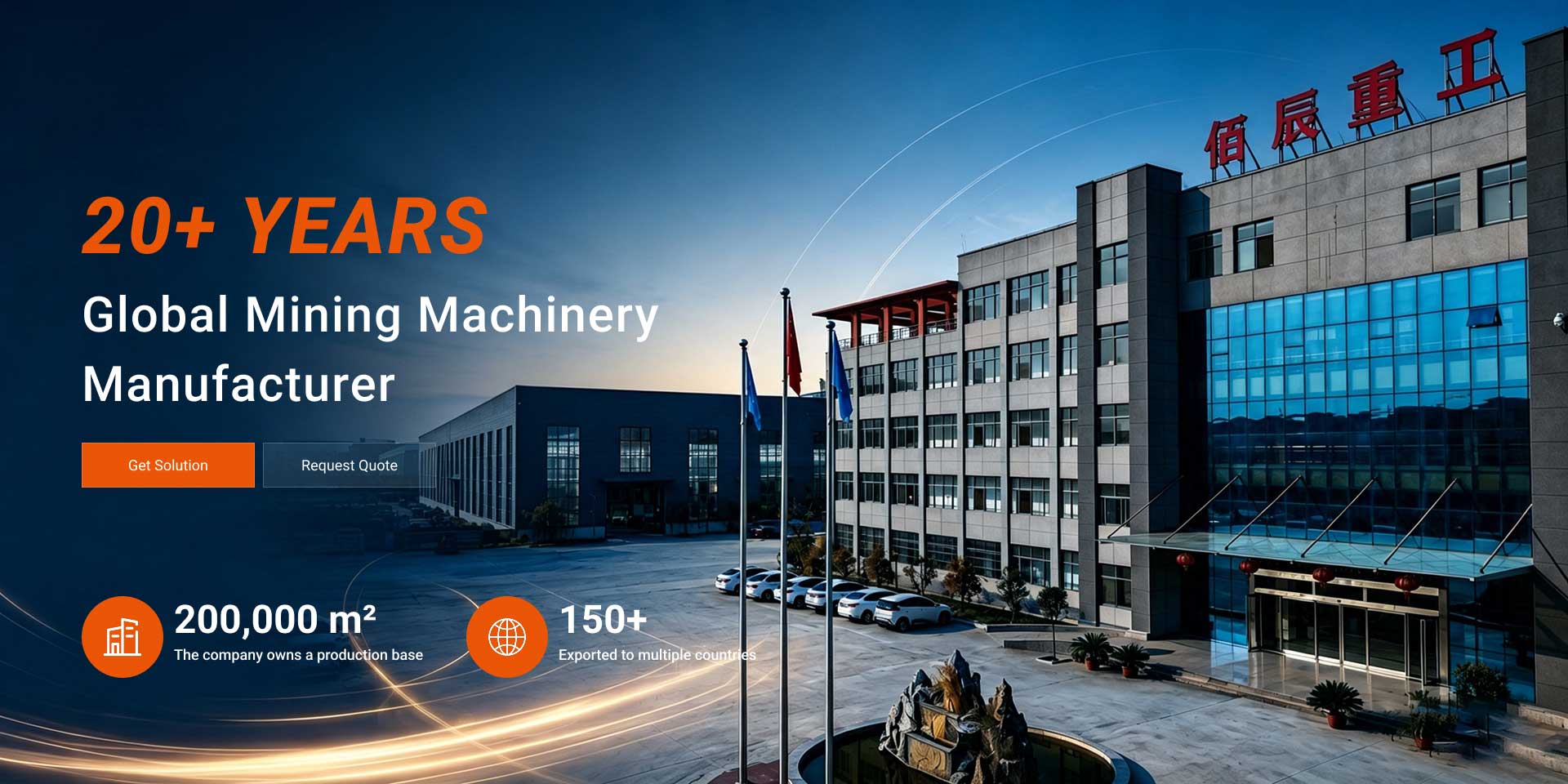
Baichy Heavy Industry
Baichy Heavy Industry is a high-tech mining equipment company integrating R&D, manufacturing, sales, and after-sales service. Focusing on crushing, grinding, and mineral processing equipment, we provide professional solutions to our customers. We are ISO9001:2015 、certified, and our products include mobile crushing palnts, crawler crushing plant, construction waste crushing plants, jaw crushers, sand making machines, cone crushers, fine crushers, grinding mills, ball mills, etc., all with reliable performance to meet diverse project needs.
Baichy Heavy Industry – Your Trusted Partner
To ensure optimal performance of your equipment, Baichy Heavy Industry offers:
- Professional on-site installation guidance
- Comprehensive operator training
- 24/7 technical support & maintenance services
Our complete after-sales service system guarantees long-term, stable operation of your machinery with minimal downtime.
Protect Your Rights – Only Use Official Channels
To avoid scams and ensure authentic support, contact us exclusively through:
• Official Website: www.baichychina.com
• WhatsApp: +8615093222637
• Email: [email protected]
Your satisfaction is our priority – expect prompt, professional service every time.
(Note: Beware of unauthorized third parties claiming to represent Baichy. Always verify through official contacts.)