
200TPH Granite Crushing Plant Design
Granite is one of the hardest and most abrasive natural stones on earth, with a compressive strength that often exceeds 160–250 MPa. Building a reliable 200tph granite crushing plant is therefore not about picking any crusher off a shelf — it is about engineering a balanced, three-stage granite crushing production line where every machine's capacity, chamber profile and power rating is matched to the material. Whether you are producing 5–10mm, 10–20mm and 20–31.5mm road aggregates, or 0–5mm manufactured sand, this guide walks you through a proven 200TPH granite crusher plant design — from process flow and equipment selection to layout, environmental protection and budget planning.
Understanding the 200TPH Granite Crushing Requirement
Before designing the granite crushing production line, three fundamentals must be fixed: final product size, feed material characteristics and operating hours.
- Target capacity: 200 tonnes per hour at a feed moisture below 3% and bulk density of about 1.6 t/m³.
- Feed size: blasted granite typically enters the plant at 500–800mm; oversized boulders may require a primary grizzly to protect the jaw crusher.
- Hardness & abrasiveness: granite is highly abrasive, so wear parts (jaw plates, cone liners, VSI rotor tips) dominate operating cost. This directly influences crusher selection and liner material choice (Mn18Cr2 or higher).
The correct answer for hard granite is a three-stage closed-circuit configuration: Jaw Crusher → Cone Crusher → VSI Sand Maker, with screening in between. This design maximises reduction, controls flakiness, and protects the sand maker from oversized feed.
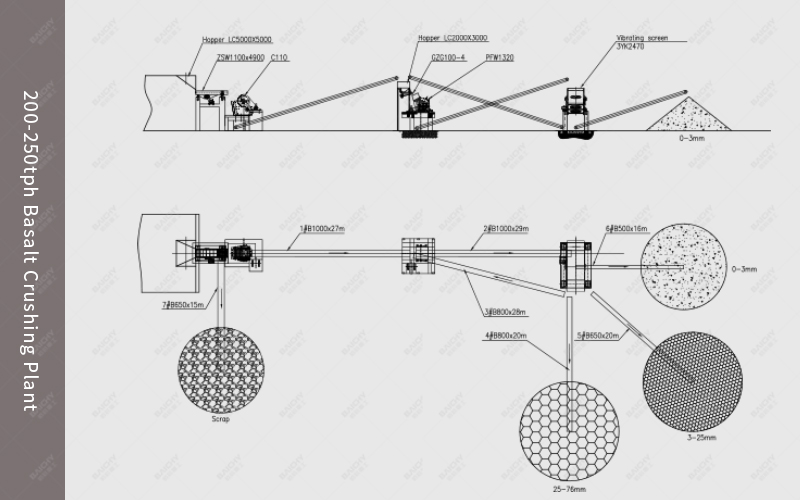
3-Stage Granite Crushing Process Flow
The 3-Stage Granite Crushing Process Flow
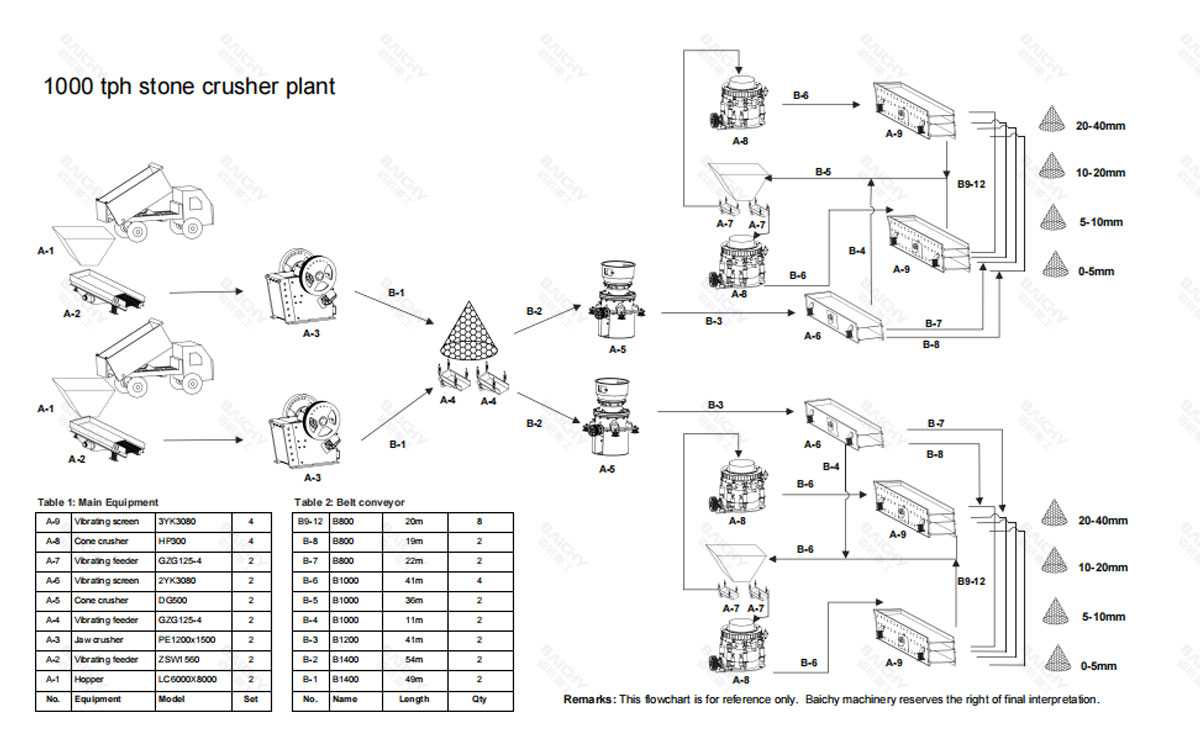
A well-designed 200tph granite crusher line follows a logical, closed-loop flow that recirculates oversized material until everything meets specification.
Stage 1 — Primary Crushing with a Jaw Crusher
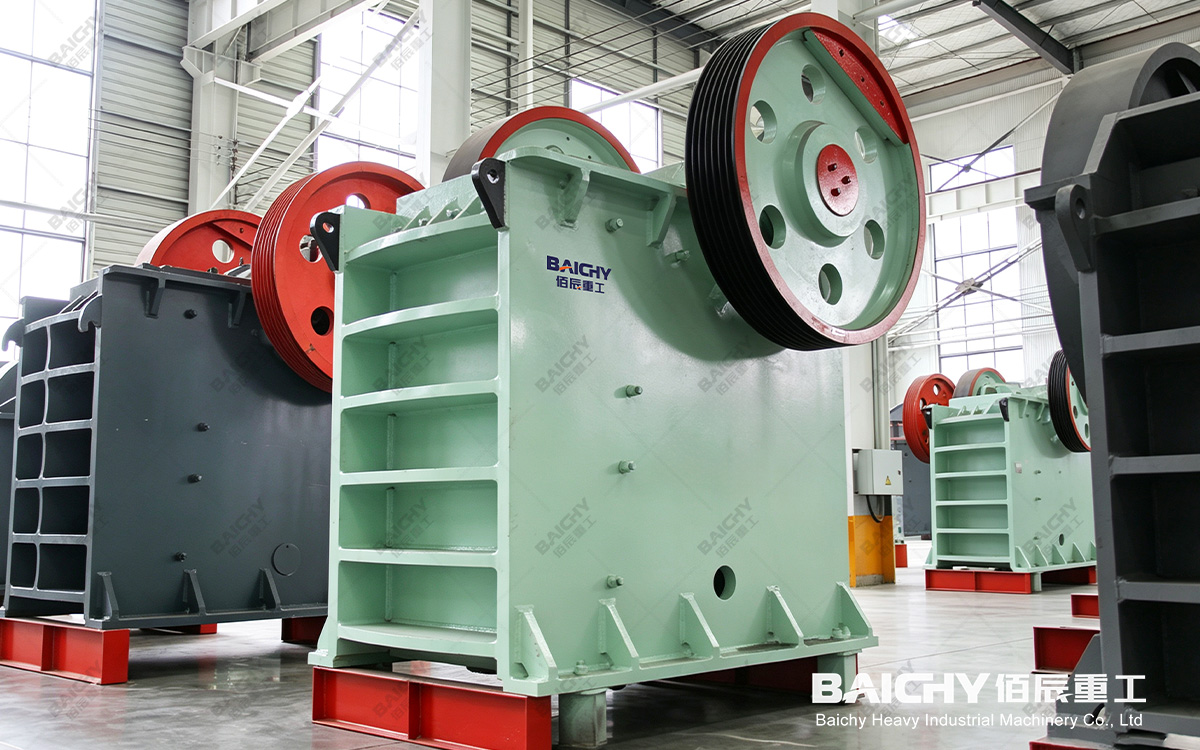
Raw granite is dumped into a vibrating grizzly feeder, which scalps fines (0–100mm) before they reach the crusher and protects the machine from tramp metal. The jaw crusher — typically a PE-750×1060 for 200tph duty — reduces 800mm feed down to a discharge of about 0–120mm. For granite, a deep-chamber jaw with a large feed opening and high crushing stroke is preferred to handle the abrasive rock efficiently.
Stage 2 — Secondary Crushing with a Cone Crusher
Because granite is hard, cone crushers outperform impact crushers at this stage — they crush by compression, producing fewer flat and elongated particles and consuming far less wear metal. A single-cylinder or multi-cylinder hydraulic cone crusher (e.g. PYB2200 or HPT300) takes the 0–120mm jaw discharge and reduces it to 0–40mm. The closed-circuit screen returns any +40mm material back to the cone, keeping product grading stable.
Stage 3 — Tertiary VSI Sand Making & Shaping
For 0–5mm manufactured sand and improved cubic particle shape, a VSI sand making machine (e.g. VSI1140) is the finishing stage. It receives 0–40mm feed, shapes the particles into the rounded, high-strength aggregates demanded by high-performance concrete, and produces sand at 200tph with adjustable rotor speed and cascade ratio. The final vibrating screen separates the finished products into stockpiles.
Complete 200TPH Granite Crushing Equipment Configuration
| Stage | Equipment | Recommended Model | Capacity (t/h) | Power (kW) | Function |
|---|---|---|---|---|---|
| Feeding | Vibrating Grizzly Feeder | ZSW-490×130 | 150–280 | 22 | Scalps fines, feeds jaw evenly |
| Primary | Jaw Crusher | PE-750×1060 | 150–280 | 110 | Reduces 800 mm feed to 0–120 mm |
| Secondary | Hydraulic Cone Crusher | HPT300 / PYB2200 | 180–260 | 220 | Crushes to 0–40 mm, low wear |
| Tertiary | VSI Sand Maker | VSI1140 | 180–250 | 264 | Sand making + particle shaping |
| Screening | Vibrating Screen | 2YK2160 × 2 sets | 200–400 | 30 each | Separates 0–5 / 5–10 / 10–20 / 20–31.5 mm |
| Conveying | Belt Conveyors | B800–B1000 series | 200–400 | 7.5–30 each | Transfers material between stages |
| Dust Control | Baghouse / Spray System | Custom | — | 30–60 | Suppresses dust at crushers & screens |
Note: Model selection depends on feed size, final product grading and local conditions. Baichy engineers can re-match each unit to your specific granite and target output.
Key Design Considerations for Hard Granite
Designing a granite crusher plant around hard rock requires attention to several factors that cheaper plants get wrong:
1. Wear life economics. Plan liner and rotor-tip replacement budgets. Cone liners and VSI tips are the biggest consumables; choose wear materials suited to abrasion and keep spare sets in stock.
2. Closed-circuit recirculation. The return conveyor and screen area must handle at least 30–40% return load without bottlenecks, or the real throughput will fall well below 200tph.
3. Flakiness control. Compression crushing in cones keeps flakiness below 10–15%, which is essential for meeting C30+ concrete and asphalt aggregate specs.
4. Iron protection. Install metal detectors and tramp iron relief on the cone and VSI to prevent costly chamber damage from stray steel in blasted rock.
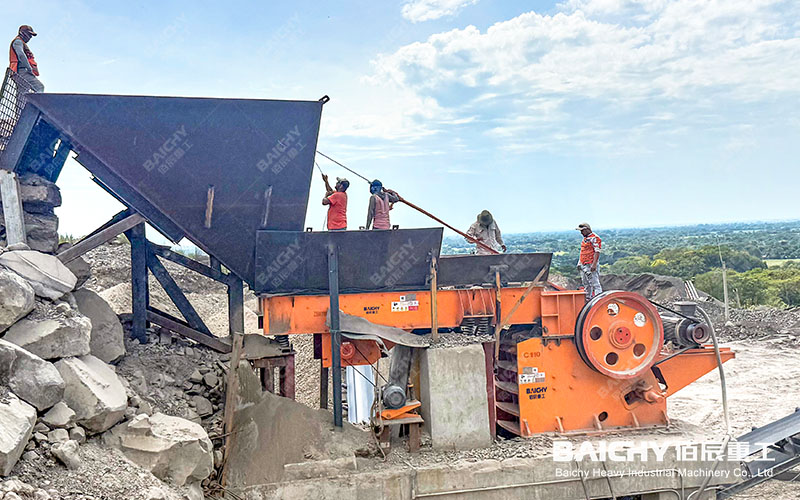
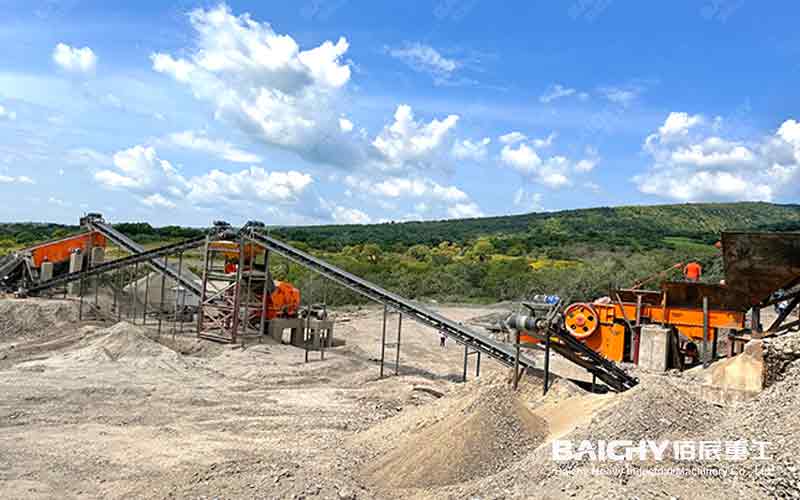
200tph granite crushing plant
Plant Layout & Site Design
A good 200TPH granite crushing plant layout minimises conveyor length, keeps maintenance access open, and lowers total steelwork and civil cost:
- Longitudinal layout — feeder, jaw, cone, VSI and screens in a straight line reduces transfer points and dust leakage.
- Elevation planning — use gravity flow between stages to cut conveyor horsepower and operating cost.
- Product stockpiles — arrange under-screen discharge chutes so each size range drops into a separate stockpile or load-out bin.
- Access & maintenance — leave crane and forklift access around crushers for quick liner changes.
Environmental Protection & Dust Control
Modern granite crushing plants must meet strict environmental standards. Integrate from day one:
- Baghouse dust collectors at crushers and screens capture respirable dust.
- Water spray systems at feed points, discharge chutes and stockpile ramps suppress fugitive dust.
- Enclosed transfer towers and conveyors prevent wind-blown dust.
- Wastewater and sludge handling keeps wash water from sand-making contained and recyclable.
Automation & Control
A 200tph plant should run on a PLC/central control system that monitors motor current, belt speed and material level, and auto-starts/stops equipment in sequence. Remote monitoring of key machines reduces downtime and labour, while integrated metal detection protects crushers automatically. These systems are standard in Baichy's modern installations and directly improve both safety and annual operating hours.
Estimating the Cost of a 200TPH Granite Crushing Plant
Total investment typically ranges from USD 250,000 to 600,000+ for a turnkey 200tph granite crushing production line, depending on:
- Crusher quality — hydraulic cone and VSI vs. cheaper spring cone.
- Civil works & steel structure — foundations, supports and stockpile civil.
- Automation & dust control — environmental compliance level.
- Delivery & installation — site conditions, freight and commissioning.
Operating cost is dominated by power (~USD 1.5–2.5/tonne) and wear parts, so choosing energy-efficient, durable crushers and maintaining them properly is the single biggest lever on long-term profitability.
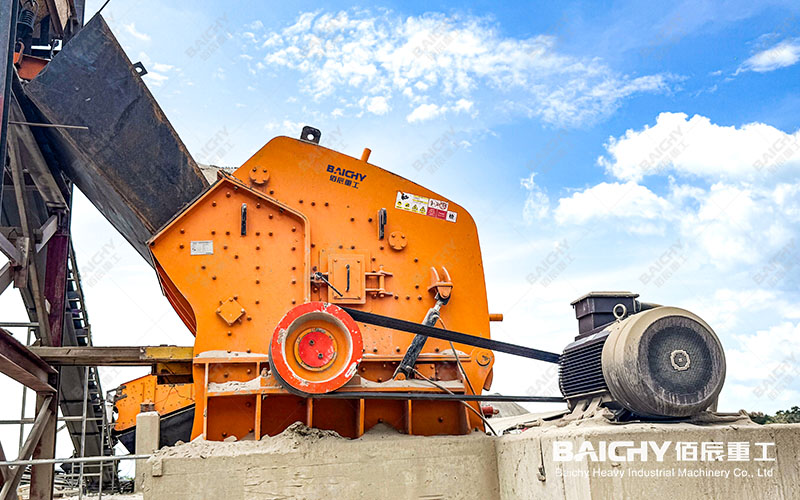
granite crushing production line
Why Choose Baichy for Your Granite Crushing Plant
As a professional manufacturer of mining crushing, ore grinding and mineral processing equipment, Baichy Heavy Industry provides complete granite crushing plant solutions — from process design and equipment supply to installation, commissioning and after-sales training. We engineer every granite crushing production line around your specific feed size, product grading and capacity target, and we stand behind our machines with reliable spare-part support worldwide.
Conclusion
A successful 200TPH granite crushing plant is the result of careful process design, correct crusher selection for hard, abrasive granite, a balanced jaw-cone-VSI three-stage layout, and disciplined attention to dust, wear and automation. Get these fundamentals right and you will achieve stable 200tph output, high-quality aggregates and sand, and a profitable, low-downtime operation for years.
FAQs
Q1: What equipment is needed in a 200tph granite crushing plant?
A complete 200tph granite crushing plant needs a vibrating grizzly feeder, a primary jaw crusher, a secondary hydraulic cone crusher, a VSI sand making machine, two to three vibrating screens, belt conveyors and a dust collection system. For hard granite, this three-stage jaw-cone-VSI configuration is the recommended standard to achieve 200tph with stable product grading.
Q2: Why use a cone crusher instead of an impact crusher for granite?
Granite is extremely hard and abrasive, with compressive strength over 160 MPa. Cone crushers crush by compression, which produces less flaky material and dramatically reduces wear-metal consumption compared to impact crushers. This makes the cone crusher the most cost-effective secondary and tertiary option for granite.
Q3: What final aggregate sizes can a 200tph granite crushing line produce?
A typical line produces 0–5mm manufactured sand, 5–10mm, 10–20mm and 20–31.5mm aggregates, adjustable via screen mesh selection. The VSI stage shapes particles to produce high-quality cubic aggregates suitable for concrete and asphalt applications.
Q4: How much does a 200tph granite crushing plant cost?
A turnkey 200tph granite crushing production line typically costs USD 250,000 to 600,000+, depending on crusher quality, civil works, automation level, dust control and installation conditions. Operating cost is dominated by power and wear parts, roughly USD 1.5–2.5 per tonne.
Q5: How do I control dust in a granite crushing plant?
Dust is controlled with baghouse dust collectors at crushers and screens, water spray systems at feed and discharge points, enclosed transfer towers and conveyors, and contained sludge handling for sand-making wash water. Integrating these from the design stage ensures environmental compliance.
Baichy Heavy Industry
Baichy Heavy Industry is a high-tech mining equipment company integrating R&D, manufacturing, sales, and after-sales service. Focusing on crushing, grinding, and mineral processing equipment, we provide professional solutions to our customers. We are ISO9001:2015 、certified, and our products include mobile crushing palnts, crawler crushing plant, construction waste crushing plants, jaw crushers, sand making machines, cone crushers, fine crushers, grinding mills, ball mills, etc., all with reliable performance to meet diverse project needs.
Baichy Heavy Industry – Your Trusted Partner
To ensure optimal performance of your equipment, Baichy Heavy Industry offers:
- Professional on-site installation guidance
- Comprehensive operator training
- 24/7 technical support & maintenance services
Our complete after-sales service system guarantees long-term, stable operation of your machinery with minimal downtime.
Protect Your Rights – Only Use Official Channels
To avoid scams and ensure authentic support, contact us exclusively through:
• Official Website: www.baichychina.com
• WhatsApp: +8615093222637
• Email: [email protected]
Your satisfaction is our priority – expect prompt, professional service every time.
(Note: Beware of unauthorized third parties claiming to represent Baichy. Always verify through official contacts.)