
Limestone Crusher Selection
Why Limestone Crushing Deserves a Careful Equipment Choice
Limestone is one of the most widely quarried rocks in the world. It feeds cement kilns, road base, concrete aggregate, and agricultural lime, and the way you crush it directly decides your product shape, operating cost and return on investment. Because limestone is soft to medium-hard (Mohs hardness of about 3, compressive strength typically 50–150 MPa), it can be processed by more than one type of limestone crusher. That is exactly why many operators ask the same question: should I buy a jaw crusher or an impact crusher for limestone? Choosing the right limestone crusher for your site is the fastest way to control aggregate quality and energy cost.
The honest answer is that it depends on your feed size, your target product, and your budget. In this limestone crusher guide, Baichy Heavy Industry compares jaw crushers and impact crushers across every decision factor — crushing principle, reduction ratio, product shape, wear cost, capacity and capital — and shows you how to build the most economical limestone crushing plant. Read the full guide to confirm which limestone crusher fits your quarry before you buy.
What Is a Jaw Crusher for Limestone?
Jaw Crusher for Limestone
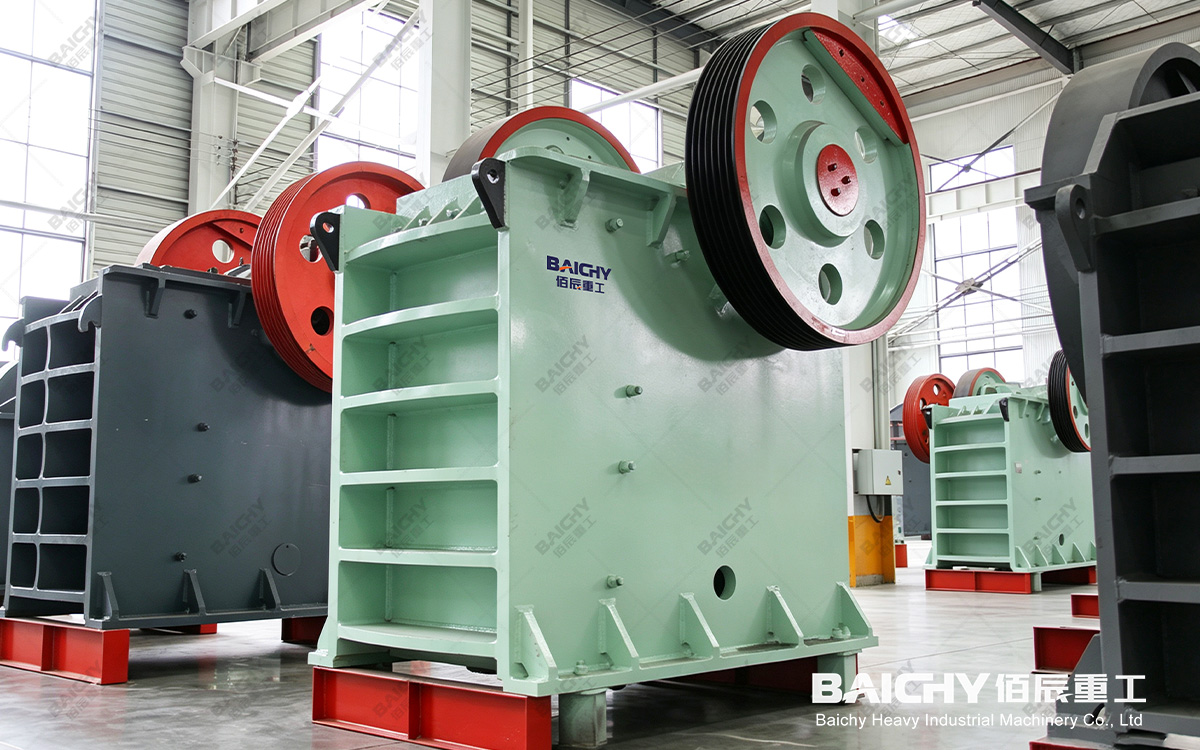
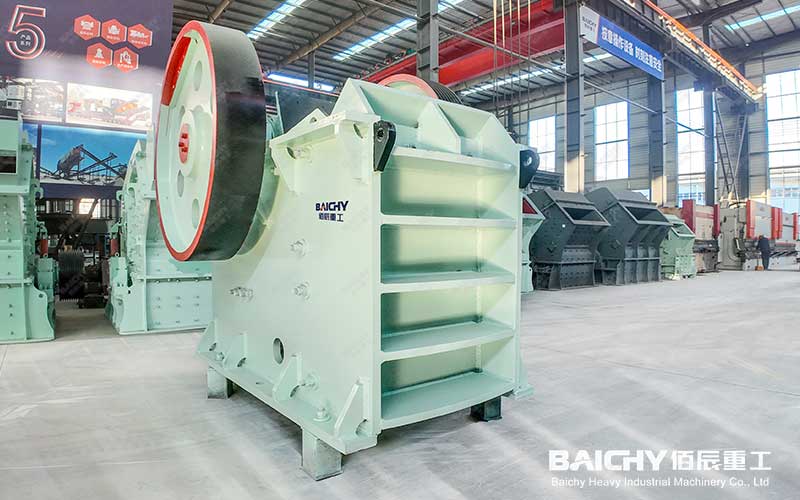
A jaw crusher is a primary limestone crusher that breaks rock by compression. The raw limestone is fed into a V-shaped chamber and squeezed between a fixed jaw plate and a moving jaw plate until it fractures into coarse pieces.
How a Jaw Crusher Works
The moving jaw swings toward the fixed jaw under the drive of an eccentric shaft, applying enormous compressive force (up to 320 MPa). Limestone that is larger than the discharge opening is repeatedly compressed and broken until it falls through. This is a simple, robust, and highly reliable crushing action.
Strengths and Weaknesses of the Jaw Crusher
Strengths: handles the largest feed (up to 1200 mm), accepts hard and abrasive rock, low wear cost per ton, low fines generation, extremely durable and easy to maintain.
Weaknesses: moderate reduction ratio (4:1–6:1), produces more elongated and flaky particles, and is therefore rarely used alone when cubical aggregate is required.
What Is an Impact Crusher for Limestone?
An impact crusher breaks limestone by high-speed impact. A rotor fitted with blow bars throws the stone at high velocity against impact plates and against other stones, shattering it along its natural cleavage planes.
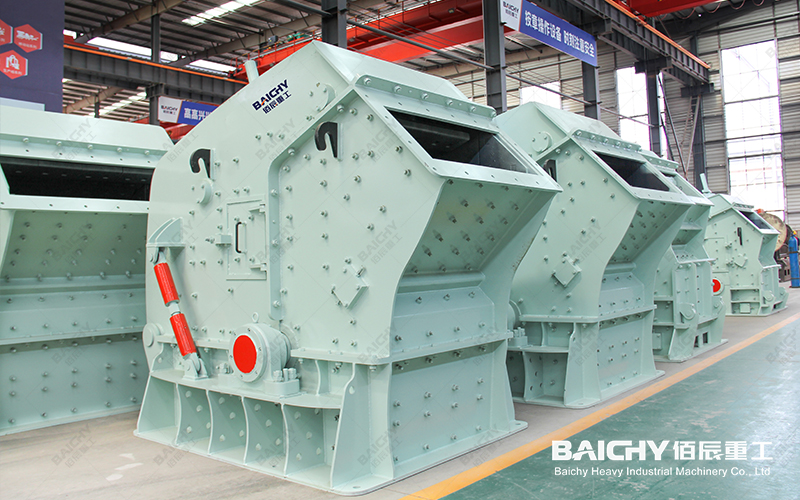
Impact Crusher for Limestone
How an Impact Crusher Works
The feed enters the crushing chamber and is struck by the rotating blow bars. Each collision splits the limestone into smaller fragments, which then rebound off the impact liners and break again. The repeated impact produces a high reduction ratio of 10:1 to 20:1 in a single pass.
Strengths and Weaknesses of the Impact Crusher
Strengths: excellent cubical product shape, high reduction ratio (a single impact crusher can replace a jaw plus cone for soft rock), lower initial capital, high flexibility with adjustable output. For this reason, the impact crusher is the most popular limestone crusher among aggregate producers.
Weaknesses: higher wear cost per ton on abrasive rock, more fines generation, and a limited feed size compared to a jaw crusher.
Jaw Crusher vs Impact Crusher for Limestone: Key Comparison
The table below summarizes how the two limestone crusher types compare across the factors that matter most to plant operators.
| Comparison Criterion | Jaw Crusher | Impact Crusher |
|---|---|---|
| Crushing principle | Compression (squeezing) | High-speed impact (blow bars) |
| Typical crushing stage | Primary crusher | Primary (single-stage) or secondary crusher |
| Max feed size | Up to 1200 mm | Up to 400 mm (CI series up to 1000 mm) |
| Reduction ratio | 4:1 – 6:1 | 10:1 – 20:1 |
| Suitable material | Hard, tough and abrasive rock | Soft to medium-hard, low-abrasion rock (ideal for limestone) |
| Product shape | Elongated, flaky, irregular | Excellent cubical, few flats |
| Fines generation | Low | Moderate to high (15–25%) |
| Wear parts | Jaw plates, cheek plates | Blow bars, impact plates, liners |
| Wear cost per ton | Low | Higher on abrasive rock; moderate on limestone |
| Capacity range (Baichy) | 15–800 t/h (motor 45–630 kW) | 15–800 t/h (motor 45–630 kW) |
| Initial investment | Higher for primary capacity | Lower per ton for soft rock |
| Best use case | Oversize feed, hard rock, road base | Cubical aggregate, cement, single-stage soft rock |
Crushing Principle: Compression vs Impact
The single most important difference is how each limestone crusher applies force. A jaw crusher squeezes, which is ideal for very hard rock but produces slabby particles. An impact crusher shatters the stone with high-speed collision, which naturally yields more cubical grains — exactly what concrete and road specification demand.
Feed Size and Reduction Ratio
If your quarry feeds boulders of 800–1200 mm, a jaw crusher is often required as the primary limestone crusher because of its large inlet. If your feed is already below 400 mm, an impact crusher can process it in one stage thanks to its high reduction ratio, cutting your equipment count and your energy bill. Ask Baichy engineers which limestone crusher matches your feed before finalizing the plant layout.
Output Shape and Fines
Aggregate buyers pay a premium for cubical stone. An impact crusher delivers superior particle shape with fewer flaky pieces, which makes it the preferred limestone crusher for concrete aggregate. The trade-off is higher fines generation, which is usually acceptable or even useful for cement plants and road base.
Wear Cost and Operating Cost
On hard, abrasive granite, an impact crusher burns through blow bars quickly. But limestone is soft and mildly abrasive, so wear is manageable — this is why the impact crusher is widely regarded as the most economical limestone crusher for soft rock. A jaw crusher keeps wear cost low but may require a downstream cone or impact crusher to achieve the final product size. Over the life of the plant, the total cost of ownership of each limestone crusher depends on your feed material and maintenance routine.
Capacity and Capital
Both limestone crusher types scale up to high throughput (Baichy units reach 800 t/h). For identical output, an impact crusher often has a lower initial price per ton on soft limestone, whereas a jaw crusher carries higher primary capital but lower running cost. Your decision should balance capital, wear cost and required product shape together, not any single factor.
When to Choose a Jaw Crusher vs an Impact Crusher
• Choose a jaw crusher for limestone when: feed exceeds 400–800 mm, the rock is hard or abrasive, you need a durable primary stage, or the final product only needs to be coarse (road base, fill).
• Choose an impact crusher for limestone when: you need cubical aggregate for concrete or asphalt, the feed is moderate, or you want a single-stage limestone crusher to save equipment and energy.
• Combine both for large plants: for a high-capacity limestone crushing plant, the classic "69 line" pairs a PE600×900 jaw crusher with a PF1214 impact crusher — the jaw handles the oversize boulders and the impact crusher shapes the final product.
Two-Stage Limestone Crushing Plant Design
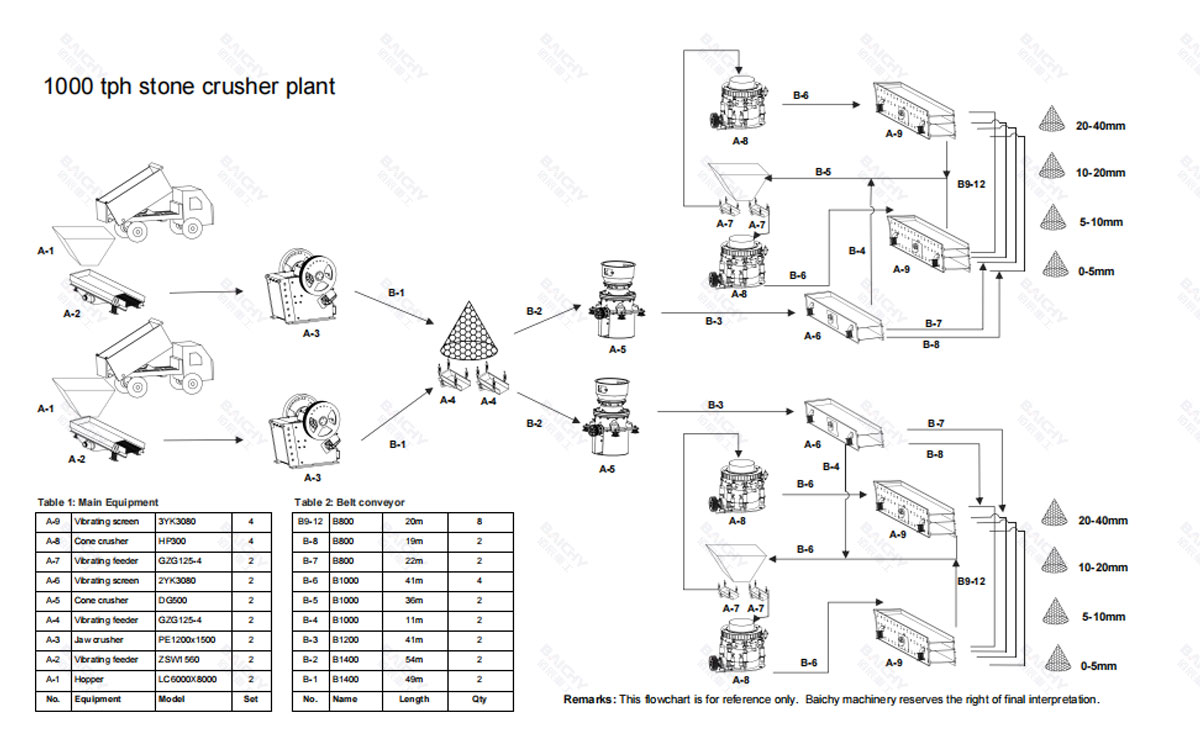
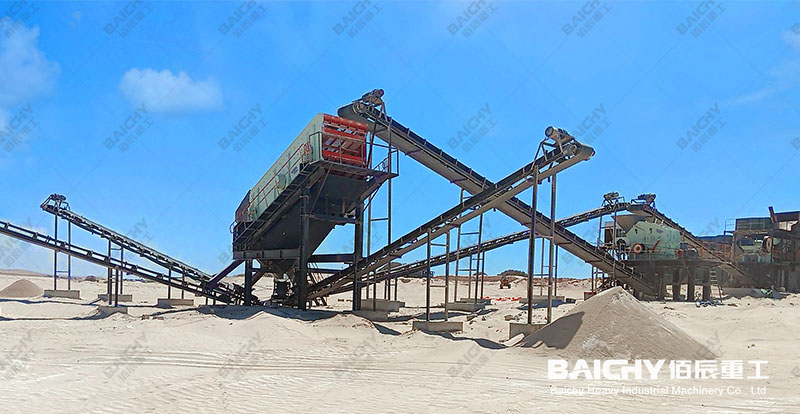
For most commercial limestone crushing plants, the most economical configuration is jaw crusher (primary) + impact crusher (secondary). The jaw crusher reduces oversized boulders to 100–250 mm; the impact crusher then shapes them into 0–30 mm cubical aggregate. This combination maximizes throughput while guaranteeing product quality, and it is the layout Baichy engineers recommend most often for 100–800 t/h limestone projects worldwide.
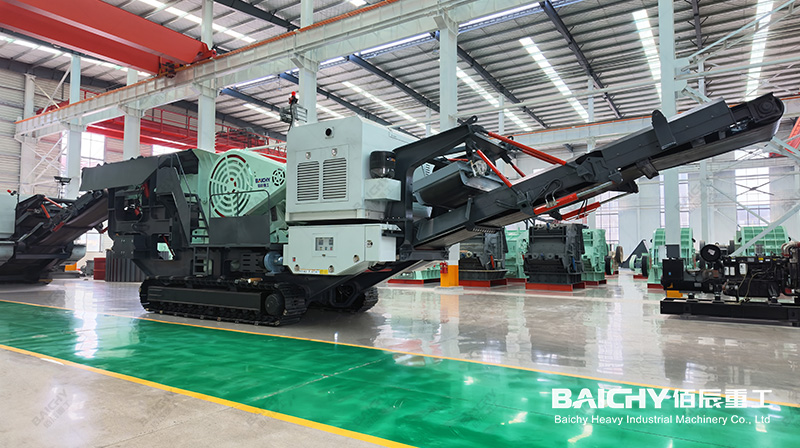
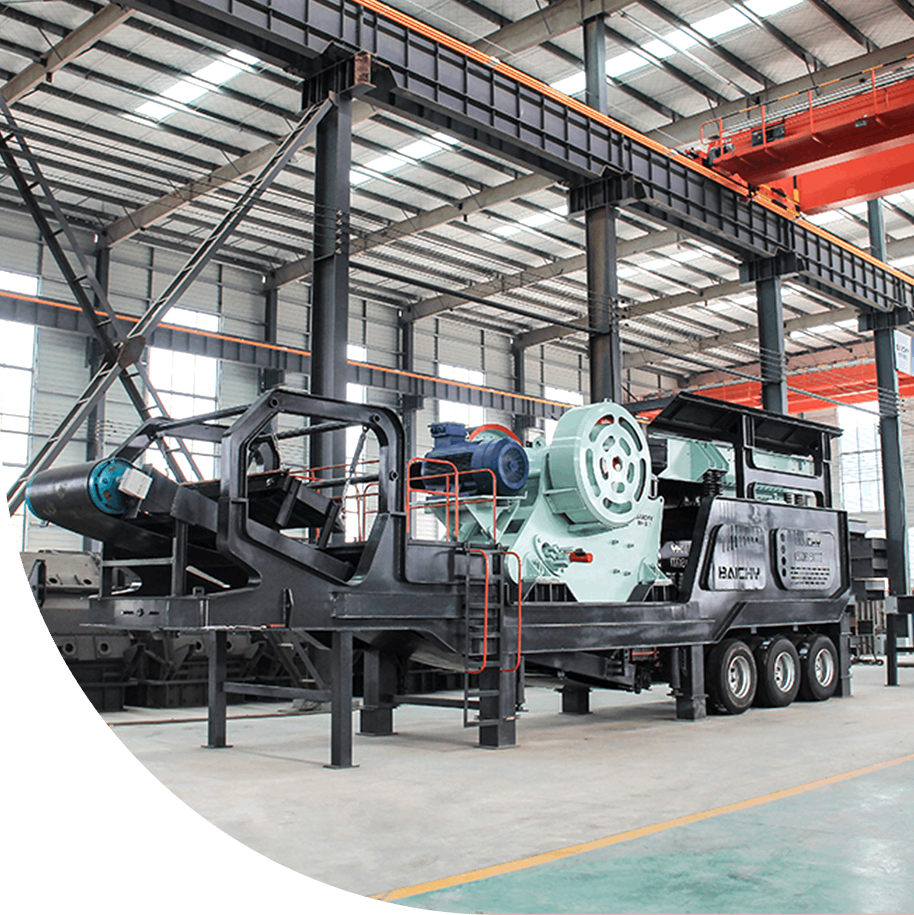
For smaller or softer feed, a single impact crusher may be enough. Baichy also offers mobile impact crusher plants and crawler jaw crushing plants that let you crush at the quarry face and move with the mining front. Whichever limestone crusher you choose, the plant design should be sized around your quarry's actual boulder size and target tonnage.
Baichy Limestone Crusher Solutions
Baichy Heavy Industry (Zhengzhou) is a leading manufacturer of mining crushing, ore grinding and mineral processing equipment, trusted in more than 150 countries. Our range covers PE/PEX jaw crushers, PF and CI series impact crushers, cone crushers, sand-making machines, and stationary and mobile limestone crushing plants. Every limestone crusher we deliver is matched to your material hardness, feed size, target product and budget by our engineers. Contact Baichy for a free crushing plant design and factory-direct quotation.
Conclusion: Choose the Limestone Crusher That Fits Your Operation
There is no single "best" limestone crusher — there is only the best match for your feed and product. Use a jaw crusher when you have oversized, hard feed and need durability; use an impact crusher when you need cubical aggregate and economical single-stage crushing; and combine both in a two-stage limestone crushing plant for the highest output. Plan your limestone crushing line around these facts, and your aggregate quality and operating cost will both improve. If you are still deciding between a jaw crusher and an impact crusher, contact Baichy for a free equipment recommendation tailored to your limestone crusher project.
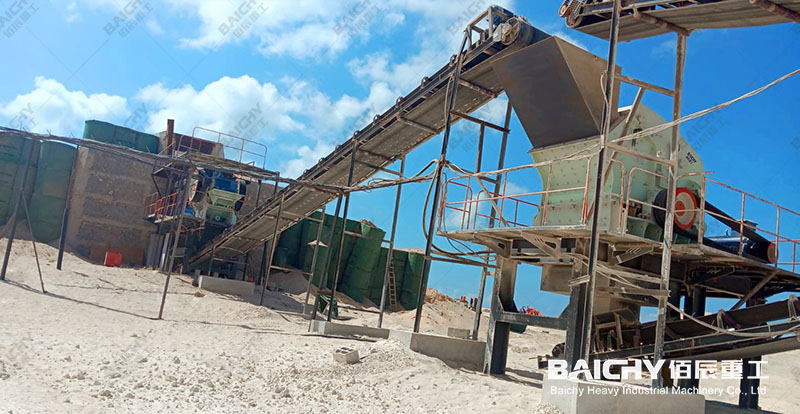
Limestone Crusher Selection
FAQ: Jaw Crusher vs Impact Crusher for Limestone
1. Can an impact crusher replace a jaw crusher for limestone?
Yes, for soft to medium-hard limestone with a feed size below about 400 mm, a single impact crusher can replace the jaw-plus-cone combination thanks to its high reduction ratio of 10:1–20:1. If your feed contains boulders over 800 mm, keep a jaw crusher as the primary stage.
2. Why is the impact crusher the first choice for limestone?
Because limestone is soft and mildly abrasive, the impact crusher delivers superior cubical product shape and a high reduction ratio with manageable wear cost, making it the most economical limestone crusher for concrete aggregate and cement feed.
3. Which crusher gives a better aggregate shape — jaw or impact?
The impact crusher produces clearly better cubical particles with fewer flaky pieces, because high-speed impact fractures the rock along its natural cleavage planes. A jaw crusher produces more elongated, irregular particles suited to road base and fill.
4. What are the typical feed size and capacity for limestone jaw and impact crushers?
Baichy jaw crushers accept up to 1200 mm feed at 15–800 t/h; impact crushers accept up to 400 mm feed (CI series up to 1000 mm) at 15–800 t/h. The right limestone crusher choice depends on your boulder size and required throughput.
5. Should my limestone crushing plant be single-stage or two-stage?
For small, soft feed use a single impact crusher. For commercial output above about 100 t/h, the recommended two-stage design pairs a jaw crusher with an impact crusher — the jaw handles oversize boulders and the impact crusher shapes cubical aggregate. Baichy engineers will size the full limestone crushing plant and recommend the most cost-effective limestone crusher for you.
Baichy Heavy Industry
Baichy Heavy Industry is a high-tech mining equipment company integrating R&D, manufacturing, sales, and after-sales service. Focusing on crushing, grinding, and mineral processing equipment, we provide professional solutions to our customers. We are ISO9001:2015 、certified, and our products include mobile crushing palnts, crawler crushing plant, construction waste crushing plants, jaw crushers, sand making machines, cone crushers, fine crushers, grinding mills, ball mills, etc., all with reliable performance to meet diverse project needs.
Baichy Heavy Industry – Your Trusted Partner
To ensure optimal performance of your equipment, Baichy Heavy Industry offers:
- Professional on-site installation guidance
- Comprehensive operator training
- 24/7 technical support & maintenance services
Our complete after-sales service system guarantees long-term, stable operation of your machinery with minimal downtime.
Protect Your Rights – Only Use Official Channels
To avoid scams and ensure authentic support, contact us exclusively through:
• Official Website: www.baichychina.com
• WhatsApp: +8615093222637
• Email: [email protected]
Your satisfaction is our priority – expect prompt, professional service every time.
(Note: Beware of unauthorized third parties claiming to represent Baichy. Always verify through official contacts.)