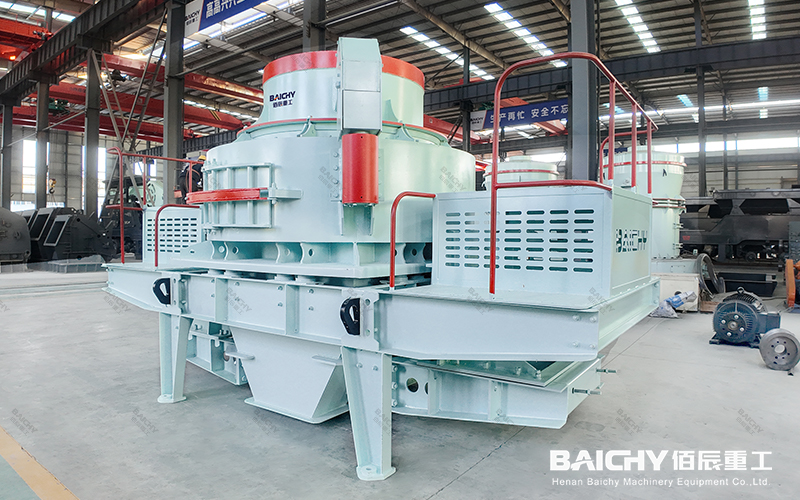
Vertical Shaft Impact (VSI) Crusher
The VSI crusher (Vertical Shaft Impact crusher), widely known as the sand making machine, is one of the most essential machines in modern aggregate, artificial sand, and mining production lines. Unlike traditional jaw or cone crushers that rely on compression, the VSI crusher uses high-speed impact and stone-on-stone collision to break rock, producing exceptionally cubical, well-graded particles. As a professional manufacturer of mining crushing, ore grinding, and mineral processing equipment, Baichy Heavy Industry designs and supplies complete VSI crusher solutions. This article explains the VSI crusher working principle, its core components, key applications, and how to select the right vertical shaft impact crusher for your plant.
What Is a VSI Crusher (Sand Making Machine)?
A VSI crusher is a tertiary or quaternary impact crushing machine built around a vertically oriented rotor. Material fed into the center of the rotor is accelerated to very high speed and ejected against either a stationary metal anvil ring or a natural material lining (rock shelf), where it shatters on impact. Because crushing occurs through particle-to-particle collision rather than between two fixed metal plates, the VSI crusher delivers three major advantages: superior cubical particle shape, a high sand-making ratio, and relatively low wear cost.
The vertical shaft impact crusher is sometimes called a sand making machine because its most common task is producing fine, cubical aggregates in the 0–5 mm range for concrete, mortar, and asphalt. However, its role goes far beyond sand: the VSI crusher is also used to reshape coarse aggregate, to crush ore before grinding, and to process various industrial minerals. Understanding the VSI crusher working principle is the first step to optimizing its performance.
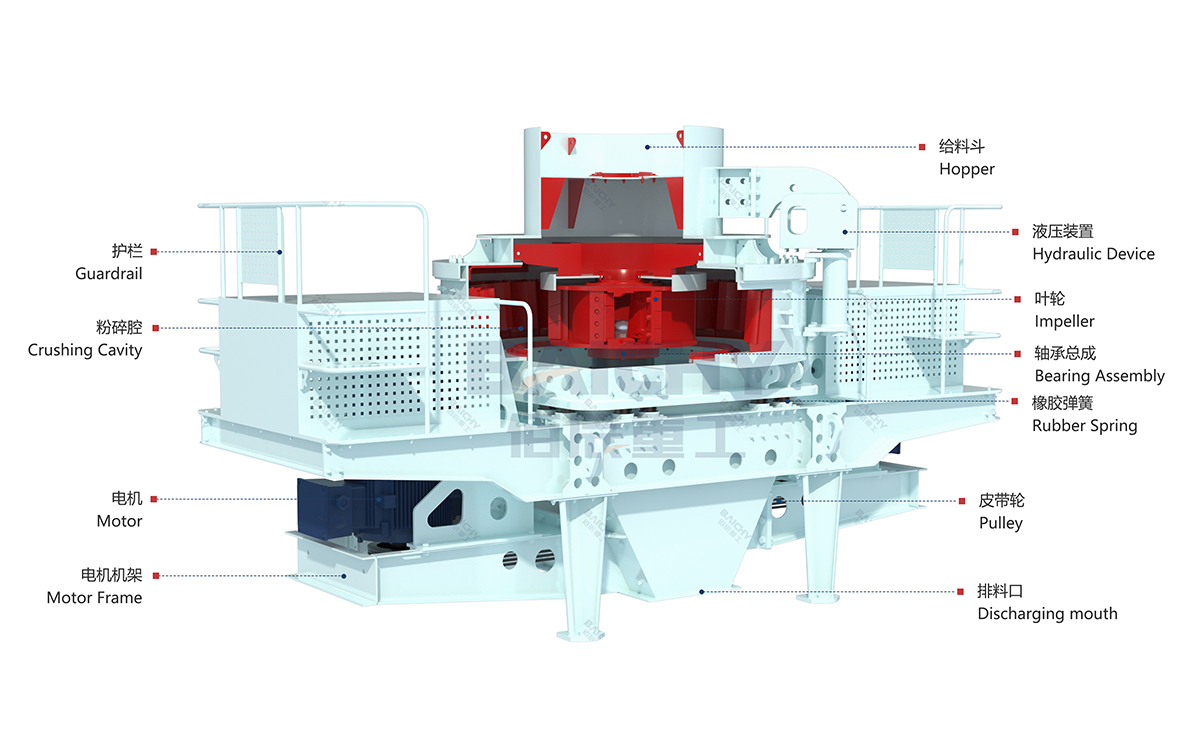
Structural diagram of the sand-making machine
How Does a Vertical Shaft Impact Crusher Work?
Step-by-Step Working Principle of the VSI Crusher
The VSI crusher working principle can be described in five clear stages:
1. Feeding. Material enters the VSI crusher through the feed hopper and falls onto the distributor plate or through the feed tube.
2. Distribution. The feed is split into two streams: the main stream drops into the high-speed rotor, while the second stream bypasses the rotor and forms the "cascade" material bed that lines the crushing chamber walls.
3. Acceleration. Inside the rotor, the material is driven to the periphery by centrifugal force and is thrown outward at a tip speed that can reach 70–80 m/s.
4. Impact. The ejected particles strike the surrounding rock shelf (stone-on-stone) or the anvil ring (stone-on-metal), shattering into smaller pieces.
5. Reduction & Discharge. Smaller particles fall through the outlet into the discharge opening and are carried away, while oversized material continues to be crushed until it passes the required size.
This self-sustaining "rock shelf" lining is the heart of the vertical shaft impact crusher: it protects the metal wear parts and means that most of the crushing work is done rock against rock.
Stone-on-Stone vs. Stone-on-Metal Crushing Modes
The VSI crusher offers two crushing modes, selected by changing the rotor tip and the chamber lining configuration:
- Stone-on-stone (rock on rock): Material is thrown against a natural material bed lining the chamber. This mode minimizes metal wear, is ideal for abrasive rocks, and produces the cleanest, most cubical products. It is the preferred mode for most VSI crusher sand-making applications.
- Stone-on-metal (rock on anvil): Material is thrown against steel anvils. This mode produces a higher sand ratio and a finer product, but increases wear cost. It suits less abrasive materials and applications where maximum reduction is required.
Choosing the right mode is a key part of tuning any VSI crusher to meet a specific product spec while controlling operating cost.
The Role of the Material Distributor and Cascade
Two details make a modern VSI crusher efficient. The material distributor evenly splits feed between the rotor and the cascade, ensuring uniform wear and consistent product quality. The cascade itself creates a dense layer of material against the walls, so incoming high-speed particles collide with other rock rather than with steel. The result is lower energy consumption per ton and a longer service life for wear parts — a decisive factor when you evaluate the total cost of ownership of a vertical shaft impact crusher.
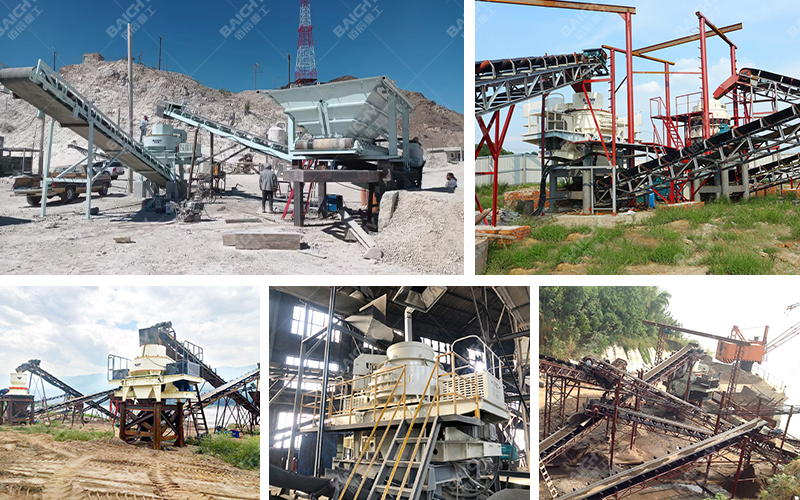
VSI Crusher Working Principle & Applications (Full Guide)
Key Components of the VSI Crusher
A reliable VSI crusher is built from several carefully engineered components:
| Component | Function |
|---|---|
| Feed hopper & feed tube | Directs incoming material into the machine and prevents spillage |
| Distributor plate | Splits feed evenly between the rotor and the cascade |
| High-speed rotor | Accelerates material to high tip speed by centrifugal force |
| Rock shelf / anvil ring | Impact surface where material is shattered |
| Casing & frame | Housing that contains the crushing chamber and supports the machine |
| Bearing assembly & shaft | Supports the rotor and transmits power at high speed |
| Motor & VFD (variable frequency drive) | Drives the rotor and enables speed adjustment for product control |
| Discharge opening | Passes finished material out of the crushing chamber |
| Hydraulic opening system | Allows fast access to wear parts for maintenance |
Each part plays a role in the VSI crusher working principle, and quality components directly determine throughput, product shape, and downtime.
Core Benefits of the VSI Sand Making Machine
Why do aggregate and mining plants around the world choose the VSI crusher? The benefits are clear:
- Superior cubical particle shape. The impact-based VSI crusher working principle naturally produces round, cubic grains with very low flakiness — ideal for concrete and asphalt.
- High sand-making ratio. A vertical shaft impact crusher can convert a large share of feed into 0–5 mm manufactured sand, reducing the need for screening losses.
- Lower wear cost. The stone-on-stone mode keeps most wear inside the material bed, cutting metal replacement expense.
- Adjustable product size. By changing rotor speed and feed rate, one VSI crusher can deliver different gradations without reconfiguration.
- Simple, low-maintenance design. With few moving parts and quick-access doors, the sand making machine is easy to service.
- Excellent for hard and abrasive rock. Granite, basalt, quartz, and river pebble are all handled efficiently by the VSI crusher.
Main Application Scenarios
Artificial Sand for Concrete Production
The most common application of the VSI crusher is producing artificial sand (manufactured sand) from crushed rock. Because concrete strength and workability depend heavily on particle shape and gradation, the cubical output of the vertical shaft impact crusher improves the concrete mix, reduces cement consumption, and increases pumpability. Sand plants pair a VSI crusher with a jaw or cone crusher and a vibrating screen to produce consistent 0–5 mm manufactured sand.
Road and Railway Construction
Highway bases, railway ballast, and asphalt mixtures demand strong, durable, well-shaped aggregates. The VSI crusher reshapes crushed material, removes weak edges and flat particles, and improves particle interlocking. For high-speed rail ballast and airport pavement, the vertical shaft impact crusher is often the reshaping machine of choice.
Mining and Ore Beneficiation
In mineral processing, the VSI crusher performs tertiary crushing to prepare ore for grinding, or it pre-crushes hard ore to increase mill throughput. Its high reduction ratio and cubical output help liberation of valuable minerals, which boosts recovery in downstream beneficiation. The sand making machine is also used to produce fine aggregate for backfill and cemented filling in underground mines.
Hydropower and Dam Construction
Massive dam and hydropower projects require millions of tons of high-quality aggregates with precise grading. The VSI crusher provides the high-capacity, low-flakiness material needed for mass concrete, riprap, and aggregate bedding. Its reliability under continuous, heavy-duty operation makes the vertical shaft impact crusher a trusted choice for these long-running projects.
Recycling and Other Industries
The VSI crusher is increasingly used to recycle construction and demolition waste, producing reusable aggregate from old concrete. It also serves glass recycling, quartz and silica sand production for glass and electronics, refractory materials, and abrasives. Wherever cubical fine aggregate or mineral sand is needed, the VSI crusher is the proven solution.
VSI Crusher Technical Parameters (Specification Table)
The following table lists typical reference parameters for common VSI crusher models supplied by Baichy Heavy Industry. Actual capacities depend on feed size, rock hardness, and moisture; contact Baichy for a tailored selection.
| Model | Feed Size (mm) | Rotor Speed (r/min) | Capacity (t/h) | Motor Power (kW) | Overall Size (L×W×H, mm) |
|---|---|---|---|---|---|
| VSI-7611 | ≤35 | 1700–1890 | 45–70 | 2×45 | 3700 × 2150 × 2100 |
| VSI-8518 | ≤40 | 1520–1690 | 60–120 | 2×75 | 4140 × 2280 × 2425 |
| VSI-9526 | ≤45 | 1360–1510 | 100–200 | 2×132 | 4560 × 2447 × 2778 |
| VSI-1140 | ≤50 | 1180–1310 | 180–320 | 2×220 | 5000 × 2700 × 3300 |
VSI Crusher vs. Other Crushing Machines
It is helpful to compare the VSI crusher with compression crushers to understand when it is the right choice:
| Machine | Crushing Principle | Best For | Particle Shape | Wear Cost |
|---|---|---|---|---|
| Jaw crusher | Compression (primary) | Coarse feed, 150–300 mm | Fair, blocky | Moderate |
| Cone crusher | Compression (secondary/tertiary) | Medium-hard rock, high capacity | Good | Lower per ton |
| VSI crusher | High-speed impact (tertiary/quaternary) | Sand making, reshaping, hard rock | Excellent, cubical | Low (stone-on-stone) |
While a cone crusher excels at large-tonnage reduction, the VSI crusher is unmatched for producing sand and for improving particle shape — which is why many plants run both in series.
How to Choose the Right VSI Sand Making Machine
Selecting a vertical shaft impact crusher involves matching the machine to your rock and your product target:
- Evaluate rock properties. Hardness, abrasiveness, and moisture dictate rotor speed, crushing mode, and wear-part material.
- Define product requirements. Target sizes, gradation, and required sand ratio determine capacity and machine model.
- Match capacity to the line. Size the VSI crusher to the throughput of your feeder and screen to avoid bottlenecks.
- Consider power and energy cost. A correctly sized motor with a VFD lets you tune production and save energy.
- Plan for maintenance. Choose a model with hydraulic opening and high-quality wear parts to minimize downtime.
- Trust an experienced supplier. Baichy Heavy Industry offers complete crushing and screening lines, field guidance, and after-sales support to ensure your sand making machine runs at peak performance.
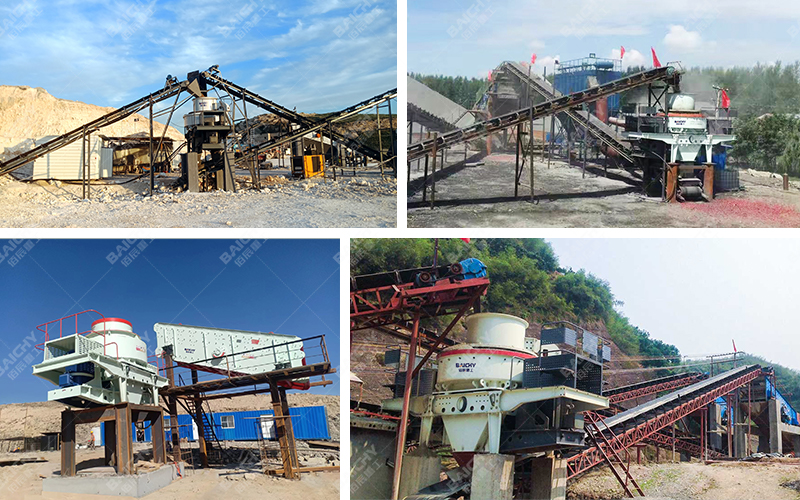
VSI Crusher Working Principle & Applications (Full Guide)
Frequently Asked Questions (FAQ)
1. What is a VSI crusher and how is it different from a cone crusher?
A VSI crusher (Vertical Shaft Impact crusher) crushes rock by high-speed impact and stone-on-stone collision, producing cubical sand and aggregate, while a cone crusher compresses rock between surfaces. The VSI crusher is preferred for sand making and particle reshaping, whereas a cone crusher handles high-capacity secondary/tertiary reduction.
2. What is the VSI crusher working principle in simple terms?
Material enters the center of the VSI crusher, is accelerated by a high-speed rotor to about 70–80 m/s, and is thrown against a natural rock shelf or metal anvils. The violent impact shatters the particles, and the crushed material falls out the bottom — this is the core of the VSI crusher working principle.
3. Which materials can a VSI sand making machine process?
The sand making machine handles granite, basalt, limestone, quartz, river pebble, cobblestone, diabase, and various ores. It also processes construction waste, glass cullet, and industrial minerals, with the stone-on-stone mode best suited to abrasive hard rock.
4. How much does a VSI crusher cost and what affects the price?
The price of a VSI crusher depends on model, capacity, motor power, wear-part quality, and optional automation. Entry models for small sand plants are affordable, while high-capacity industrial vertical shaft impact crushers cost more. Contact Baichy Heavy Industry for a quotation matched to your project.
5. How can I maintain a VSI crusher to extend its service life?
Regularly inspect and replace wear parts such as rotor tips, distributor plates, and liners; balance the rotor to avoid vibration; keep the feed size and moisture within spec; and lubricate bearings on schedule. Using a VFD to control rotor speed also reduces unnecessary wear on your VSI crusher.
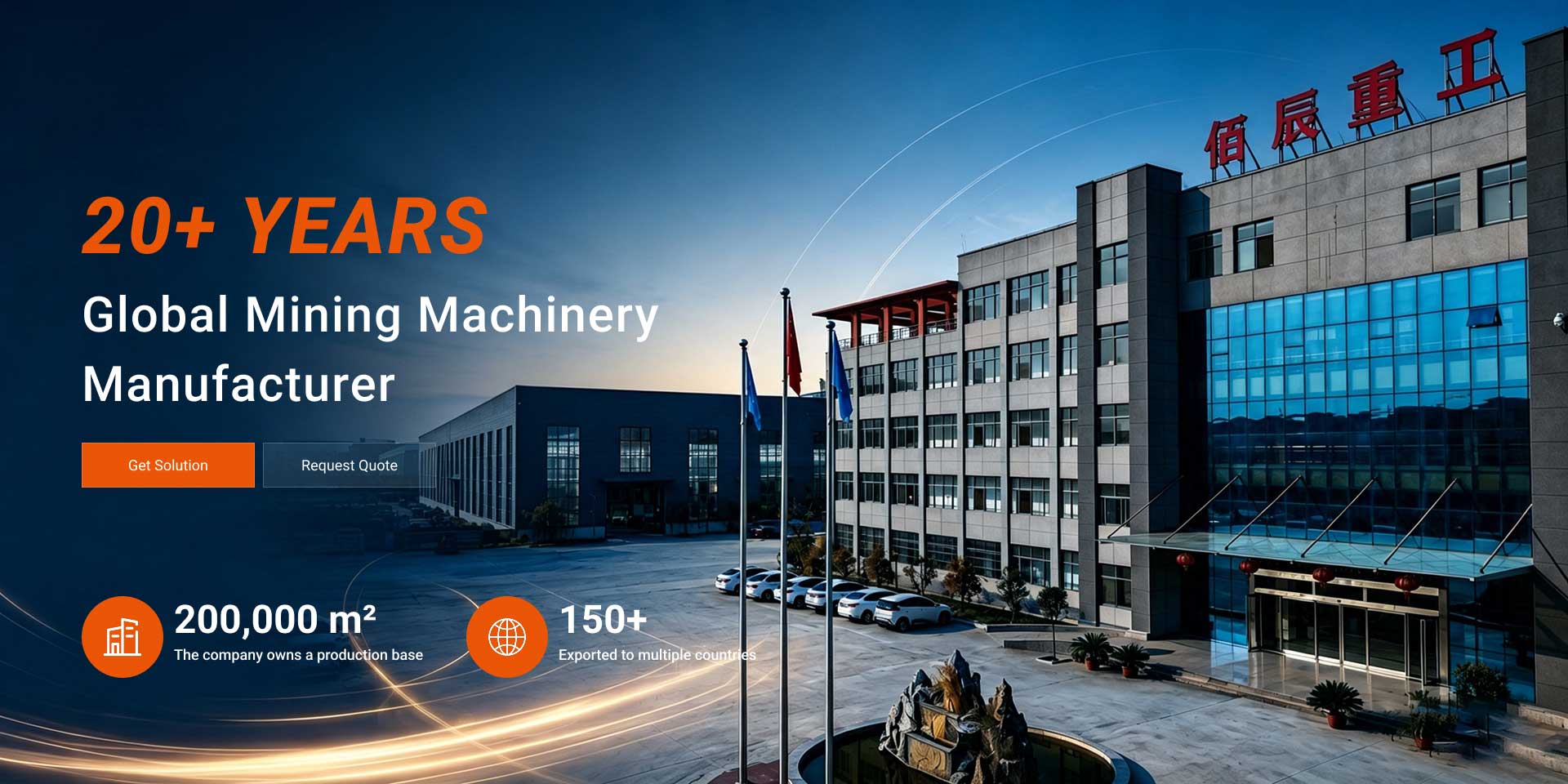
Baichy Heavy Industry
Baichy Heavy Industry is a high-tech mining equipment company integrating R&D, manufacturing, sales, and after-sales service. Focusing on crushing, grinding, and mineral processing equipment, we provide professional solutions to our customers. We are ISO9001:2015 、certified, and our products include mobile crushing palnts, crawler crushing plant, construction waste crushing plants, jaw crushers, sand making machines, cone crushers, fine crushers, grinding mills, ball mills, etc., all with reliable performance to meet diverse project needs.
Baichy Heavy Industry – Your Trusted Partner
To ensure optimal performance of your equipment, Baichy Heavy Industry offers:
- Professional on-site installation guidance
- Comprehensive operator training
- 24/7 technical support & maintenance services
Our complete after-sales service system guarantees long-term, stable operation of your machinery with minimal downtime.
Protect Your Rights – Only Use Official Channels
To avoid scams and ensure authentic support, contact us exclusively through:
• Official Website: www.baichychina.com
• WhatsApp: +8615093222637
• Email: [email protected]
Your satisfaction is our priority – expect prompt, professional service every time.
(Note: Beware of unauthorized third parties claiming to represent Baichy. Always verify through official contacts.)