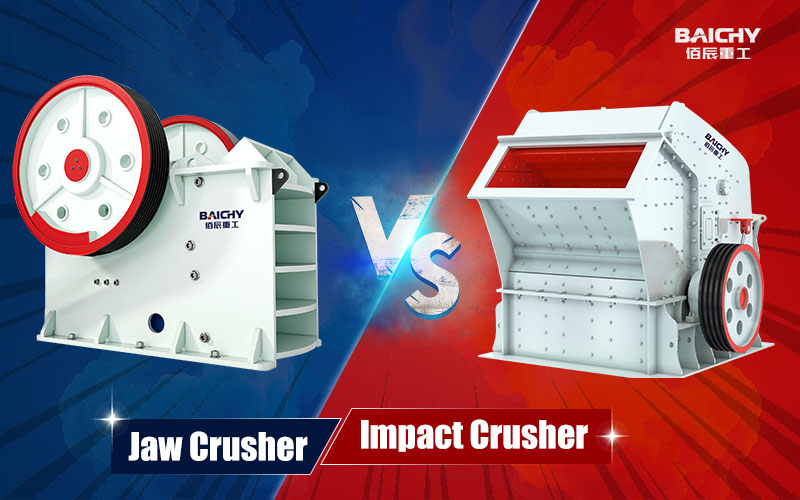
Differences Between Jaw Crushers and Impact Crushers
In the fields of mining machinery and aggregate production lines, jaw crushers and impact crushers are two of the most prominent "star" pieces of equipment. While both shoulder the critical task of crushing, they differ significantly in structure, operating principles, application scenarios, and performance. This article offers a comprehensive overview of these differences to help you make the right equipment choice.
1. Core Comparison: Structure and Operating Principles
A crusher's operating principle determines its efficiency and the method by which it processes materials.
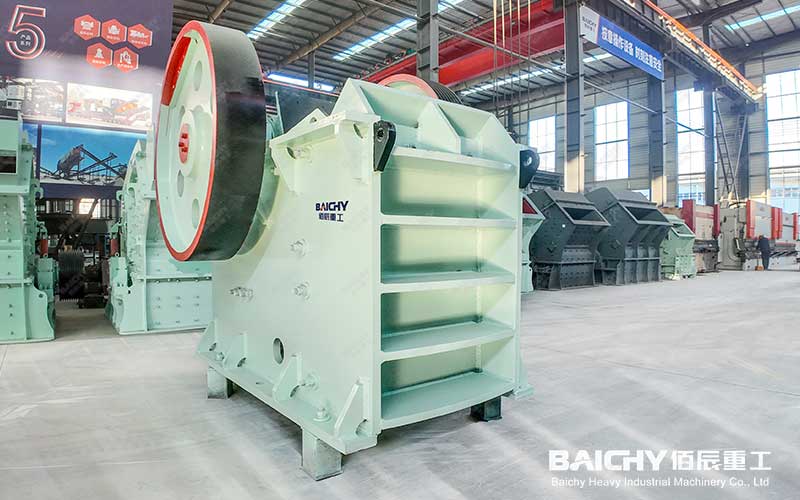
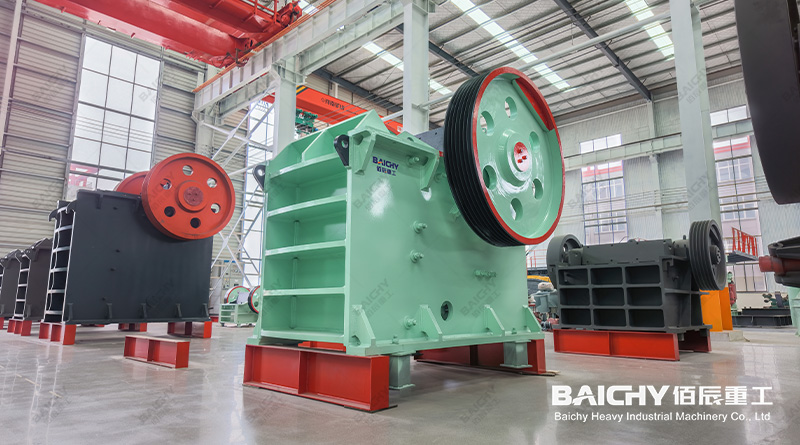
Jaw Crusher
Jaw Crusher: "Compression-style" Crushing
The jaw crusher features a crushing chamber formed by a movable jaw and a fixed jaw, simulating the movement of an animal's jaws to perform the crushing action.
Operational Logic: The movable jaw plate performs a periodic reciprocating motion against the fixed jaw plate, similar to the opening and closing of a mouth.
Crushing Process: As the movable jaw approaches the fixed jaw, the material is crushed through compression, splitting, and impact forces; as it moves away, the crushed material is discharged through the outlet under the force of gravity.
Impact Crusher: "Impact-style" Crushing
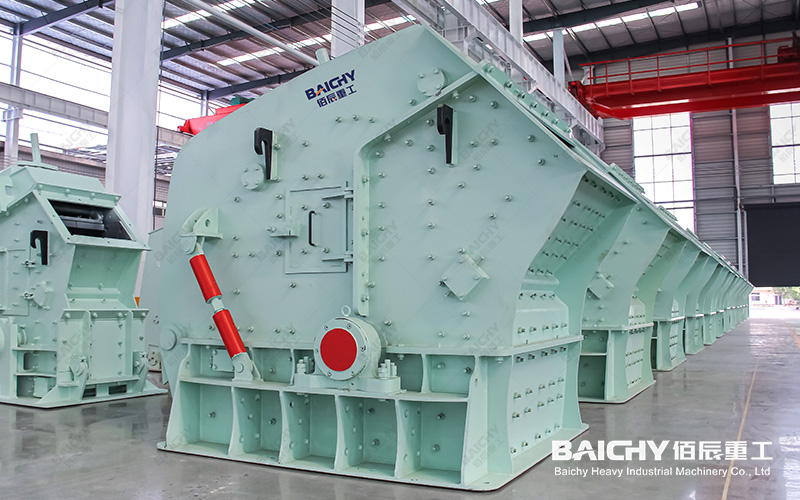
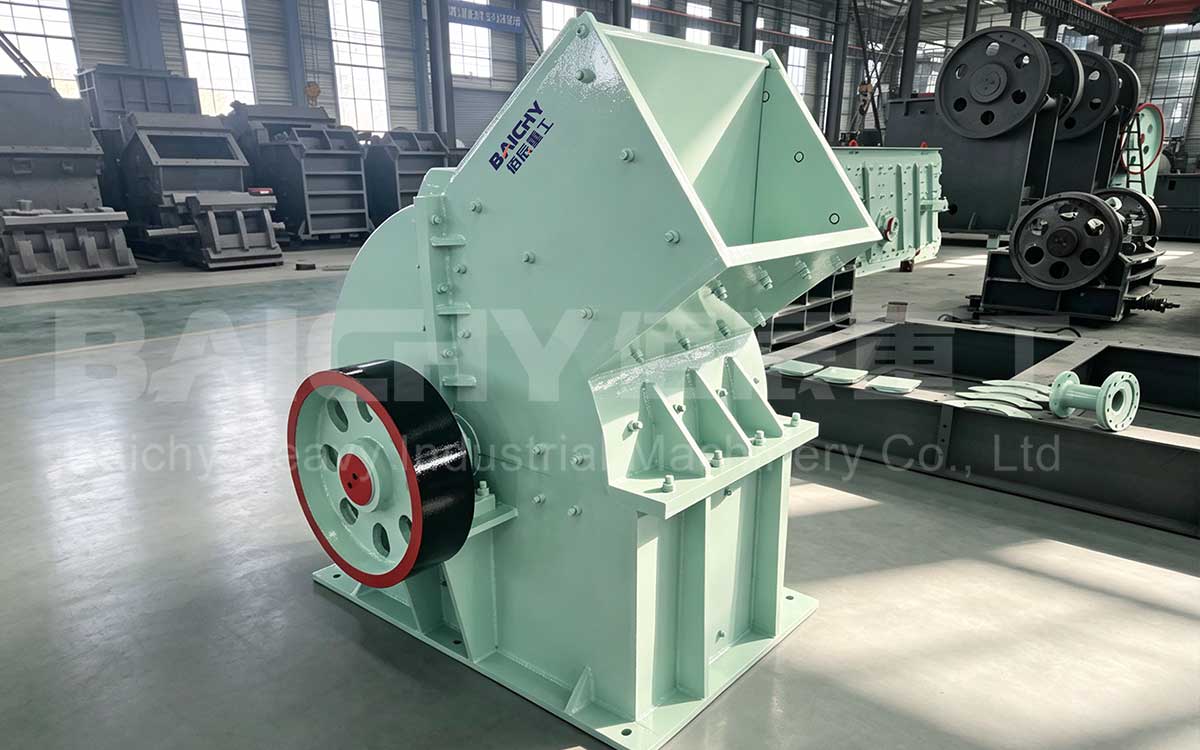
impact crusher
The impact crusher primarily consists of a rotor (equipped with blow bars), impact plates, and a frame.
Operational Logic: Utilizes impact energy to crush materials.
Crushing Process: When material enters the zone of the blow bars, it is shattered by the high-speed impact of the rotor and subsequently thrown against the impact plates for further collision. The material undergoes repeated impacts and bouncing between the rotor and the impact plates until it is reduced to the desired particle size.
123456
2. Application Fields: Differences in Hardness Adaptability
A crusher's ability to handle material hardness directly affects equipment lifespan and maintenance costs.
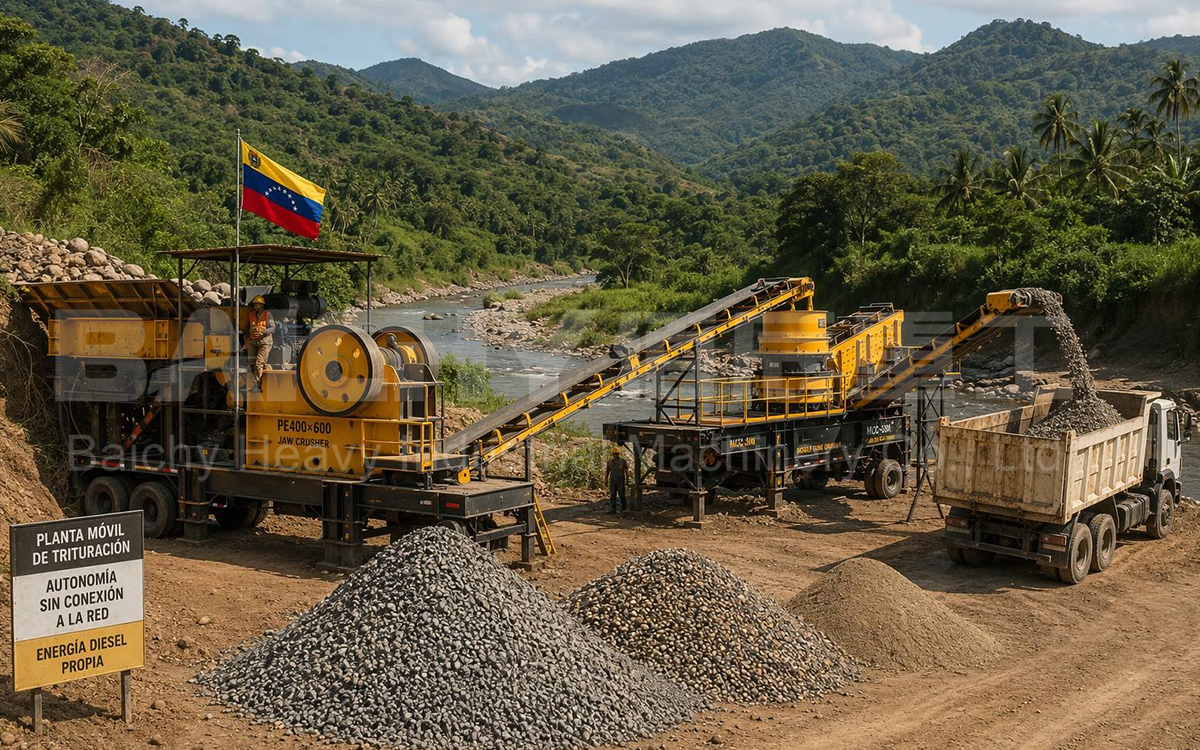
Jaw Crusher: Widely used in industries such as mining, metallurgy, and water conservancy. It handles compressive strengths up to 320 MPa and easily processes hard ores like granite and basalt; it typically serves as the "primary crusher" in a production line.
Impact Crusher: Primarily used in metallurgy, chemicals, and infrastructure projects (highways, railways) that require mobility. Although it can handle materials with compressive strengths up to 350 MPa, its blow bars are prone to wear; thus, it is better suited for medium-hard, low-toughness, and brittle materials (e.g., limestone, concrete) and is commonly used for secondary or tertiary crushing.
3. Performance Characteristics: Advantages and Limitations
Performance Highlights of Jaw Crushers
High crushing ratio and throughput: Deep crushing chamber with no dead zones improves feeding capacity and output; capable of handling oversized material blocks.
Simple, reliable, and low-cost: Simple structure, easy operation and maintenance, and very low operating costs.
Eco-friendly and energy-efficient: Low noise and dust emissions; saves 15%–30% energy per unit, with potential for even greater savings at the system level.
Performance Highlights of Impact Crushers
Large feed opening and high crushing chamber: Suitable for applications involving harder materials, high crushing ratios, and requirements for minimal fine powder in the final product.
Precise discharge control: The gap between blow bars and impact plates is easily adjustable, allowing for effective control of discharge particle size.
Excellent product quality: The final product is cubic in shape, free of internal tension and cracks, making it the preferred aggregate for highway and expressway pavement.
4. Key Differences
Material Hardness Suitability: Jaw crushers handle all types of hard materials; impact crushers are better suited for brittle or soft materials.
Feed Size: Jaw crushers accept very large feed sizes (processing raw stone); impact crushers handle medium-sized feed.
Product Fineness: Jaw crushers produce coarser output; impact crushers yield finer, more uniform output.
Production Capacity: Generally, for the same power rating, jaw crushers offer higher throughput.
Summary: How do you choose the right crusher for your project?
When selecting equipment, consider the following logic:
Consider material hardness: For hard materials like granite or iron ore, the jaw crusher is the primary choice.
Consider product requirements: For applications requiring high-quality particle shapes—such as highway surfacing or high-performance concrete—an impact crusher is essential.
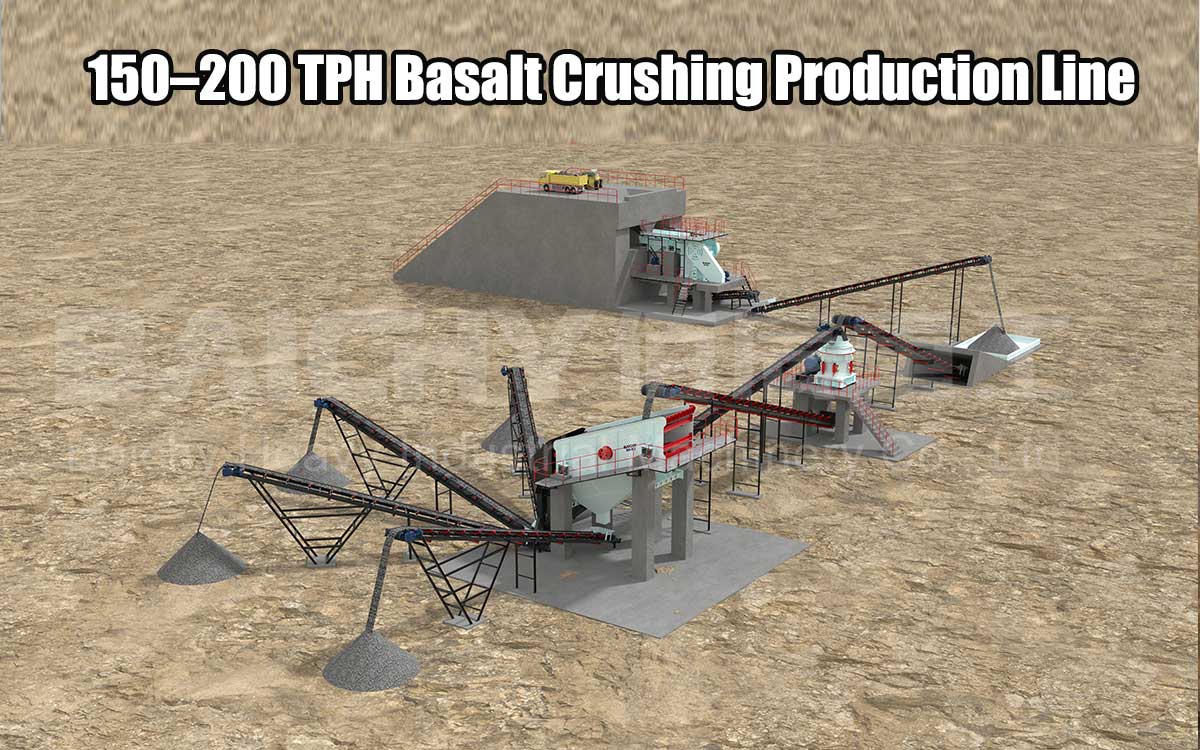
Consider the production stage: Use a jaw crusher for the first stage (primary/coarse crushing) and an impact crusher for subsequent stages (secondary/fine crushing).
FAQ
1. What material hardness levels are jaw crushers and impact crushers respectively suited for?
Jaw Crusher: Excels at processing materials of various hardness levels, particularly hard, highly abrasive rocks (e.g., granite, basalt, river pebbles).
Impact Crusher: Better suited for materials of medium hardness that are brittle and have low toughness (e.g., limestone, gypsum, construction waste). If used for extremely hard materials, wear parts like blow bars will wear out rapidly, increasing operating costs.
2. Why are impact crushers frequently recommended for producing highway surfacing aggregate?
The key factor is the shape of the finished particles. Impact crushers use high-speed impact to break material, resulting in a cubic shape with minimal needle-like or flaky particles and no significant internal tension cracks. This high-quality aggregate significantly enhances the strength and stability of concrete or asphalt pavements, meeting the strict standards required for highway construction.
3. How are jaw crushers and impact crushers typically utilized within an aggregate production line?
In a typical three-stage crushing process:
The jaw crusher usually serves as the primary crusher (first stage), responsible for the initial crushing of large raw stones from the quarry. Impact crushers are typically used for secondary or tertiary crushing, further processing the semi-finished material discharged by jaw crushers to achieve the final required particle size and shape.
4. Which is easier and less expensive to maintain: the jaw crusher or the impact crusher?
Generally, jaw crushers have lower maintenance costs. They feature a relatively simple structure, and their primary wear parts—the jaw plates—are easy and inexpensive to replace. In contrast, impact crushers have a more complex structure; their high-speed rotating blow bars and impact liners wear out relatively quickly when processing hard materials, resulting in more frequent replacements and a heavier maintenance workload.
5. How do I choose between the two based on feed size?
If you need to process raw material with a very large particle size (typically over 500mm, or even up to 1200mm), you must select a jaw crusher for the primary crushing stage.
If the raw material size is smaller (typically under 300–500mm) and you have high requirements for the shape of the finished product, you can consider using an impact crusher directly.
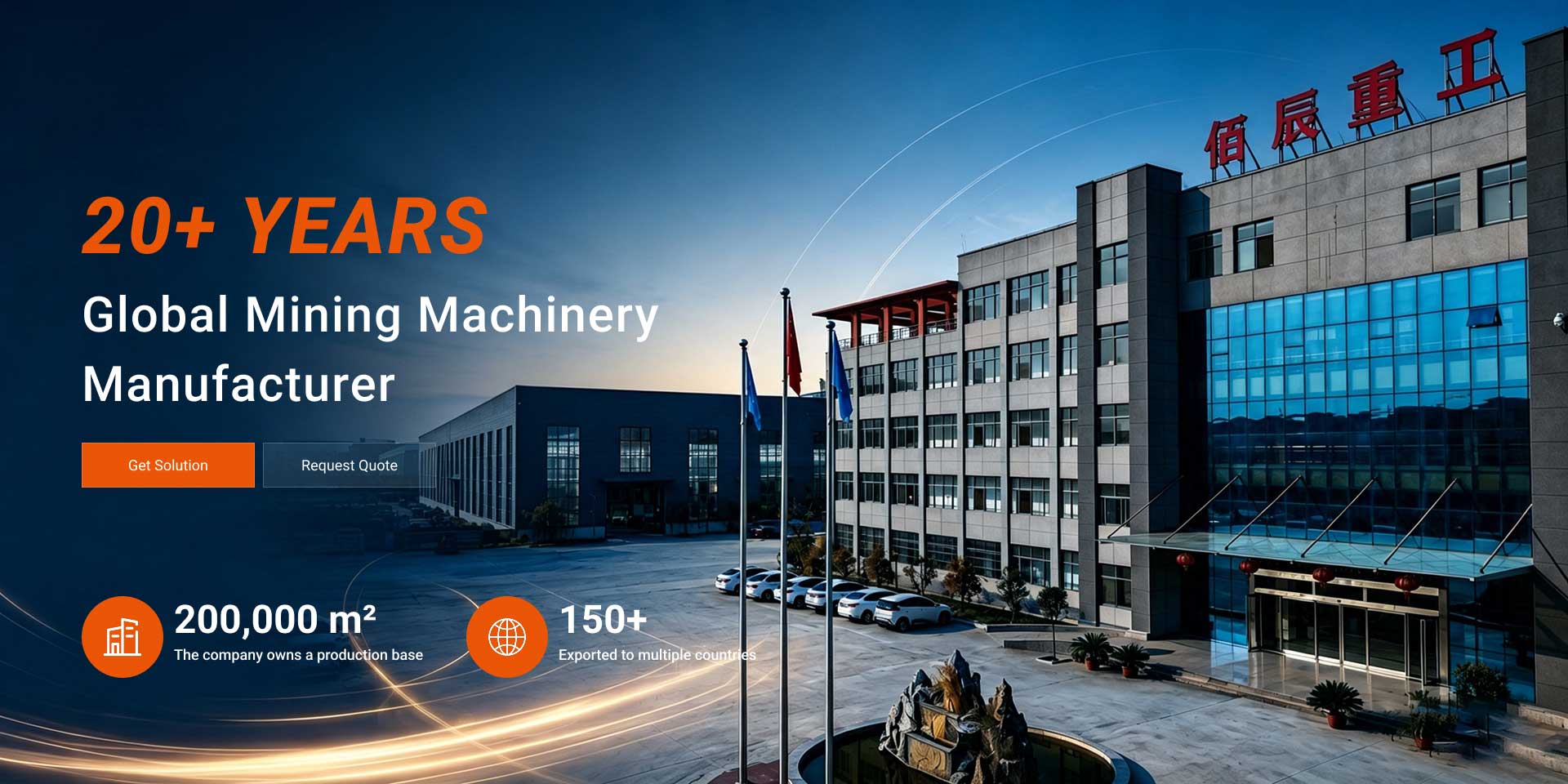
Baichy Heavy Industry
Baichy Heavy Industry is a high-tech mining equipment company integrating R&D, manufacturing, sales, and after-sales service. Focusing on crushing, grinding, and mineral processing equipment, we provide professional solutions to our customers. We are ISO9001:2015 、certified, and our products include mobile crushing palnts, crawler crushing plant, construction waste crushing plants, jaw crushers, sand making machines, cone crushers, fine crushers, grinding mills, ball mills, etc., all with reliable performance to meet diverse project needs.
Baichy Heavy Industry – Your Trusted Partner
To ensure optimal performance of your equipment, Baichy Heavy Industry offers:
- Professional on-site installation guidance
- Comprehensive operator training
- 24/7 technical support & maintenance services
Our complete after-sales service system guarantees long-term, stable operation of your machinery with minimal downtime.
Protect Your Rights – Only Use Official Channels
To avoid scams and ensure authentic support, contact us exclusively through:
• Official Website: www.baichychina.com
• WhatsApp: +8615093222637
• Email: [email protected]
Your satisfaction is our priority – expect prompt, professional service every time.
(Note: Beware of unauthorized third parties claiming to represent Baichy. Always verify through official contacts.)