
Cement Ball Mill
In cement, mining, and large-scale building materials production projects, a stable and efficient grinding process is crucial for ensuring overall production capacity and economic benefits. A cement mill with a capacity of 100 tons per hour is a key piece of equipment designed to meet the needs of medium to large-scale production lines. This article will provide an in-depth analysis of the technical characteristics, core advantages, and application scenarios of this type of mill, offering a comprehensive reference for your project selection.
I. In-depth Equipment Analysis
1. Technical Overview and Working Principle
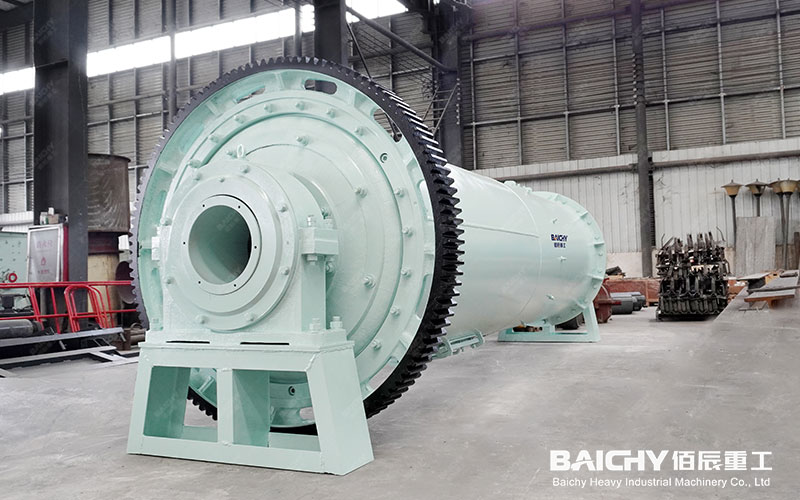
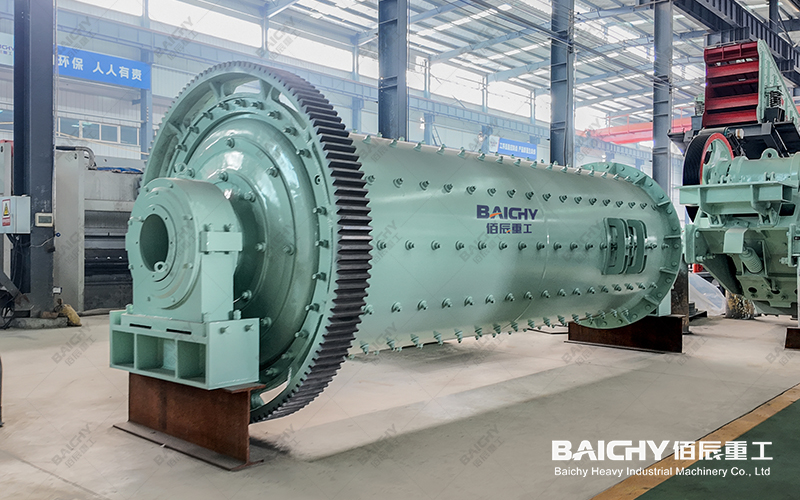
A cement mill with a capacity of 100 tons per hour typically refers to a ball mill or vertical mill, belonging to large-scale grinding equipment. Its core function is to grind cement clinker and admixtures (such as slag and fly ash) to the target fineness to produce cement of various grades that meet standards.
This equipment uses the rotation of the cylinder to drive the internal grinding media (such as steel balls and steel segments) to impact and grind the materials. Its capacity design comprehensively considers multiple factors such as cylinder size, drive power, feed particle size, discharge fineness, and material grindability. A mill with a rated capacity of 100 t/h can typically process moderately grindable materials stably, and can achieve higher output with optimized system configuration.
2. Core Design Advantages
Choosing a mill with this capacity means achieving a good balance between investment and return. Its main design advantages are reflected in the following aspects:
• Significant economies of scale: A capacity of 100 tons per hour is sufficient to support a cement production line of 2500-5000 t/d, making it an ideal choice for achieving large-scale production and reducing energy consumption per unit product.
• Stable and reliable operation: The mill, designed for this capacity level, has been reinforced in terms of structural strength, bearing system, and transmission device, ensuring the reliability and long service life of the equipment under continuous high-load operation.
• Strong system adaptability: It can serve as the core grinding equipment for new production lines and is also suitable for the technological upgrading of existing production lines. It is easily integrated and matched with auxiliary equipment such as elevators, classifiers, and dust collection systems.
• High Technological Maturity: This capacity range falls within the industry's mainstream specifications. The technical solutions have been validated through extensive industrial practice, and the operating parameters and process control strategies are highly mature.
Cement Ball Mill
II. Detailed Explanation of Performance Advantages
The value of a high-performance 100t/h cement mill extends far beyond its basic capacity figures. Its comprehensive advantages are key to project success.
1. Superior Grinding Efficiency: Optimized length-to-diameter ratio, zoned liner design, and efficient compartmentalization devices ensure a more scientific movement trajectory of the grinding media and a reasonable material residence time within the mill, thereby significantly improving grinding efficiency and reducing over-grinding.
2. Outstanding Energy-Saving Characteristics: Modernly designed mills typically feature large double-slip bearings or main bearings. The transmission system employs gear edge drive or a more efficient center drive, with optional slow-speed drive devices, resulting in high overall transmission efficiency. Combined with a scientifically designed grinding media gradation, power consumption per ton of product can be effectively reduced.
3. Superior Product Quality Control
By precisely controlling the internal ventilation and classifier system's circulating load, and in conjunction with a high-performance dynamic classifier, product fineness and particle size distribution can be flexibly and stably controlled to meet the production requirements of different cement grades.
4. Intelligent Operation and Maintenance
It can be integrated with an advanced PLC/DCS automatic control system, enabling remote start/stop, load detection, fault alarms, and automatic monitoring of the lubrication system, significantly reducing reliance on manual labor and improving safety and management efficiency.
III. Typical Configuration and Case Reference
The following is an example of the main technical parameters of a typical Φ4.2×13m cement ball mill (capacity approximately 100-110 t/h):
| Project | Parameters/Description |
| Mill Specifications | Φ4.2×13m |
| Mill Type | Dual-compartment mill/Center-driven |
| Design Capacity | 100-110 t/h (Cement, specific surface area ≥340 m²/kg) |
| Drive Motor Power | ~3550 kW |
| Grinding Media Load | ~210 t |
| Feed Size | ≤25 mm |
| Equipment Weight | ~240 t (excluding grinding media) |
| Core Applications | Cement clinker grinding, slag powder production |
Application Case: Upgrade Project of a Cement Plant in Southeast Asia
The plant's existing production line had insufficient capacity, so it decided to add a new grinding line. We provided them with a complete grinding system, including a Φ4.2×13m ball mill. Since its commissioning, the equipment has operated smoothly, with actual output consistently above 105 t/h. Product fineness fully meets standards, and unit power consumption is approximately 15% lower than the original line. The customer is very satisfied with the return on investment.
Equipment Selection and Related Recommendations
When selecting a 100 t/h cement mill, the following specific project conditions must be considered:
• Grinding Material: Is it pure clinker, or a mixture with a large amount of slag, fly ash, etc.? What are the material's moisture content and grindability?
• Product Fineness: What is the target specific surface area or sieve residue?
• System Process: Is it an open-circuit or closed-circuit mill? What type of classifier is planned?
• Site and Budget: Vertical roller mills may require less space but have a higher investment cost; ball mills are more traditional and easier to maintain.
Related Equipment Recommendations:
• Vertical Roller Mill (VRM): For grinding materials such as slag, vertical roller mills have a significant advantage in energy consumption. A 100 t/h capacity slag vertical roller mill is a highly efficient and energy-saving alternative. • High-efficiency air classifier: Whether paired with a ball mill or a vertical mill, a high-performance rotor or vortex air classifier can significantly improve system efficiency and product quality.
• Pre-grinding equipment: Such as roller presses, a combined grinding system of "roller press + ball mill" can greatly increase output and reduce energy consumption, representing a current mainstream technological upgrade direction.
Frequently Asked Questions (FAQ)
Q1: Can this 100t/h mill be used to grind slag? Will the output decrease?
A1: It can be used to grind slag. However, since slag is generally more difficult to grind than cement clinker, under the same product fineness requirements, the output will decrease to some extent if the system is not specifically adjusted. It is recommended to have a dedicated design for slag grinding projects, or to choose a vertical roller mill (slag vertical mill) more suitable for hard materials to maintain efficient and economical operation.
Q2: What is the typical delivery and installation cycle for the equipment?
A2: For a Φ4.2×13m mill, the manufacturing period from contract signing to equipment delivery is generally 4-6 months. On-site installation and commissioning time depends on the civil engineering progress and the size of the installation team, typically taking 2-3 months. We will provide detailed installation guidance and technical services.
Q3: Besides the main unit, do we need to source all the auxiliary equipment ourselves?
A3: No. As a professional equipment manufacturer, we can provide complete grinding system solutions from feeding, grinding, and classifying to dust collection and conveying, including the design, manufacturing, or procurement and integration of all major auxiliary equipment. We ensure perfect matching of all units, providing customers with turnkey engineering services, saving you time and effort.
About of Baichy Heavy Industry
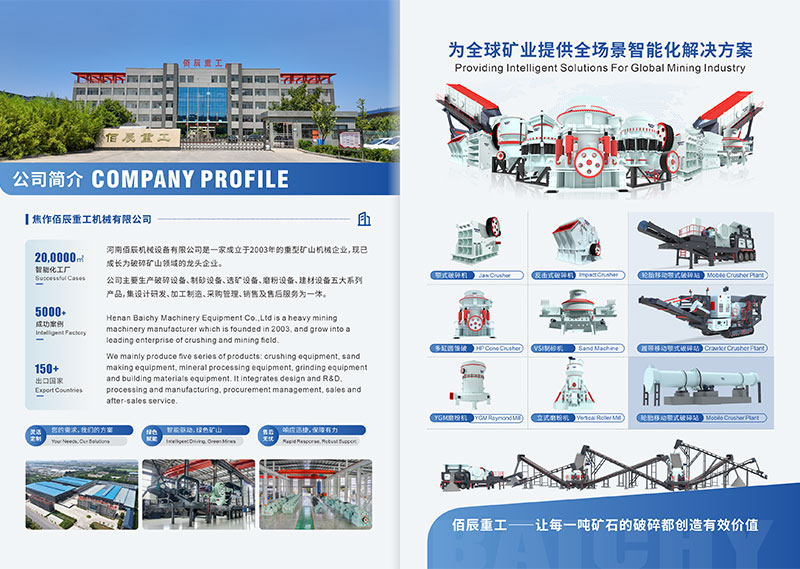
Baichy Heavy Industry is a high-tech mining equipment company integrating R&D, manufacturing, sales, and after-sales service. Focusing on crushing, grinding, and mineral processing equipment, we provide professional solutions to our customers. We are ISO9001:2015 、certified, and our products include mobile crushing palnts, crawler crushing plant, construction waste crushing plants, jaw crushers, sand making machines, cone crushers, fine crushers, grinding mills, ball mills, etc., all with reliable performance to meet diverse project needs.
Our advantages:
• Professional pre-sales support: Free project design and comprehensive solutions to help you accurately select the right equipment;
• Comprehensive on-site service: Providing installation guidance and worker training to ensure smooth equipment commissioning;
• Reliable after-sales guarantee: A complete after-sales system, timely response to technical inquiries and equipment maintenance, ensuring long-term stable operation.
To protect your rights, please contact us through the following official channels for professional service:
Official Website Customer Service
WhatsApp: 0086-15093222637
Email: [email protected]
We are committed to providing high-quality equipment and full-cycle services to deliver comprehensive intelligent solutions for the global mining industry!