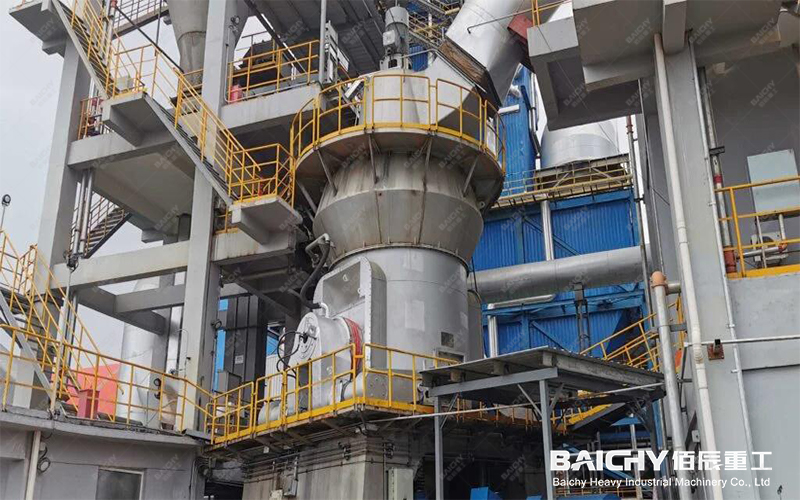
Coal Mill in Coal-Fired Power Plants
When selecting a coal mill for a coal-fired power plant, one must first establish the "fineness–power consumption–explosion prevention" triangle before addressing production capacity. The constraints among these three factors are rigid: finer pulverized coal leads to more complete combustion and lower combustible content in fly ash, but the specific energy consumption for pulverization rises in tandem; while lowering the mill outlet temperature aids in explosion prevention, excessive reduction sacrifices drying capacity, leading to condensation and mill clogging. A verifiable domestic retrofit case provides specific figures: replacing the coarse powder separator with a centrifugal-inertial coupled structure increased separation efficiency by 13.3% and pulverization output by 20%, while reducing specific energy consumption by 4.73 kWh/t (*Performance Optimization and Retrofitting of a Double-Inlet/Double-Outlet Mill Direct-Firing Pulverization System*, China Powder Science and Technology, 2021). Consequently, the initial conclusion may be unpalatable: for power plants, the key to energy savings in pulverization lies not in replacing the coal mill itself, but in enhancing classification efficiency.
I. The Coal Mill Performs Four Simultaneous Functions in the Power Plant
In a direct-firing pulverization system, the coal mill is not merely a crusher; it is an integrated system—often referred to in the industry as a medium-speed mill or vertical coal mill—that combines crushing, grinding, drying, and classification within a single housing. Raw coal is fed into the center of the grinding table; centrifugal force flings the material layer toward the table's edge, where hydraulic grinding rollers apply compression and shear forces. Hot air (80–350°C) rising from the air ring simultaneously suspends the coal particles and evaporates moisture. A dynamic classifier uses rotor speed to reject oversized particles back to the table for regrinding, while compliant pulverized coal travels with the airflow to a bag filter before being discharged through an air-lock discharge valve. The absence of intermediate transfer stages between these four processes explains the structural reason for its superior energy efficiency compared to the three-stage "ball mill + coarse powder separator + coal feeder" configuration: official specifications indicate that vertical coal mills reduce energy consumption by 30%–50% compared to ball mill systems for the same production capacity. II. The coal pulverizing system is the area of auxiliary power consumption most frequently overlooked
While power plants focus on boiler efficiency, the coal pulverizing system is often neglected. Deep peak-shaving operations exacerbate this issue: when units operate at low loads, equipment such as forced-draft and induced-draft fans, feedwater pumps, and coal mills deviate from their design operating points. Deep peak-shaving drives up both the overall auxiliary power consumption rate and the coal consumption rate for power generation (see *Discussion on Key Issues of Deep Peak-Shaving in Large Coal-Fired Boilers*, Southern Energy Construction, 2022). The same study notes that low-load (or variable-load) operation places higher demands on pulverized coal fineness and uniformity, and adjusting the dynamic separator speed is an effective way to regulate these parameters. In other words, the coal pulverizing system serves as a control mechanism for stabilizing combustion at low loads, rather than merely being an auxiliary component that passively follows the main unit's operation. Other research estimates that the potential for energy savings in the coal preparation stage is equivalent to approximately 0.5%–2% of total power generation (see *Energy Dissipation Mechanism and Energy-Saving Strategies for Coal Pulverizing Systems in Coal-Fired Power Plants*, Coal Processing & Comprehensive Utilization, 2018).
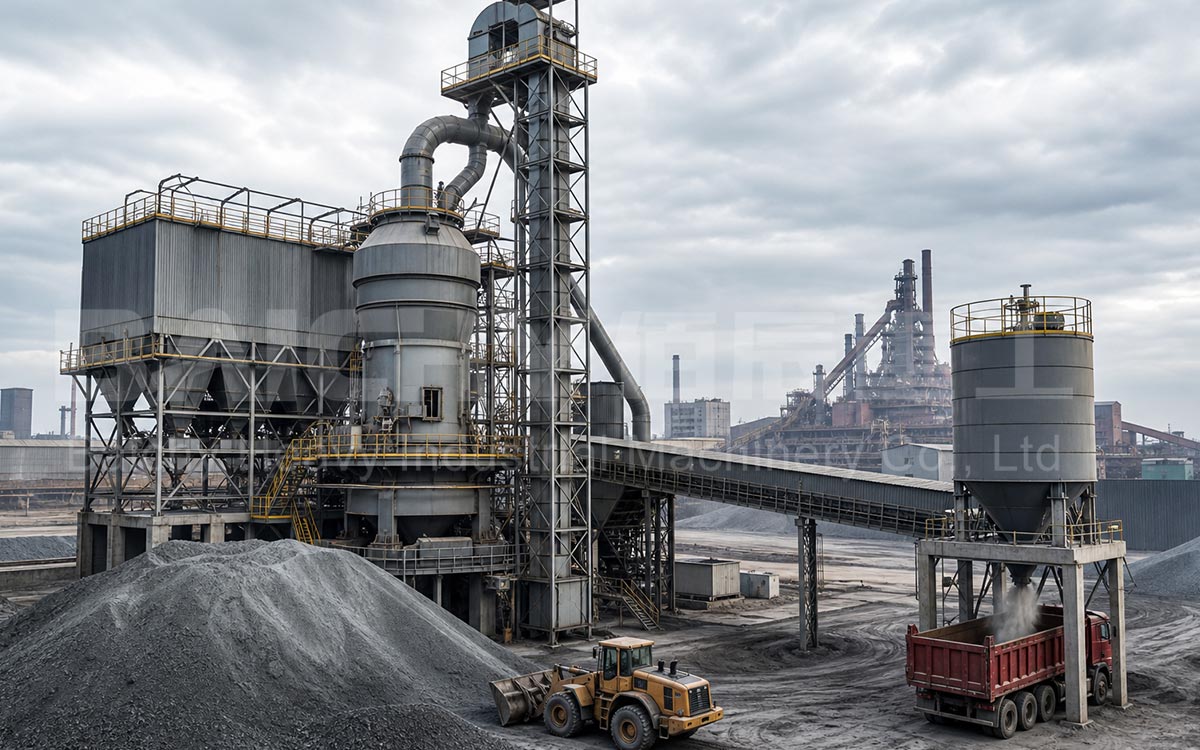
Application of Coal Mills in Coal-Fired Power Plants
III. Finer is not necessarily better; R80μm represents an economic optimum
Pulverized coal fineness simultaneously determines two sets of factors: ignition and burnout characteristics, and mill output versus specific energy consumption for pulverization. Increasing fineness improves burnout but raises the circulating load, thereby reducing the effective output of a given mill and increasing electricity consumption—a cost reflected in the plant's auxiliary power usage. The key control point lies in the classification mechanism: variable frequency drives (VFDs) are employed on the classifiers of vertical coal mills to continuously adjust rotor speed based on the R80μm value (the percentage of particles retained on an 80μm sieve), thereby controlling fineness and improving particle size uniformity. A more concentrated particle size distribution minimizes segregation within the furnace—where coarse particles fail to burn out completely while fine particles burn out prematurely—thereby creating the potential to simultaneously reduce combustible content in fly ash and nitrogen oxide (NOx) emissions.
IV. Comparison of Models, Fineness, and Drying Parameters
Coal vertical mills are categorized by grinding table diameter. Within the same category, inlet/outlet temperatures and product moisture specifications are consistent; differences lie primarily in production capacity and installed power:
| Model | Grinding disc diameter(mm) | Max. feed size(mm) | Fineness of the finished product(μm/目) | Inlet air temperature(℃) | Outlet air temperature(℃) | Feed/Product Moisture Content(%) | Production capacity(t/h) | Motor power(kW) |
|---|---|---|---|---|---|---|---|---|
| SRM1300 | 1300 | ≤38 | 212-45/70-325 | ≤350 | 70-95 | 4/≤1 | 10-28 | 132-200 |
| SRM1500 | 1500 | ≤38 | 212-45/70-325 | ≤350 | 70-95 | 4/≤1 | 13-38 | 220-285 |
| SRM1700 | 1700 | ≤38 | 212-45/70-325 | ≤350 | 70-95 | 4/≤1 | 18-68 | 315-400 |
| SRM1900 | 1900 | ≤38 | 212-45/70-325 | ≤350 | 70-95 | 4/≤1 | 23-85 | 450-600 |
| SRM2200 | 2200 | ≤38 | 212-45/70-325 | ≤350 | 70-95 | 4/≤1 | 36-135 | 600-750 |
Note: Data is sourced from the technical specifications on Baichy Heavy Industry’s official website for coal vertical mills. Capacity figures represent a rated range; actual output varies based on coal type, Hardgrove Grindability Index (HGI), feed particle size, and target fineness. Comparisons regarding power consumption and noise levels at equivalent capacities are based on the manufacturer's rated standards; actual results depend on the specific material and operating conditions. Specifications are subject to change without prior notice; the actual equipment prevails.
V. Explosion Protection and Outlet Temperature: Three Non-Negotiable Constraints
For pulverizing systems handling high-volatile coal, safety takes precedence over economic efficiency. The control protocols specified by the manufacturer require three measures to be implemented simultaneously:
① Strictly control the coal mill outlet temperature, typically maintaining it below 100°C;
② Maintain a slight negative pressure within the system to prevent oxygen ingress;
③ Install online CO/O₂ monitoring and a nitrogen inerting/fire-suppression system. Controlling temperature alone without managing negative pressure allows air leakage to raise oxygen levels; installing monitoring without inerting capabilities leaves the system without a response mechanism after an alarm triggers.
Another easily overlooked factor: Medium-speed coal mills are sensitive to foreign metal objects. A high-efficiency iron remover must be installed upstream; otherwise, foreign objects can directly damage the grinding rollers and table liners.
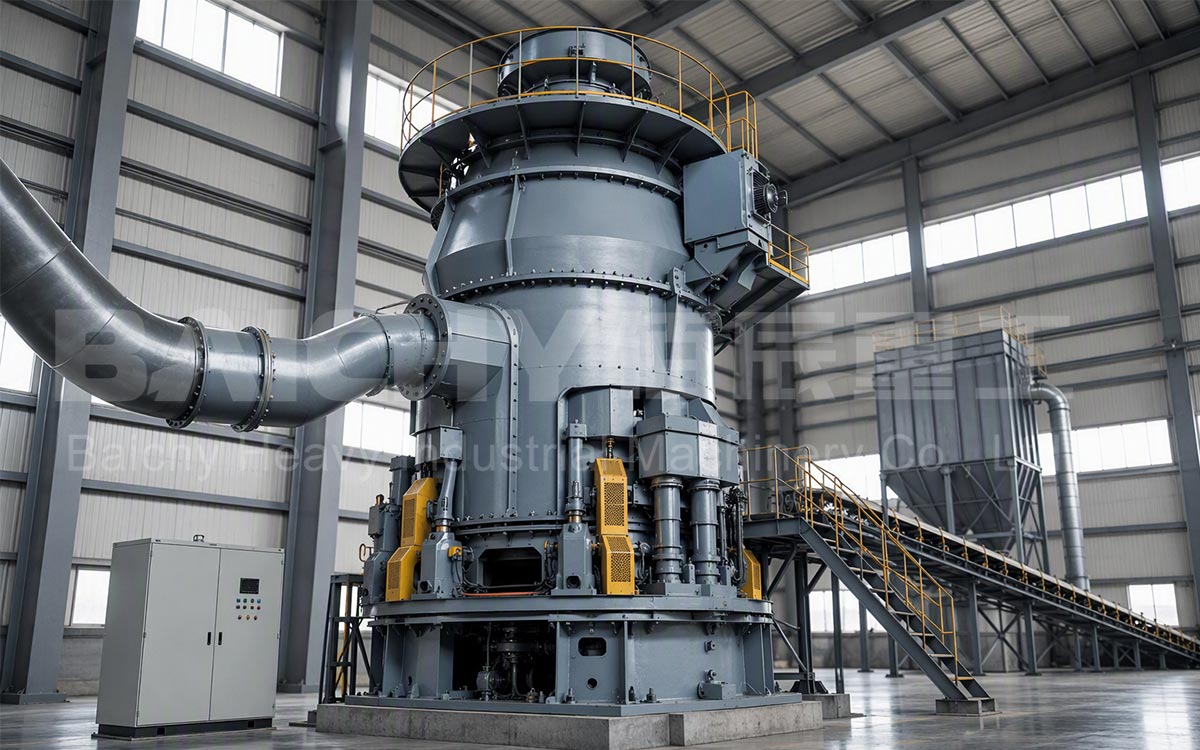
pulverized coal fineness
VI. Equipment Selection and Pitfalls to Avoid
Do not select models solely based on a capacity chart. Specification tables provide rated ranges; output for a specific model fluctuates with changes in coal grindability and feed particle size. The correct procedure is to first determine the coal type and target fineness, then consult the table for model selection.
Do not apply ball mill standards to coal vertical mills. Manufacturer data indicates that coal vertical mills consume 30%–50% less power and operate at noise levels below 85 dB (compared to approximately 110 dB for ball mills) at equivalent capacities; these comparisons are valid only if effective upstream iron removal is in place and feed particle size remains within the specified limits.
Schedule maintenance based on calculated downtime. For models equipped with a hydraulic roller-tilting mechanism, replacing the entire set of grinding rollers and liners typically takes 8–12 hours; one should factor this into the annual cost of downtime losses when deciding whether a "lower-priced model without the tilting mechanism" actually saves money.
Q1: Why do coal-fired power plants use vertical medium-speed coal mills instead of ball mills for pulverization?
A: There are three main reasons. First is power consumption: for the same production capacity, vertical coal mills consume 30%–50% less power than ball mill systems. Second is drying: hot air is introduced into the mill, allowing grinding and drying to occur simultaneously and eliminating the need for a separate drying stage. Third is classification precision: a dynamic classifier allows for continuous adjustment of coal powder fineness via rotor speed, resulting in a narrower particle size distribution compared to ball mills and more complete combustion. The trade-off is greater sensitivity to foreign metal objects, so effective iron removal prior to grinding is essential.
Q2: What is the appropriate fineness setting (R80μm) for coal powder?
A: There is no universal value; it depends on the coal type and boiler type. High-volatile bituminous coal can be ground coarser, while low-volatile lean coal requires finer grinding. A practical approach is to conduct combustion adjustment tests using classifier speed as a variable—finer grinding improves burnout but increases specific power consumption for pulverization; the intersection of these two curves represents the economic fineness setting for that specific mill.
Q3: Why must the coal mill outlet temperature be kept below 100°C?
A: This is a safety limit to prevent explosions. Mixtures of coal powder and air are more prone to spontaneous combustion at high temperatures. Standard control measures include keeping the outlet temperature below 100°C, maintaining slight negative pressure in the system, and employing online CO/O₂ monitoring and nitrogen inerting. The upper temperature limit also involves a trade-off with drying capacity: while inlet hot air can reach 350°C, a lower outlet temperature means the moisture content of the finished product relies more heavily on stable airflow and material bed stability.
Q4: If the specific power consumption of the pulverization system is high, what should be checked first?
A: Check the classification first, then the material bed. Low separator efficiency causes coarse particles to be repeatedly returned for regrinding, creating an unproductive circulating load; in the aforementioned retrofit case, simply replacing the coarse particle separator improved separation efficiency by 13.3%, increased grinding output by 20%, and reduced specific energy consumption by 4.73 kWh/t. The next critical factor is the balance between the material bed on the grinding table and the airflow: a bed that is too thin results in "empty grinding," while one that is too thick prevents the airflow from effectively suspending the pulverized coal.
Q5: How long is the downtime required to replace a full set of grinding rollers and table liners?
A: For vertical coal mills equipped with a hydraulic roller tilting mechanism, replacing the complete set of rollers and liners typically takes 8–12 hours. As the abrasiveness of different coal types varies significantly—and the official website does not provide a service life chart based on coal type—no specific service life guarantee is provided here; actual replacement schedules are determined based on on-site wear monitoring.
Baichy Heavy Industry
Baichy Heavy Industry is a high-tech mining equipment company integrating R&D, manufacturing, sales, and after-sales service. Focusing on crushing, grinding, and mineral processing equipment, we provide professional solutions to our customers. We are ISO9001:2015 、certified, and our products include mobile crushing palnts, crawler crushing plant, construction waste crushing plants, jaw crushers, sand making machines, cone crushers, fine crushers, grinding mills, ball mills, etc., all with reliable performance to meet diverse project needs.
Baichy Heavy Industry – Your Trusted Partner
To ensure optimal performance of your equipment, Baichy Heavy Industry offers:
- Professional on-site installation guidance
- Comprehensive operator training
- 24/7 technical support & maintenance services
Our complete after-sales service system guarantees long-term, stable operation of your machinery with minimal downtime.
Protect Your Rights – Only Use Official Channels
To avoid scams and ensure authentic support, contact us exclusively through:
• Official Website: www.baichychina.com
• WhatsApp: +8615093222637
• Email: [email protected]
Your satisfaction is our priority – expect prompt, professional service every time.
(Note: Beware of unauthorized third parties claiming to represent Baichy. Always verify through official contacts.)