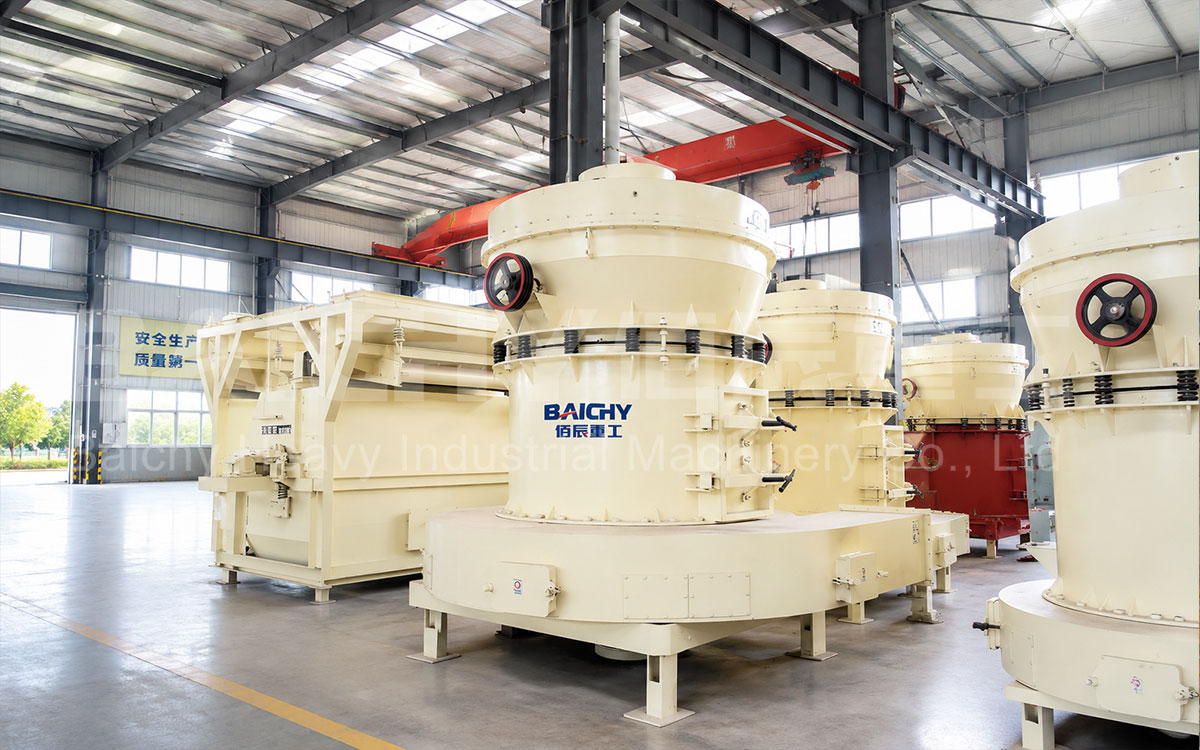
YGM95 High-Pressure Suspension Roller Mill
The YGM95 high-pressure suspension grinding mill is the first model in the YGM series to transition from three to four grinding rollers. It features a 950 mm diameter grinding ring, four 310×190 mm grinding rollers, and a 45 kW main motor; it offers an output capacity of 2.1–5.6 t/h and a finished product fineness of 0.613–0.033 mm (approximately 30–425 mesh). It is designed for the most typical operational scenarios in the 2–5 t/h range: projects processing calcite, limestone, dolomite, or gypsum sourced from captive mines. To determine whether to adopt the YGM95, consider three criteria: whether daily demand falls within the 33.6–89.6 t range (coverable by a two-shift schedule), whether the target fineness is between 200 and 325 mesh, and whether the raw material's Mohs hardness is below 7.
I. Why the 4-Roller Configuration Marks a Turning Point in This Class
The YGM series shares a consistent pressurization mechanism: high-pressure springs (exerting 1,000–1,500 kg of force) are secured to the roller suspension brackets. During operation, the grinding rollers roll tightly against the grinding ring under the combined influence of spring pressure and centrifugal force, generating a grinding pressure approximately 1.2 times that of a standard Raymond mill with equivalent power. The distinction lies in the fact that while 3-roller models (YGM65/YGM75/YGM85) excel at agility and speed, the 4-roller YGM95 is the first to simultaneously increase both the roller count and the grinding ring dimensions—pairing a 950×190 mm ring with four φ310 mm rollers. This configuration extends both the grinding path and the material retention time, which is the mechanical reason for the boost in output capacity from the 1.2–4 t/h range to 2.1–5.6 t/h.
This leads to a key conclusion: the YGM95 is not merely an "upscaled version" of the YGM85, but rather the first model in the series engineered specifically for continuous industrial-scale workloads. Any discussion regarding cost-effectiveness must assume a two-shift or three-shift operation; intermittent single-shift production fails to fully utilize the equipment's capacity, thereby driving up the cost per ton.
II. Factory Specifications and Technical Limits
| Item | YGM95 Specifications |
|---|---|
| Number of grinding rollers | 4 |
| Roller dimensions | 310 × 190 mm |
| Grinding ring dimensions | 950 × 190 mm |
| Max. feed particle size | ≤25 mm |
| Finished product fineness | 0.613–0.033 mm (approx. 30–425 mesh) |
| Production capacity | 2.1–5.6 t/h |
| Main unit power | 45 kW |
| Overall dimensions | 7100 × 5900 × 7900 mm |
Source: Technical specifications from the Baichy Heavy Industry YGM High-Pressure Suspension Roller Mill product page. Capacity varies based on material hardness, feed particle size, and target fineness.
The complete system comprises the main unit, gearbox, classifier (turbine classifier), blower, pulse dust collector, jaw crusher, bucket elevator, electromagnetic vibrating feeder, and electrical control system. The classifier speed is infinitely adjustable between 50 and 400 rpm to maintain the finished product fineness within the required process range. Grinding components are made of high-chromium alloy; combined with fully enclosed negative-pressure operation and pulse dust collection, dust emission concentrations can be kept below 15 mg/m³, and noise levels do not exceed 75 dB.
III. Scaling Up or Down: The YGM95 Selection Dilemma
Signals to scale up (choose the YGM130): If the target fineness consistently exceeds 325 mesh, or if daily demand surpasses the YGM95's maximum output for a two-shift schedule, consider the 5-roller model—the YGM130. It offers a capacity of 2.5–9.5 t/h, translating to 40–152 tons per day based on a 16-hour, two-shift operation. Forcing the YGM95 to operate continuously at 400 mesh essentially sacrifices capacity for fineness, which is not cost-effective. Indicators favoring the lower-end model (YGM85): Suitable for single-shift operations with a daily demand of approximately 10–32 tonnes, or situations involving intermittent raw material supply, frequent start-stop cycles, or space constraints. The YGM85 has a capacity of 1.2–4 t/h, translating to 9.6–32 tonnes per day based on an 8-hour single shift.
Assessment of the mid-range: A capacity of 2.1–5.6 t/h corresponds to a daily output of 16.8–44.8 tonnes for a single 8-hour shift, or 33.6–89.6 tonnes for two 16-hour shifts. This range represents a gap between the YGM85 and YGM130 models: the YGM85’s upper limit of 64 tonnes/day (two shifts) falls short of the 89.6-tonne peak, while the YGM130’s range of 40–152 tonnes/day (two shifts) would result in long-term low-load operation within this bracket. A key observation: model selection errors occur most frequently in this category—not because the machine is undersized, but because daily demand was not accurately calculated.
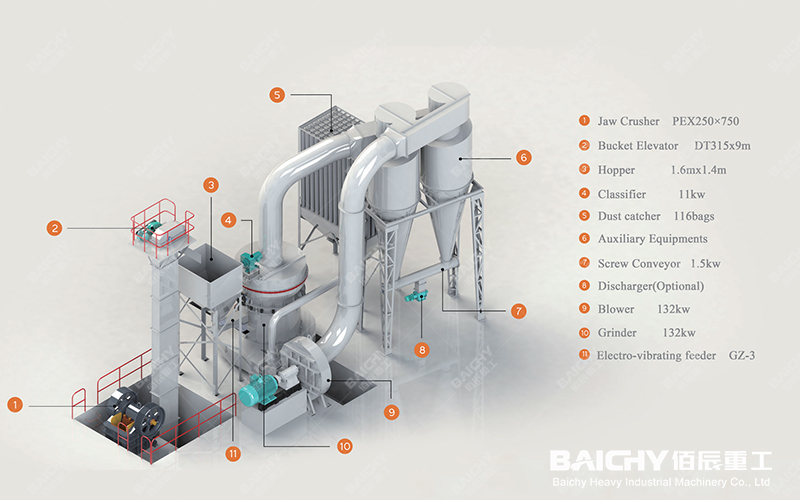
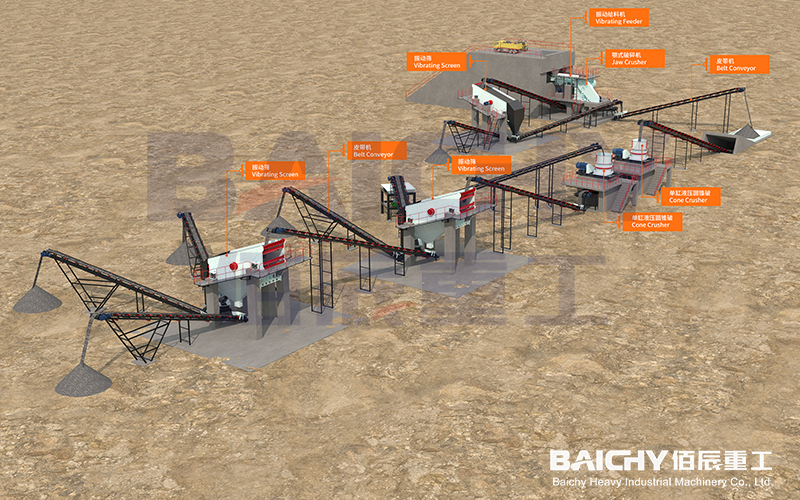
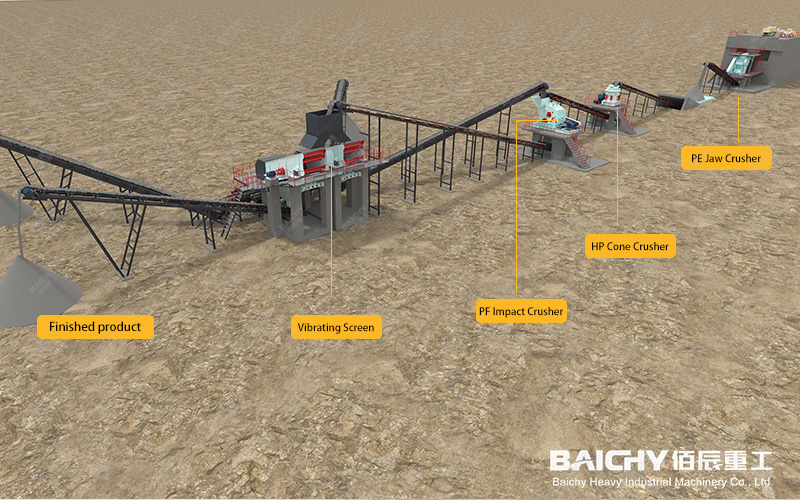
Schematic diagram of the high-pressure grinding mill process
IV. Nominal Capacity vs. Actual Capacity: A Crucial Distinction
The 2.1–5.6 t/h figure in the parameter table is a range, not a guaranteed output. Three variables determine where you land within this range: if the feed particle size is close to 25 mm, the target fineness is high, and the raw material hardness approaches Mohs 7, output will lean toward the lower limit. Conversely, reaching 5.6 t/h is only possible if the feed size is under 15 mm, the fineness is around 200 mesh, and the material is easy to grind.
A key observation: do not size your equipment based on the upper limit. Actual daily output is usually determined by the order mix rather than the mill's nameplate rating. Providing complete details—raw material composition, feed particle size, target mesh size, and required hourly capacity—during the inquiry stage is far less costly than complaining later that performance targets were not met. Feed moisture content is another critical factor: if it exceeds 6%, the stability of the grinding roller surface is compromised, leading to powder adhesion and a sharp drop in output. V. On-site evidence is more convincing than specification sheets
In December 2017, Baichy shipped a YGM95 high-pressure mill to Qinhuangdao, Hebei, for use in processing calcite. The setup targeted a fineness of 200 mesh and an output of 2–3 tons per hour, with a customer-specified sieve pass rate of 85%. Records from the same period also show YGM-95 units being exported to Bahrain and shipped to Xinzhou, Shanxi. Comparing the 2–3 t/h figure against the specification sheet reveals that, even when processing calcite—a material considered "easiest to grind"—the actual output fell within the middle of the rated range rather than at the upper limit.
Fourth Assessment: What a buyer should verify most closely is not the figures on the nameplate, but the manufacturer's actual delivery track record for similar materials. Metrics such as sieve pass rate, fineness stability, and continuous operating duration carry more weight than any marketing slogan.
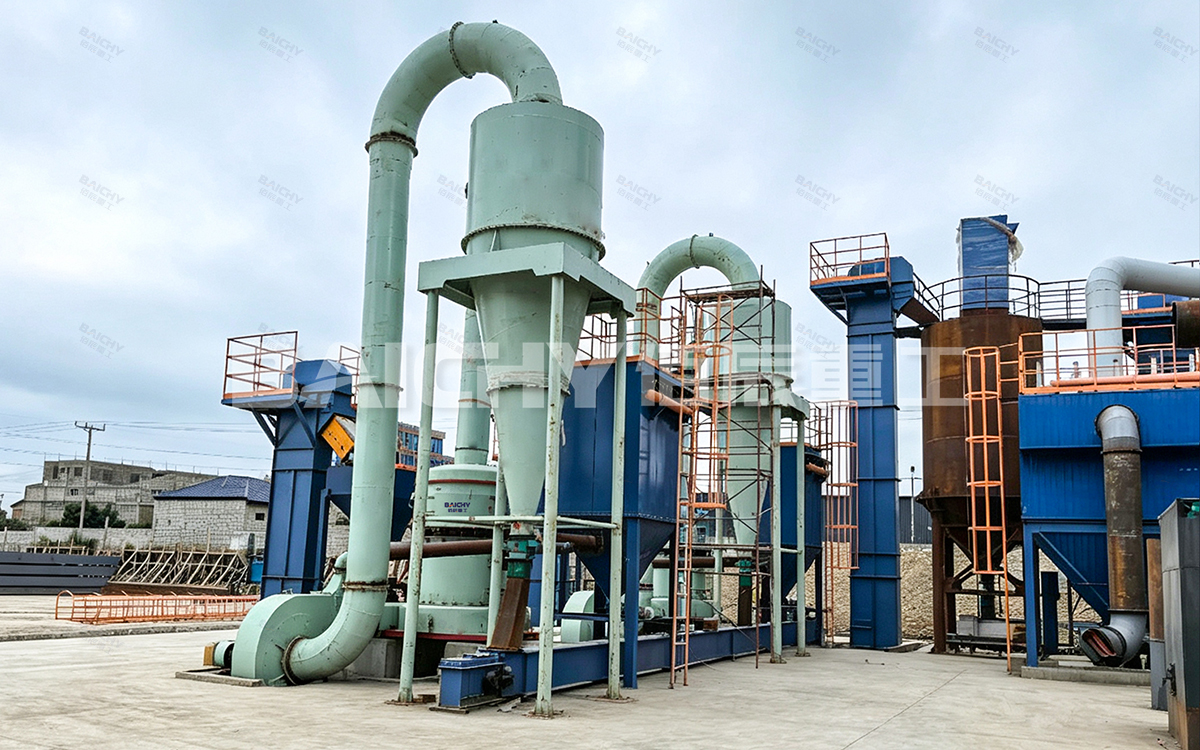
Gypsum Grinding Client Site
VI. Cost analysis: The basis of calculation matters more than the raw numbers
The main unit has a power rating of 45 kW, typical for medium-sized milling equipment; the real differentiators are wear-related costs and losses due to downtime. Materials with a Mohs hardness of around 3, such as calcite and limestone, cause slow wear on grinding rollers and rings; however, if the raw material contains hard components like quartz or dolomite, the frequency of replacing wear parts increases significantly. When calculating the cost per ton, one must aggregate and compare four factors—main unit power consumption, fan and classifier power consumption, wear-part amortization, and downtime losses—rather than focusing solely on the main unit's power rating.
Fifth Assessment: The cost per ton for a single machine operating on a continuous two-shift schedule is usually lower than that of intermittent single-shift production, as fixed costs are spread across a larger output volume. This is precisely why one should "calculate daily demand first, then select the machine model." Specific investment amounts and costs per ton depend on local electricity prices, the ability to self-source raw materials, and the selling price of the finished product; these must be calculated inpidually based on specific project parameters.
VII. YGM95 High-Pressure Suspension Grinding Mill FAQ
FAQ 1: What are the capacity and fineness specifications of the YGM95 High-Pressure Suspension Grinding Mill?
Factory specifications indicate a capacity of 2.1–5.6 t/h, a finished product fineness of 0.613–0.033 mm (approx. 30–425 mesh), a maximum feed particle size of ≤25 mm, and a main unit power of 45 kW. Actual values vary based on material hardness, feed size, target fineness, and moisture content; for instance, on-site records for processing calcite to 200 mesh show a rate of 2–3 t/h.
FAQ 2: How should I choose between the YGM95, YGM85, and YGM130 models?
Based on a two-shift (16-hour) workday, the daily output ranges are: YGM85 (1.2–4 t/h) = 19.2–64 t/day; YGM95 (2.1–5.6 t/h) = 33.6–89.6 t/day; YGM130 (2.5–9.5 t/h) = 40–152 t/day. Selection depends on two factors: choose the YGM85 for single-shift production or space-constrained sites; choose the YGM95 for two-shift production, a fineness of 200–325 mesh, and a daily demand of 33.6–89.6 t; opt for the YGM130 if daily demand exceeds 90 t or consistently requires a fineness finer than 325 mesh.
FAQ 3: What materials can the YGM95 process? What is the maximum hardness limit?
It is suitable for non-flammable, non-explosive, brittle materials with a Mohs hardness below 7 and moisture content below 6%. Typical materials include calcite, limestone, dolomite, gypsum, barite, talc, kaolin, and coal gangue. Materials with high hardness or high silica content will accelerate wear on the grinding rollers and rings; therefore, mineral composition details should be provided during the selection process.
FAQ 4: What equipment is included in a complete YGM95 grinding production line, and how much space is required?
The standard configuration includes a jaw crusher, bucket elevator, electromagnetic vibrating feeder, YGM95 main unit, classifier, cyclone collector, pulse dust collector, blower, and screw conveyor. The main unit measures 7,100 × 5,900 × 7,900 mm; additionally, the layout must accommodate a raw material storage area, finished product silos, and maintenance access paths.
FAQ 5: What is the service life of wear parts and the environmental performance?
Grinding components are made of high-chromium alloy, ensuring controllable wear rates under standard operating conditions. The dust collection system utilizes a pulse-jet bag filter and operates under fully enclosed negative pressure, keeping dust emissions below 15 mg/m³ and noise levels at or below 75 dB. Since the availability of spare parts and the responsiveness of commissioning services directly impact actual production output, it is recommended to include specific contract clauses regarding the stocking of wear parts, the customization of motors and electrical controls to meet local grid standards, and provisions for operator training.
Baichy Heavy Industry
Baichy Heavy Industry is a high-tech mining equipment company integrating R&D, manufacturing, sales, and after-sales service. Focusing on crushing, grinding, and mineral processing equipment, we provide professional solutions to our customers. We are ISO9001:2015 、certified, and our products include mobile crushing palnts, crawler crushing plant, construction waste crushing plants, jaw crushers, sand making machines, cone crushers, fine crushers, grinding mills, ball mills, etc., all with reliable performance to meet diverse project needs.
Baichy Heavy Industry – Your Trusted Partner
To ensure optimal performance of your equipment, Baichy Heavy Industry offers:
- Professional on-site installation guidance
- Comprehensive operator training
- 24/7 technical support & maintenance services
Our complete after-sales service system guarantees long-term, stable operation of your machinery with minimal downtime.
Protect Your Rights – Only Use Official Channels
To avoid scams and ensure authentic support, contact us exclusively through:
• Official Website: www.baichychina.com
• WhatsApp: +8615093222637
• Email: [email protected]
Your satisfaction is our priority – expect prompt, professional service every time.
(Note: Beware of unauthorized third parties claiming to represent Baichy. Always verify through official contacts.)