
Configuration of a 200 tph Sand and Aggregate Production Line
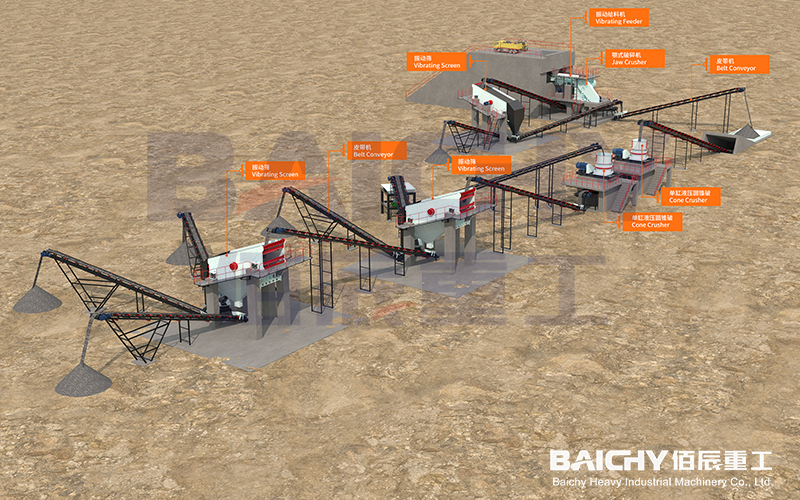
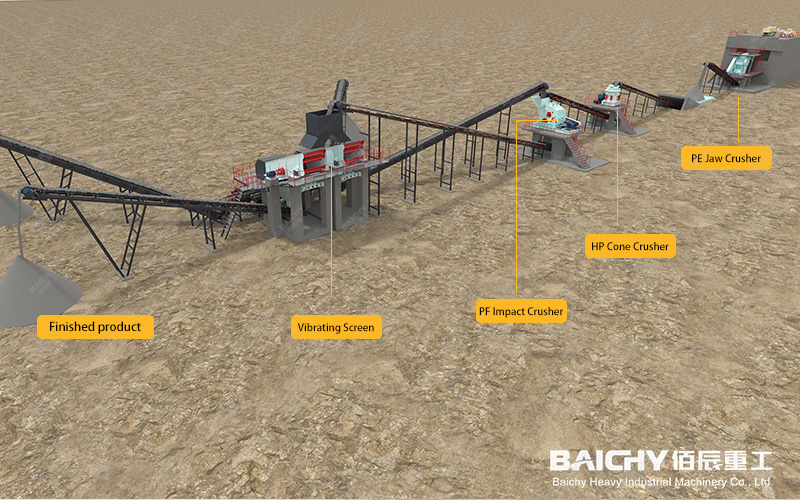
A standard configuration for a sand and gravel aggregate production line with an hourly capacity of 200 tons consists of a ZSW490×110 grizzly feeder, a PE750×1060 jaw crusher for primary crushing, a secondary crushing stage (for medium and fine crushing), and a 4YK2160 four-deck circular vibrating screen for closed-circuit classification, yielding four finished product sizes: 0–5 mm, 5–10 mm, 10–20 mm, and 20–31.5 mm. The upper limit of this line's capacity is typically determined not by the crushers, but by the screening equipment: assuming an oversize rate of 15% on the screen, the secondary crushing and screening stages must handle a throughput of 200 &pide; 0.85 ≈ 235 t/h, rather than the nominal 200 t/h.
I. Definitions of Aggregate Production Line Capacity
The phrase "200 tons per hour" refers to four distinct figures depending on whether one is discussing inquiries, technical agreements, or on-site acceptance:
• Nominal Capacity: The value specified on the equipment nameplate, calibrated based on limestone (with a bulk density of approximately 1.6 t/m³).
• Actual Operational Capacity: The output calculated by applying an operating condition correction factor to the nominal value (e.g., ×0.85–0.95 for medium-soft rock; ×0.75–0.85 for hard rock).
• Finished Product Capacity: The output of material meeting the required grading specifications after screening; material returned to the circuit is not double-counted.
• Raw Material Feed Rate: The actual volume of material accepted by the feeder and primary crusher, which is usually higher than the finished product output.
Disputes in such projects most frequently arise when the quotation is based on one definition while acceptance testing relies on another; to avoid this, technical agreements should list all four terms separately, specifying the corresponding numerical values and the duration of the performance assessment for each.
equipment list for a 200 tph aggregate production line
II. The Bottleneck Lies in Screening, Not Crushing
A quick calculation clarifies the situation: the throughput for the secondary stage is 235 t/h. The 4YK2160 screen has a surface area of 2100 × 6000 mm (12.6 m²), resulting in a unit screen load of 235 &pide; (2.1 × 6.0) ≈ 18.7 t/(h·m²). This places it in the upper range of the standard 15–20 t/(h·m²) limit. Consequently, the screen surface area cannot be reduced, nor can the number of decks be decreased; any cost savings from switching to a 3YK (three-deck) screen would be offset by fluctuations in the finished product pass rate and a shortened screen mesh lifespan. Furthermore, removing a deck eliminates the capacity for independent grading of a specific product size fraction.
III. Determining Model Specifications via Three Calculations
The equipment models for a sand and aggregate production line are determined through calculations rather than by simply consulting a table.
① Coarse crushing is determined by the maximum feed size: Jaw crusher feed opening width ≥ Maximum raw ore size &pide; 0.85. For raw ore ≤530 mm, the PE750×1060 model is selected (feed opening 750×1060 mm; max feed ≤630 mm; discharge opening 80–140 mm; rated capacity 110–320 t/h; 110 kW motor). Applying a 0.9 factor yields 99–288 t/h, and a 0.8 factor yields 88–256 t/h; the 200 t/h target falls within this mid-range. (Do not opt for the PE900×1200 simply for convenience, as the frame, foundation, and electrical control systems would then need to be configured for a 400 t/h scale.)
② Equipment selection for the secondary crushing stage is based on throughput: Throughput = 200 &pide; (1 − oversize rate) = 200 &pide; 0.85 ≈ 235 t/h. If the secondary stage is configured for only 200 t/h, the result after commissioning will be fluctuations in the finished product pass rate and a drastic reduction in the service life of liners and blow bars.
③ Screening capacity is also determined based on throughput; the calculation method is provided in the previous section: 18.7 t/(h·m²).
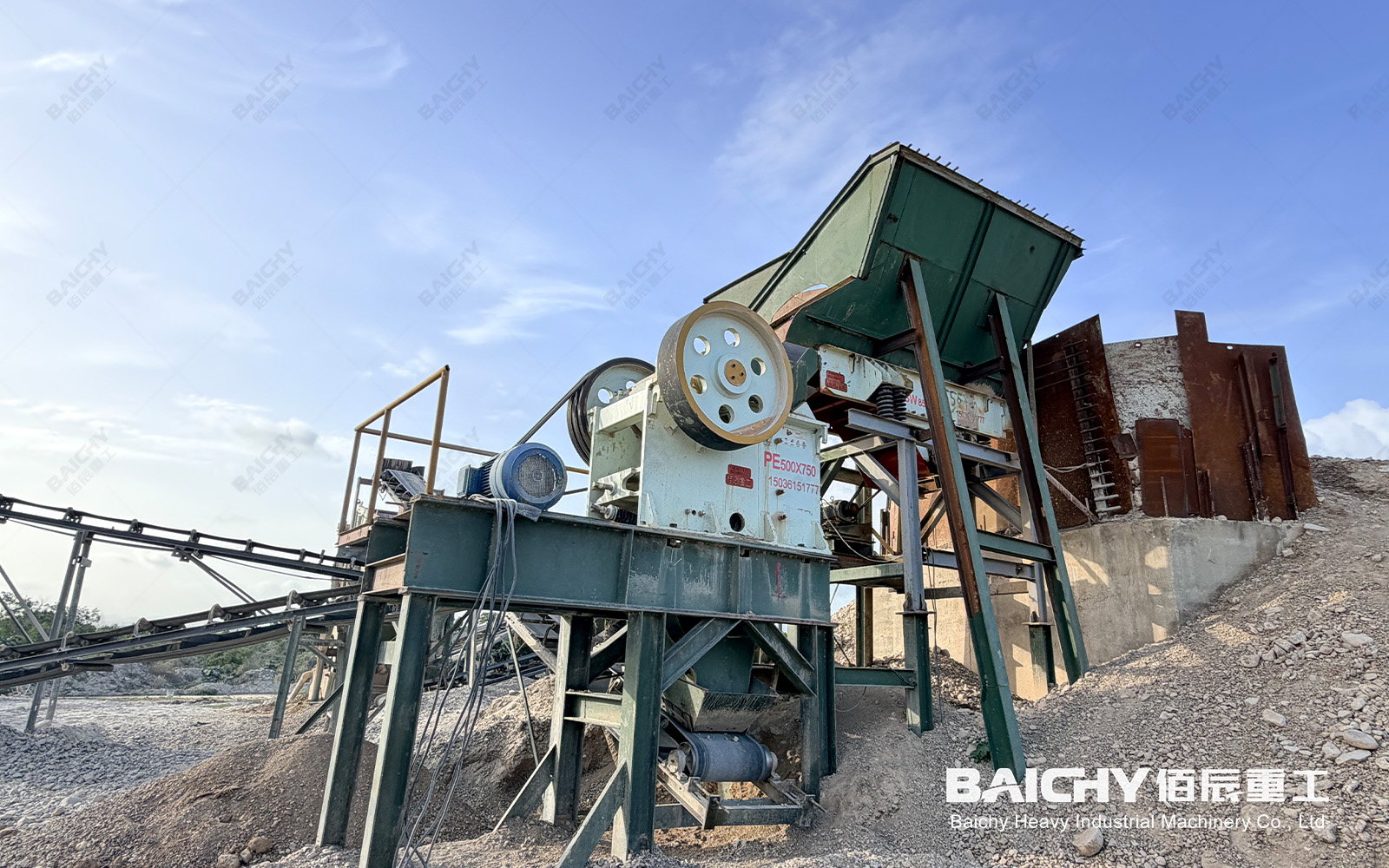
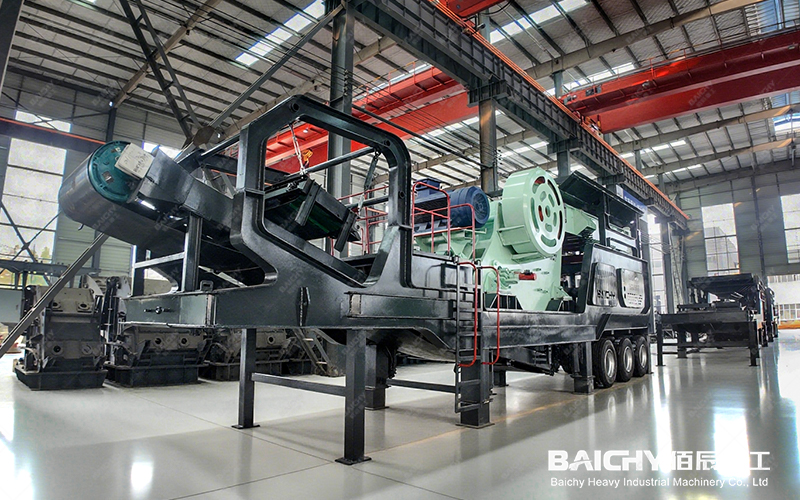
equipment selection for the primary crushing stage
IV. Equipment Configuration for the Complete Line
The table below lists the equipment for this 200 tph aggregate production line:
| Process | Equipment | Model | Key Parameters (Limestone Calibration) | Power |
|---|---|---|---|---|
| Feeding | Grizzly Vibrating Feeder | ZSW490×110 | Trough 4900×1100 mm; Max. feed size ≤580 mm; 180–400 t/h | 15 kW |
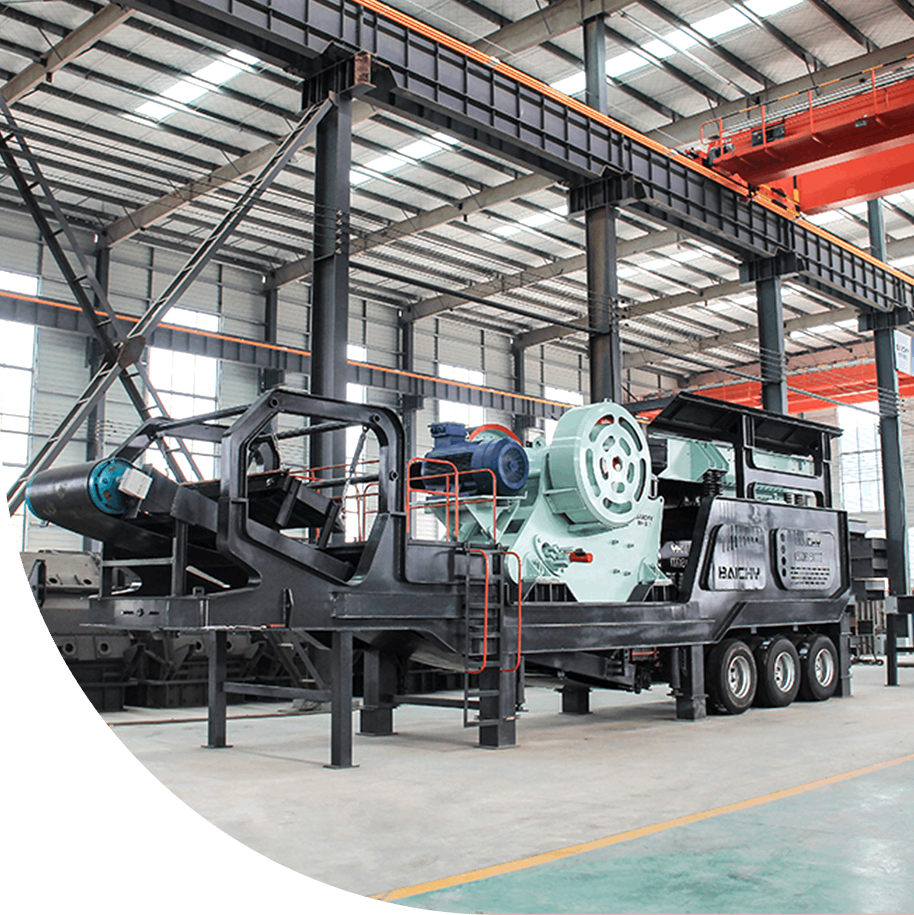
| Primary Crushing | Jaw Crusher | PE750×1060 | Feed opening 750×1060 mm; Max. feed size ≤630 mm; Discharge opening 80–140 mm; 110–320 t/h | 110 kW |
| Secondary/Fine Crushing (Medium-Soft Rock) | Impact Crusher | PF1315 | Rotor Φ1320×1500 mm; Max. feed size ≤350 mm; 100–280 t/h | 200 kW |
| Secondary/Fine Crushing (Hard Rock) | Multi-cylinder Hydraulic Cone Crusher | HP300 | Moving cone Φ1120 mm; Max. feed size ≤241 mm; Discharge opening 10–45 mm; 125–485 t/h | 220 kW |
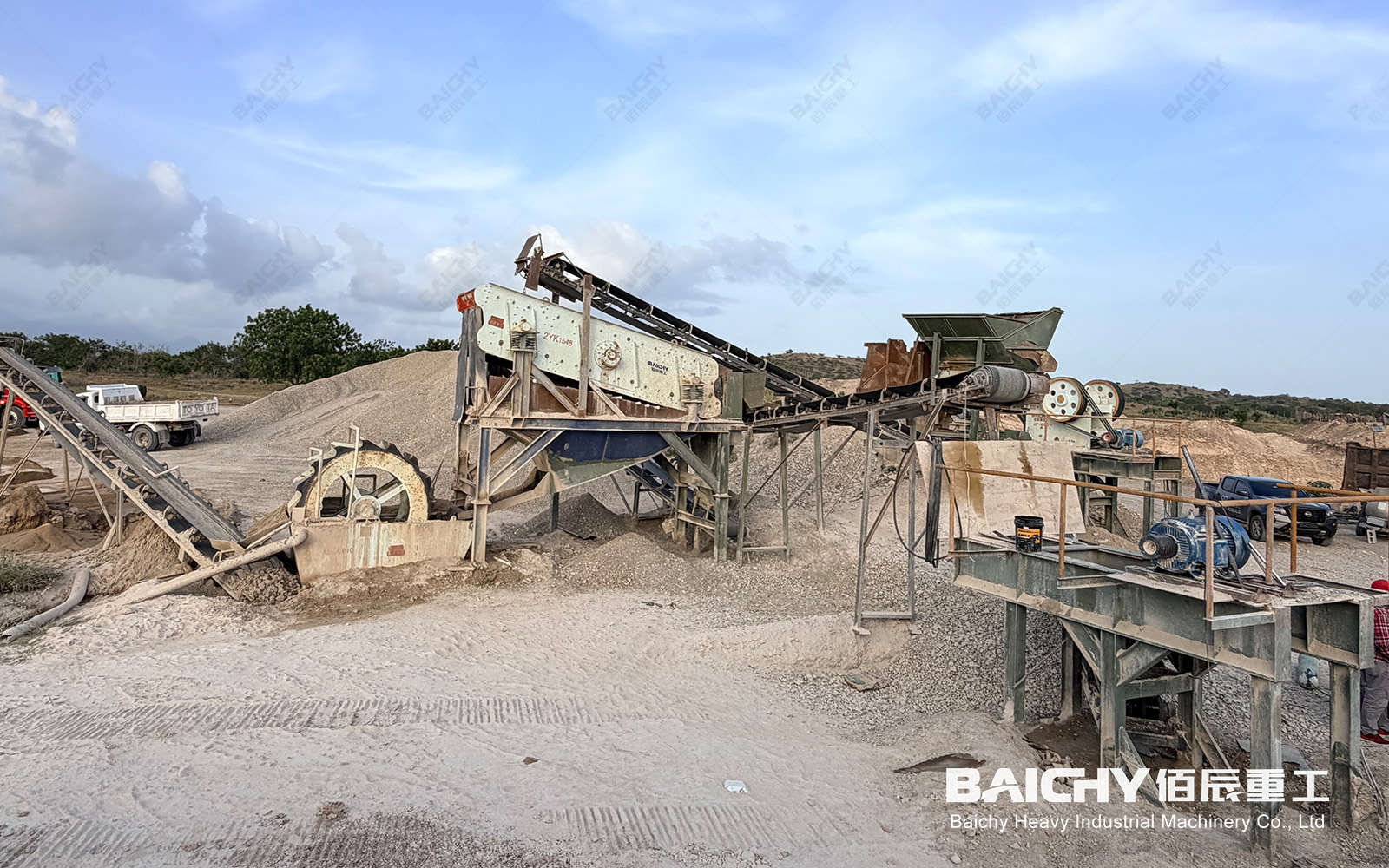
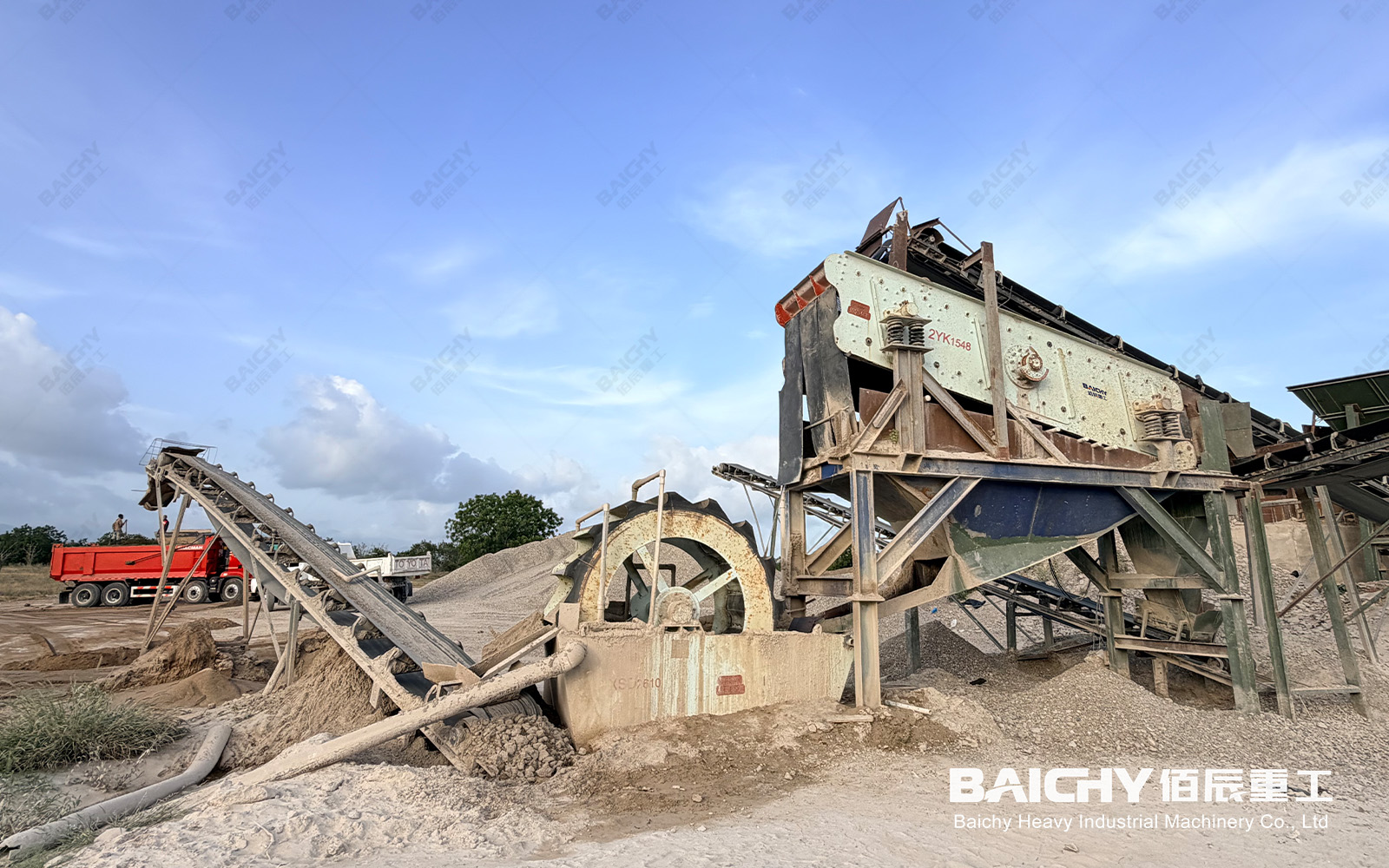
| Screening | 4-Deck Circular Vibrating Screen | 4YK2160 | Screen surface 2100×6000 mm; Equipped with 5/10/20/31.5 mm mesh | 30–45 kW |
| Conveying | Belt Conveyor | B800 / B650 | Main material flow: B800; Return material & finished product: B650 | — |
Total installed power for main equipment (using the median value of 37 kW for the screen): Medium-soft rock branch 15+110+200+37 ≈ 360 kW; Hard rock branch 15+110+220+37 ≈ 380 kW. Motors are customized according to local specifications (380/400/440V, 50/60Hz).
V. FAQ
Q1: Does an hourly capacity of 200 tons refer to the finished product output or the raw ore feed rate?
A1: It depends on the contract terms. If based on finished product output, the rate of qualified graded material after screening is 200 t/h (meaning the throughput of the secondary crushing stage and the raw ore feed rate will both exceed this figure); if based on raw ore feed, the finished product output is calculated by working backward from a 200 t/h feed rate. The technical agreement should specify "qualified finished product output ≥ 200 t/h" or "raw ore feed rate of 200 t/h," and define the operating condition correction factor and the duration for continuous hourly performance assessment; acceptance should not be based solely on nameplate figures.
Q2: Why are the secondary crusher and screening machine sized for 235 t/h instead of 200 t/h?
A2: Because of the closed-circuit material return. Assuming an oversize rate (material retained on the screen) of 15%, the secondary crusher and screen must handle the "200 t/h finished product + returned material," calculated as 200 &pide; 0.85 ≈ 235 t/h. Sizing for only 200 t/h would lead to chronic overloading, resulting in fluctuating finished product quality, high screen bearing temperatures, and drastically reduced service life for liners and screen meshes. If the oversize rate rises to 25%, the required throughput becomes 200 &pide; 0.75 ≈ 267 t/h; for medium-soft rock applications, the equipment model would need to be upgraded from the PF1315 to the PF1320 (160–350 t/h).
Q3: Should a horizontal shaft impact crusher (HSI) or a cone crusher be used for the secondary crushing stage?
A3: It depends on the abrasiveness of the material. For limestone, dolomite, river pebbles, and shale, choose the PF1315 impact crusher; for the same production capacity, the investment cost is 30%–40% lower than that of a cone crusher, and it yields a high percentage of cubical particles suitable for asphalt surface courses. For granite, basalt, iron ore, and metamorphic sandstone, choose the HP300 multi-cylinder cone crusher; it utilizes inter-particle (lamination) crushing, and the service life of the mantle and concave liners is 1,200–2,000 hours—6 to 10 times that of impact crusher blow bars (which last 120–200 hours when processing granite).
Q4: What are the requirements for feeding and input material for the PE750×1060?
A4: The maximum feed size is ≤630mm; material exceeding this size must undergo pre-crushing to prevent chamber jamming. A matching ZSW490×110 grizzly feeder should be used for uniform feeding and pre-screening to remove soil. If the clay content is consistently high, a soil removal step should be added at the feeding end rather than attempting remediation downstream. Metal foreign objects (such as drill rods or anchor bolts) must not enter the machine; installing an iron remover on the feed conveyor belt is recommended.
Q5: If the current setup is for 200 tph but expansion to 300 tph is planned for the future, what provisions should be made now?
A5: You only need to make three specific provisions; there is no need to spend extra money right now:
① Design the jaw crusher foundation based on the dimensions of the PE900×1200 model to avoid having to break up and rebuild the foundation later;
② Reserve a foundation spot and electrical control circuit for a second crusher at the secondary crushing stage;
③ Reserve space and conveyor connection points in the screening building for the future installation of a second circular vibrating screen.
Do not select a conveyor belt width that is at the absolute limit of capacity; using a B800 belt allows for a margin to increase speed later.
Baichy Heavy Industry
Baichy Heavy Industry is a high-tech mining equipment company integrating R&D, manufacturing, sales, and after-sales service. Focusing on crushing, grinding, and mineral processing equipment, we provide professional solutions to our customers. We are ISO9001:2015 、certified, and our products include mobile crushing palnts, crawler crushing plant, construction waste crushing plants, jaw crushers, sand making machines, cone crushers, fine crushers, grinding mills, ball mills, etc., all with reliable performance to meet diverse project needs.
Baichy Heavy Industry – Your Trusted Partner
To ensure optimal performance of your equipment, Baichy Heavy Industry offers:
- Professional on-site installation guidance
- Comprehensive operator training
- 24/7 technical support & maintenance services
Our complete after-sales service system guarantees long-term, stable operation of your machinery with minimal downtime.
Protect Your Rights – Only Use Official Channels
To avoid scams and ensure authentic support, contact us exclusively through:
• Official Website: www.baichychina.com
• WhatsApp: +8615093222637
• Email: [email protected]
Your satisfaction is our priority – expect prompt, professional service every time.
(Note: Beware of unauthorized third parties claiming to represent Baichy. Always verify through official contacts.)