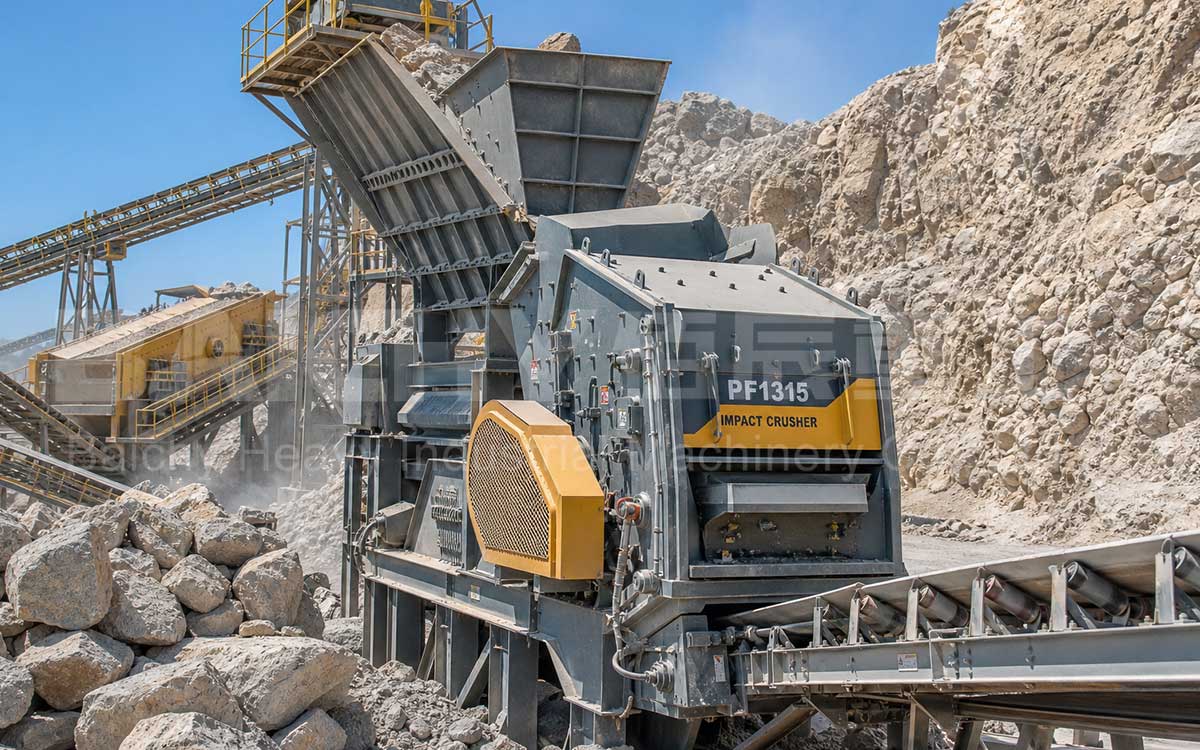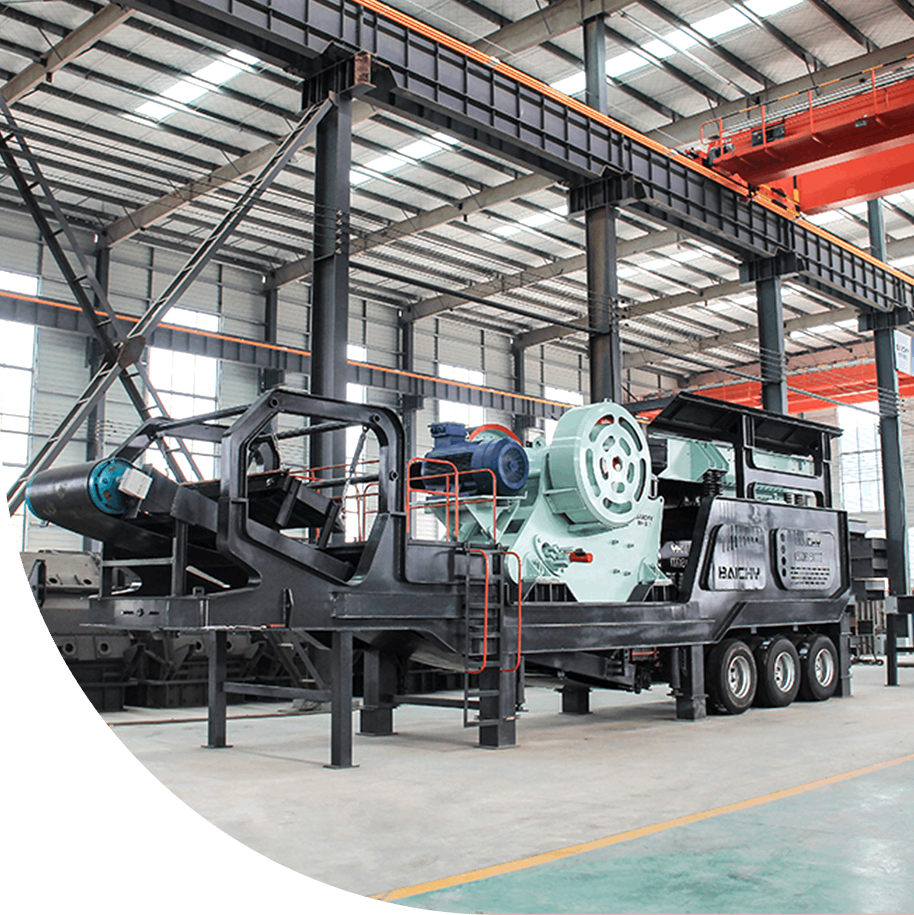


Slag grinding mills
When granulated blast furnace slag (GBFS) is ground into S95-grade slag powder, it can replace 30%–50% of cement clinker; it is a low-carbon cementitious material recognized by both the steel and cement industries. This article clarifies the logic behind selecting a slag grinding mill by using market data, equipment comparison charts, and a verifiable financial analysis.
There is no single "best model" for slag grinding mills; there are only solutions that make economic sense. Data from the World Steel Association (worldsteel) indicates that global crude steel production in 2024 is approximately 1.88 billion tonnes (with China accounting for about 1.01 billion tonnes). Blast furnace ironmaking generates roughly 0.25–0.3 tonnes of slag per tonne of pig iron—meaning slag is not waste, but a readily available raw material. Once ground to S95 grade (specific surface area of 420–450 m²/kg and a 28-day activity index ≥95%), the profit is derived from the spread between the finished product's selling price and the cost of the raw slag. For large-scale slag powder plants (≥30 t/h), vertical mills are the preferred choice, offering system power consumption of approximately 35–45 kWh/t—saving 30%–45% in electricity compared to ball mills. Ball mills offer greater stability for scenarios involving small-to-medium capacities or the processing of multiple material types. For small projects (1–15 t/h), the Raymond mill represents the most accessible entry-level solution. The ultimate criterion is always the same financial calculation: comparing electricity costs, drying expenses, land use and civil engineering costs, and wear-and-tear expenses to determine which solution offers the shortest payback period.
I. Why grind slag into powder: From a "disposal burden" to a "second profit stream"
1.1 Supply and demand logic: Slag is a steel by-product; powder is a raw material for construction materials
For steel mills and construction material enterprises planning to purchase slag grinding mills, the first step is to understand the raw material landscape: based on the proportion of blast furnace production processes, the volume of newly generated blast furnace slag worldwide amounts to approximately 300 million tonnes annually. Untreated slag represents a burden in terms of stockpiling costs and environmental pressure; however, after water quenching and grinding, it becomes ground granulated blast-furnace slag (GGBS). GGBS can replace 30%–50% of cement clinker on a one-to-one basis. Given that the industry standard for clinker production involves emitting approximately 0.8 tons of CO₂ per ton, a higher slag inclusion rate results in a lower carbon footprint for the concrete and cement. This is the fundamental reason why demand for slag powder remains strong amidst policies promoting low-carbon cementitious materials and the implementation of carbon tariffs.
1.2 The Logic of Reactivity: Slag’s Value is "Ground" into Existence
The latent hydraulic activity of water-quenched slag requires mechanical activation: the finer the particles and the higher the specific surface area, the higher the activity index. According to the national standard GB/T 18046 (Ground Granulated Blast-Furnace Slag), the S95 grade requires a 28-day activity index of ≥95%, with mainstream market products typically featuring a specific surface area of 420–450 m²/kg. Consequently, the core performance metric for a slag grinding mill is not merely the ability to produce powder, but the capacity to consistently maintain the finished product's fineness within the S95/S105 range—consistent fineness ensures a consistent grade, and a consistent grade ensures a stable selling price.
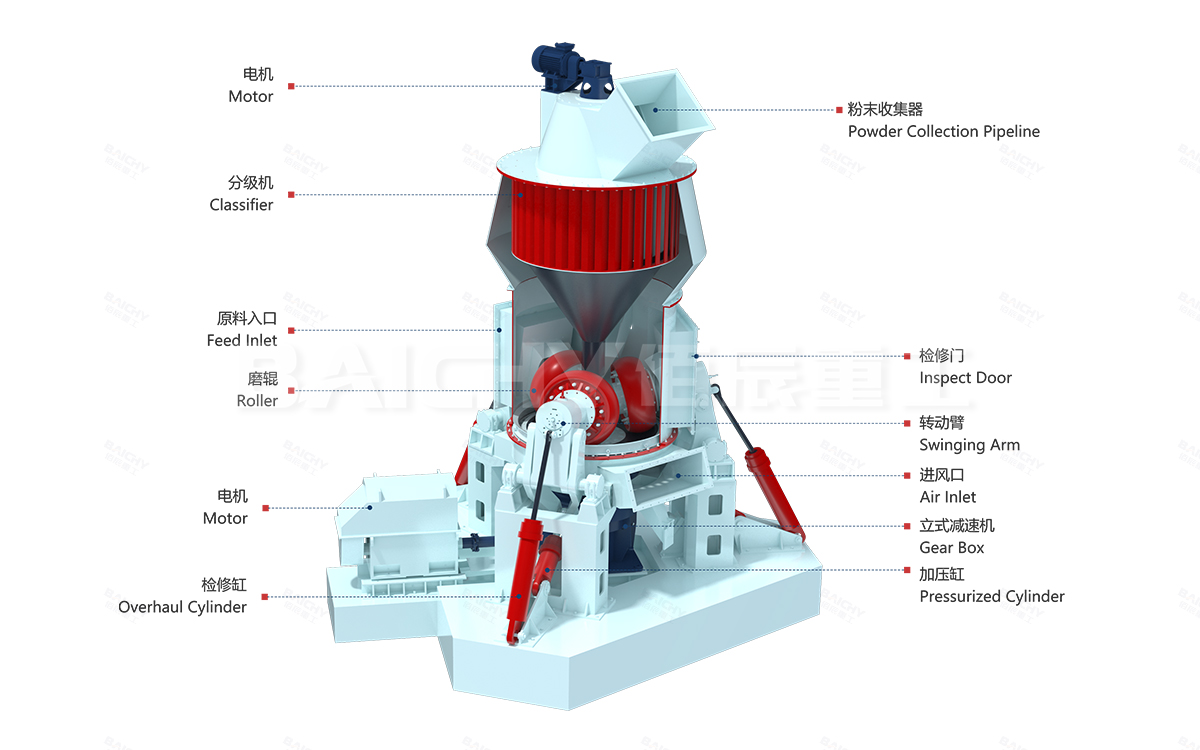
Structural diagram of the vertical mill
II. Comparison of Three Mainstream Slag Grinding Mills: Vertical Roller Mills, Ball Mills, and Raymond Mills
Keep this premise in mind: all three types of slag grinding mills are capable of producing S95-grade powder; the differences lie in production capacity, power consumption, moisture tolerance, and investment payback. Ultimately, equipment selection is a matter of matching the machinery to specific operating conditions.
2.1 Vertical Roller Mill (VRM): The Workhorse for Large-Scale Slag Grinding Plants
The VRM integrates grinding, drying, and classification into a single main unit. Water-quenched slag with an input moisture content of ≤15%–20% can be dried and ground simultaneously, eliminating the need for a separate pre-drying line. The system's power consumption is approximately 35–45 kWh/t—30%–45% lower than that of a ball mill—and its footprint is roughly one-half to two-thirds that of a ball mill system. An online variable-frequency classifier allows for continuous adjustment of product fineness during operation, enabling a single production line to simultaneously supply multiple grades (such as S95 and S105). This capability explains why large-scale slag powder plants almost universally opt for vertical mills; in high-capacity scenarios, selecting a slag grinding mill is effectively synonymous with selecting a vertical mill. The downsides include high initial investment costs and sensitivity to material bed stability and abrasiveness; furthermore, the payback period is significantly extended when production capacity falls below 20–30 t/h.
2.2 Ball Mill: A Time-Tested Solution Offering Stability, Reliability, and High Material Tolerance
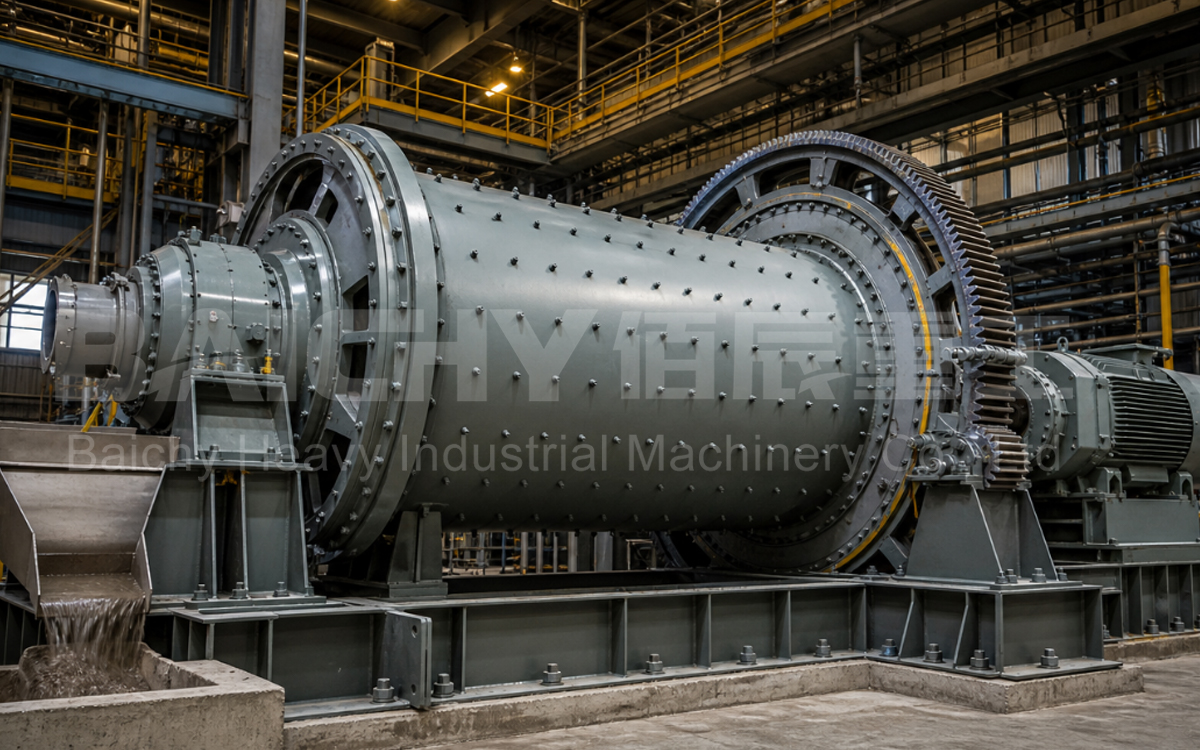
As a traditional choice for slag grinding, the ball mill relies on the impact and grinding action of steel balls. It offers the highest tolerance for abrasive materials (such as slag containing trace metal particles), ensures consistent fineness and reliable operation, and is well-suited for expanding existing grinding stations, handling frequent material switching, and executing retrofit projects. The trade-offs include a system power consumption of approximately 60–75 kWh/t and a requirement for feed moisture content below 1%–2%; water-quenched slag must be pre-dried or processed in a ball mill system equipped with a drying chamber. Additionally, the footprint and civil engineering investment are significantly higher than those of a vertical mill with equivalent capacity.
2.3 Raymond Mill (Ring-Roller Mill): A Low-Barrier, Entry-Level Solution for Small Capacities
The Raymond mill is characterized by low initial investment, a compact footprint, and ease of operation, making it suitable for small-scale slag powder projects (1–15 t/h), pilot lines, and multi-variety, small-batch processing. However, the grinding rollers and rings experience high wear rates when processing abrasive materials like slag, and production capacity drops significantly as the target fineness approaches or exceeds 400 m²/kg. It is essentially a solution for "getting up and running quickly" rather than for "long-term cost reduction"; most customers eventually upgrade to vertical mills or ball mills as they scale up operations.
2.4 Key Parameters of Three Types of Slag Grinding Mills at a Glance
| Comparison Item | Vertical Roller Mill (VRM) | Ball Mill | Raymond Mill / Ring Roller Mill |
|---|---|---|---|
| Single-unit Capacity | 10–100+ t/h | 5–100+ t/h | 1–15 t/h |
| System Power Consumption (Industry Typical) |
Approx. 35–45 kWh/t | Approx. 60–75 kWh/t | Limited benefit from scale; consumption rises significantly with finer product requirements |
| Feed Moisture Content | ≤15%–20%; simultaneous drying and grinding (no pre-drying needed) | Requires pre-drying to <1%–2% or a drying silo | Requires pre-drying or low-moisture feed material |
| Finished Product Fineness | 400–500 m²/kg; continuously adjustable online | Stable; adjustment requires shutdown to change grinding media grading | 80–400 mesh range; capacity drops at high specific surface areas |
| Footprint & Civil Works | Approx. 1/2–2/3 of ball mill system | Large (includes external classification and lifting equipment) | Smallest |
| Initial Investment | High | Medium | Low |
| Wear Parts | Grinding rollers and table (material bed grinding; long service life) | Steel balls and liners | Grinding rollers and rings (higher wear from abrasive materials) |
| Preferred Scenario | S95/S105 slag powder plants with capacity ≥20–30 t/h | Frequent material switching, retrofitting, highly abrasive slag | Small-scale projects (≤15 t/h) and pilot lines |
Note: The above figures represent typical industry ranges, not guarantees for specific models; nameplate capacity and actual operational capacity must be calculated separately. Specific model selection is subject to material grinding tests and signed technical agreements.
III. Four Questions for Equipment Selection: Crunch the Numbers Before Ordering
Price differences among slag grinding mills primarily stem from the investment in the main unit; the sequence of these four questions should not be altered.
3.1 Question 1: Production Capacity—Does output justify the investment?
Based on a rough calculation for a production line with an annual output of 200,000 tons of S95 slag powder, the savings in electricity costs and the elimination of a pre-drying system (when using a vertical mill instead of a ball mill) can usually offset the investment price difference within 2–4 years. The smaller the capacity, the harder it is to justify this cost-benefit analysis; this is precisely why projects with capacities below 20 t/h often revert to using ball mills or Raymond mills.
3.2 Question 2: Moisture Content—Is drying a cost factor?
Water-quenched slag typically contains 10%–20% moisture, which is the primary input parameter for the thermal design of the slag grinding mill. Vertical mills allow for simultaneous grinding and drying; their hot air systems are designed based on the worst-case seasonal moisture levels, with a 15%–20% safety margin. In contrast, ball mill solutions require factoring the investment in dryers, fuel costs, and conveying systems into the CAPEX/OPEX—this is often the key reason why the "total cost is lower" despite the vertical mill unit itself being more expensive.
3.3 Question 3: Fineness—Product grade determines selling price
Producing only S95 grade slag for the bulk admixture market yields different returns compared to supplying premium S105 grade slag. Vertical mills feature online classification, allowing for grade switching on a single line, whereas ball mills require a shutdown to adjust grinding parameters. Define the product matrix first, then determine the mill configuration—never reverse this order. Provide the target grades directly to the slag mill supplier so they can match the classifier and main mill unit accordingly.
3.4 Question 4: Abrasion and Iron Removal—Metal contaminants are "silent killers"
Slag often contains metal particles. A high-intensity magnetic iron remover must be installed before the mill inlet (this is a mandatory requirement, not an option); otherwise, iron particles can damage grinding rollers and tables, cause instability and vibration in the material bed, and result in excessive iron content in the finished product. Before signing a contract, ensure the system's specific energy consumption (kWh/t) is included in the performance clauses and request a material grinding test report—this is the step most easily skipped during procurement, yet the one that should least be overlooked.
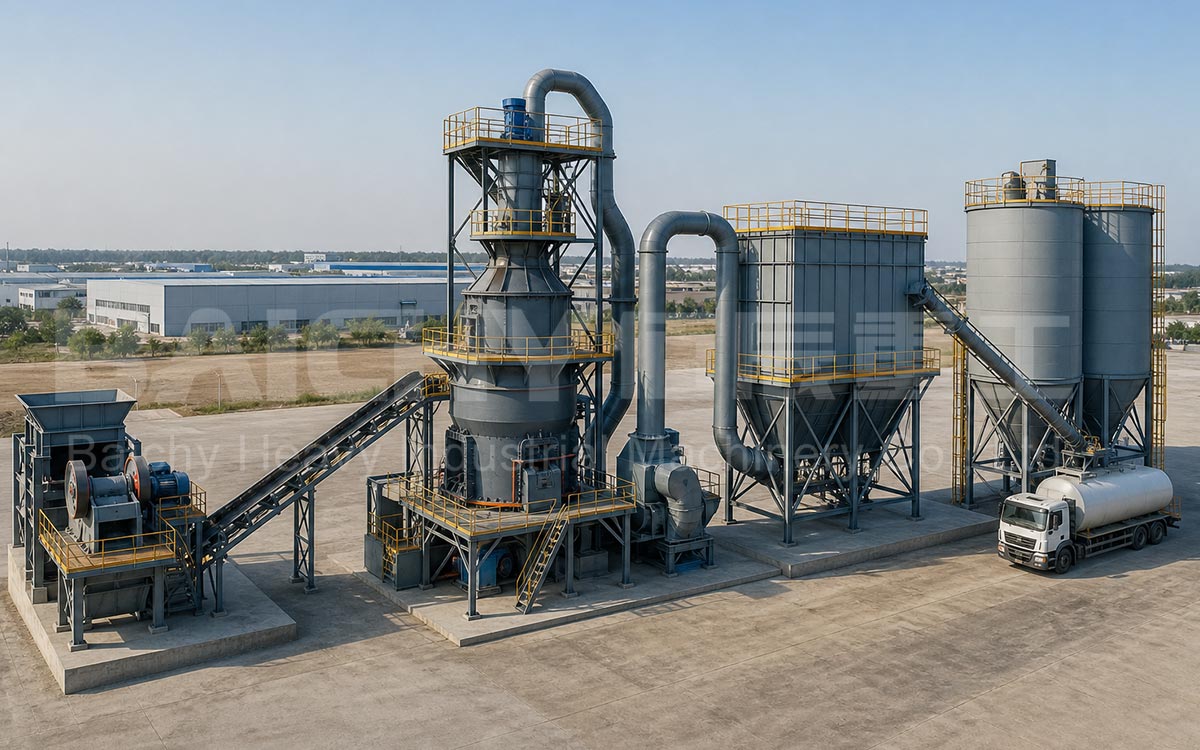
Vertical Mill Customer Site
IV. Slag Grinding Production Line: Ancillary Equipment List & Quick Selection Guide
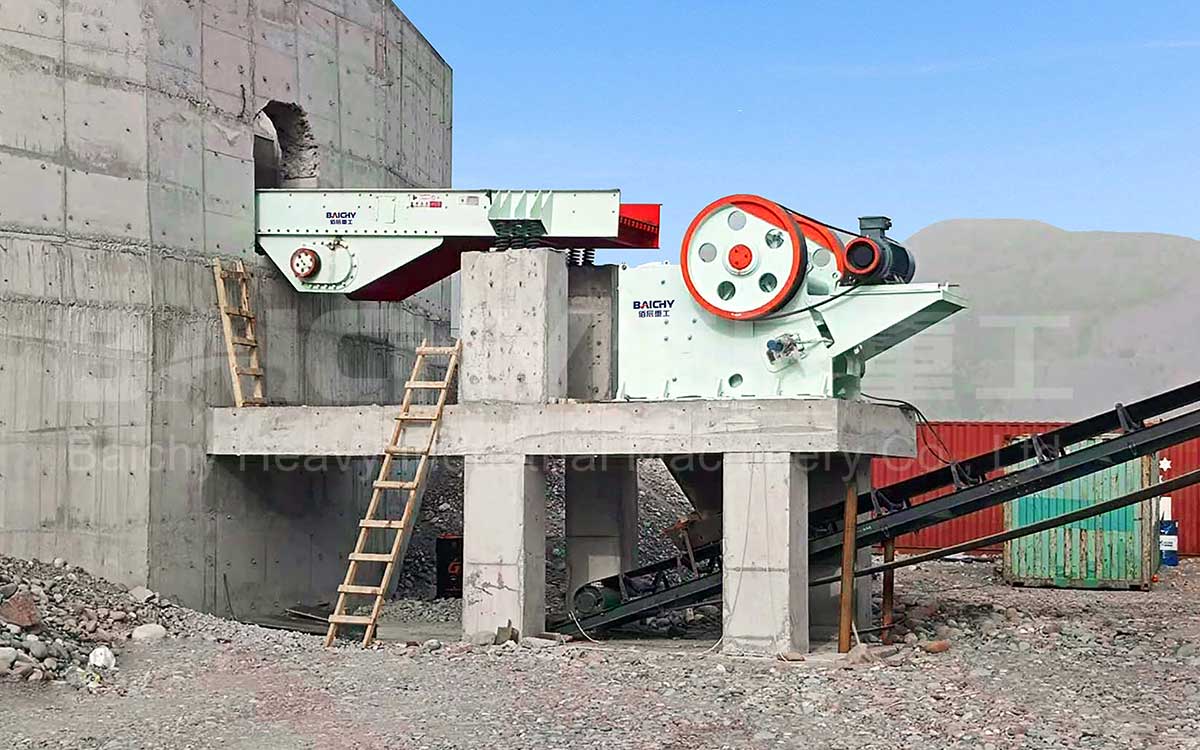
Regardless of the specific slag grinding mill chosen, a complete production line requires the same set of auxiliary equipment: Feeding (ZSW vibrating feeder + belt conveyor) → Iron removal (strong magnetic separator) → Grinding (main slag mill unit) → Classification & Dust Collection (dynamic classifier + bag filter) → Conveying & Storage (bucket elevator + finished product silo).
Quick Selection Guide: ≤15 t/h & budget-sensitive → Raymond mill; 20–100 t/h & long-term operation → Vertical roller mill; Highly abrasive slag, retrofitting projects, or multi-material switching → Ball mill. All solutions support customization for 60Hz/400V/440V power grids and freeze-protection designs for extreme cold conditions; please specify your local grid frequency when inquiring.
V. Slag Grinding Mill FAQ
Q1: Should I choose a vertical roller mill or a ball mill for slag grinding? How do I choose for small-to-medium capacities?
A1: Consider capacity and total cost. For long-term projects with capacities ≥20–30 t/h, vertical roller mill systems consume approximately 35–45 kWh/t—30%–45% less than ball mills; combined with the elimination of pre-drying, the investment cost difference is usually recovered within 2–4 years. For projects with capacities of 10–20 t/h, budget constraints, or the need to switch between multiple materials, the ball mill is more reliable. For startup operations with capacities ≤15 t/h, the Raymond mill is a suitable option.
Q2: Can water-quenched slag with 10%–20% moisture content be fed directly into the slag grinding mill?
A2: It depends on the mill type. Vertical roller mills can dry material while grinding, eliminating the need for pre-drying if the input moisture is ≤15%–20%. Ball mills generally require input moisture <1%–2%, necessitating pre-drying or a configuration that includes a drying chamber. For any slag grinding mill, it is recommended to design the hot air system based on the worst-case scenario regarding raw material moisture content (typically during the rainy season) and to include a 15%–20% safety margin to prevent production cutbacks.
Q3: What is the investment cost for a slag powder production line, and what is the payback period?
A3: The investment depends on production capacity, equipment model, and auxiliary systems; the typical industry payback period is 3–5 years. Profits are derived from the margin between the slag powder selling price and the combined cost of raw slag and processing, as well as the shift from a disposal cost to a revenue-generating product. Three key variables affect the payback period: the effectiveness of iron removal, whether system power consumption is included in performance assessment criteria, and the ability to consistently meet fineness standards. If you provide slag samples and your target capacity, Baichy Heavy Industry offers free grinding tests and CAPEX/OPEX calculations.
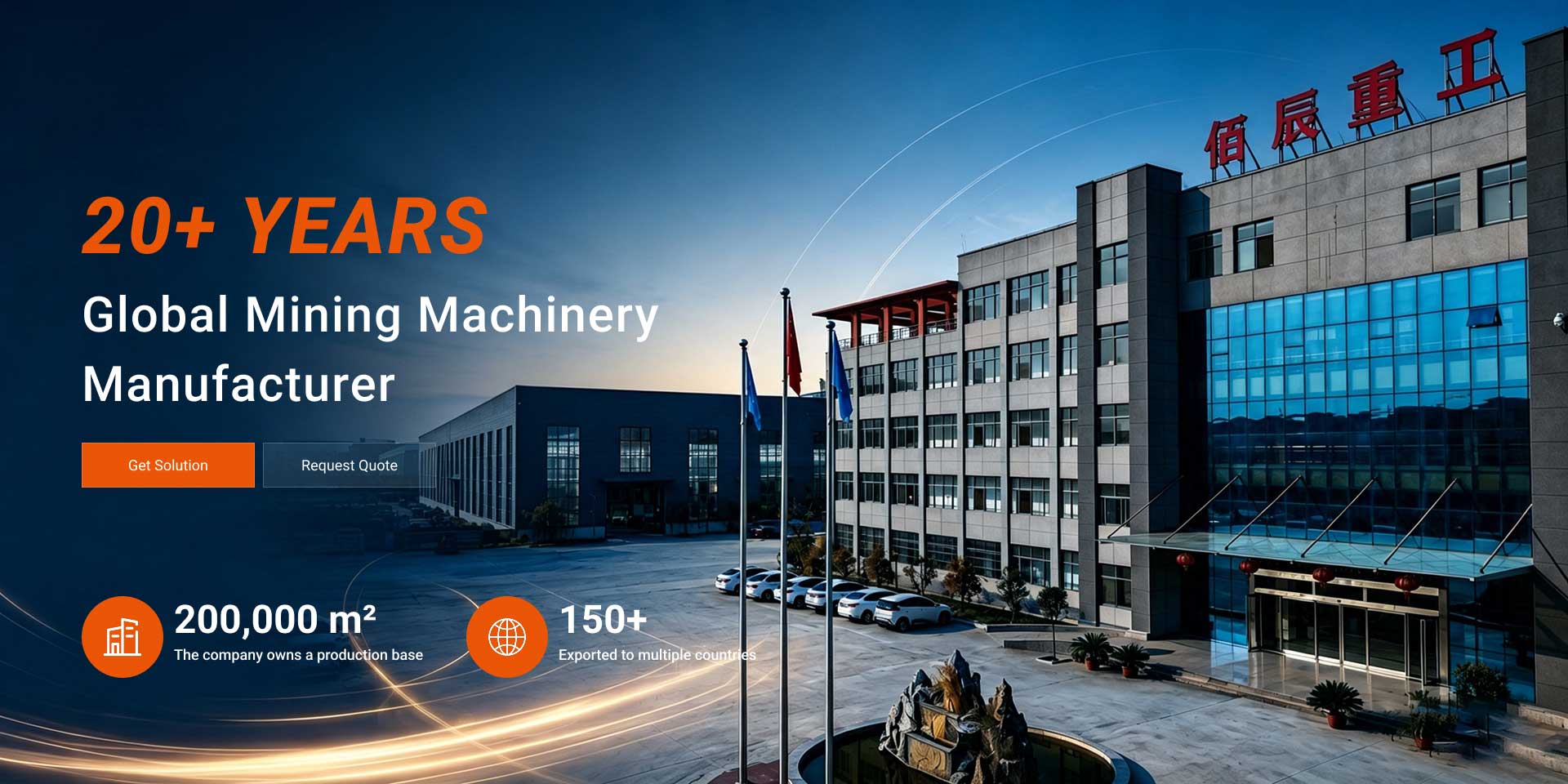
Baichy Heavy Industry
Baichy Heavy Industry is a high-tech mining equipment company integrating R&D, manufacturing, sales, and after-sales service. Focusing on crushing, grinding, and mineral processing equipment, we provide professional solutions to our customers. We are ISO9001:2015 、certified, and our products include mobile crushing palnts, crawler crushing plant, construction waste crushing plants, jaw crushers, sand making machines, cone crushers, fine crushers, grinding mills, ball mills, etc., all with reliable performance to meet diverse project needs.
Baichy Heavy Industry – Your Trusted Partner
To ensure optimal performance of your equipment, Baichy Heavy Industry offers:
- Professional on-site installation guidance
- Comprehensive operator training
- 24/7 technical support & maintenance services
Our complete after-sales service system guarantees long-term, stable operation of your machinery with minimal downtime.
Protect Your Rights – Only Use Official Channels
To avoid scams and ensure authentic support, contact us exclusively through:
• Official Website: www.baichychina.com
• WhatsApp: +8615093222637
• Email: [email protected]
Your satisfaction is our priority – expect prompt, professional service every time.
(Note: Beware of unauthorized third parties claiming to represent Baichy. Always verify through official contacts.)