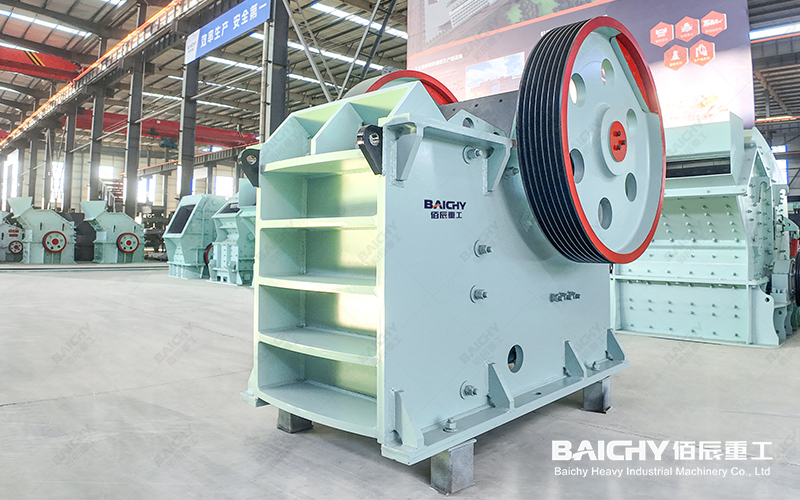
Primary Jaw Crusher
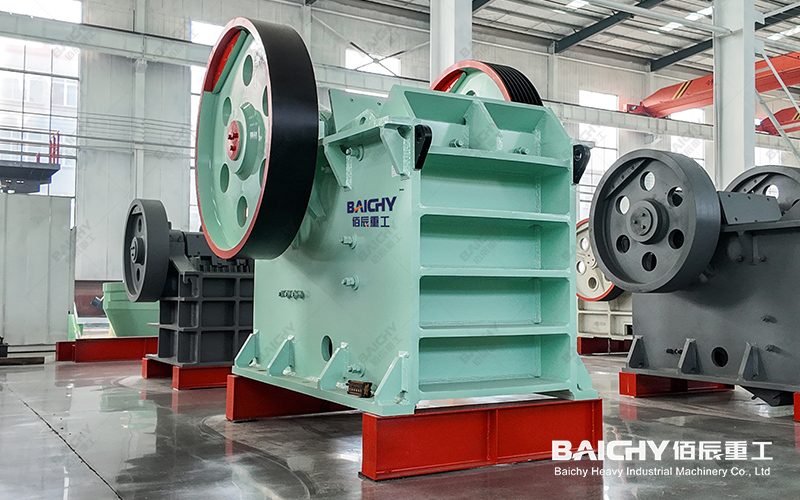
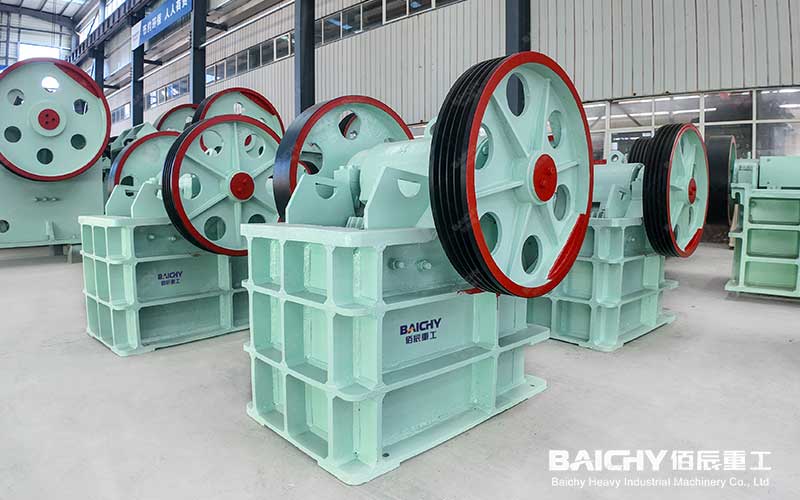
The primary choice for the primary crushing stage is the compound-pendulum jaw crusher (single-toggle design, PE series). This preference stems not merely from industry convention but from a combination of crushing principles and economic factors: compression crushing is "non-selective" regarding material type, handling everything from limestone to granite, basalt, and iron ore; its simple structure ensures the lowest capital expenditure (CAPEX) and maintenance requirements in its class; and a 4–6:1 reduction ratio is sufficient to process large rocks (up to 1000mm) while providing suitable feed for the secondary crushing stage.
This article breaks down the equipment selection logic based on three dimensions—feed size, material hardness, and target capacity—and provides a model-vs.-capacity comparison table to help you pinpoint the right machine. It concludes with an FAQ section and capacity conversion factors to help you avoid the common pitfall of selecting a machine based solely on nominal capacity, only to face a production shortfall upon startup.
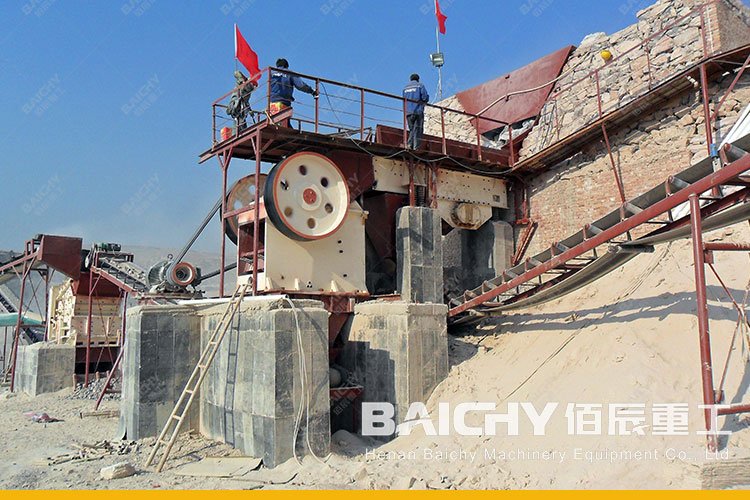
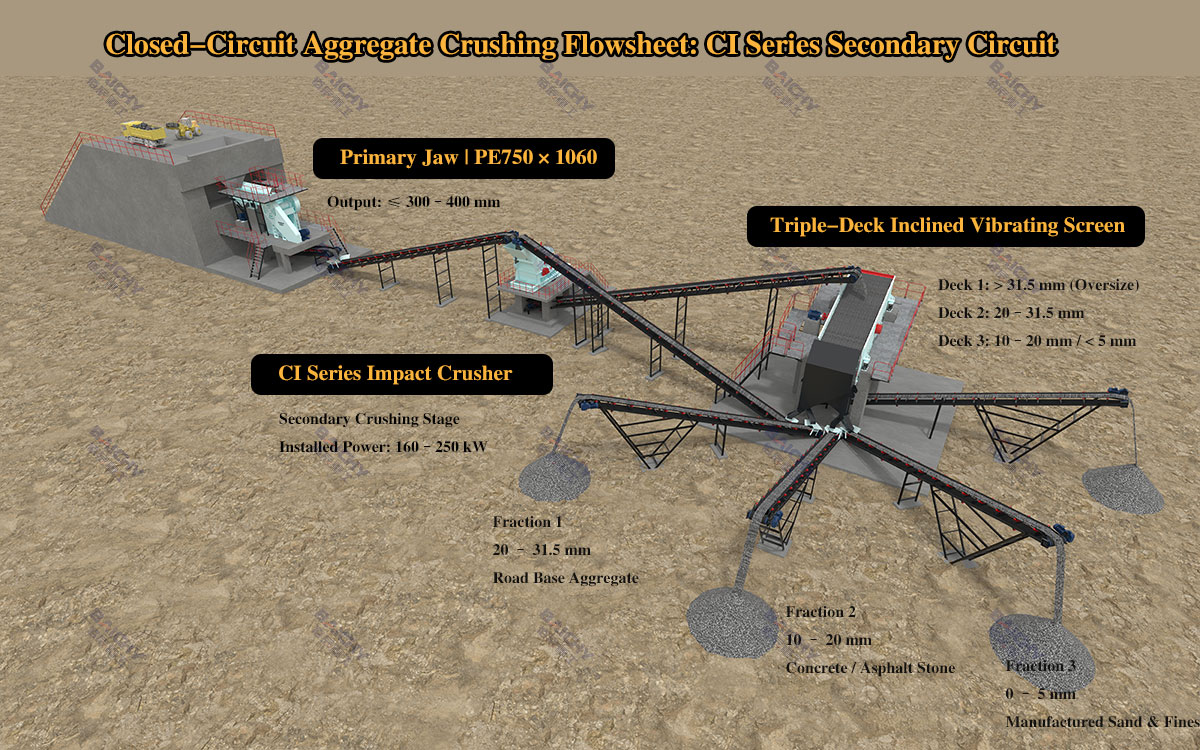
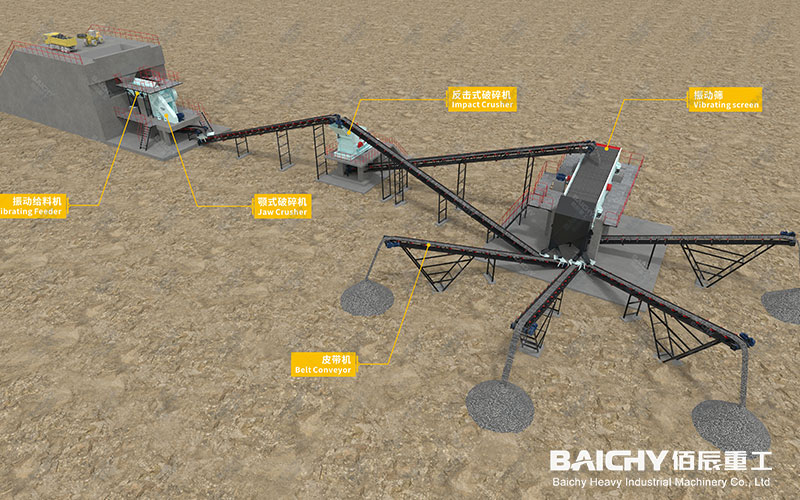
Granite Crushing Site Featuring a Jaw Crusher Production Line
I. Three Fundamental Parameters for Primary Crushing Operations
Jaw crusher performance does not depend on a single parameter but on the interplay of three factors: feed size, material hardness, and target capacity. A mismatch in any of these dimensions can cause the entire production line's capacity to plummet.
1.1 Feed Size: 80–85% of the Inlet's Short-Side Width is the Hard Limit
A jaw crusher's inlet is defined by its "width × length" (e.g., 600×900 mm), and the maximum feed size is approximately 80–85% of the inlet's short-side width:
• ≤80% of short-side width (Recommended): The crushing chamber operates efficiently at full load with no risk of jamming.
• 80–85% (Critical): Operation is possible but requires regular rock shapes; excessively long or flat rocks can easily jam sideways in the inlet, necessitating pre-processing.
• >85% (Prohibited): Frequent jamming and a sharp drop in crushing efficiency occur; forced feeding can damage the eccentric shaft and bearings.
When selecting a model, first calculate the required short-side width by piding the maximum rock size by 0.85.
Example: If the largest feed particle is 500 mm, the short side of the feed opening must be ≥ 590 mm → This immediately narrows the selection to the PE-600×900 model or larger.
1.2 Material Hardness: Compressive strength determines the upper limit of the model and the service life of wear parts.
Jaw crushers can process materials with a compressive strength of ≤350 MPa, covering almost all natural ores. However, material hardness directly dictates actual throughput and jaw plate lifespan. Nominal capacity ratings are based on limestone (bulk density: 1.6 t/m³); for hard rock, a conversion factor must be applied:
| Material Type | Compressive Strength (MPa) | Capacity Conversion Factor | Jaw Plate Lifespan Baseline |
| Limestone | 80–140 | 1.00 (Nominal Baseline) | Longest |
| Granite | 140–250 | 0.75–0.85 | Medium |
| Basalt | 180–300 | 0.70–0.80 | Medium-Short |
| River Pebbles | 200–300 | 0.70–0.80 | Medium-Short |
| Iron Ore | 150–350 | 0.60–0.75 | Short |
Engineering Insight: Actual throughput for hard rock is limited by two factors: reduced material flow rate through the crushing chamber and the need to narrow the discharge opening to control the reduction ratio. Applying the conversion factor *plus* a 15–25% design margin is the correct approach for selecting equipment that ensures the production line meets targets immediately upon commissioning.
1.3 Capacity Requirements: Determine t/h first, then the model.
• Design Capacity = Target Output × 1.15–1.25 margin factor (to account for fluctuations in feed, maintenance downtime, and momentary blockages in the crushing chamber).
• Primary crushing capacity is determined by the discharge opening setting: a larger opening results in higher capacity but a lower reduction ratio. The target discharge particle size must be determined in coordination with the feed requirements of the secondary crushing stage (cone crusher, impact crusher, or sand-making machine)—this is the most common point of misalignment in production line design.
II. Comparison of Three Optional Schemes
Scheme A: PE Compound-Pendulum Jaw Crusher (Single-Toggle) ⭐ Preferred choice for primary crushing
Principle: The eccentric shaft directly drives the swing jaw. The upper end of the swing jaw performs an elliptical motion while the lower end follows an arc-shaped path, exerting a combined "compression and shearing" force on the material. The material is progressively crushed within the crushing chamber before being discharged through the outlet.
Model Specifications (Nominal capacity based on limestone at 1.6 t/m³):
| Model | Feed Opening (mm) | Max. Feed Size (mm) | Discharge Range (mm) | Nominal Capacity (t/h) | Motor Power (kW) | Typical Application |
| PE-400×600 | 400×600 | 340 | 40-100 | 16-60 | 30 | Small-scale production lines / Mobile stations |
| PE-500×750 | 500×750 | 425 | 50-100 | 50-100 | 55 | 100 t/h class production lines |
| PE-600×900 | 600×900 | 500 | 65-160 | 60-160 | 55-75 | 100–200 t/h Core model |
| PE-750×1060 | 750×1060 | 630 | 80-140 | 110-320 | 90-110 | 200–300 t/h production lines |
| PE-900×1200 | 900×1200 | 750 | 95-165 | 220-450 | 110-132 | 300–450 t/h production lines |
| PE-1200×1500 | 1200×1500 | 1020 | 150-300 | 400-800 | 160-220 | Large-scale mining operations |
Advantages:
• Simple structure, minimal maintenance costs, and convenient jaw plate replacement (symmetrical design allows for reversible use)
• High tolerance for oversized chunks and occasional foreign objects (metal parts, tree roots); rugged and durable under coarse crushing conditions.
• Lowest initial investment (CAPEX); offers the best total cost of ownership (TCO) among the three options.
• Mature domestic supply chain; spare parts are globally accessible; short delivery lead times.
Disadvantages:
• Moderate crushing ratio (4–6:1); wide output particle size distribution.
• Output contains elongated and flaky particles; requires downstream shaping equipment if the final product (e.g., concrete aggregate) has specific shape requirements.
Option B: European-style deep-cavity jaw crusher (C-Series)
Principle: Builds upon the compound pendulum structure by deepening the crushing cavity and increasing the eccentric stroke; the larger swing of the moving jaw results in higher crushing efficiency and capacity density. Discharge opening adjustment uses a wedge or hydraulic system, eliminating the need for machine shutdown or disassembly during adjustment.
Applications: Large-scale stationary production lines; mining projects prioritizing capacity with sufficient budget.
Advantages:
• Capacity is approximately 10–20% higher than equivalent PE-series models; higher capacity density per unit.
• Hydraulic discharge opening adjustment saves labor and minimizes downtime.
• Deep-cavity design offers better adaptability to high-hardness materials and ensures more uniform stress distribution on the jaw plates.
Disadvantages:
• Purchase cost is 15–30% higher than equivalent PE-series models.
• More complex structure requires higher skill levels from operators and maintenance personnel; higher spare parts costs.
Option C: Simple pendulum jaw crusher (double-toggle)
Principle: The moving jaw swings in a simple arc around a fixed pivot point, with crushing force transmitted via a double-toggle mechanism. Generates high crushing force but has a short stroke and low efficiency. Advantages:
• Even wear on jaw plates; long service life.
• High crushing force; capable of continuous, heavy-duty operation with extremely hard materials.
Disadvantages:
• Complex structure and heavy machine body; purchase cost is significantly higher than that of double-toggle (compound pendulum) models.
• Low crushing ratio (only 3–4:1) and low capacity density; a larger machine is required for the same output.
• Complex maintenance; high cost of spare parts.
Suitability: Considered only by ultra-large mines (primary crushing capacity >800 t/h) seeking to minimize uneven jaw plate wear; for medium-to-large production lines, choosing this represents a poor return on investment ("spending big money for little gain").
III. Comparative Summary
Primary Crushing Comparison: Jaw Crusher vs. Gyratory Crusher vs. Impact Crusher
| Dimension | Jaw Crusher | Gyratory Crusher | Impact Crusher |
| Hard Rock Suitability | ★★★★★ | ★★★★★ | ★★ |
| Purchase Cost | ★★★★★ | ★★ | ★★★★ |
| Max. Capacity | ~800 t/h | 5000+ t/h | ~500 t/h |
| Maintenance Cost | Low | High | High (blow bar wear) |
| Foundation Requirements | Standard concrete foundation | Deep pit, heavy-duty foundation | Standard foundation |
| Application Scenarios | General use for medium-to-large lines | Continuous operation in ultra-large mines | Primary crushing of soft rock (e.g., limestone) |
Conclusion: Gyratory crushers are the exclusive choice for ultra-large mines (5000 t/h class); selecting one for small-to-medium lines is a case of investment mismatch. Primary crushing with impact crushers is limited to low-to-medium hardness materials like limestone; costs associated with blow bar wear become prohibitive when processing granite or basalt. The jaw crusher is the only universal solution for primary crushing stages with capacities below 800 t/h.
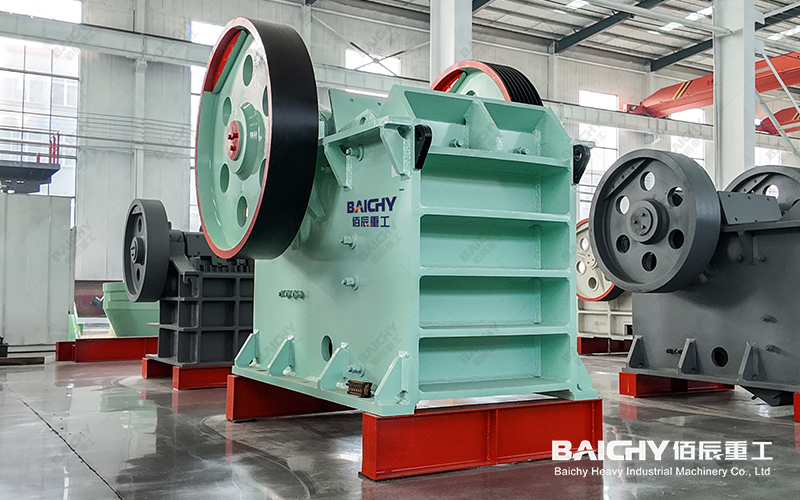
Jaw Crusher
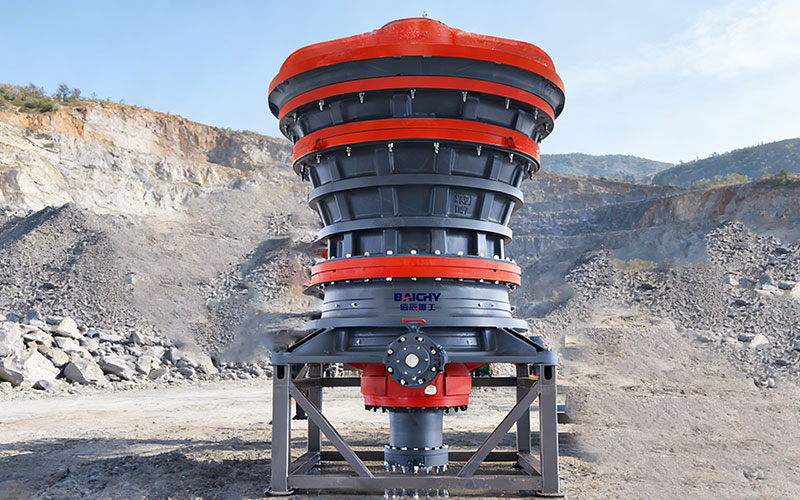
Gyratory Crusher
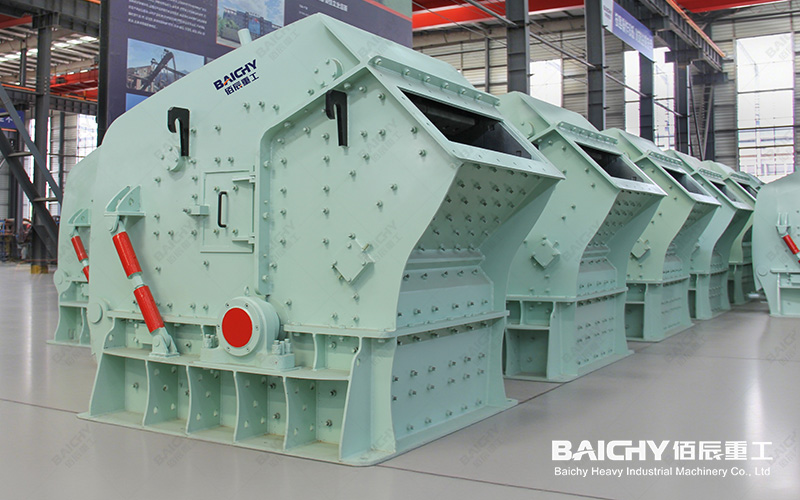
Impact Crusher
IV. Recommended Solution
Top Recommendation: PE Compound Pendulum Jaw Crusher
Direct matching based on target capacity and maximum feed size:
| Target Capacity (t/h) | Max. Feed Size (mm) | Recommended Model | Motor Power (kW) |
| ≤60 | ≤340 | PE-400×600 | 30 |
| 50–100 | ≤425 | PE-500×750 | 55 |
| 60–160 | ≤500 | PE-600×900 | 55–75 |
| 110–320 | ≤630 | PE-750×1060 | 90–110 |
| 220–450 | ≤750 | PE-900×1200 | 110–132 |
| 400–800 | ≤1020 | PE-1200×1500 | 160–220 |
| Mobile/Multi-site Scenarios | ≤500 | YDPZ Mobile Jaw Crushing Station (Integrated feeding, crushing, and screening) | Model-dependent |
Reasons for Recommendation:
1. Broadest Adaptability: Covers the full capacity range of 16–800 t/h and handles both hard and soft rock; the main equipment remains unchanged from initial production through capacity expansion.
2. Lowest TCO: Offers the lowest purchase cost, simplest maintenance, and cheapest spare parts for the same capacity; the 3–5 year full-lifecycle cost is significantly superior to the other two categories.
3. Reliable Capacity: Selection based on a 1.2 conversion factor ensures an engineering margin for meeting production targets upon commissioning.
Recommended Alternative: Euro-style C-Series (Large-scale stationary line)
Upgrade to the C-Series deep-cavity model if any of the following conditions apply:
• Target capacity >300 t/h with long-term, continuous full-load operation (primary mine production line);
• High-hardness materials (basalt/iron ore) combined with extreme requirements for capacity density;
• Ample project budget; willingness to pay a 15–30% purchase premium for higher single-unit capacity and the convenience of hydraulic adjustment.
Not Recommended: Double-toggle (Blake-style) jaw crusher (unless capacity >800 t/h)
Choosing a double-toggle crusher for capacities under 800 t/h means paying higher purchase and maintenance costs for "jaw plate wear uniformity" that isn't actually needed. A specific comparison between double-toggle and gyratory crushers is recommended only above this capacity level.
V. Auxiliary Equipment Recommendations
Primary crushing is not a standalone operation; a lack of proper auxiliary equipment is the primary cause of capacity loss:
| Auxiliary Equipment | Function | Consequences of Absence |
| ZSW Vibrating Feeder | Uniform, continuous feeding | Fluctuating feed rates; capacity fluctuations of 20–40% |
| Belt Conveyor | Transfer from primary crusher outlet to secondary stage | - |
| Pre-screening (Optional) | Remove fines when material has high dust/clay content | Fines occupy crushing cavity; wasted power on ineffective crushing |
| Tramp Iron Remover | Catch metal foreign objects | Foreign objects damage jaw plates or jam the discharge opening |
| Dust Removal System | Negative pressure dust collection at cavity inlet | Failure to meet environmental standards; deteriorating work environment |
| Hydraulic Breaker (Optional) | Pre-treatment of oversized rocks | Oversized rocks jam the cavity; entire line shuts down |
VI. Risk Warnings
1. Oversized Feed: Rocks with a short-side dimension >85% of the inlet width will jam horizontally across the cavity opening. The feed yard must be equipped with a hydraulic breaker or use blasting for pre-treatment; do not expect the jaw crusher to "muscle through" such material.
2. High Moisture/Clay Content: Sticky materials cake at the bottom of the crushing cavity, causing a sharp drop in capacity or even a complete blockage of the discharge opening. Materials with high moisture content require pre-screening or the selection of a model equipped with a scraper device.
3. Overstated Capacity: Suppliers' nominal capacity ratings are based on limestone; capacities for granite/basalt should be adjusted by a factor of 0.7–0.85, and for iron ore by 0.6–0.75. Additionally, a 15–25% margin should be factored in—this is the primary reason why production lines often suffer from insufficient output immediately upon commissioning.
4. Misuse of PEX Series: The PEX series is designed for fine/secondary crushing (featuring smaller feed openings and the ability to adjust discharge openings to finer settings); using it for primary crushing results in significant capacity loss. Always verify the series designation before selection.
5. Power Standard Mismatch: Ensure the motor voltage and frequency match the local grid (e.g., 380V/50Hz is common in Africa; 220V/440V/60Hz is common in Latin America). Baichy can customize motor windings; this must be specified before placing an order.
6. Foundation and Installation: Jaw crushers generate high dynamic loads. Concrete foundations must be constructed according to the manufacturer's drawings, and vibration-damping pads must not be omitted; otherwise, fatigue cracking of the frame is inevitable.
VII. FAQ
1. Why choose a jaw crusher over an impact crusher for primary crushing?
Impact crushers rely on high-speed impact for size reduction, causing rapid wear on blow bars when processing hard rock—in granite applications, blow bar lifespan is often measured in weeks. The costs of replacement and downtime far exceed those associated with jaw plate replacement in jaw crushers. Jaw crushers utilize static compression; their jaw plates are wear-resistant and versatile regarding material type. It is industry consensus to use jaw crushers for primary crushing of hard rock, whereas impact crushers are limited to primary crushing of materials with low to medium hardness, such as limestone.
2. What is the difference between the PE and PEX series?
The PE series is designed for primary crushing: it features a large feed opening and a discharge range of 40–300mm, serving as the first stage of the crushing process. The PEX series is designed for fine/secondary crushing: it has a smaller feed opening and an adjustable discharge range of 8–75mm, serving as the second stage. Using a PEX crusher for primary crushing results in severely inadequate capacity and feed capability—this constitutes a selection error, not an equipment defect.
3. How do I choose between a compound pendulum and a simple pendulum crusher?
The compound pendulum type is the choice for the vast majority of applications due to its simple structure, high production capacity, and low cost. The simple pendulum type is suitable only for ultra-large mines (primary crushing capacity >800 t/h); its sole advantages are more uniform jaw plate wear and a longer service life. Selecting a simple pendulum crusher for medium-to-large production lines represents a mismatch in investment.
4. What is the relationship between maximum feed particle size and feed opening dimensions?
Maximum feed particle size ≈ 80–85% of the feed opening's short-side width. Example: For the PE-600×900 model (short side 600 mm), the maximum feed size is 500 mm (i.e., 600 mm × 83%). Reverse calculation for model selection: Maximum lump size &pide; 0.85 = minimum required short-side dimension of the feed opening.
5. Why must nominal capacity figures for jaw crushers be adjusted downwards?
Nominal capacity is based on limestone (density: 1.6 t/m³). When processing hard rock, throughput is limited by the crushing chamber volume, and the discharge opening often needs to be narrowed; consequently, actual capacity is a fraction of the nominal figure: granite 75–85%, basalt 70–80%, river pebbles 70–80%, and iron ore 60–75%. Model selection formula: Nominal capacity × conversion factor &pide; (1.15–1.25 safety margin).