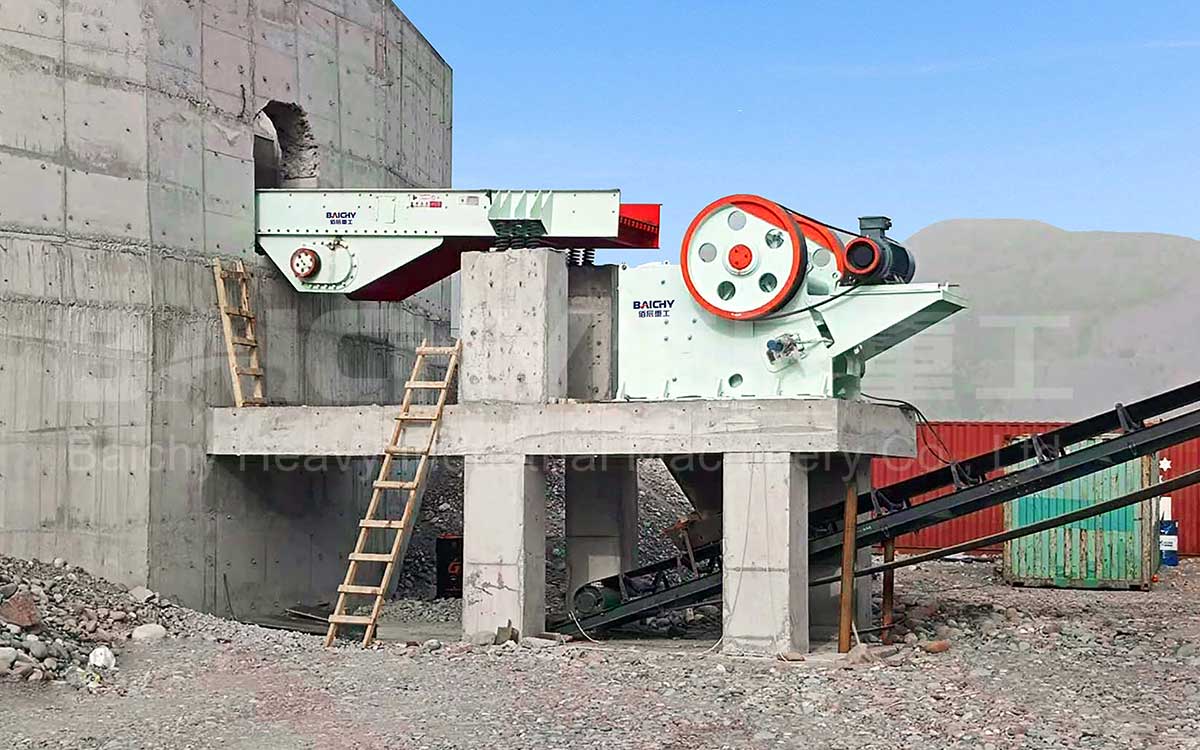

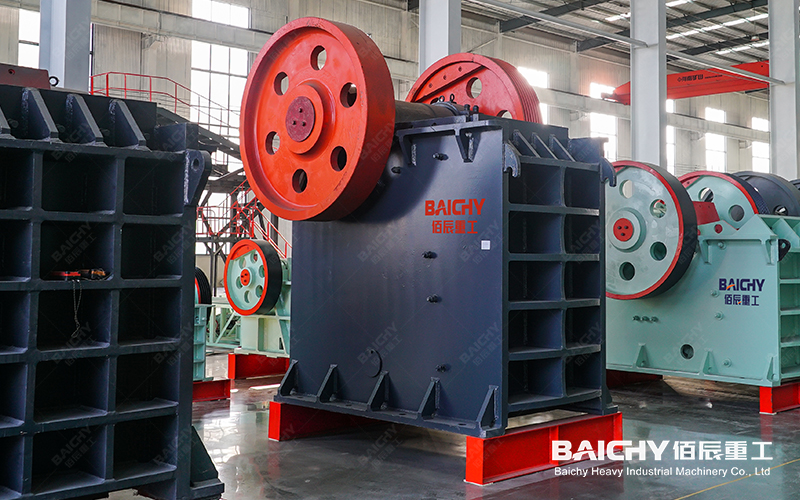
Jaw Crusher for primary crushing
In Indonesia, a well-configured 250–300 TPH andesite crushing line allows for the recovery of equipment investment within just 8 to 10 months.
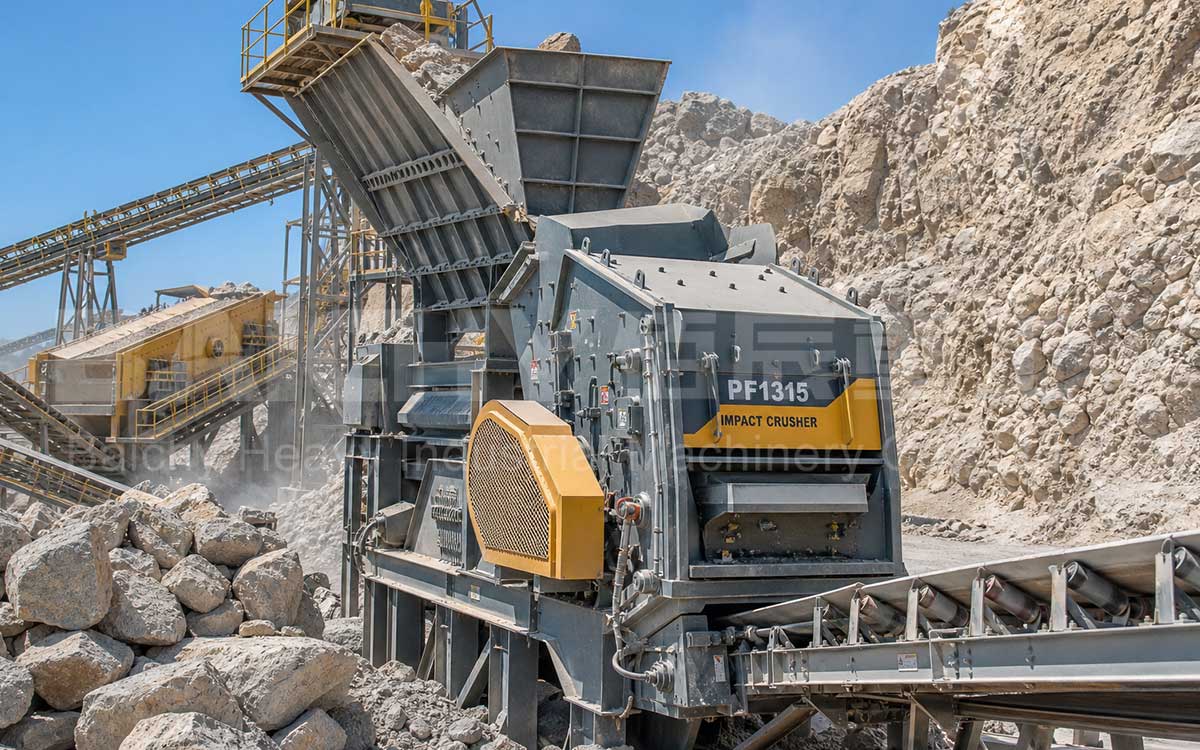
The hardness of andesite (uniaxial compressive strength of 170–250 MPa; Mohs hardness of 5–6) dictates that impact crushers are not a viable shortcut. A "Jaw Crusher + Cone Crusher" setup is the only configuration that simultaneously meets requirements for production capacity, aggregate particle shape, and wear-part longevity. With Indonesia's construction sector projected to grow by 5.4% in 2026—reaching a market size of US$32.94 billion—and the IKN (New Capital City of Nusantara) receiving an allocation of IDR 488 trillion for 2025–2029, a massive surge in aggregate demand is currently underway.
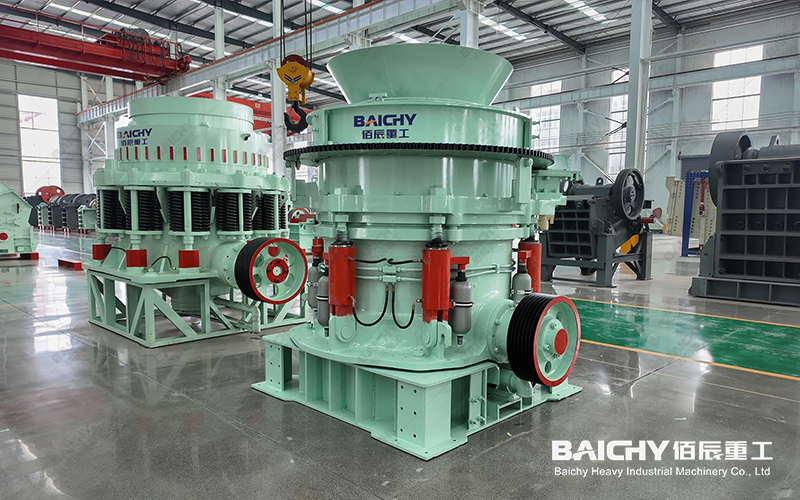
Hydraulic Cone Crusher
I. Why is the "Jaw Crusher + Cone Crusher" combination essential for andesite?
Andesite is a high-hardness volcanic rock. Three key metrics illustrate why: a uniaxial compressive strength of 170–250 MPa means impact crusher blow bars would last less than 200 hours, making them completely unfeasible; a Mohs hardness of 5–6 requires wear parts rated at least at the Mn18Cr2 level; and an abrasiveness index of 0.3–0.6 indicates moderate abrasiveness, resulting in an expected cone crusher liner lifespan of approximately 800–1,200 hours.
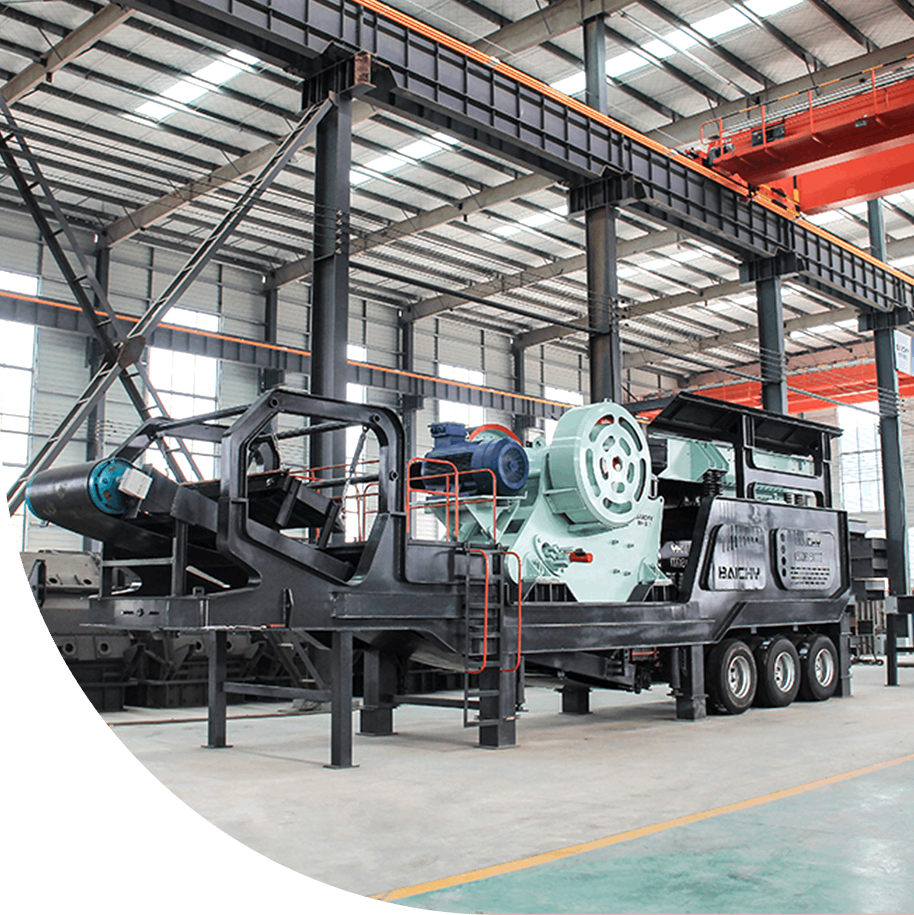
Industry Consensus: In regions rich in andesite resources—such as Sumatra, Java, and Sulawesi—there is only one proven crushing solution: using a heavy-duty jaw crusher for primary crushing, followed by a hydraulic cone crusher for secondary crushing and shaping.
II. 250–300 TPH Andesite Crushing Line: Core Equipment Configuration
Key Assumptions: The following configuration is based on an andesite loose bulk density of 1.6 t/m³, a feed size of ≤ 630 mm, and a product output graded into four fractions: 0–5 mm, 5–10 mm, 10–20 mm, and 20–31.5 mm. All equipment motors are compatible with Indonesia's 50Hz/380V three-phase industrial power standard.
| Process | Equipment Model | Qty | Power per Unit (kW) | Key Specifications | Function Description |
| Feeding | ZSW490×110 Vibrating Feeder | 1 | 15 | Trough: 4900×1100mm; Capacity: 180-400 t/h | Grizzly bar pre-screening; removes fines to reduce load on the jaw crusher |
| Primary Crushing | PE750×1060 Jaw Crusher | 1 | 110 | Inlet: 750×1060mm; Max feed: 630mm; Discharge opening: 80-200mm; Capacity: 110-320 t/h | Processes large andesite raw material; output size ≤ 200mm |
| Secondary Crushing | HP300 Hydraulic Cone Crusher | 1 | 220 | Medium-crushing cavity; Feed size ≤ 200mm; Discharge opening: 16-45mm; Capacity: 180-320 t/h | Crushes material <200mm down to <50mm |
| Screening | 3YK2160 Triple-deck Circular Vibrating Screen | 1 | 30 | Screen surface: 2100×6000mm; 3 decks; Capacity: 150-400 t/h | 4-stage grading: 0-5/5-10/10-20/20-31.5mm |
| Conveying | B800-B1200 Belt Conveyor | 6 | Total approx. 90 | Belt width: 800-1200mm; Conveying distance customized to site | Finished aggregate stockpiling and closed-circuit material return |
Total installed power: approx. 465 kW. Actual operating power consumption is approximately 325–350 kW (at a 70–75% load rate), equating to an energy consumption of roughly 1.1–1.3 kWh per tonne of material processed.
Production Capacity Calculation Logic
PE750×1060 processing andesite (hardness correction factor: 0.75): Theoretical capacity is 110–320 tph × 0.75 = 82–240 tph; stable output is approximately 220–260 tph with a closed-side setting (CSS) of 120 mm.
HP300 secondary crushing (reducing 200 mm feed to <50 mm): 250–320 tph (matched to the jaw crusher's capacity; involves minimal circulating load).
Finished aggregate after screening: 250–300 tph (including <15% recirculating material in a closed-loop circuit).
III. Where is the money being spent? A Transparent Cost Breakdown
For buyers in the Indonesian market, here is an investment estimate based on CIF Jakarta terms (excluding the 10% Indonesian VAT and 2.5% import duty, and excluding site construction costs):
• Core Equipment (FOB): USD 280,000–340,000 — Complete set including jaw crusher, cone crusher, feeder, screening unit, and conveyor system.
• Sea Freight (CIF Jakarta): USD 12,000–18,000 — 2× 40HQ containers or break-bulk shipping; Shanghai/Tianjin to Jakarta.
• Installation & Commissioning: USD 15,000–25,000 — Includes foundation construction, electrical installation, and trial runs (no-load and with-load) over 10 days.
• Total Equipment Delivery Budget: USD 310,000–380,000 — From order placement to production launch; lead time of 25–35 days.
Quick Calculation of Daily Profit
• Daily Output: 10 hours × 250 tph × 0.85 (overall utilization rate) = 2,125 tons of finished aggregate.
• Aggregate Selling Price in Indonesia: IDR 280,000–380,000/m³ (approx. USD 18–25/m³, equivalent to USD 11–15/ton).
• Production Cost per Ton (electricity + wear parts + labor): Approx. USD 2.8–3.5/ton.
• Daily Gross Profit: 2,125 × (11 – 3.2) ≈ USD 16,600.
• Equipment Payback Period: Approx. 19–23 working days (≈ 1 month at full capacity; realistically 8–10 months, accounting for initial break-in and market ramp-up).
IV. Indonesian Market—Why is Now the Optimal Window?
Three key signals:
1. Launch of the second phase of construction for IKN (the new capital city).
The Indonesian government has allocated IDR 488 trillion (approx. USD 2.9 billion) for the IKN (New Capital City) project for 2026–2029; core infrastructure—such as the parliament building, government offices, roads, and bridges—is consuming vast quantities of andesite aggregate.
2. Steady growth in national infrastructure investment.
Indonesia's construction market is projected to reach USD 329.4 billion by 2026, with an annual growth rate of 5.4%; the infrastructure sector alone is expected to exceed USD 106.9 billion by 2026.
3. Andesite is a key local mineral resource in Indonesia.
Large-scale andesite quarries exist across Sumatra, Java, and Sulawesi; sourcing materials locally minimizes transport distances and offers a distinct unit-cost advantage.
Conclusion: The 2026–2028 period represents a golden window for Indonesian andesite aggregate suppliers to expand capacity. Act too late, and your competitors will have already filled the stockpiles at the IKN construction sites.
V. Equipment Selection & Pitfall Avoidance
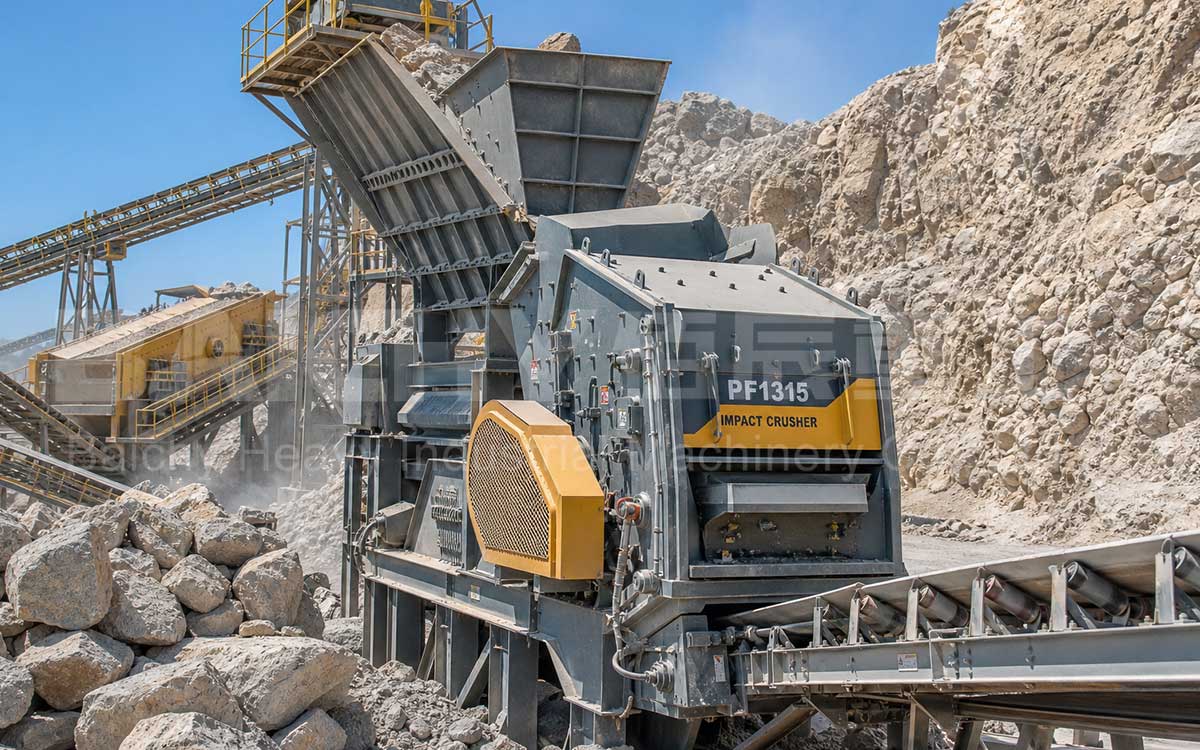
Recommendation 1: Do not use impact crushers for andesite.
The blow bars of impact crushers have a very short lifespan when processing materials with a compressive strength exceeding 200 MPa, and they cannot guarantee consistent particle shape. Maintenance downtime will eat into your profits.
Recommendation 2: Choose hydraulic cone crushers.
HP-series hydraulic cone crushers feature built-in tramp iron protection and a hydraulic clearing function. Andesite deposits may contain occasional basalt veins or iron ore chunks; without hydraulic protection, a spring-type cone crusher could suffer half a day of downtime from a single jam.
Recommendation 3: Stock spare screen decks.
Andesite is angular and abrasive, causing woven wire screens to wear out quickly. It is recommended to keep a spare set of screens (3 pieces) on hand, as local procurement lead times range from 7 to 14 days.
Recommendation 4: Ensure compatibility with 50Hz motors.
Indonesia's power grid operates at 50Hz. All motors must be selected for 50Hz operation; otherwise, a 60Hz motor running at 50Hz will see a 17% drop in rotational speed, directly impacting production capacity and conveyor belt speed.
VI. FAQ
Q1: Can the PE750×1060 consistently achieve a throughput of 250 tph when processing andesite?
It depends on the feed size and the discharge opening setting. With a feed size of ≤500mm and a discharge opening of 120mm, the actual output for andesite is approximately 220–260 tph, which is sufficient to keep the downstream cone crusher and screening equipment running at full capacity. If you require a higher guaranteed primary crushing capacity, you can upgrade to the PE900×1060.
Q2: Does the shape of the finished aggregate meet the Indonesian SNI standard?
Yes. The HP300 cone crusher utilizes the principle of inter-particle (lamination) crushing; over 90% of the product is cubical in shape, and the proportion of 0–5mm stone dust can be controlled within 15–20%. The content of flaky and elongated particles is less than 10%, meeting the SNI 03-1750-1990 standard for concrete aggregates.
Q3: How is after-sales maintenance handled in Indonesia?
Baili Heavy Industry provides: ① A 6-month spare parts kit for wear parts (jaw plates, liners, screen mesh) included with the shipment; ② Remote video technical support (WhatsApp access to Chinese/English-speaking engineers); ③ On-site engineers for installation and commissioning (15–20 days). We already have multiple crushing lines operating in Indonesia and can arrange site visits.
Q4: Can this line be expanded to a capacity of 400 tph?
Yes, expansion space can be reserved. The maximum capacity of the PE750×1060 in this configuration is approximately 320 tph; by adding a second HP300 (for parallel secondary crushing) or upgrading to an HP400, the total capacity can reach 350–400 tph. We recommend reserving a foundation spot for a second cone crusher during the site layout phase.
Q5: What is the delivery lead time?
The lead time for standard equipment is 25–35 days (including 8 hours of factory test runs), and sea shipping to Jakarta takes approximately 12–18 days. The total time from placing the order to the equipment arriving at the port is approximately 37–53 days. It is recommended to place orders two months in advance to align with the construction windows of the rainy or dry seasons.