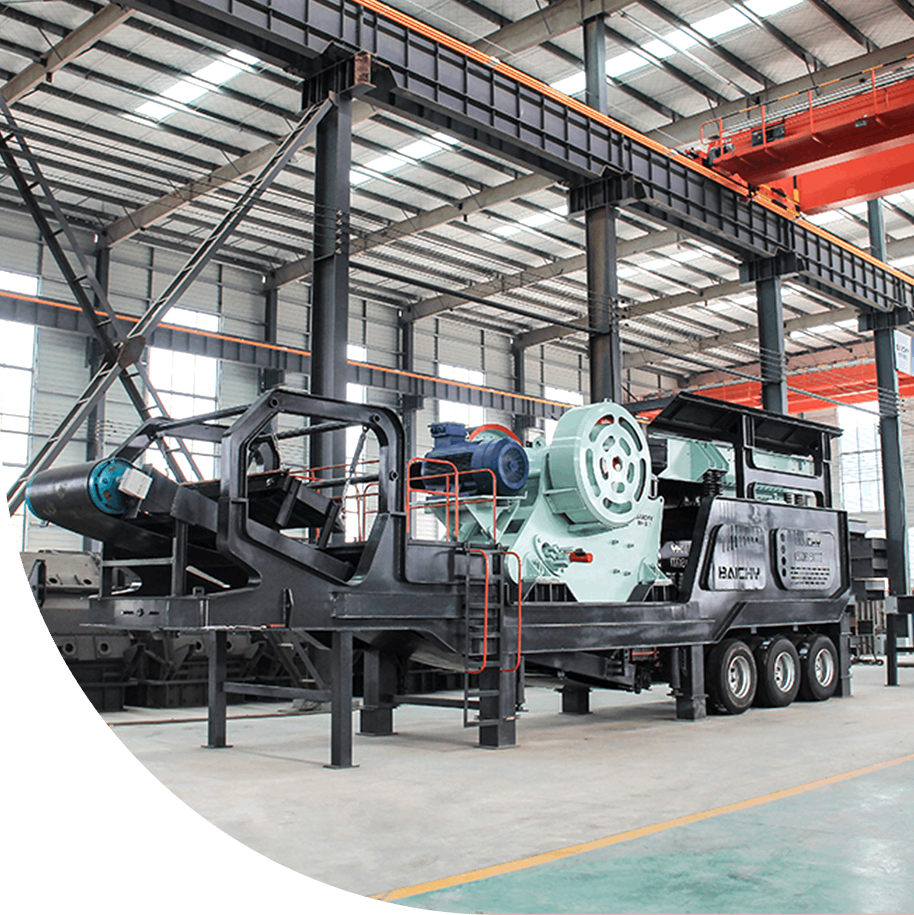

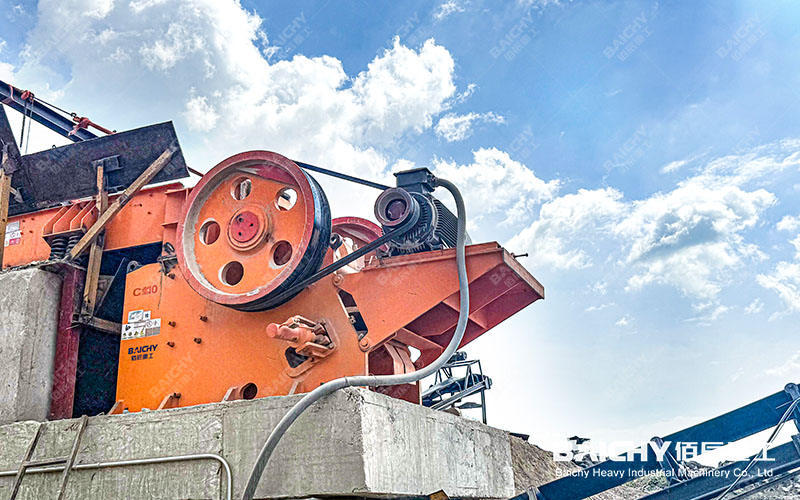
150–200 tph Stationary Basalt Crushing Production Line
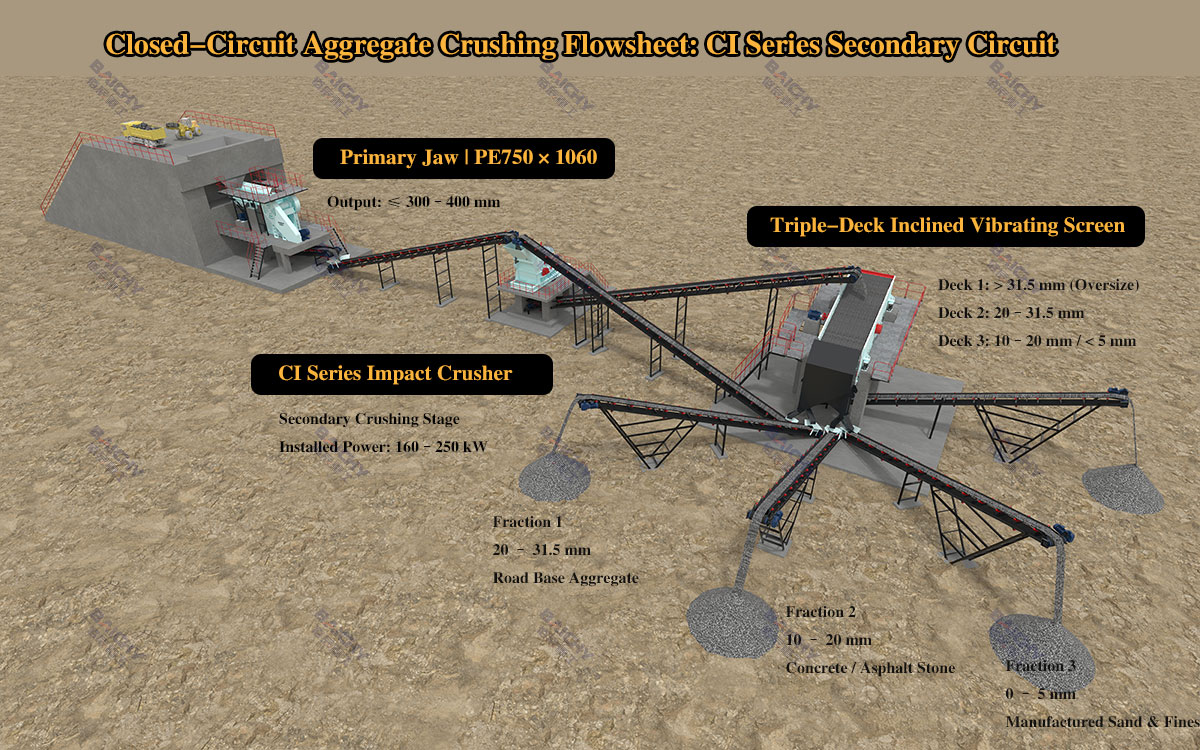
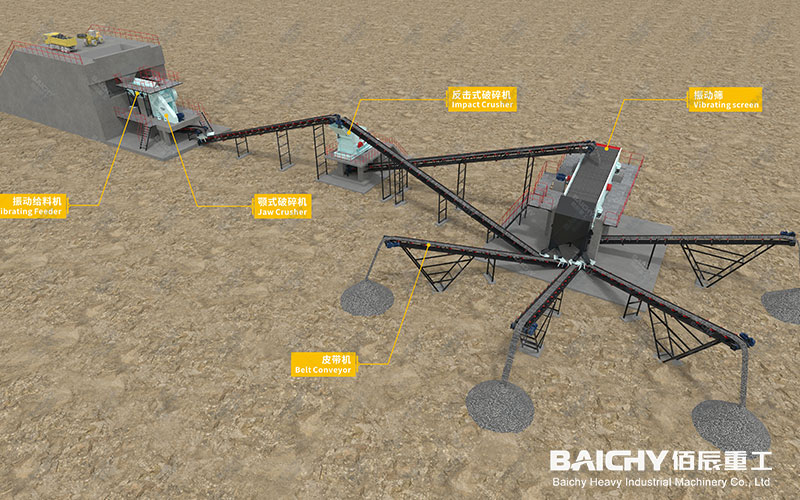
Basalt is the dominant rock type in the Brazilian aggregate market; the Serra Geral basalt formation extensively covers the southern and southeastern regions. With a compressive strength of 180–300 MPa and high abrasiveness, this rock poses a significant challenge to the "jaw crusher plus impact crusher" processing route. The mainstream solution for a 200 t/h basalt crushing line in Brazil consists of "primary jaw crushing + parallel secondary/tertiary cone crushing + closed-circuit screening with a four-deck circular vibrating screen." This configuration yields four finished product sizes (0–5, 5–10, 10–20, and 20–40 mm) in a single pass, offers a liner lifespan of 1,200–2,000 hours, and is manufactured to meet Brazil’s 380V/60Hz power standards.
I. Overview: Why Basalt Processing in Brazil Merits a Dedicated Approach
Basalt has a uniaxial compressive strength of 180–300 MPa—roughly three to four times that of limestone—and contains highly abrasive minerals such as pyroxene; consequently, wear parts are consumed three to six times faster than in limestone applications. Therefore, the primary selection criterion for a basalt crushing line is to avoid impact-based crushing (using blow bars) in favor of inter-particle (lamination) crushing. A capacity of 200 t/h is considered medium-to-high for basalt operations; a single cone crusher is insufficient to handle the load alone. A parallel dual-cone setup not only distributes the secondary and tertiary crushing loads but also ensures the line maintains 60–70% capacity during the maintenance of a single unit—a critical factor for fulfilling long-term, continuous supply contracts in Brazil. In contrast, when processing basalt, an impact crusher’s blow bars last only 120–200 hours, requiring replacement once or twice a month; the associated downtime and spare parts costs quickly negate any initial purchase price savings—a calculation that makes little economic sense given Brazil's high electricity and labor costs.
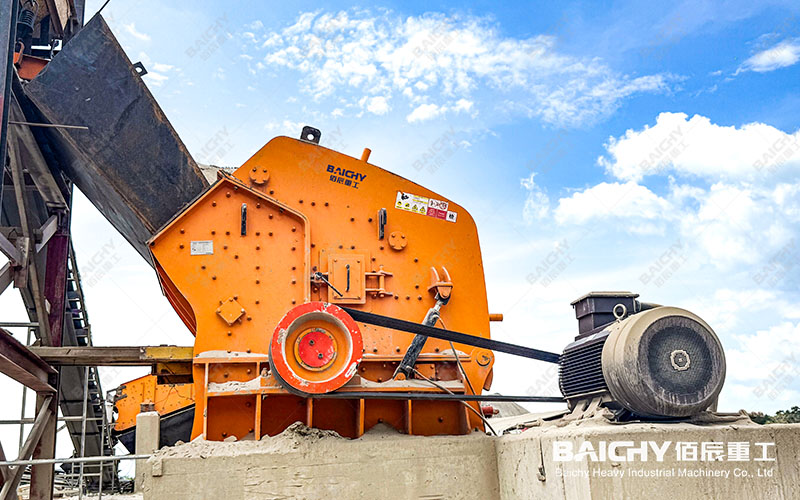
150–200 tph Stationary Basalt Crushing Production Line
II. Typical Application Scenarios
The 200 t/h basalt processing line represents the "sweet spot" for aggregate plants and infrastructure supply in Brazil; the investment cost for a single line is manageable, while the daily output supports continuous supply.
| Scenario | Typical Requirements | Value of This Line |
|---|---|---|
| Aggregate plant supporting a ready-mix concrete station | 0-5/5-10/10-20 mm continuous gradation | Four-deck screen produces four fractions in one pass; stable gradation |
| Asphalt surface layers for high-grade highways and interstate roads | Skid-resistant basalt aggregate; flakiness & elongation index ≤12% | Cone crusher inter-particle crushing (shaping); meets DNIT acceptance standards |
| Railway ballast and bridge/tunnel projects | 20-40 mm high-strength ballast | Adjustable discharge opening; particle size range switchable based on orders |
| PAC infrastructure and highway concession projects | High volume, continuous supply, traceable records | Closed-circuit screening + buffer bin; minimal supply fluctuation |
| Manufactured sand market | 0-5 mm manufactured sand as a byproduct | Reserved interface for VSI sand maker; capacity expandable during peak seasons |
III. Standard Configuration and Core Parameters
The following outlines Baichy’s standard two-stage closed-circuit configuration designed for 200 t/h basalt processing in Brazil (nominal capacity based on basalt bulk density of 2.8–3.0 t/m³):
| Equipment Unit | Model | Quantity | Feed Size | Discharge/Function | Capacity (Basalt) |
|---|---|---|---|---|---|
| Raw material hopper + grizzly feeder | ZSW1142 | 1 | ≤600 mm | Uniform feeding; pre-screening to remove fines | 250-400 t/h |
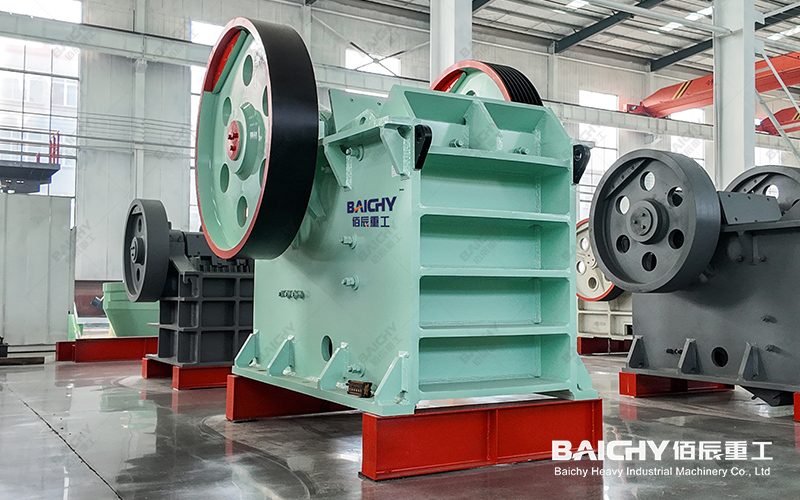
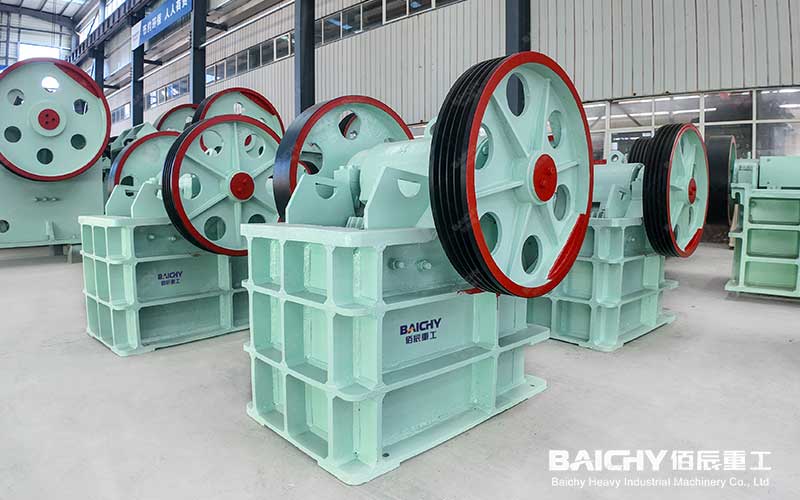
| Jaw crusher (primary crushing) | C100 | 1 | ≤600 mm | Adjustable discharge ≤150 mm | 150-350 t/h |
| Symons cone crusher (secondary/tertiary crushing) | CS160 | 2 | ≤150 mm | Adjustable closed-side setting (CSS) 10-40 mm | 100-170 t/h per unit |
| Four-deck circular vibrating screen (closed-circuit) | 4YK2460 | 2 | ≤45 mm | Outputs 0-5/5-10/10-20/20-40 mm in one pass | 150-480 t/h per unit |
| Belt conveyor | B800-B1200 | Multiple units | — | Material transfer and finished product stockpiling | — |
| Electrical control system | 380V/60Hz | 1 set | — | Centralized control, soft start | Compatible with Brazilian power grid |
Capacity conversion basis (Basalt = 1.0): Granite ×0.95–1.0; Limestone ×1.2–1.4 (avoids the discrepancy between "nominal 200 tph" and "actual 150 tph"). Pre-screening and sand washing units are required if raw ore has high clay or moisture content (>8%). Motor power figures in the table are subject to the specific configuration list; total installed power for main machinery is approx. 500–580 kW (excluding conveyors). **Quick calculation of operating cost per ton (Basalt application; Brazilian electricity price range R$0.7–0.9/kWh):** Electricity consumption is approx. 3.5–4.2 kWh/t; including wear parts and labor, the total line cost is approx. R$6–9/t. Wear part costs for the cone crusher configuration are only 1/4–1/3 of those for the impact crusher configuration; based on an annual output of 500,000 tons, savings on wear parts and reduced downtime losses over a 5-year lifecycle are sufficient to offset the initial investment cost difference.
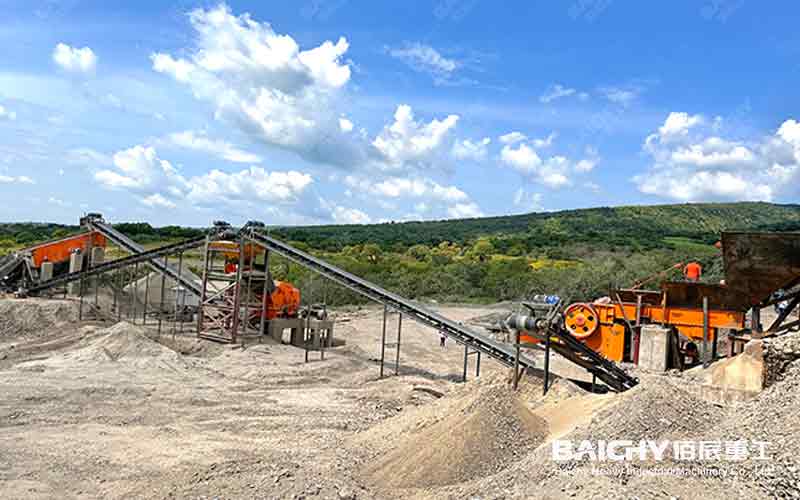
150–200 tph Stationary Basalt Crushing Production Line
IV. Core Advantages: Translating Specifications into Profit
• Interparticle (lamination) crushing—balancing particle shape and wear resistance: Finished product flake/elongation content ≤12%, meeting acceptance standards for Brazilian highway asphalt surface courses and C30–C50 concrete aggregates. Liner lifespan is 1,200–2,000 hours—6 to 10 times that of impact crusher blow bars—extending the spare parts procurement cycle from "monthly" to "quarterly."
• Parallel dual-unit operation ensures continuous production during maintenance — Two CS160 units share the intermediate and fine crushing load; the line retains 60–70% capacity even when one unit is undergoing maintenance, preventing breaches of continuous supply contracts.
• Four-deck screen yields four product sizes in one pass; precise grading equals profit — Produces 0–5, 5–10, 10–20, and 20–40 mm fractions on a single line, eliminating the need for secondary transfer and screening; easily switch between aggregate and railway ballast products by changing screen meshes.
• Nominal capacity matches actual performance — Grizzly pre-screening removes fines, a buffer hopper smooths out feed fluctuations, and a closed-circuit recirculation rate of 15–25% ensures the line operates at full design capacity, typically achieving over 95% of the rated output in actual operation.
• Localized delivery for Brazil — The entire line is manufactured to 380V/60Hz standards and NR-12 machinery safety requirements; includes Portuguese manuals and remote commissioning support, and is compatible with off-grid mining sites powered by diesel generators.
V. Relevant Case Studies (On-site records; data anonymized)
The following details the operation of a similar basalt crushing production line delivered by Baichy to Brazil and Latin America (client information anonymized):
Basalt aggregate project in a southern Brazilian state (similar 200 tph class delivery): The rock formation belongs to the Serra Geral basalt belt with a compressive strength of 220–280 MPa. The production line utilizes a ZSW1142 feeder, C100 jaw crusher, dual CS160 crushers (in parallel), and a 4YK2460 closed-circuit screen:
• Actual Capacity: Designed for 180–200 t/h; stable on-site operation at 175–210 t/h; compliance rate exceeding 96%; meeting local supply contracts for concrete and highway aggregates.
• Finished Product Profile: Four product sizes produced in a single pass; measured content of flaky/elongated particles in the 10–20 mm fraction ≤12%.
• Wear Parts Performance: The first set of CS160 liners remained operational after approximately 1,500 hours of continuous use; spare parts inventory cycle extended from "monthly" to "quarterly."
• Power Compatibility: The entire line was manufactured for 380V/60Hz operation and passed commissioning on the first attempt; no on-site voltage modification was required, shortening the time-to-production by approximately 3 weeks.
This configuration has a track record of stable operation in over 20 hard-rock quarries worldwide; Brazilian clients with fragmented mining rights or multi-face operations may opt for the YDPZ wheeled mobile station combination, allowing for flexible relocation and immediate production.
VI. Recommended Equipment
1. PE/PEX/C90 Series Jaw Crushers — For upgrading the primary crushing stage when raw ore size exceeds 600mm or planned capacity exceeds 250 tph;
2. HP/CS/PY Series Cone Crushers — Hydraulic and spring-based product lines to suit different budgets; crushing chamber profiles selected based on material hardness;
3. VSI Vertical Shaft Impact Crusher — When configured in a closed-loop sand-making circuit, the 0–5mm byproduct is upgraded to high-grade manufactured sand (fines content <5%);
4. Spiral Sand Washer + Fine Sand Recovery Unit — Integrated when raw ore has high clay content or finished product exceeds stone dust limits;
5. YK/GTS Series Circular Vibrating Screens — Added for capacity expansion or finer particle size classification;
6. YDPZ Wheeled/Tracked Mobile Crushing Stations — A flexible option for unstable mining rights, leased-land operations, or scenarios requiring rapid relocation.
VII. FAQ
Q1: What equipment is included in the standard configuration for a basalt crushing production line with an hourly capacity of 200 tons?
A: Standard two-stage closed-loop configuration: ZSW1142 Grizzly Feeder (pre-screening) → C100 Jaw Crusher (reduces feed ≤600mm to ≤150mm) → Two CS160 Cone Crushers in parallel (adjustable closed-side setting of 10–40mm) → Two 4YK2460 four-deck circular vibrating screens in a closed-loop circuit (oversize material returned to cone crushers); includes conveyors, buffer bins, and a 380V/60Hz electrical control system. Produces four finished product sizes simultaneously: 0–5mm, 5–10mm, 10–20mm, and 20–40mm. For budget-sensitive projects, the dual CS160 setup can be downgraded to a single large-chamber hydraulic cone crusher, accepting a 10–20% reduction in capacity.
Q2: Are there any specific requirements regarding electrical and safety standards for projects in Brazil?
A: Brazil's industrial power grid operates at 380V/60Hz (with some mining areas using 440V/60Hz or onsite diesel generation); production lines exported to Brazil are manufactured to these specifications, featuring soft-start and centralized control systems. Mechanical guarding, emergency stops, and interlocks comply with NR-12 standards, and the equipment comes with Portuguese manuals and safety signage. The project's environmental impact assessment (EIA) involves CONAMA/IBAMA procedures; the production line design includes provisions for dust and noise control systems to facilitate EIA approval.
Q3: Does "200 tons per hour" refer to nominal capacity or stable operating capacity? How is this performance guaranteed?
A: This figure refers to the stable operating capacity when processing basalt: calculations are based on a bulk density of 2.8–3.0 t/m³, a jaw crusher discharge setting of 100–150 mm, a closed-circuit cone crushing configuration, and continuous feeding. Actual onsite performance typically meets or exceeds 95% of this rate. Prerequisites include raw ore blast fragmentation sizes ≤600 mm (with moisture and clay content within limits), continuous and uniform feeding (using a surge bin), and correct screen aperture and closed-circuit settings. If raw ore conditions or finished product specifications differ, clients can send rock samples with specified particle size distributions; Baichen can then provide capacity conversion estimates and customized configuration specifications.
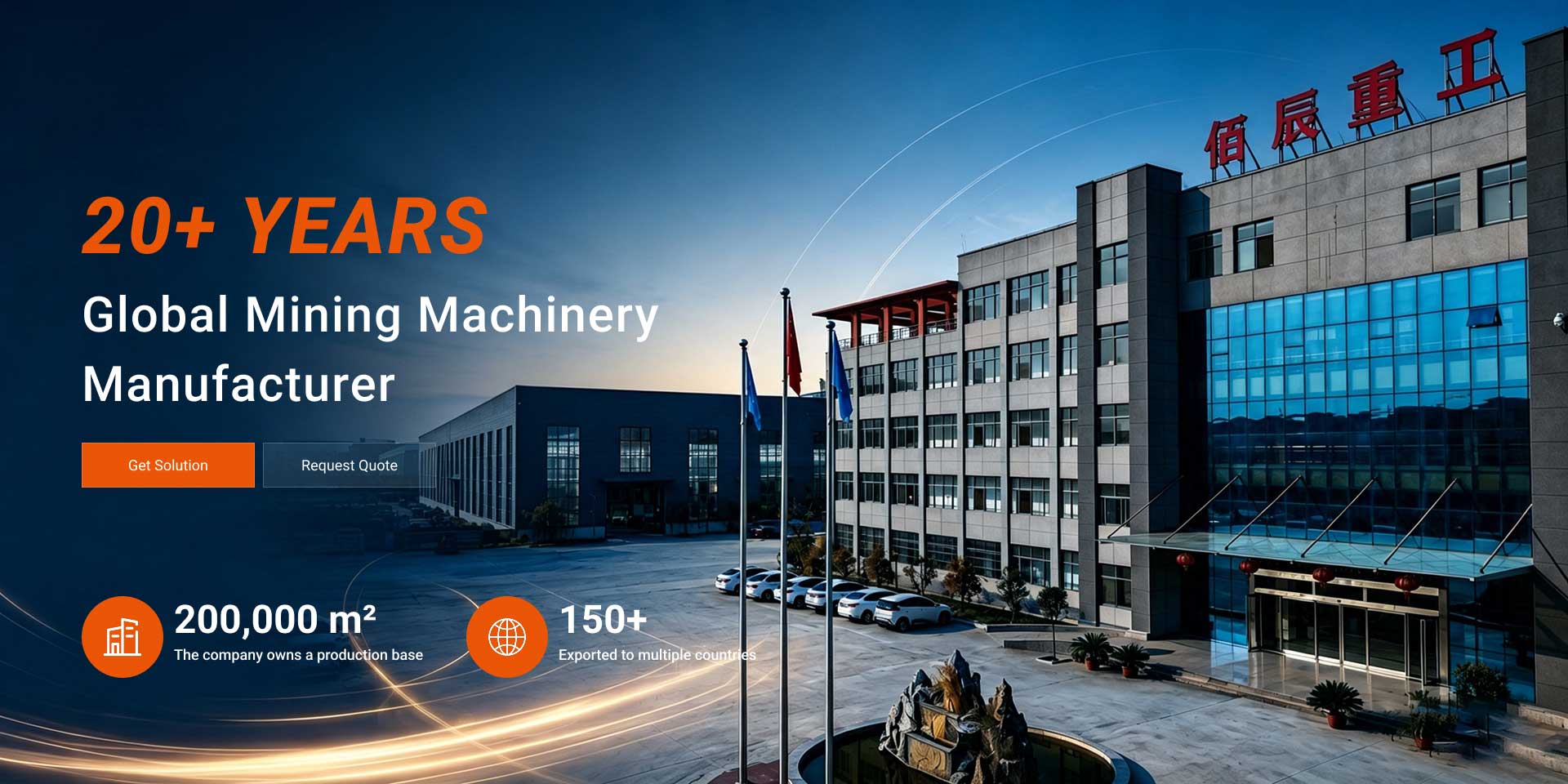
Baichy Heavy Industry
Baichy Heavy Industry is a high-tech mining equipment company integrating R&D, manufacturing, sales, and after-sales service. Focusing on crushing, grinding, and mineral processing equipment, we provide professional solutions to our customers. We are ISO9001:2015 、certified, and our products include mobile crushing palnts, crawler crushing plant, construction waste crushing plants, jaw crushers, sand making machines, cone crushers, fine crushers, grinding mills, ball mills, etc., all with reliable performance to meet diverse project needs.
Baichy Heavy Industry – Your Trusted Partner
To ensure optimal performance of your equipment, Baichy Heavy Industry offers:
- Professional on-site installation guidance
- Comprehensive operator training
- 24/7 technical support & maintenance services
Our complete after-sales service system guarantees long-term, stable operation of your machinery with minimal downtime.
Protect Your Rights – Only Use Official Channels
To avoid scams and ensure authentic support, contact us exclusively through:
• Official Website: www.baichychina.com
• WhatsApp: +8615093222637
• Email: [email protected]
Your satisfaction is our priority – expect prompt, professional service every time.
(Note: Beware of unauthorized third parties claiming to represent Baichy. Always verify through official contacts.)