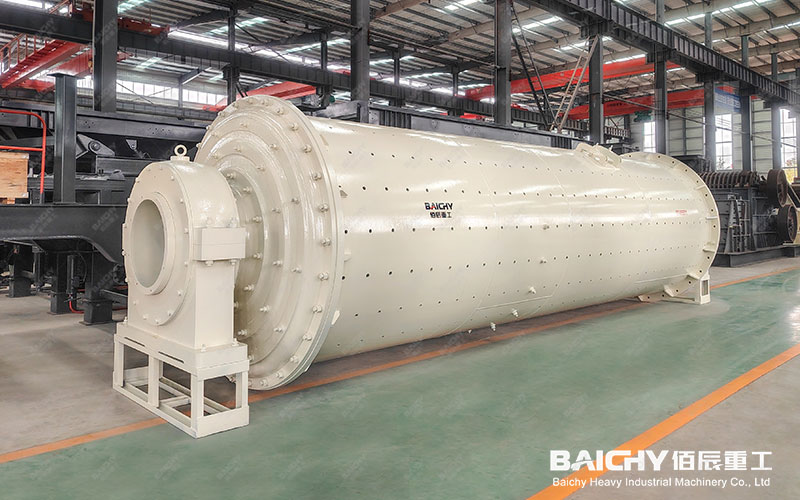
Wet vs. Dry Milling: Key Differences
In the field of mineral processing, grinding is a crucial step in releasing valuable minerals and achieving monomer liberation. The choice between wet and dry grinding directly impacts the efficiency, cost, and final product quality of the entire production line. As a mineral processing equipment manufacturer with 20 years of industry experience, we understand that choosing between these two methods is not a simple yes or no question, but requires comprehensive consideration based on material characteristics, project conditions, and ultimate goals. This article will provide a comprehensive analysis of the main differences between these two methods to help you make the best decision.
| Key Words | Wet vs. Dry Milling: Key Differences |
|---|---|
| Product Model | Ball Mill |
| Feed Size | ≤25mm |
| Motor Power | 18.5-4500kw |
| Capacity | 0.65-615t/h |
| Core Functions | Grinding precision and particle size controllability |
| Brand | Baichy Heavy Industry |
| Packing | Standard containers,Nude Packing,Wooden boxes, etc |
| Installation | Engineer Guide |
| Factory visit | Welcomed Warmly |
| Export Countries | Southeast Asia, Central Asia, South America, North America, Africa |
| Payment | T/T,L/C payment,Paypal...etc |
| Please note: The above table data is for reference only. For specific information, please contact us. | |
Overview: Basic Definitions of the Two Grinding Processes
As the name suggests, wet grinding involves adding water or other liquids as a medium during the grinding process. The material forms a slurry in the liquid and is then ground and impacted in equipment such as ball mills or rod mills, with the liquid flow used for conveying and classifying.
On the other hand, dry grinding does not require the addition of a liquid medium. The material is directly pulverized in a dry ball mill or vertical mill in a dry state, pulverized through impact, compression, and grinding, typically using airflow for material conveying and classification.
In-depth Analysis of Key Differences
Comparison of Process Principles and Environment
Differences in Media and Processes:
The core of wet milling is liquid-solid two-phase flow. Water reduces the adhesion of materials, increases their flowability, and allows fine particles to be quickly carried away, preventing over-grinding. Dry milling is gas-solid two-phase flow, which is extremely sensitive to the moisture content of the material and requires strict control of feed humidity. This process typically integrates drying, grading, and dust removal systems.
Applicable Environmental Factors:
In areas with scarce water resources and harsh winters, dry milling has a natural advantage. However, in areas with strict environmental requirements and a need to prevent dust pollution, wet milling is preferred because it effectively suppresses dust.
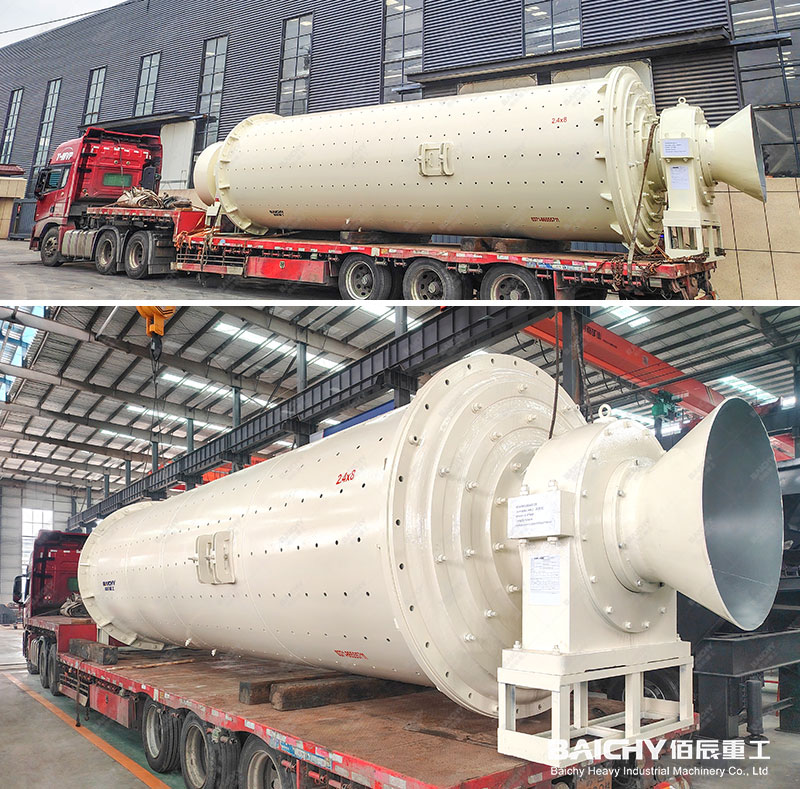
Ball mill being shipped
Comparison of Performance and Yield Results
Product Fineness and Shape:
Generally, wet milling can obtain finer product particle sizes (down to a few micrometers), and the particle shape is more rounded. Dry milling experiences a sharp increase in energy consumption during ultrafine grinding, and the product particles are mostly angular.
Efficiency and Energy Consumption:
For the same fineness requirements, wet grinding typically offers higher grinding efficiency, and due to the reduced material bed effect, energy consumption per unit product may be lower. However, dry grinding eliminates subsequent dewatering and drying processes, and from an overall process flow perspective, its total energy consumption may sometimes be more advantageous.
Economics and Maintenance Cost Comparison
Investment and Operating Costs:
Advantages Summary: When to Choose Which System?
| Characteristics | Advantages of Wet Grinding | Advantages of Dry Grinding |
| Material Characteristics | High moisture content, high viscosity, prone to dust generation, requiring subsequent wet separation (e.g., flotation); | Low moisture content (requires drying), water-sensitive, requiring subsequent dry separation (e.g., air separation) or direct sale. |
| Product Requirements | Extremely fine particle size and high purity requirements; | Relatively coarse particle size or requires drying. |
| Environmental Factors | Water-rich areas require strict dust control; | Water-scarce and cold areas, environmental regulations allow dust emissions to meet standards. |
| Process Integration | Seamless integration with flotation, wet leaching, etc.; | Direct integration with drying, calcination, dry magnetic separation, etc. |
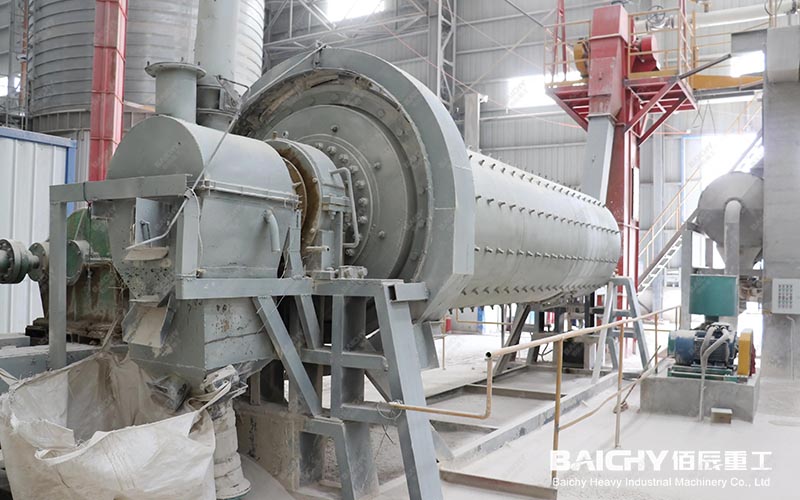
Ball mill customer site
Reference Application Cases
• Wet Grinding Case: In an iron ore beneficiation plant, the raw ore is coarsely crushed by a jaw crusher and then wet-ground by a ball mill. This forms a closed-loop cycle. grinding system with a hydrocyclone, and the resulting slurry is directly supplied to the subsequent magnetic separator for separation. In this process, water serves as both the grinding medium and the carrier for transport and sorting.
• Dry Grinding Case Study: In a cement raw material preparation project, limestone, clay, and other raw materials are ground and dried in an integrated vertical mill (dry process). The resulting dry powder is collected by a cyclone dust collector. The entire process requires no water, is highly efficient, and meets the requirements of dry cement production.
Equipment Recommendations and Selection Advice
As a professional mineral processing equipment manufacturer, we recommend:
• For the fine processing of most metallic ores (gold, copper, iron, tungsten, etc.) and non-metallic ores, if subsequent flotation or gravity separation is required, we strongly recommend using wet grinding processes, equipped with our energy-saving ball mills, hydrocyclone units, and related dewatering equipment.
• For industries such as cement, building materials, coal, and chemical raw materials (water-sensitive), or in arid regions, we recommend dry grinding processes. Our dry ball mills or vertical mills can be selected, and a high-efficiency dust removal system is essential.
Frequently Asked Questions (FAQ)
Q1: Which is more environmentally friendly, wet grinding or dry grinding?
The two methods have different environmental focuses. Wet grinding produces virtually no dust pollution, but it generates wastewater, requiring a water treatment system for recycling. Dry grinding produces no wastewater, but dust control is crucial, requiring investment in high-efficiency bag filters or electrostatic precipitators. From the perspective of three wastes (waste gas, wastewater, and solid waste), if water recycling can be achieved, the overall environmental management of wet grinding may be more straightforward.
Q2: My material is a bit wet, can I use dry grinding?
It is not recommended. The moisture content of the material is the key to the success or failure of dry grinding. Generally, the feed moisture content should be controlled below 5% (depending on the material's stickiness). Excessive moisture will cause the material to adhere to the mill and pipes, clogging the screen and greatly reducing grinding efficiency and output. For slightly wet materials, consider adding a drying process, or directly assess the feasibility of switching to wet grinding.
Q3: Can I switch from dry grinding to wet grinding?
The renovation project is extensive, essentially a complete system rebuild. It requires not only replacing or modifying the mill itself (different sealing and discharge methods), but also adding the entire slurry conveying, classification, dewatering, and water circulation system. Conversely, the reverse is also true. Therefore, during the project feasibility study phase, it is essential to consider resources, products, and geographical conditions, and collaborate with experienced mineral processing equipment manufacturers to determine the most fundamental process rout.
Perfect after-sales service
Baichy Heavy Industry provides professional on-site guidance for installation, training of workers, and other services to ensure that customers can use the equipment smoothly.
The company has a complete after-sales service system, which can provide customers with timely technical support and equipment maintenance services to ensure the long-term stable operation of the equipment.
To prevent the rights and interests of customers from being infringed, Baichy Heavy Industry reminds customers: please contact our customer service staff through the official website of Baichy Heavy Industry , or add WhatsApp: 15093222637 ; or send an email to: [email protected] , we will get in touch with you as soon as possible and provide you with the most professional service in the industry.
Baichy Heavy Industry
Baichy Machinery is a factory supplier of mining machinery, mainly focusing on stone crushers, powder grinding mills, and mineral beneficiation plants. We can offer you a free design and completed solutions according to your project.
Baichy Heavy Industry has grown into a high-tech mining equipment comprehensive enterprise, integrating R&D, manufacturing, sales, and after-sales service, Passing ISO9001:2015 quality management system certifications. The main products are mobile jaw crushing plants, construction waste crushing plants, PE jaw crushers, VSI sand-making machines, Symons cone crushers, single-cylinder hydraulic cone crushers, PCX high-fine crushers, grinding mills, ball mills, and full sets of beneficiation equipment with an excellent level.