In the field of mineral processing and beneficiation, crushing and grinding are key steps in releasing target minerals and achieving monomer liberation. Among these, grinding, as one of the most energy-intensive processes, directly impacts the efficiency, cost, and ultimate profitability of the entire production line. Faced with the two mainstream technological paths of dry grinding and wet grinding, many investors and plant managers often find themselves in a dilemma. As a beneficiation equipment manufacturer with 20 years of industry experience, we will delve into the core differences between these two processes to help you make the wisest decision.
| Key Words | What Is the Difference Between Dry and Wet Grinding? |
|---|---|
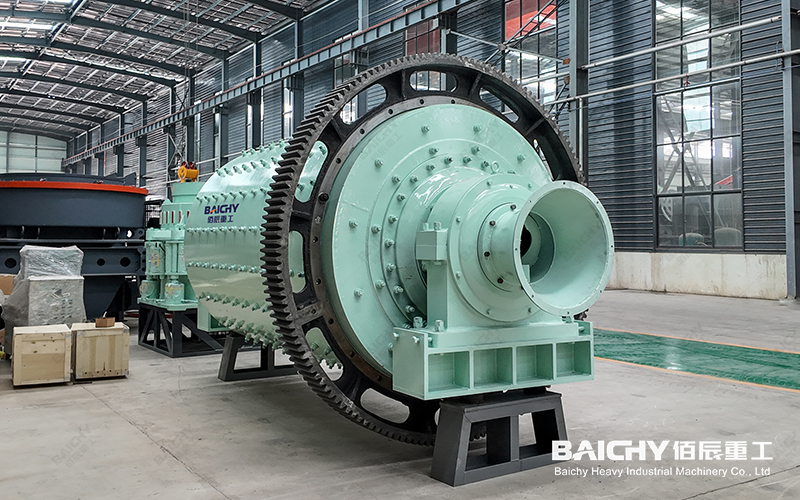
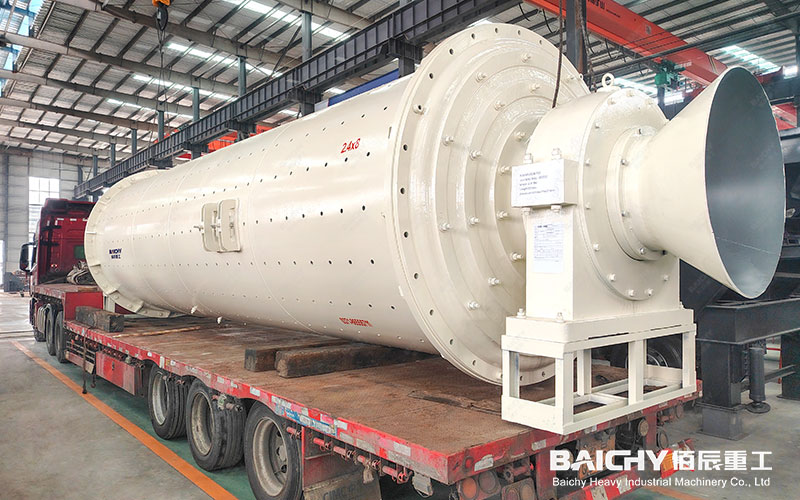
| Product Model | Ball Mill |
| Feed Size | ≤25mm |
| Motor Power | 18.5-4500kw |
| Capacity | 0.65-615t/h |
| Core Functions | Grinding precision and particle size controllability |
| Brand | Baichy Heavy Industry |
| Packing | Standard containers,Nude Packing,Wooden boxes, etc |
| Installation | Engineer Guide |
| Factory visit | Welcomed Warmly |
| Export Countries | Southeast Asia, Central Asia, South America, North America, Africa |
| Payment | T/T,L/C payment,Paypal...etc |
| Please note: The above table data is for reference only. For specific information, please contact us. | |
Core Differences: A Comprehensive Comparison of Dry and Wet Grinding Processes
Simply put, dry grinding refers to grinding materials in a dry state without adding water or other liquids during the grinding process; the material is ground under the action of airflow or the equipment itself. Wet grinding, on the other hand, involves adding a certain proportion of water or chemical agents during the grinding process to form a slurry before grinding.
Process Flow and Equipment Selection
• Dry Grinding System: Typically involves dry ball mills or vertical roller mills (VRMs). The material enters the mill after drying, and fine powder is carried away by hot air or natural ventilation. Subsequent classification often employs dynamic classifiers or cyclone separators to form a closed-loop cycle. The system requires supporting equipment such as hot air furnaces and dust collectors.
• Wet Grinding System: The core equipment is a wet ball mill or rod mill. Material is mixed with water to form a slurry, which is then fed into the system and transported by water flow. Classification equipment typically includes spiral classifiers, hydrocyclones, or vibrating screens. The system requires supporting equipment such as water pumps and thickeners.
Advantages and Disadvantages Analysis
Advantages of Dry Grinding:
1. No water required: Suitable for arid and water-scarce areas, saving water resources and eliminating wastewater treatment problems.
2. Dry product: The final product is dry powder, eliminating the need for additional dehydration and drying, saving subsequent drying costs and energy.
3. Simple process: In some cases, concentration and filtration processes can be omitted, potentially reducing investment.
Disadvantages of Dry Grinding:
1. Dust control: Easily generates dust, requiring a high-efficiency dust removal system, increasing environmental protection investment and operation and maintenance costs.
2. Over-grinding: Difficult to control product particle size, prone to over-grinding, and material temperature may rise.
3. Sensitive to material moisture content; generally requires the moisture content of the feed material to be below 5%.
Advantages of wet grinding:
1. Higher efficiency: The lubricating effect of water reduces particle adhesion, typically resulting in 20%-30% higher output than a dry grinding mill of the same specifications, with relatively lower energy consumption.
2. Uniform particle size: Easier to control product fineness, less over-grinding, and better for subsequent separation (such as flotation).
3. Dust-free environment: Minimal dust pollution, better working environment, and less environmental pressure.
Disadvantages of wet grinding:
1. High water consumption: Requires a sufficient water source and a complex wastewater treatment and return system.
2. Product dewatering: The produced slurry needs to undergo concentration, filtration, and other processes to obtain dry concentrate, increasing equipment and operating costs.
3. Corrosion and wear on equipment, especially requiring careful maintenance of pipelines and pumps.
Application Scenarios and Case Studies
Typical Applications of Dry Grinding
Case 1: Cement Production. Vertical mills or dry ball mills are widely used for grinding cement raw materials and clinker, fully utilizing their advantage of direct kiln calcination.
Case 2: Iron Ore in Arid Regions. In a Mongolian iron ore project, due to extreme water shortages, we configured a fully dry process of dry magnetic separation-dry ball milling-dry magnetic separation for the client, successfully solving the water source problem and ensuring stable operation to this day.
Typical Applications of Wet Grinding
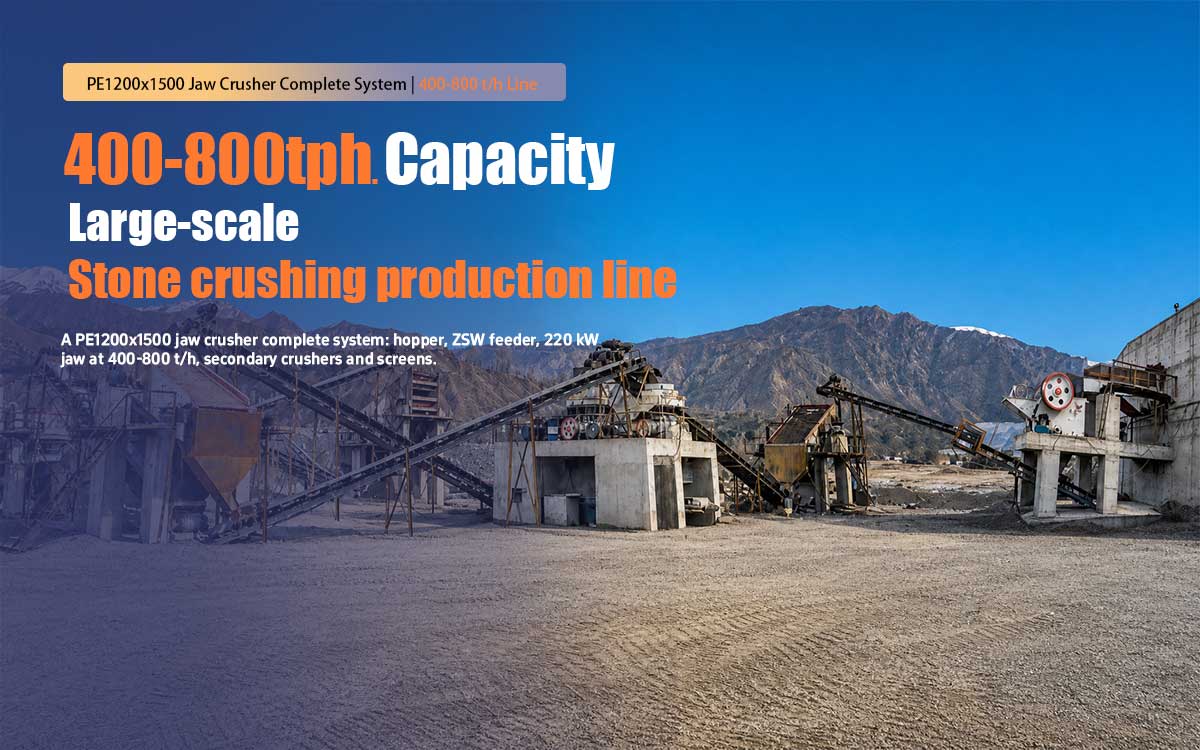
Case 1: Non-ferrous Metal Flotation (e.g., copper, lead, zinc). This is the main battlefield for wet grinding. Water is not only the medium but also provides the necessary conditions for flotation. Our jaw crusher + cone crusher + wet ball mill + hydrocyclone unit for a Chilean copper mine project ensured a grinding fineness of -200 mesh (75%), laying a solid foundation for efficient flotation.
Case 2: Hydrometallurgy and Ceramic Raw Materials For gold ores requiring chemical leaching or ceramic glazes demanding extremely high fineness, wet milling is the only option because it achieves finer and more uniform grinding.
How to Choose? Our Professional Recommendations
There is no best process, only the most suitable process. The key to selection lies in comprehensive consideration of:
1. Material properties: hardness, moisture content, viscosity, and final product requirements.
2. Geographical environment: water resource abundance, environmental policies (restrictions on dust/wastewater).
3. Subsequent processes: direct smelting, flotation, or selling as dry powder?
4. Total investment and operating costs: balancing CAPEX (equipment investment) and OPEX (operating costs).
Our recommendation is: During the project feasibility study phase, it is essential to conduct detailed mineral processing tests. Comparative laboratory tests to obtain specific technical and economic indicators for both dry and wet processes are the most reliable basis for making scientific decisions.
Frequently Asked Questions (FAQ)
1. Can dry milling achieve the same fineness as wet milling?
Theoretically, it's possible, but the difficulty and cost differ. Dry grinding of ultrafine powders (e.g., -625 mesh) leads to a sharp increase in energy consumption and is prone to grinding and agglomeration. Wet grinding is more advantageous and efficient in obtaining ultrafine particles.
2. Is a dry grinding system really more environmentally friendly?
This is a misconception. While it saves water and avoids wastewater, dust emissions are a serious challenge. Modern environmental standards require extremely low dust concentrations, meaning investment in expensive, high-efficiency bag filters or electrostatic precipitators is necessary, and their operation and maintenance costs are significant. Wet grinding is naturally more environmentally friendly in terms of dust.
3. Can wet grinding be converted to dry grinding? And vice versa?
Conversion projects are large-scale and usually uneconomical. The core equipment (mill, classifier), conveying system, and auxiliary facilities are completely different. This is equivalent to rebuilding most of the production line. Therefore, the process route must be determined at the initial stage of project design.
Perfect after-sales service
Baichy Heavy Industry provides professional on-site guidance for installation, training of workers, and other services to ensure that customers can use the equipment smoothly.
The company has a complete after-sales service system, which can provide customers with timely technical support and equipment maintenance services to ensure the long-term stable operation of the equipment.
To prevent the rights and interests of customers from being infringed, Baichy Heavy Industry reminds customers: please contact our customer service staff through the official website of Baichy Heavy Industry , or add WhatsApp: 15093222637 ; or send an email to: [email protected] , we will get in touch with you as soon as possible and provide you with the most professional service in the industry.
Baichy Heavy Industry
Baichy Machinery is a factory supplier of mining machinery, mainly focusing on stone crushers, powder grinding mills, and mineral beneficiation plants. We can offer you a free design and completed solutions according to your project.
Baichy Heavy Industry has grown into a high-tech mining equipment comprehensive enterprise, integrating R&D, manufacturing, sales, and after-sales service, Passing ISO9001:2015 quality management system certifications. The main products are mobile jaw crushing plants, construction waste crushing plants, PE jaw crushers, VSI sand-making machines, Symons cone crushers, single-cylinder hydraulic cone crushers, PCX high-fine crushers, grinding mills, ball mills, and full sets of beneficiation equipment with an excellent level.
Conclusion
The debate between dry and wet grinding is essentially a process of finding the optimal solution under specific constraints. Two decades of experience serving global clients have taught us that a deep understanding of your ore characteristics and project needs, combined with professional test data, is essential to paving the way for maximum return on investment. We not only provide high-quality dry and wet ball mills, but also offer complete solutions from mineral testing and process design to equipment selection.