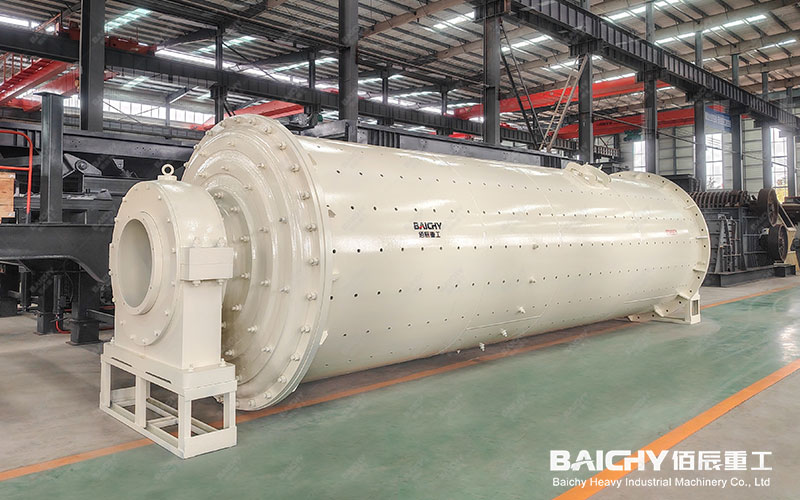
The Gold Ball Mill: A Crucial Tool in Gold Ore Processing
As a mineral processing equipment manufacturer with 20 years of experience, we deeply understand the decisive role of the grinding process in the entire production line. Among numerous grinding equipment, the horizontal wet ball mill, with its superior stability and efficient grinding capacity, has always occupied an irreplaceable core position. This article will provide an in-depth analysis of this classic equipment, sharing our professional insights and practical experience.
| Key Words | The Gold Ball Mill: A Crucial Tool in Gold Ore Processing |
|---|---|
| Product Model | Ball Mill |
| Feed Size | ≤25mm |
| Motor Power | 18.5-4500kw |
| Capacity | 0.65-615t/h |
| Core Functions | Grinding precision and particle size controllability |
| Brand | Baichy Heavy Industry |
| Packing | Standard containers,Nude Packing,Wooden boxes, etc |
| Installation | Engineer Guide |
| Factory visit | Welcomed Warmly |
| Export Countries | Southeast Asia, Central Asia, South America, North America, Africa |
| Payment | T/T,L/C payment,Paypal...etc |
| Please note: The above table data is for reference only. For specific information, please contact us. | |
In-depth Equipment Analysis: What is a Horizontal Wet Ball Mill?
The horizontal wet ball mill is a material grinding equipment widely used in mining, building materials, chemical and other industries. Its core working principle is to use a horizontally placed rotating cylinder with internal grinding media (such as steel balls). With the combined participation of material and water (wet method), friction and impact forces are used to grind lumpy or granular materials to the required fineness.
Overview of Core Structure and Workflow
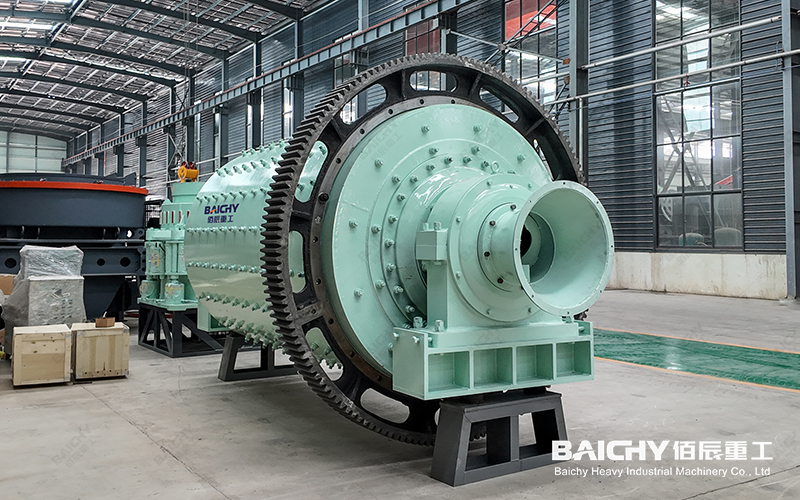
This equipment mainly consists of a feeding section, cylinder section, discharge section, transmission section (reducer, pinion, motor), as well as bearing section and lubrication system, among other key components. During operation, materials and water are mixed in a specific ratio and enter the cylinder through the feed end. Driven by a transmission device, the cylinder rotates at a uniform speed. The grinding media inside the cylinder are lifted to a certain height by friction and centrifugal force and then fall, thus impacting and grinding the materials inside the cylinder. The slurry meeting the fineness requirements is discharged through the grate plate at the discharge end or via overflow, completing one grinding cycle.
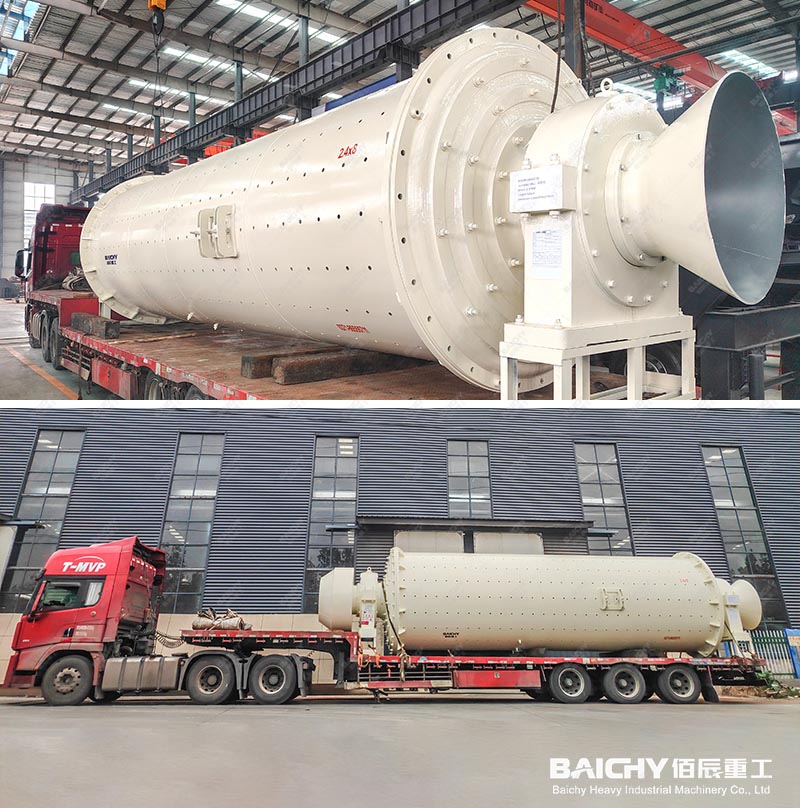
24.x8m Ball mill shipped
Why Choose a Horizontal Wet Ball Mill? Detailed Explanation of its Core Advantages
Based on 20 years of technical accumulation and customer feedback, we have summarized several unparalleled advantages of horizontal wet ball mills:
1. High Grinding Efficiency and Uniform Product Particle Size
During wet grinding, water can promptly carry away fine particles, effectively reducing over-grinding. It also helps material flow, improving grinding efficiency and resulting in a more concentrated and uniform particle size distribution in the final product.
2. Stable Operation and Strong Adaptability
Horizontal wet ball mills have a robust structure and mature design, enabling continuous and stable operation with a low failure rate. It exhibits excellent adaptability to various ores (both metallic and non-metallic) and boasts strong processing capacity.
3. Environmentally Friendly and Easy to Integrate
Wet operation effectively suppresses dust emissions, resulting in a cleaner and more environmentally friendly working environment. The ground slurry can directly flow into the next beneficiation process (such as flotation or magnetic separation), ensuring smooth process integration and easy overall line configuration.
4. Good Sealing and Lower Noise
Compared to dry mills, wet operation results in lower noise levels. Furthermore, the horizontal structure makes sealing easier, reducing the risk of slurry leakage.
Successful Case Studies: Our Equipment in the Field
We once provided a Φ3.6×6.0m horizontal wet ball mill to a large copper mine beneficiation plant in Jiangxi Province for the primary coarse grinding of copper ore. For the past three years, this equipment has consistently maintained its characteristics of high throughput, low energy consumption, and easy maintenance. It grinds ore from -15mm to -0.074mm (65%), fully meeting design specifications and earning high praise from customers. Customer feedback indicates that the stable operation of the equipment is one of the key guarantees for achieving their production line's production targets.
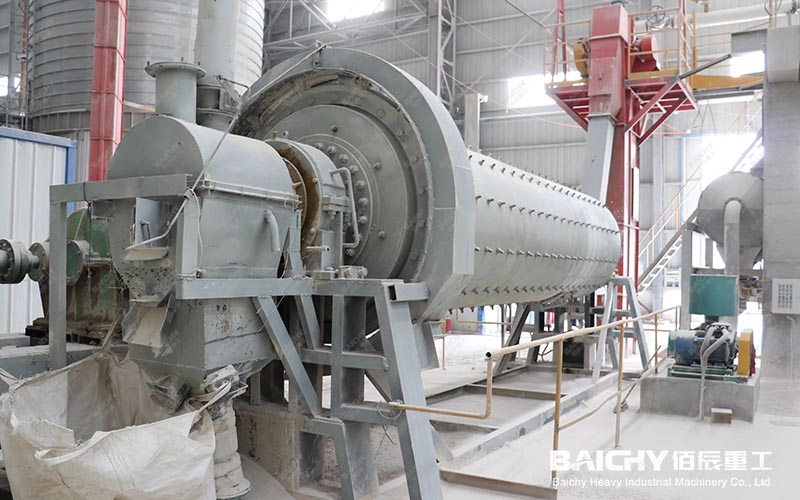
Ball mill customer site
Recommended Related Equipment
A complete grinding and classification loop for a horizontal wet ball mill typically requires the following equipment:
• Hydrocyclone assembly: Used to classify the ore discharged from the ball mill. Unqualified coarse particles are returned to the ball mill for regrinding, forming a closed-loop cycle and improving efficiency.
• Slurry pump: Used to transport slurry, providing a stable pressure and flow rate for the hydrocyclones.
• Feeder: Provides raw materials evenly and continuously into the ball mill, ensuring stable mill load.
Frequently Asked Questions (FAQ)
Q1: What are the main differences between a horizontal wet ball mill and a dry ball mill?
A1: The main difference lies in the grinding environment. Horizontal wet ball mills add water during grinding to form a slurry, resulting in no dust pollution and a finer, more uniform product particle size. They are typically used in conjunction with wet mineral processing. Dry ball mills, on the other hand, do not add water and are suitable for water-scarce areas or applications where the product must be dry powder, but dust control is crucial.
Q2: How to determine the appropriate steel ball ratio and filling rate?
A2: The steel ball ratio (the ratio of large to small balls) and filling rate (the proportion of steel balls to the cylinder volume) are key parameters affecting grinding efficiency. This requires scientific calculation and adjustment based on the feed particle size, ore hardness, target fineness, and mill model. Typically, multiple diameter ratios are used when initially loading balls, and a certain amount of larger balls is added periodically to maintain balance. We will provide a professional initial recommendation plan upon equipment delivery.
Q3: What are the key points of daily maintenance?
A3: Routine maintenance should focus on the lubrication system (ensuring proper lubrication of bearings and gears), liner bolts (regularly check for tightness to prevent loosening and leakage), motors and transmission components (check for temperature rise and abnormal noise), and timely replenishment of worn steel balls and liners. Establishing a standardized inspection and maintenance system can greatly extend the service life of the equipment.
| Key Words | The Gold Ball Mill: A Crucial Tool in Gold Ore Processing |
|---|---|
| Product Model | Ball Mill |
| Feed Size | ≤25mm |
| Motor Power | 18.5-4500kw |
| Capacity | 0.65-615t/h |
| Core Functions | Grinding precision and particle size controllability |
| Brand | Baichy Heavy Industry |
| Packing | Standard containers,Nude Packing,Wooden boxes, etc |
| Installation | Engineer Guide |
| Factory visit | Welcomed Warmly |
| Export Countries | Southeast Asia, Central Asia, South America, North America, Africa |
| Payment | T/T,L/C payment,Paypal...etc |
| Please note: The above table data is for reference only. For specific information, please contact us. | |