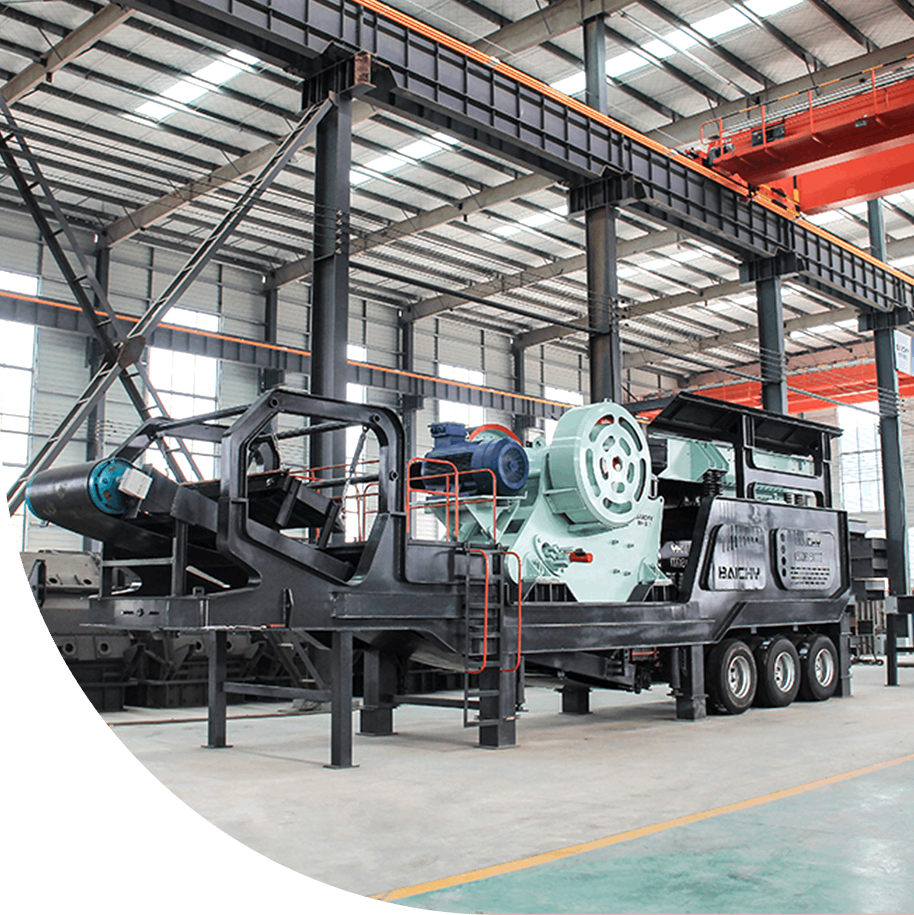


PEX fine jaw crusher
The application scenario for the PEX series fine-crushing jaw crusher can be summarized in one sentence: it excels in secondary fine-crushing stations requiring an hourly output of 15–80 tons, a feed size of ≤250 mm, and a target discharge size of 25–60 mm. It does not compete with primary jaw crushers for coarse crushing, nor does it clash with high-capacity cone crushers; instead, it firmly occupies a niche in small-to-medium production lines characterized by minimal investment, the fewest potential points of failure, and the fastest specification changeovers.
I. Defining the Boundaries: Feed and Discharge Specifications for the PEX Series
A clear understanding of operational boundaries is essential for determining the right application scenario. The PEX series is classified as a fine-crushing jaw crusher, positioned for the secondary crushing stage rather than the primary stage:
• Feed Size Limit: ≤250 mm (≤210 mm for the 250-width series). Material exceeding this size must first be processed by a PE primary jaw crusher;
• Discharge Size Range: Continuously adjustable between 25–60 mm (extendable to 25–90 mm for the PEX-300×1300 model);
• Material Hardness Limit: Suitable for materials with a compressive strength of ≤320 MPa, covering limestone, dolomite, river pebbles, raw iron ore, and moderately weathered granite;
• Capacity Range: 15–80 t/h. For production lines exceeding 100 t/h, cone crushers offer superior advantages in terms of capacity and particle shape;
• Material Adaptability: High tolerance for materials containing clay, moisture, or steel rebar contaminants—an inherent advantage of the jaw-based compression mechanism over impact-based equipment.
Operating outside these boundaries comes at a cost reflected directly in jaw plate lifespan and specific energy consumption; within these boundaries, however, it offers the most reliable cost-performance ratio among secondary crushing equipment.
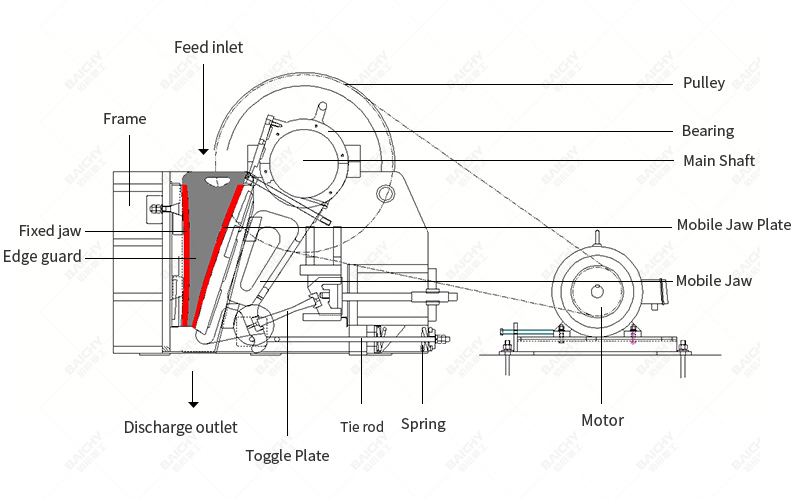
Structural diagram of a fine jaw crusher
II. Parameter Table for Key PEX Series Models
Table: PEX Series Fine Jaw Crusher — Main Models and Technical Specifications
| Model | Feed Opening Size | Max. Feed Size | Discharge Opening Range | Processing Capacity | Motor Power |
|---|---|---|---|---|---|
| PEX-250×750 | 250×750 mm | ≤210 mm | 25–60 mm | 15–45 t/h | 22–30 kW |
| PEX-250×1000 | 250×1000 mm | ≤210 mm | 25–60 mm | 16–52 t/h | 30–37 kW |
| PEX-250×1200 | 250×1200 mm | ≤210 mm | 25–60 mm | 20–61 t/h | 37 kW (55 kW optional) |
| PEX-300×1300 | 300×1300 mm | ≤250 mm | 25–90 mm | 30–80 t/h | 55 kW |
Note: Processing capacity is rated on medium-hard limestone (bulk density approx. 1.6 t/m³). For hard rock such as granite, multiply by 0.80–0.90; for iron ore, multiply by 0.70–0.80 to obtain the realistic capacity. A 10–15% margin is recommended for equipment selection. Applicable material compressive strength ≤320 MPa. Specifications are subject to the final technical agreement.
III. Six Major Application Scenarios
3.1 Secondary Fine Crushing in Aggregate Production Lines
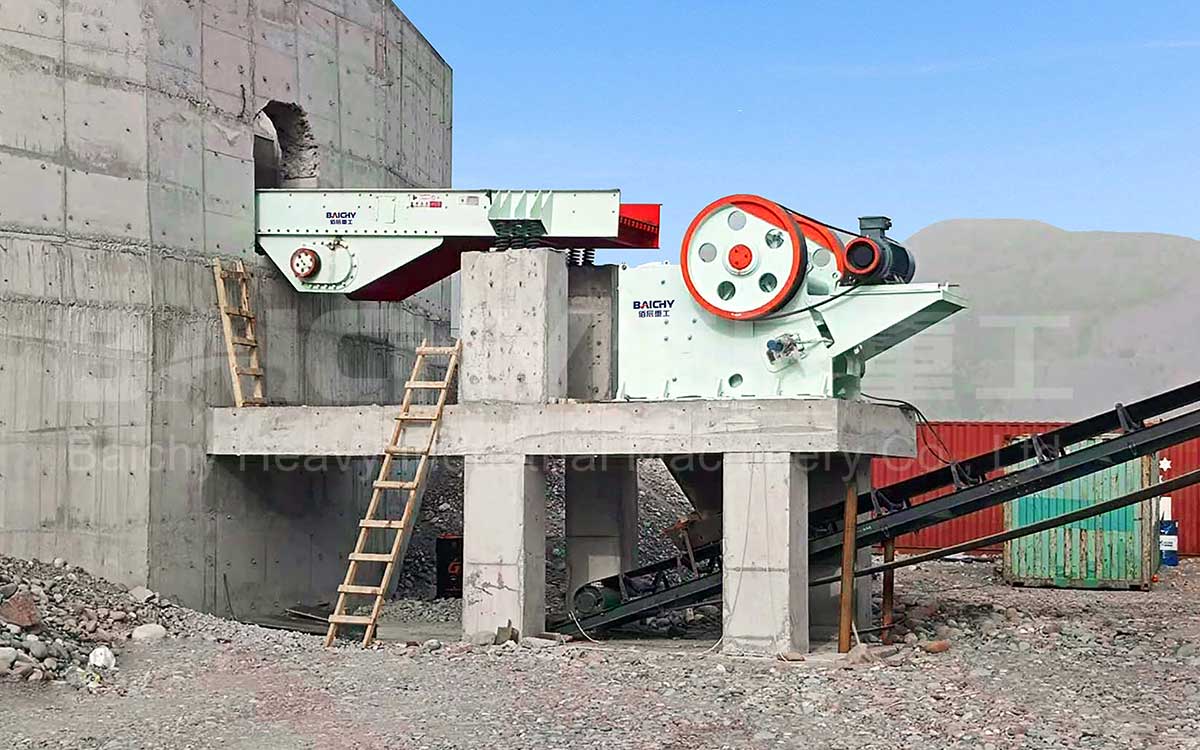
This is the most common application scenario. It utilizes a "PE primary crusher + PEX fine crusher + vibrating screen" configuration. Material discharged from the primary crusher (100–210 mm) is fed directly into the PEX series fine jaw crusher; the resulting product (25–60 mm) is screened and graded for direct supply to concrete mixing plants and highway sub-base applications. The entire line requires minimal civil engineering work and has a small footprint, making it ideal for quarries with limited capital that wish to pursue phased investment.
3.2 Pre-grinding Crushing in Mineral Processing Plants (Gold, Copper, Iron, Manganese)
Mineral processing requires highly consistent feed sizes for grinding mills. PEX series fine jaw crushers, combined with closed-circuit screening, consistently reduce run-of-mine ore to ≤60 mm—creating a uniform feed size. This results in an increase of approximately 5 percentage points in the -200 mesh fraction and a reduction in mill power consumption of about 12%. Saving 1 kWh in the crushing stage lowers the processing cost per ton—this is the most direct financial benefit of the "crush more, grind less" strategy.
3.3 Construction Waste and Concrete Recycling
Demolition waste often contains rebar and brick-concrete fragments; impact crushers are prone to tooth damage, jamming, and rapid blow bar wear, whereas the compression mechanism of jaw crushers is inherently tolerant of iron and other impurities. Switching to PEX series fine jaw crushers for secondary crushing significantly reduces downtime caused by jams. The output serves as recycled aggregate for backfill or brick-making raw material, making it a highly reliable choice for urban solid waste resource recovery lines.
3.4 Pre-crushing for Powder Grinding Lines
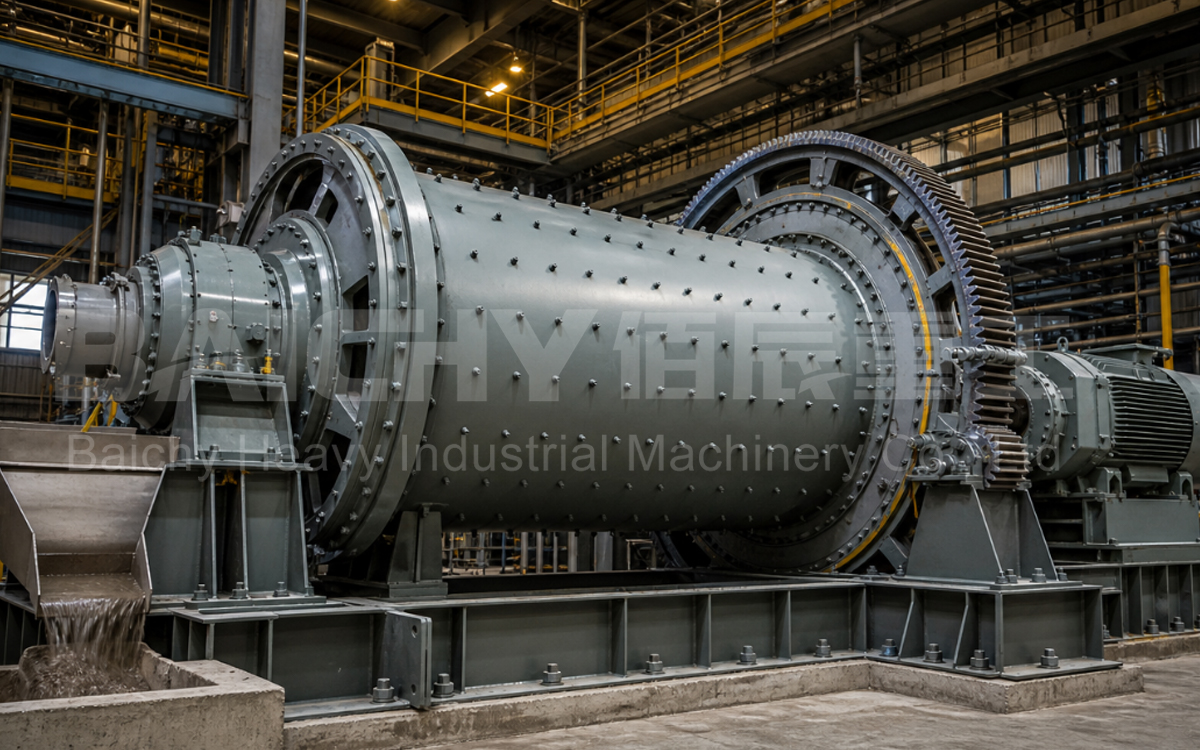
Raymond mills and ball mills typically require a feed size of ≤30–50 mm. Grinding large, raw chunks directly results in high power consumption and excessive wear. Pre-crushing ore to 25–60 mm using PEX series fine jaw crushers before feeding the mill increases hourly output and extends the service life of grinding rollers and rings—representing one of the most cost-effective energy-saving upgrades for powder grinding plants.
3.5 Secondary Crushing Unit for Mobile Crushing Stations
Mobile stations are constrained by vehicle weight and width limits, requiring primary equipment that is lighter and simpler while maintaining the same capacity. With no reliance on hydraulic power stations and featuring standardized structural components, the PEX series fine jaw crusher is an ideal choice for mobile secondary crushing applications. 3.6 Flexible Production of Multiple Product Types and Specifications
The discharge opening of the PEX series fine jaw crusher features a mechanical adjustment mechanism. Switching production between graded aggregates, sub-base materials, and pre-grinding feedstocks within the 25–60 mm range takes only minutes, eliminating the need to stop the machine for disassembly or reassembly—"multi-product capability from a single machine" directly translates to higher capital utilization efficiency.
IV. Application Scenario vs. Model Selection Table
Table: PEX Series Fine Jaw Crusher — Application Scenarios and Recommended Models
| Application Scenario | Hourly Capacity Requirement | Recommended Model | Key Matching Equipment |
|---|---|---|---|
| Small-scale aggregate line (secondary crushing) | 15–45 t/h | PEX-250×750 | ZSW feeder + PE-400×600 primary crusher + YA vibrating screen |
| Medium-scale aggregate line (secondary crushing) | 20–61 t/h | PEX-250×1200 | PE-500×750 primary crusher + closed-circuit screening with material return |
| Pre-crushing for mineral processing (pre-grinding) | 30–80 t/h | PEX-300×1300 | Closed-circuit screening + iron remover |
| Construction waste recycling | 20–60 t/h | PEX-250×1000 / 250×1200 | Heavy-duty feeder + pre-screening for soil removal |
| Pre-crushing for powder grinding line | 16–52 t/h | PEX-250×1000 | Capacity matched with Raymond mill / ball mill |
| Secondary crusher for mobile station | 20–50 t/h | PEX-250×1000 | Integrated design with chassis and screening unit |
Note: Capacity figures refer to the fine-crushing stage and are rated on medium-hard limestone (bulk density approx. 1.6 t/m³). For hard rock such as granite, multiply by 0.80–0.90; for iron ore, multiply by 0.70–0.80. Model selection should be based on the maximum feed size, target discharge size and required hourly capacity, with a 10–15% margin. Specifications are subject to the final technical agreement.
V. Selection Criteria: Align Three Key Figures, Avoid Two Common Pitfalls
Three figures that must be aligned:
• Maximum feed particle size—determines whether to choose the 250 mm inlet width series (≤210 mm) or the 300 mm inlet width series (≤250 mm);
• Target discharge particle size—determines the required discharge opening range and whether a 90 mm setting is needed;
• Target hourly capacity—determines the model specifications and motor power; for hard rock applications, apply a correction factor before finalizing—err on the side of a larger capacity rather than a smaller one. Two common pitfalls:
Mistaking nominal capacity for actual operational capacity: Rated capacities are based on limestone; for hard rocks like granite or basalt, a discount factor of 0.70–0.85 must be applied. If the contract specifies only nominal capacity, the buyer bears the cost of under-utilization (failure to keep the crusher fully fed) after commissioning.
Using the PEX series fine-crushing jaw crusher for primary crushing: Its feed opening is narrow and elongated; large chunks of material can easily jam the machine and cause abnormal wear on the jaw plates. Primary crushing tasks should be handled by the PE series.
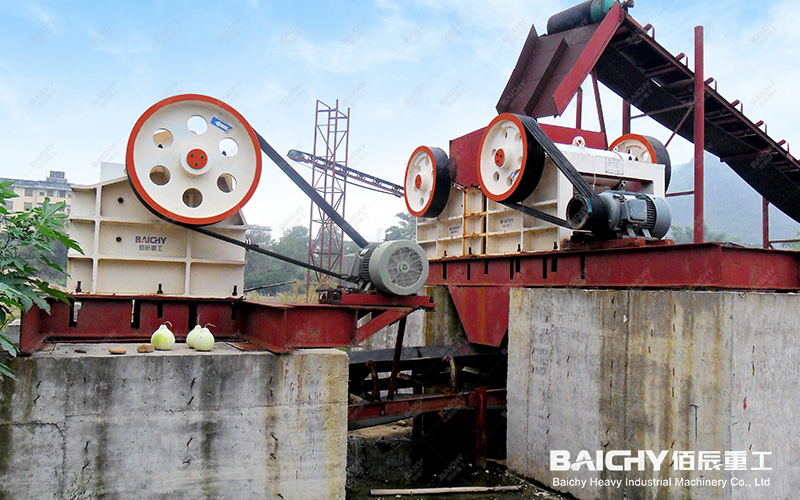
Fine Jaw Crusher Customer Site
VI. FAQ
Q1: What are the primary applications for the PEX series fine-crushing jaw crusher?
It is mainly used in six scenarios: secondary fine crushing in aggregate production lines; pre-crushing before grinding in mineral processing plants; recycling of construction waste and concrete; pre-crushing for powder grinding lines; as the secondary crusher in mobile crushing stations; and for flexible production involving multiple product types and specifications. Common characteristics include an hourly output of 15–80 tons, a feed size of ≤250 mm, and a target discharge size of 25–60 mm.
Q2: How do the application scenarios for PEX fine-crushing jaw crushers differ from those of cone crushers?
The distinction is based on hourly output and material hardness: For small-to-medium lines with outputs under 80 t/h, material compressive strength ≤320 MPa, and budget sensitivity, the PEX fine-crushing jaw crusher offers significantly lower investment and maintenance costs. For high-volume lines exceeding 100 t/h or those processing highly abrasive hard rock, cone crushers offer superior capacity and longer wear-part lifespan. The two can also be used in series, with the jaw crusher performing pre-crushing and the cone crusher handling final crushing.
Q3: Can the PEX fine-crushing jaw crusher be installed on a mobile crushing station?
Yes. The PEX-250×1000 or PEX-250×1200 models are commonly used for the secondary crushing stage of mobile stations. They do not rely on hydraulic systems or external oil stations, feature standardized structural components, and offer better control over total vehicle weight and maintenance complexity. However, the unit requires an integrated design based on the vehicle's total tonnage; a standard stationary crusher cannot simply be mounted directly onto the mobile chassis.
Baichy Heavy Industry
Baichy Heavy Industry is a high-tech mining equipment company integrating R&D, manufacturing, sales, and after-sales service. Focusing on crushing, grinding, and mineral processing equipment, we provide professional solutions to our customers. We are ISO9001:2015 、certified, and our products include mobile crushing palnts, crawler crushing plant, construction waste crushing plants, jaw crushers, sand making machines, cone crushers, fine crushers, grinding mills, ball mills, etc., all with reliable performance to meet diverse project needs.
Baichy Heavy Industry – Your Trusted Partner
To ensure optimal performance of your equipment, Baichy Heavy Industry offers:
- Professional on-site installation guidance
- Comprehensive operator training
- 24/7 technical support & maintenance services
Our complete after-sales service system guarantees long-term, stable operation of your machinery with minimal downtime.
Protect Your Rights – Only Use Official Channels
To avoid scams and ensure authentic support, contact us exclusively through:
• Official Website: www.baichychina.com
• WhatsApp: +8615093222637
• Email: [email protected]
Your satisfaction is our priority – expect prompt, professional service every time.
(Note: Beware of unauthorized third parties claiming to represent Baichy. Always verify through official contacts.)