Ball Mill Applications
1. Definition and Positioning of Ball Mills
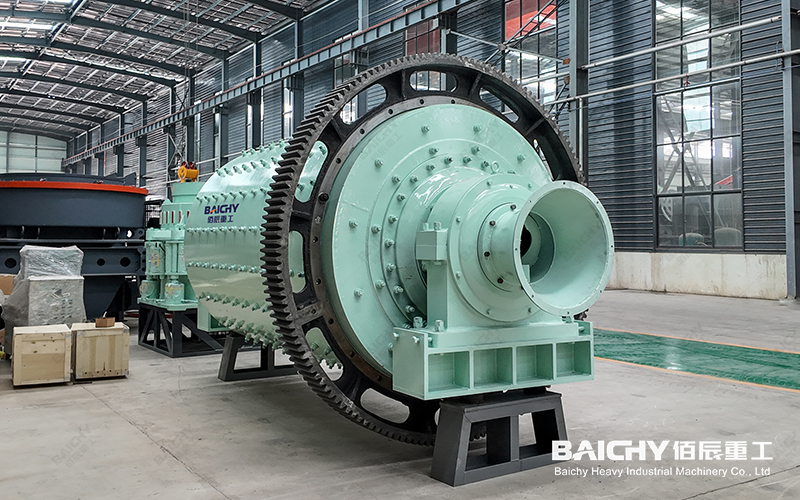
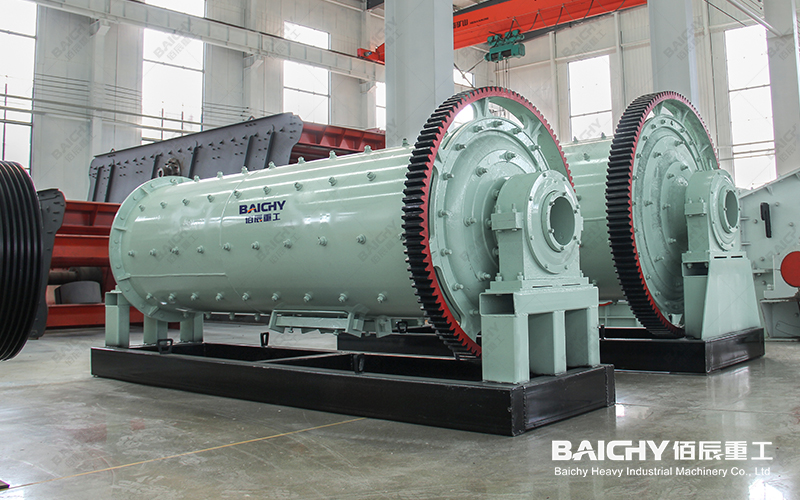
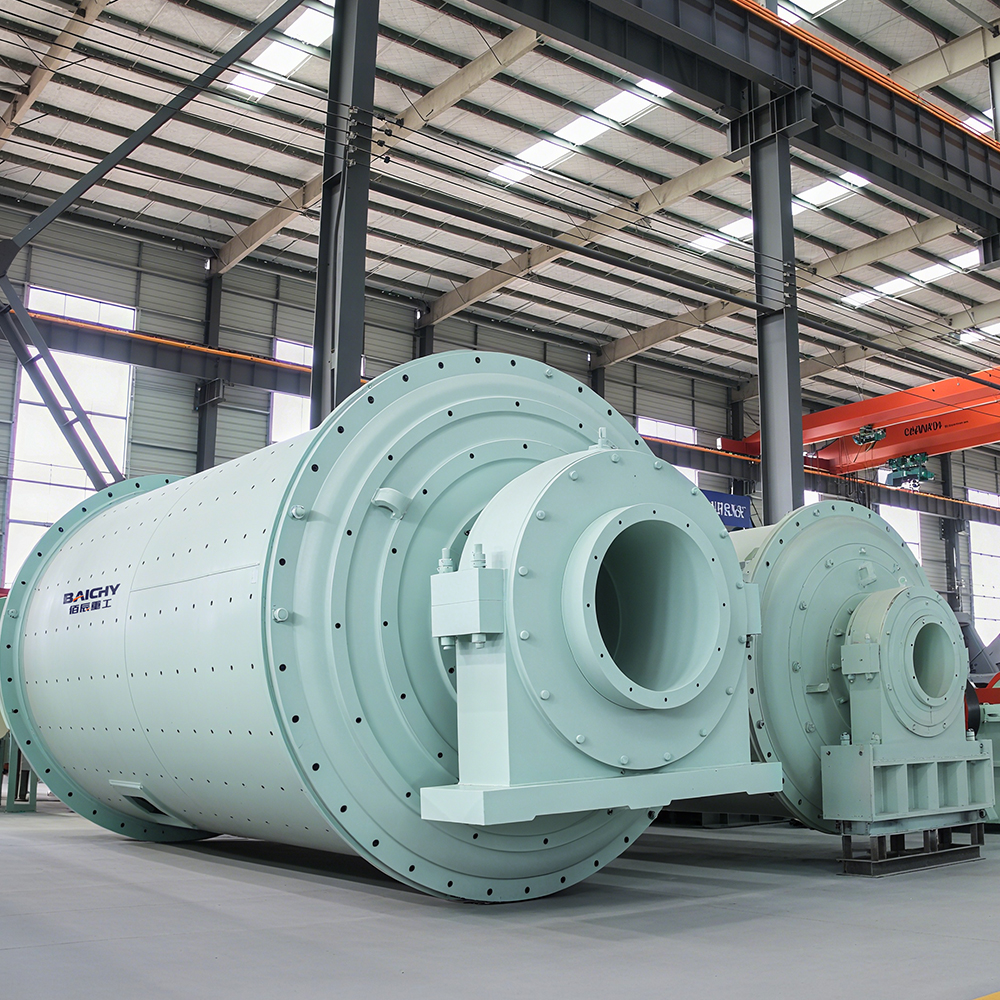
The ball mill is the ultimate comminution equipment in the industrial sector for achieving the "liberation—fine grinding—homogenization" of solid materials.
By utilizing the impact and shearing forces of grinding media (such as steel balls or ceramic balls) within a rotating cylindrical shell, it reduces materials from centimeter-scale down to micron—or even nano—scale, serving as an indispensable core link in modern industrial processes.
| Parameter Category | Typical Parameters | Description |
| Feed Size | ≤25 mm | Enters after pre-processing by a jaw crusher |
| Discharge Size | 20 μm – 200 μm | Standard wet/dry ball milling |
| Ultimate Fineness | Up to 0.1 μm | Nano-scale ball milling processes |
| Processing Capacity | 0.5 t/h – 500 t/h | Varies depending on machine model and process |
Applicable Standards:
- GB/T 25706-2010 Ball Mills
- ISO 9001:2015 Quality Management Systems
2. Applications in the Mining and Metallurgy Industries
In the mining sector, ball mills undertake the critical task of "mineral liberation," serving as the decisive factor in mineral processing recovery rates.
• Further grinds crushed ore to achieve complete separation between valuable minerals and gangue (waste rock).
• Directly influences the recovery rates and economic viability of subsequent processes, such as flotation and leaching.
| Project Case Study | Time | Results |
| Shandong Gold Mine Technical Upgrade Project | 2023 | Ball mill fineness (percentage passing -200 mesh) increased from 65% to 85%; gold recovery rate improved by 8%. |
| Jiangxi Copper Mine Expansion Project | 2022 |
Adoption of large-scale overflow-type ball mills resulted in a 35% increase in processing capacity. |
Key Technical Considerations:
1. Balancing grinding fineness with the prevention of over-grinding.
2. Optimizing the grinding media (ball) charge and rotational speed.
3. Integrating with classification equipment to establish a closed-circuit grinding system.
3. Applications in the Cement and Building Materials Industries
Ball mills determine the strength grade of cement and the durability of concrete.
• Co-grinding of cement clinker, gypsum, and mineral admixtures
• The finer the fineness, the faster the hydration reaction and the higher the early-stage strength
| Parameters | Ordinary Cement | High-Performance Cement |
| Specific Surface Area | 300–320 m²/kg | ≥380 m²/kg |
| 28-Day Compressive Strength | 42.5 MPa | ≥52.5 MPa |
Referenced Standard: GB 175-2007 *Common Portland Cement*
4. Applications in the Chemical and Fertilizer Industries
Ball mills significantly enhance chemical reaction rates by increasing the specific surface area.
• The fineness of phosphate rock powder directly impacts the phosphoric acid extraction rate
• Pigments and dyes rely on ball milling to achieve particle size uniformity and color stability
| Application Scenario | Target Particle Size | Benefits |
| Phosphate Fertilizer Production | ≤75 μm | Acidolysis rate increased by 12% |
| Organic Pigments | D50 ≤5 μm | Tinting strength increased by 15% |
5. Ceramics, Glass, and Electronic Materials
Ball mills ensure the purity and particle size distribution stability of raw materials for high-end ceramics and glass.
• Electronic Ceramics: Al₂O₃ and ZrO₂ require strict control over impurities and particle size
• Photovoltaic Glass: SiO₂ raw materials require high whiteness and low iron content
Case Study:
In 2024, an electronic ceramics manufacturer in Guangdong adopted an alumina-lined ball mill; iron (Fe) content was controlled to ≤0.02%, resulting in a 6% increase in product yield.
6. Applications in the Power Industry
Ball mills determine the combustion efficiency and emission levels of the pulverizing systems in coal-fired power plants.
• The finer the pulverized coal, the higher the burnout rate and the lower the carbon content in fly ash
• Reduces NOx and CO₂ emissions
| Pulverized Coal Fineness (R90) | Combustion Efficiency | Remarks |
| ≤20% | ≥98% | Supercritical Units |
7. New Energy and Advanced Materials (Fastest-Growing Sector)
Ball mills are core equipment for the preparation of materials for lithium-ion batteries, sodium-ion batteries, and solid-state batteries. • Mixing and Nanomization of Cathode and Anode Materials
• Improvement of Ionic Conductivity and Cycle Life
| Project | Material | Grinding Target | Result |
| Power Battery Project | NCM811 | D50 ≤ 5 μm | Capacity retention rate increased to 92% (after 1000 cycles) |
8. The Three Core Values of Ball Mills
Ball mills create industrial economic value through physical comminution.
1. Liberation of Monomers: Releasing encapsulated valuable components (gold, copper, rare earth elements).
2. Maximization of Specific Surface Area: Accelerating reactions, enhancing material strength, and reducing energy consumption.
3. Homogenization and Mixing: Achieving microscopic uniformity in multi-component materials.
Ball Mill Applications
9. Frequently Asked Questions (FAQ)
1. What is the difference between a ball mill and a Raymond mill?
Ball mills are suitable for hard materials and can achieve micron-level fineness; Raymond mills are suitable for soft materials, offering high throughput but limited fineness.
2. Do ball mills consume a lot of energy? Are there energy-saving solutions?
In mineral processing plants, traditional ball mills account for 40%–60% of total electricity consumption. Energy savings of 10%–25% can be achieved through the use of rolling bearings, permanent magnet direct drives, automatic lubrication systems, and intelligent load control.
3. How can one determine if a ball mill is "over-grinding"?
Over-grinding leads to excessive sliming (generation of fines) and a reduction in recovery rates. This can be monitored by tracking changes in the proportion of -400 mesh particles using sieve analysis or laser particle size analyzers.
4. What is the best material for ball mill liners?
High-manganese steel is commonly used for metal ores; rubber or composite materials are recommended for corrosive operating environments; and the ceramics industry requires alumina liners to prevent contamination.
5. Can ball mills be used for the preparation of nanomaterials?
Yes, by utilizing grinding aids, low-temperature cooling, and extended grinding durations, nanoscale fineness can be achieved; however, the energy consumption and cost implications must be carefully weighed.
6. What are the most critical parameters when selecting a ball mill?
Processing capacity (throughput), feed particle size, discharge fineness, and material hardness (Bond Work Index).
7. What is the typical maintenance cycle for a ball mill?
For large-scale ball mills, the main bearings should be inspected every 6 months, and the liners typically have a service life of 1–3 years, depending on the specific operating conditions. 8. How do you choose between wet ball milling and dry ball milling?
Wet milling is predominantly used in mineral processing and ceramics, while dry milling is more common in cement production and power plants. Wet milling offers easier control over product fineness, whereas dry milling systems are simpler in design.
9. Do ball mills have a significant impact on the environment?
The primary environmental impacts are noise and dust. Compliance with emission standards can be achieved through the use of soundproof enclosures, dust collection systems, and vibration-damping foundations.
10. What are the future development trends for ball mills?
Key trends include intelligent operation (featuring online particle size monitoring and AI-driven optimization), scaling up to larger capacities, energy efficiency, and modular design.