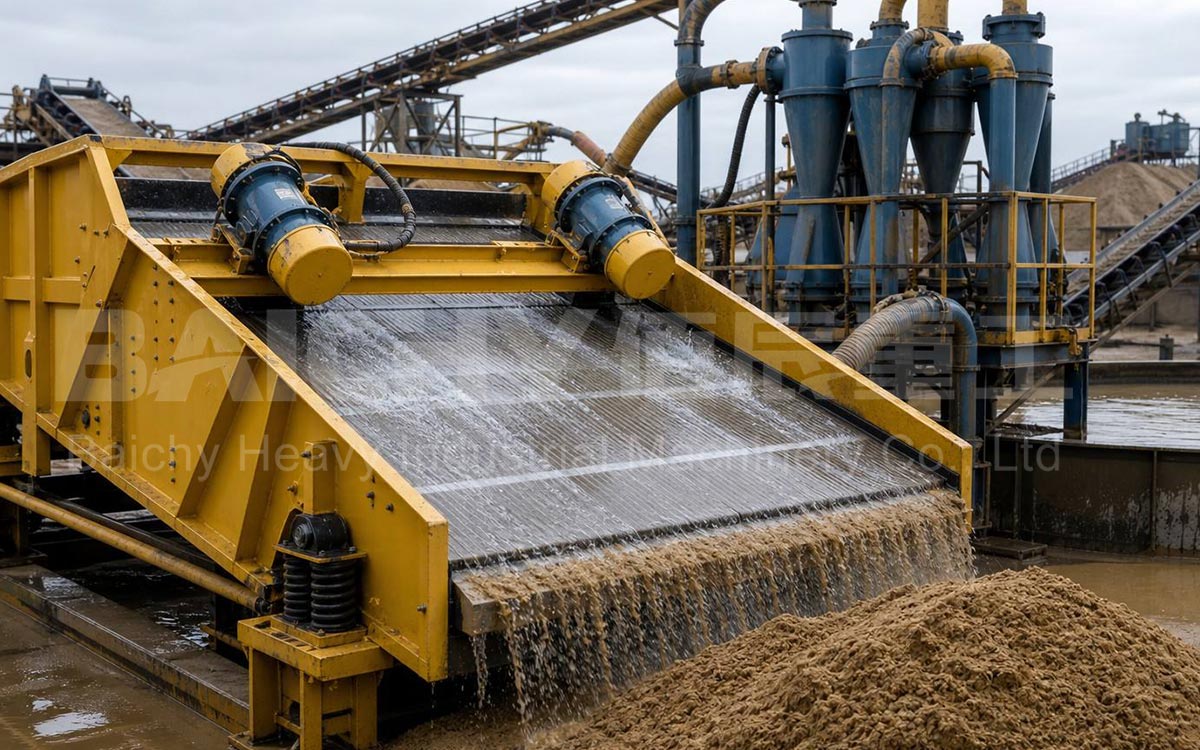
High-frequency dewatering screen
High moisture content in fine sand and tailings represents a frequently overlooked "hidden cost" for sand and gravel plants as well as mineral processing facilities. Baichy Heavy Industry’s high-frequency dewatering screen utilizes a core design combining "high-frequency, low-amplitude vibration" with "wedge-wire screening media." It can reduce the moisture content of fine sand and tailings from 25%–30% to below 15% in a single pass. Unlike natural air-drying, this process is unaffected by weather or site constraints and allows for continuous operation; compared to filter presses, it requires lower capital investment and consumes less electricity per ton. When paired with a hydrocyclone cluster for fine sand recovery, the recovery rate for fine particles exceeds 90%, and the equipment investment is typically recouped within one year.
I. What is a High-Frequency Dewatering Screen?
The high-frequency dewatering screen is a linear-vibration dewatering device designed specifically for fine-grained materials. Two synchronously counter-rotating vibrators generate a linear vibration trajectory; the vibration frequency is significantly higher than that of standard linear screens (typically 25–50 Hz), while the amplitude is smaller (2–4 mm). Materials are tossed and bounced at high frequencies across the screen surface, allowing water to pass rapidly through the mesh under the combined influence of vibration, gravity, and surface tension, while fine particles are retained and conveyed to the discharge point. The screen surface typically employs polyurethane wedge-wire or V-shaped slotted screens; the slots widen from top to bottom, facilitating rapid water drainage and preventing clogging.
Unlike standard linear dewatering screens that operate on a "low-frequency, high-amplitude" principle, high-frequency dewatering screens target fine-grained materials using a "high-frequency, low-amplitude" approach. Fine particles are prone to washing away with the water flow under low-frequency, high-amplitude conditions; conversely, high-frequency vibration enables rapid stratification and water drainage through the water film, effectively "retaining fine sand while quickly draining water." This capability constitutes the core technical distinction between high-frequency dewatering screens and conventional screening equipment.
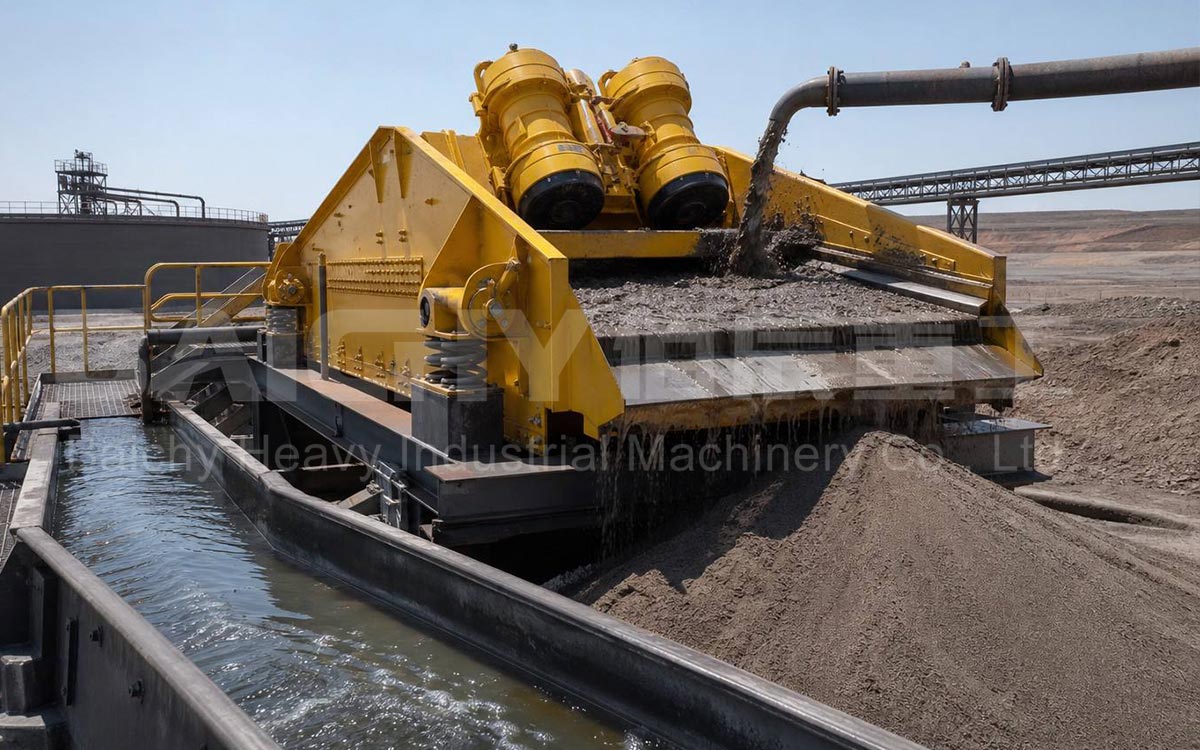
high-frequency vibrating dewatering screen
II. Application Scenarios: Where High-Frequency Dewatering Screens Are Most Needed
Dewatering of Manufactured Fine Sand: In wet sand-making production lines, the overflow from sand washers and underflow from hydrocyclones have high water content. High-frequency dewatering screens recover and dewater this fine sand, ensuring the final product meets moisture standards and is ready for immediate truck loading.
Mineral Processing Tailings Dewatering: Tailings slurries (from iron, gold, copper, etc., processing) are thickened and fed into high-frequency dewatering screens. The dewatered tailings are dry-stacked or used for backfilling, while the filtrate is recycled into the processing system, achieving tailings volume reduction and water recovery.
Fine Dewatering of Coal Slime: Fine coal slime from coal preparation plants undergoes fine dewatering via these screens; combined with thickeners, this enables a closed-loop wash-water cycle with zero external discharge.
Dewatering After Wet Cleaning: Materials such as river pebbles, sea sand, and recycled construction aggregates are dewatered after wet cleaning, ensuring stable aggregate grading and reducing the land area required for natural air-drying.
Tailings Pond Water Recovery: High-frequency dewatering screens recover water from tailings, reducing the need for fresh water makeup and alleviating water supply pressure in water-scarce regions.
III. Equipment Advantages: High Frequency, High Recovery, Low Moisture Content
High-frequency dewatering screens have become standard equipment for fine sand recovery and tailings reduction due to four key performance indicators:
• Low Moisture Content: When paired with a hydrocyclone cluster, the screen can dewater fine sand with an initial moisture content of 25%–30% down to 12%–15% in a single pass, meeting requirements for dry discharge and truck loading while eliminating the need for secondary air-drying.
• High Fine-Particle Recovery Rate: Wedge-wire screens feature uniform slot openings and precise classification, achieving a recovery rate of over 90% for fine sand particles larger than 0.075mm. This minimizes the loss of finished sand, effectively turning overflow material into "found" profit.
• Continuous Operation and High Throughput: The linear vibrating screen surface offers strong self-cleaning capabilities. With continuous feeding and discharge, a single unit supports 24-hour production, matching the non-stop operational pace of sand and gravel plants as well as mineral processing facilities.
• Low energy consumption and maintenance costs: High-frequency, low-amplitude vibration minimizes impact on the equipment, extending the service life of the vibrator and damping springs. The wear-resistant, self-cleaning polyurethane screen panels have a lifespan measured in years; routine maintenance is limited to inspecting the vibrator, springs, and screen tension.
• Economic benefits: Based on a fine sand processing rate of 50 tons per hour, reducing moisture content from 25% to 12% removes approximately 130 kg of water per ton. With fine sand priced at 60 RMB/ton and the loss rate reduced from 8% to 2%, the revenue gained solely from recovering lost fine sand covers the equipment's electricity costs. Furthermore, dry stacking dewatered tailings eliminates the need for investment in expanding tailings ponds, resulting in significant overall economic benefits.
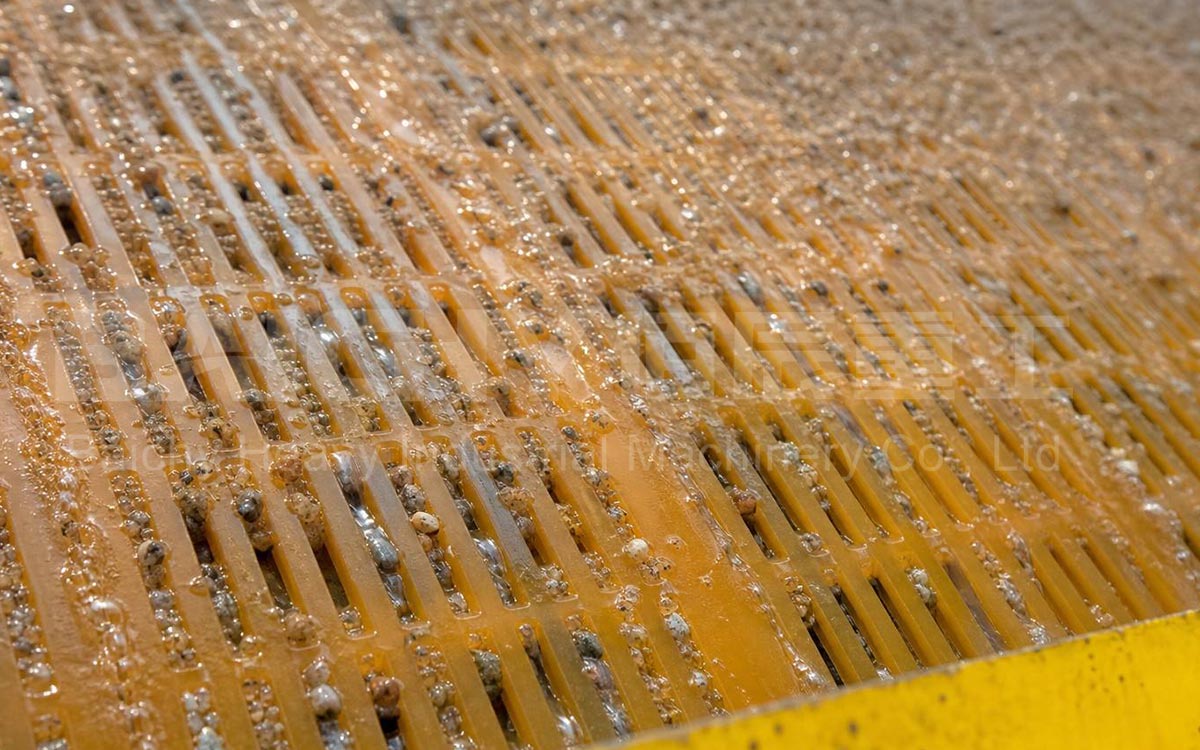
fine sand dewatering
IV. Key Specifications Table
The table below lists common specifications for the Bacihy HDS series high-frequency dewatering screen. Screen aperture, amplitude, and vibration frequency can be customized based on material characteristics and site conditions:
| 型号 Model |
筛面尺寸 (mm) Screen Surface Dimensions |
筛孔 (mm) Aperture |
处理量 (t/h) Processing Capacity |
振幅 (mm) Amplitude |
振动频率 (Hz) Vibration Frequency |
电机功率 (kW) Motor Power |
|---|---|---|---|---|---|---|
| HDS-1230 | 1200×3000 | 0.25–1.0 | 10–20 | 2–4 | 25–45 | 3×2 |
| HDS-1530 | 1500×3000 | 0.25–1.0 | 20–40 | 2–4 | 25–45 | 4×2 |
| HDS-1830 | 1800×3000 | 0.25–1.0 | 30–55 | 2–4 | 25–45 | 5.5×2 |
| HDS-2445 | 2400×4500 | 0.25–1.0 | 50–90 | 2–4 | 25–45 | 7.5×2 |
| HDS-3055 | 3000×5500 | 0.25–1.0 | 80–140 | 2–4 | 25–45 | 11×2 |
V. Typical Application Cases
Case 1: Fine Sand Recovery in a River Pebble Manufactured Sand Production Line:
A river pebble sand-making plant in Southeast Asia utilized a process flow comprising "Jaw Crusher + Cone Crusher + VSI Sand Maker + Sand Washer." The overflow from the sand washer carried away a large amount of fine sand (0.075–1.2 mm), resulting in unbalanced particle size distribution and an unstable fineness modulus for the finished sand. Following the retrofit—which added a "cyclone cluster + HDS-2445 high-frequency dewatering screen"—fine sand recovery increased to over 90%, and the moisture content of the finished sand stabilized at approximately 13%. Improved grading led to a higher selling price per ton, allowing the equipment investment to be recouped in about 10 months.
Case Study 2: Iron Ore Tailings Dewatering and Dry Stacking:
A domestic iron ore processing plant faced a near-capacity tailings pond, and expanding it would have required a massive investment. By adopting a "thickener + HDS-3055 high-frequency dewatering screen" setup to replace some pond-based storage, the plant achieved dry stacking as tailings moisture dropped from 30% to below 15%. Filtrate is recycled into the processing system, saving over one million yuan annually in fresh makeup water and pond expansion costs, while also passing environmental compliance inspections on the first attempt.
VI. Recommended Auxiliary Equipment
A single high-frequency dewatering screen cannot function as a standalone production line; a four-stage configuration—"thickening—classification—dewatering—recovery"—is recommended:
Cyclone Cluster: Hydrocyclones classify and recover fine sand from the sand-washing overflow, increasing the feed concentration for the high-frequency dewatering screen and stabilizing dewatering performance.
Fine Sand Recovery Machine: Connected in series with the high-frequency dewatering screen to further recover ultra-fine particles from the overflow, minimizing material loss.
Thickening Equipment: Peripheral-drive thickeners (NS/NZ series) pre-concentrate the tailings slurry, stabilizing feed concentration and reducing the load on the high-frequency dewatering screen.
Auxiliary Equipment: Slurry pumps, belt conveyors, and filter presses (for final processing) complete the dewatering system.
Bacihy offers comprehensive EPC services—ranging from process design and equipment selection to installation and commissioning—and customizes complete line solutions based on your material characteristics, production capacity, and target moisture content.
VII. FAQ
Q1: To what level can the high-frequency dewatering screen reduce moisture content?
A single stage of dewatering typically reduces the moisture content of fine sand or tailings from an initial 25%–30% down to 12%–15%. If a moisture level below 10% is required, a secondary dewatering stage using a filter press can be added, or the process can be further optimized by adjusting vibration amplitude, screen aperture size, and feed bed thickness; the process is simply customized to meet the target moisture content.
Q2: How do I choose between a high-frequency dewatering screen and a standard linear dewatering screen?
Consider two factors: material particle size and target moisture content. Choose a standard linear dewatering screen for processing coarse-grained materials or for high-volume pre-dewatering, as it offers a lower investment cost. Choose a high-frequency dewatering screen for processing fine-grained materials (0.075–3 mm) when low moisture content is required, as it delivers superior fine-particle recovery and dewatering performance. In practice, the two are often used in combination: the linear screen handles pre-dewatering to reduce the load, while the high-frequency screen ensures precision finishing.
Q3: Will such fine sand clog the screen mesh?
No. High-frequency dewatering screens utilize polyurethane wedge-wire mesh featuring apertures that widen from top to bottom, providing self-cleaning capabilities. Combined with high-frequency, low-amplitude vibration and an optional spray-cleaning system, the screen allows even 0.075 mm ultra-fine particles to pass through with water without clogging the apertures, resulting in a service life measured in years.
Baichy Heavy Industry
Baichy Heavy Industry is a high-tech mining equipment company integrating R&D, manufacturing, sales, and after-sales service. Focusing on crushing, grinding, and mineral processing equipment, we provide professional solutions to our customers. We are ISO9001:2015 、certified, and our products include mobile crushing palnts, crawler crushing plant, construction waste crushing plants, jaw crushers, sand making machines, cone crushers, fine crushers, grinding mills, ball mills, etc., all with reliable performance to meet diverse project needs.
Baichy Heavy Industry – Your Trusted Partner
To ensure optimal performance of your equipment, Baichy Heavy Industry offers:
- Professional on-site installation guidance
- Comprehensive operator training
- 24/7 technical support & maintenance services
Our complete after-sales service system guarantees long-term, stable operation of your machinery with minimal downtime.
Protect Your Rights – Only Use Official Channels
To avoid scams and ensure authentic support, contact us exclusively through:
• Official Website: www.baichychina.com
• WhatsApp: +8615093222637
• Email: [email protected]
Your satisfaction is our priority – expect prompt, professional service every time.
(Note: Beware of unauthorized third parties claiming to represent Baichy. Always verify through official contacts.)