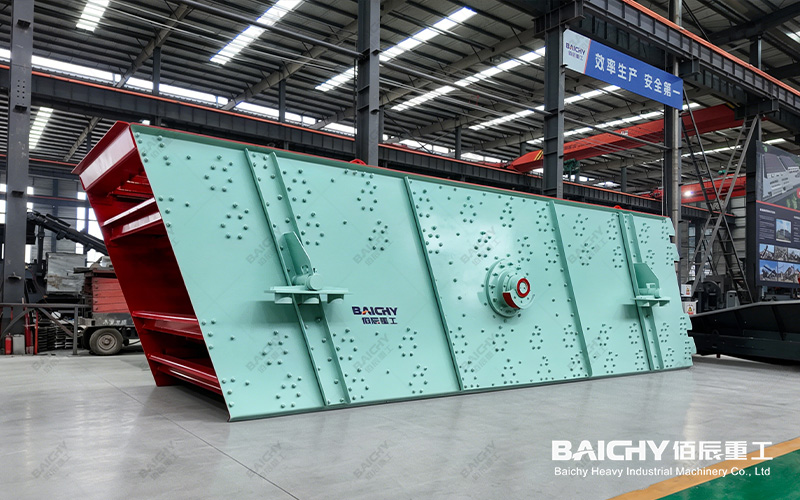
YK Series Vibrating Screen
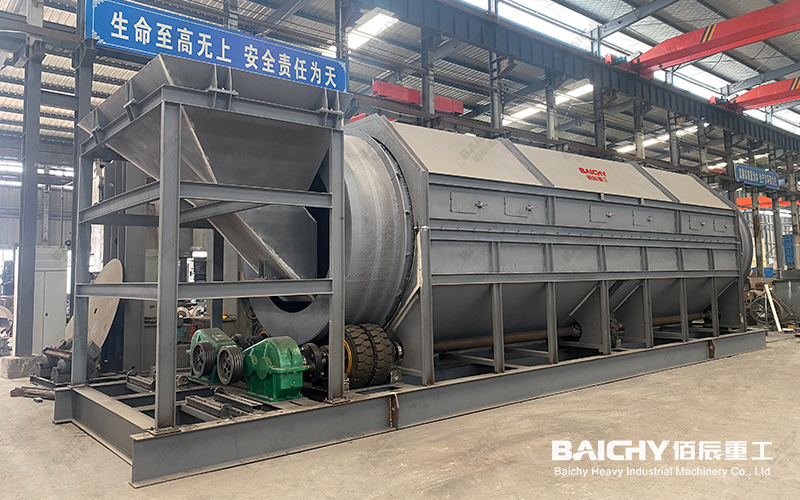
Mining Trommel Screen
Screening serves as the critical quality control checkpoint in a crushing production line; selecting the wrong screening equipment means that even the best crusher cannot produce qualified finished products. Baichy Heavy Industry’s YK series vibrating screens and GTS trommel screens cover the entire capacity range of 0.5–850 t/h, utilizing "high-frequency vibration grading" and "rotary tumbling screening" principles respectively. The YK vibrating screen is ideal for large-volume dry material processing, while the trommel screen is best suited for wet, sticky materials prone to clogging. Both feature robust construction and support 24-hour continuous operation, making them a recognized, high-efficiency screening combination for the sand, gravel, and mineral processing industries.
I. Working Principles of the Two Screening Systems
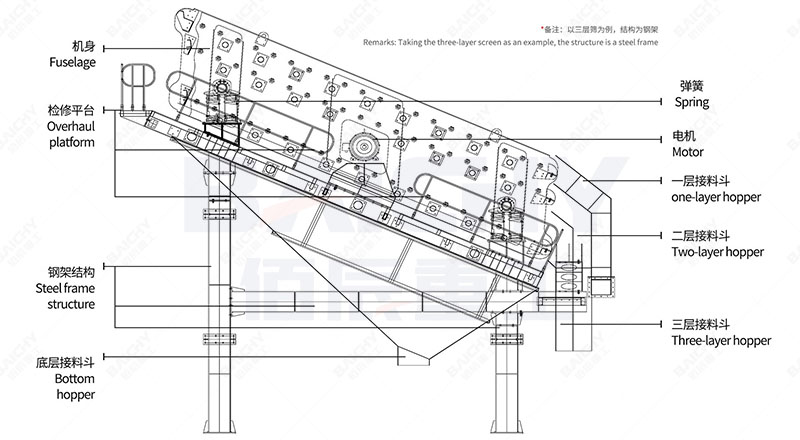
Working Principle of the YK Series Vibrating Screen
YK Series Circular Vibrating Screen: An exciter with eccentric blocks generates a circular vibration trajectory. Material on the screen surface is continuously tossed, loosened, and stratified; fine particles pass through the mesh, while coarse particles are discharged along the inclined surface. The screen box is assembled using high-strength lock-bolts (ring-groove rivets) and can be configured with 1–4 decks to separate 2–5 product sizes in a single pass, with a processing capacity of 30–850 t/h.
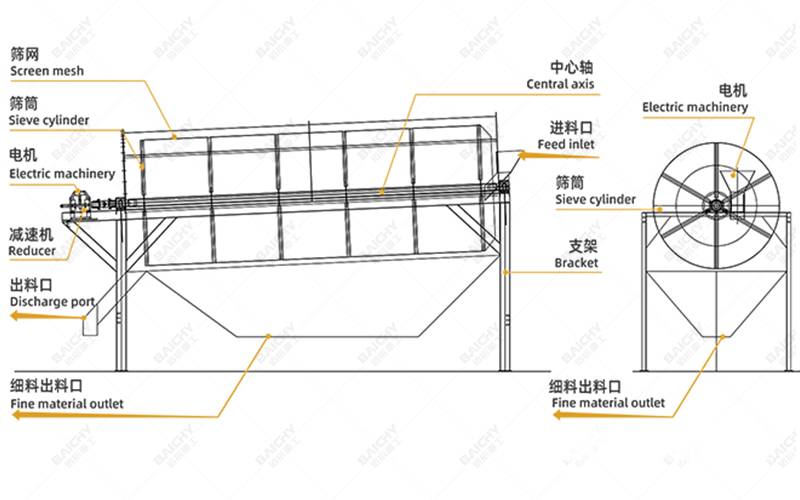
Structural diagram of a mining drum screen
Trommel Screen: A motor drives the cylindrical screen drum to rotate at a constant speed. Inside the drum, material is continuously lifted and cascades downward; fine particles pass through the mesh, while large particles roll along the inclined drum toward the discharge end. As the material tumbles, it maintains full contact with the screen surface. The mesh design utilizes gravity for self-cleaning, ensuring virtually no clogging even with high-moisture or highly sticky materials.
| Aspect | YK Series Vibrating Screen | Trommel Screen |
|---|---|---|
| Screening Principle | High-frequency vibration, throwing, and classification | Rotary tumbling and gravity-based screening |
| Ideal Materials | Dry materials, low moisture content, high volume | Wet, sticky, and fibrous materials |
| Processing Capacity | 30–850 t/h | 0.5–350 t/h |
| Screen Deck Configuration | 1–4 decks | 2–4 decks (customizable) |
| Dust Control | Standard open design | Fully enclosed dust cover; zero dust emission |
II. Application Scenarios: Selecting Screening Equipment Based on Material Characteristics
The primary rule when selecting screening equipment is to consider the material's moisture content and stickiness; production capacity is a secondary factor.
• Typical Applications for YK Vibrating Screens: Sand and aggregate classification (e.g., classifying crushed limestone, granite, or basalt into 0–5, 5–10, 10–20, and 20–31.5 mm fractions); closed-circuit screening in mineral processing (e.g., iron and gold ore, controlling feed size to ≤20 mm for mills with oversize material returned to the circuit); coal and chemical industry classification.
• Typical Applications for Trommel Screens: Desliming river sand or quartz sand (handles wet sand and mineral sludge with 10%–25% moisture content; vibrating screens tend to blind/clog with such materials, whereas trommel throughput remains largely unaffected); sorting construction and municipal solid waste; classifying compost and organic fertilizers.
Quick Reference: Moisture content <5% → Prioritize YK vibrating screen; >10% or contains clay/fibers → Trommel screen; significant moisture fluctuations → Trommel screen is the safer choice.
III. Equipment Advantages: Translating Durability into Profitability
1. Advantages of the YK Series Vibrating Screen:
① Screening efficiency increased by over 15%;
② Screen box constructed with lock-bolt rivets and high-strength bolts for superior fatigue and crack resistance;
③ Labyrinth seals extend bearing life, while centralized lubrication points allow for maintenance in just 10 minutes;
④ 1–4 deck configurations with screen media options (polyurethane, manganese steel, or stainless steel); compatible with 50/60Hz power grids and designed for 24-hour continuous operation.
2. Unique Advantages of the Trommel Screen:
Prevents clogging with wet, sticky materials (via gravity self-cleaning and an optional rotating steel wire brush); fully enclosed dust cover ensures zero dust emissions; minimal wear parts (limited to screen plates and support rollers) result in annual maintenance costs far lower than vibrating screens of equivalent capacity.
For every 15% increase in screening efficiency, a 200 t/h production line yields approximately 200,000 additional tons of qualified product annually; reducing downtime caused by clogging by just one hour saves tens of thousands of yuan—ultimately, durable screening equipment translates to a lower cost per ton and higher equipment availability. IV. Key Specifications: Official Parameter Tables for Two Types of Screening Equipment
YK Series Vibrating Screen Specifications (Verified against official website; selected mainstream models):
| Model | Screen Surface Dimensions (mm) | Number of Decks | Aperture (mm) | Processing Capacity (t/h) | Motor Power (kW) |
|---|---|---|---|---|---|
| 2YK1237 | 1200×3700 | 2 | 3–50 | 30–100 | 5.5 |
| 3YK1548 | 1500×4800 | 3 | 3–100 | 30–275 | 15 |
| 2YK1860 | 1800×6000 | 2 | 3–100 | 65–586 | 18.5 |
| 3YK2160 | 2100×6000 | 3 | 3–100 | 81–720 | 30 |
| 4YK2160 | 2100×6000 | 4 | 3–100 | 81–720 | 37 |
| 3YK2460 | 2400×6000 | 3 | 3–150 | 100–810 | 30 |
| 4YK2470 | 2400×7000 | 4 | 3–100 | 180–900 | 45 |
GTS Series Trommel Screen Specifications (Verified against official website):
| Model | Drum Diameter (mm) | Drum Length (mm) | Aperture (mm) | Processing Capacity (t/h) | Motor Power (kW) |
|---|---|---|---|---|---|
| GTS1030 | 1000 | 3000 | 2–80 | 20–100 | 4 |
| GTS1236 | 1200 | 3600 | 2–80 | 30–120 | 7.5 |
| GTS1545 | 1500 | 4500 | 2–80 | 60–280 | 11 |
| GTS1860 | 1800 | 6000 | 2–80 | 80–350 | 22 |
Note: Throughput varies based on material specific gravity, moisture content, and feed particle size; actual capacity is determined by material testing.
V. Real-World Cases: On-site Performance of Screening Equipment
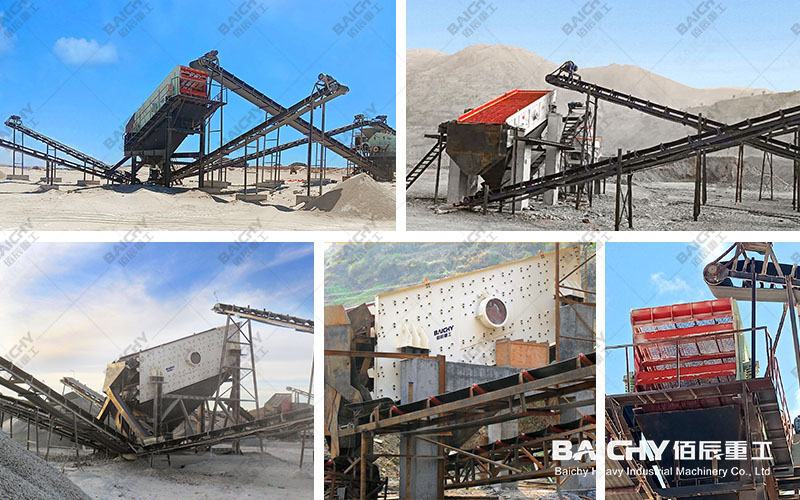
Vibrating Screen Customer Site
Case 1: Airport Aggregate Project in Ethiopia (4YK2160). Two 4YK2160 four-deck circular vibrating screens simultaneously produce four aggregate sizes (0–5, 5–10, 10–20, and 20–40 mm), directly meeting runway concrete gradation requirements.
Case 2: River Pebble Sand Making in the Dominican Republic (2YK1548). A combination of PE500×750 Jaw Crusher, 2YK1548 screen, and XSD2610 sand washer separates 0–5 mm manufactured sand, 5–20 mm crushed stone, and oversize material in a single pass; sand yield increased by 15%, with a fine sand loss rate of <3%.
Case 3: Wet/Sticky Quartz Sand & Construction Waste (GTS Trommel Screen). Enables continuous screening with zero dust generation even at moisture levels exceeding 15%; features interchangeable screen meshes (2–80 mm) and separates 3–4 product specifications on a single line, replacing multiple vibrating screens in series and reducing both investment costs and footprint.
VI. Recommended Equipment: Configuring Screening Equipment for Production Lines
Closed-Circuit Screening Combination for Hard Rock Crushing (200–250 t/h Granite Line): ZSW Vibrating Feeder → PE750×1060 Jaw Crusher → HP300 Cone Crusher → 3YK2160 Vibrating Screen (closed-circuit classification). Oversize material (>31.5 mm) is recirculated, while three aggregate sizes (0–5, 5–16, and 16–31.5 mm) are produced; this is a mainstream solution for granite and basalt processing. Wet Sand Making/Washing Configuration: Crushing → Vibrating Screen Classification → Wheel-bucket Sand Washer → Dewatering Screen/Fine Sand Recovery Machine. For wet, sticky raw materials, a GTS Trommel Screen is installed upstream for pre-desliming. Recommended equipment includes the XSD Sand Washer, TS Dewatering Screen, and Fine Sand Recovery Machine; Baichen offers EPC turnkey services.
VII. FAQ (Frequently Asked Questions)
Q1: Should I choose a YK Vibrating Screen or a Trommel Screen for my application?
A: The key factor is material moisture content. For dry sand, gravel, or ore with <5% moisture, the YK Vibrating Screen offers high speed, a small footprint, and low cost, sorting 2–5 specifications in one pass. For materials with >10% moisture or those containing clay/fibers, the Trommel Screen relies on gravity for self-cleaning, preventing frequent screen blinding. If moisture content fluctuates significantly, the Trommel Screen is the safer, more reliable choice.
Q2: How does the YK Vibrating Screen prevent blinding when handling wet materials?
A: It can be equipped with bouncing ball cleaning devices, anti-blinding polyurethane mesh, or high-frequency self-cleaning systems to maintain high throughput even during the rainy season. If moisture content consistently exceeds 10%, it is recommended to add a pre-screening or washing/desliming stage, or to assign the screening task to a Trommel Screen.
Q3: How many specifications can a single screening unit produce simultaneously?
A: The YK series vibrating screen features up to 4 decks, producing 5 specifications in one pass (4 finished products + 1 oversize/return material). Trommel screens can be customized with 2–4 screening layers, separating 3–4 particle sizes at once. Baichen supports on-site screen mesh replacement, allowing for product mix adjustments without replacing the entire machine.
VIII. Conclusion
Rugged, durable screening equipment is not merely a procurement cost but a profit multiplier for the production line. The YK series vibrating screen dominates dry material classification with high efficiency and massive capacity, while the Trommel screen handles wet, sticky materials with anti-blinding and dust-free capabilities; together, they form a complementary, comprehensive screening equipment portfolio. Baichen Heavy Industry provides a full range of screening equipment and complete production line solutions.
Baichy Heavy Industry
Baichy Heavy Industry is a high-tech mining equipment company integrating R&D, manufacturing, sales, and after-sales service. Focusing on crushing, grinding, and mineral processing equipment, we provide professional solutions to our customers. We are ISO9001:2015 、certified, and our products include mobile crushing palnts, crawler crushing plant, construction waste crushing plants, jaw crushers, sand making machines, cone crushers, fine crushers, grinding mills, ball mills, etc., all with reliable performance to meet diverse project needs.
Baichy Heavy Industry – Your Trusted Partner
To ensure optimal performance of your equipment, Baichy Heavy Industry offers:
- Professional on-site installation guidance
- Comprehensive operator training
- 24/7 technical support & maintenance services
Our complete after-sales service system guarantees long-term, stable operation of your machinery with minimal downtime.
Protect Your Rights – Only Use Official Channels
To avoid scams and ensure authentic support, contact us exclusively through:
• Official Website: www.baichychina.com
• WhatsApp: +8615093222637
• Email: [email protected]
Your satisfaction is our priority – expect prompt, professional service every time.
(Note: Beware of unauthorized third parties claiming to represent Baichy. Always verify through official contacts.)