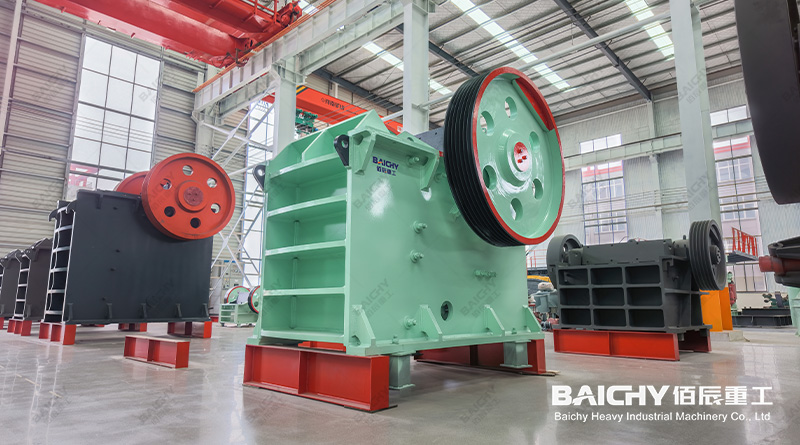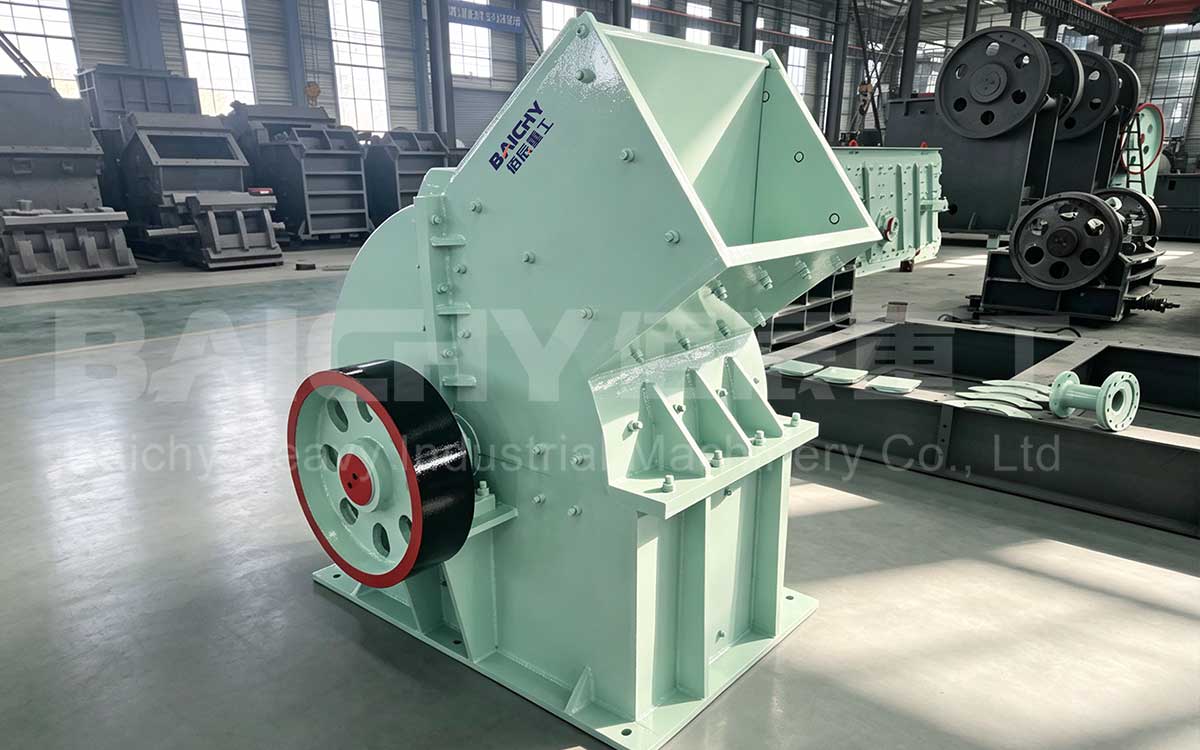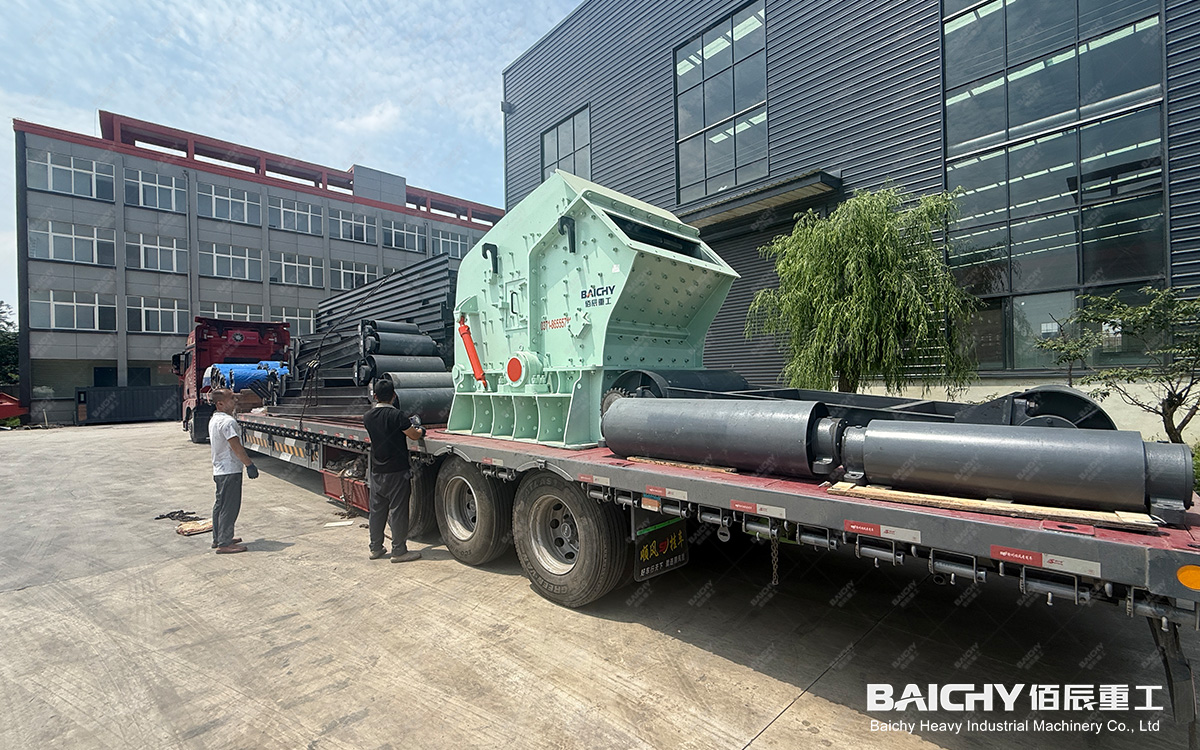
PF1315 impact crusher is being shipped
In modern sand and gravel aggregate production lines, the PF1315 impact crusher (also known as the 1315 impact breaker) is almost a "golden partner" for stone quarries with an hourly output of 200-300 tons. With its excellent aggregate shaping capacity brought by the impact crushing principle, stable processing capacity of 130-250 t/h, and seamless process compatibility with jaw crushers, it has become the preferred model for the secondary crushing (medium crushing) stage of small to medium-sized sand and gravel aggregate production lines. This article will systematically analyze why the PF1315 impact crusher has become a standard configuration for stone quarries and its core value in the processing of materials such as limestone and bluestone.
I. Overview of the PF1315 Impact Crusher
The PF1315 impact crusher belongs to the PF series single-rotor impact crusher. The rotor specifications are Φ1320×1500mm. It uses a high-speed rotating rotor to drive high-chromium hammers to impact, project, and rebound materials through a multiple crushing cycle. Unlike compression crushing (such as cone crushers), impact crushing causes stone to fracture along joint surfaces, producing finished products that are mostly cubic with very low needle-like and flaky content. It has a natural "shaping" effect, making it an ideal processing equipment for high-quality concrete aggregates (C30-C50 and above).
For mainstream stone quarries, primary crushing often uses PE750×1060 or PE900×1200 jaw crushers. Their discharge size (≤350-500mm) perfectly matches the maximum feed size of the PF1315 crusher. This combination forms a classic "jaw crusher + impact crusher" two-stage closed-circuit or two-stage two-closed-circuit process, balancing investment cost and finished product quality.
II. Core Technical Parameters of PF1315 Impact Crusher
The following table shows the reference technical parameters of the standard PF-1315 impact crusher (slight differences may occur depending on different manufacturing standards; please refer to the manufacturer's instruction manual):
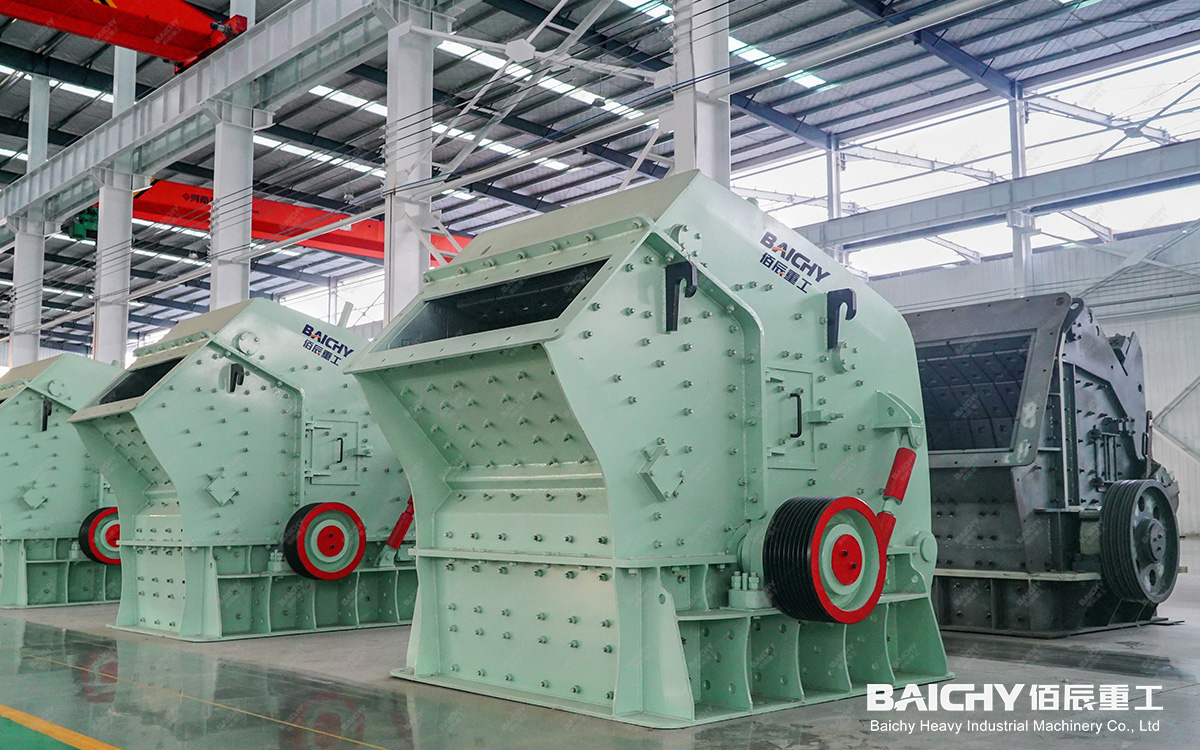
PF1315 Impact Crusher
| Parameter Item | Specification/Value | Description |
| Model | PF-1315 / PF1315 | Single rotor, three-section impact chamber |
| Rotor Diameter × Length | Φ1320 × 1500 mm | High inertia, heavy-duty rotor |
| Feed Inlet Size | 860 × 1520 mm | Wide feed inlet suitable for medium-sized materials |
| Maximum Feed Size | ≤500 mm (soft to medium-hard rock) | Limestone/bluestone up to 500 mm |
| Processing Capacity | 130~250 t/h | Depends on material hardness and discharge requirements |
| Motor Power | 6P 180~200 kW | Commonly used 200kW four-pole/six-pole motor |
| Discharge Size | Adjustable, usually ≤40mm | Adjustable by the gap between the impact plates |
| External Dimensions (Length × Width × Height) | ≈3180 × 2720 × 2620 mm | Including frame, excluding platform |
| Total weight of equipment | ≈24~27 t | Including rotor and liners |
Note: Actual production capacity is affected by the compressive strength of raw materials, moisture content, feeding uniformity, and the return ratio of closed-circuit screening. For hard rock (granite, etc.), it is recommended to reduce production or select a hydraulic cone crusher.
III. Why is PF1315 the "standard equipment" for stone quarries? - Core Advantages Analysis
3.1 Excellent aggregate shaping capability, finished product particle shape comparable to national standard superior grade
PF1315 adopts a three-chamber crushing zone design. The material undergoes multiple impact-rebound-re-impact processes in the crushing chamber. Selective crushing causes cleavage-developed rocks to break along weak surfaces, producing stones that are mostly equiaxed cubic, with needle-like and flaky particle content typically <8%~10% (better than GB/T 14685-2022 Class II/Class I aggregate requirements). It can meet the coarse aggregate particle shape requirements of highways, bridges, and commercial concrete mixing plants without the need for an additional independent shaping machine.
3.2 High crushing ratio, simplified process, reduced investment
The impact crusher can achieve a crushing ratio of i=10~40. For medium-hardness limestone, it can often crush 350mm material into 20~30mm finished product in one pass. Under some operating conditions, it can eliminate a secondary crushing unit, shorten the belt conveyor distance, reduce dust points and civil engineering foundation costs, and reduce the overall investment of the production line by 20%~30%.
3.3 Perfect integration with jaw crusher, strong process compatibility
When the discharge port of the PE750×1060 jaw crusher is adjusted to 100~120mm, ≤500mm pieces in the discharge can directly enter the PF1315 without the need for an intermediate buffer bin. At the same time, the impact crusher does not have a bottom screen plate, making it less prone to clogging for materials with slightly higher moisture content (≤8%), suitable for use in stone quarries in rainy southern regions.
3.4 Convenient Operation and Maintenance, Controllable Lifespan of Wear Parts
Utilizing high-chromium cast iron/high-manganese steel hammers, these machines offer moderate hardness and impact resistance. Under limestone conditions, a single set of hammers can operate continuously for 300-600 hours. Some models are equipped with a hydraulic opening device, allowing for quick replacement of the hammers and impact liners, significantly reducing downtime for maintenance.
3.5 Wide Range of Applicable Materials
In addition to medium-hard rocks (limestone, dolomite, shale, gypsum) with compressive strength ≤350MPa, the PF1315 can also be used for the recycling and crushing of concrete blocks and waste bricks from construction waste, achieving multi-purpose functionality.
IV. Typical Application Scenarios
Limestone/Bluestone Aggregate Production Line: Equipped with a PE750×1060 jaw crusher + PF1315 impact crusher + 3YK/4YK circular vibrating screen, this closed-loop system produces 0-5mm manufactured sand and 5-10/10-20/20-31.5mm high-quality crushed stone, with a stable hourly output of 180-250 tons.
• Highway/Railway Dedicated Aggregate Processing Plant: Requires low-needle-shaped, flaky, and well-graded coarse aggregate. The PF1315 crusher serves as the core of the medium crushing and shaping section, ensuring the finished product meets high-grade concrete aggregate standards.
• Construction Waste Recycling: Urban demolition waste concrete, after iron removal, enters the impact crusher to produce recycled coarse and fine aggregates for roadbed or non-load-bearing blocks.
• Cement Plant/Raw Meal Pre-grinding System: Pre-crushes limestone to reduce the feed particle size to the ball mill and improve grinding efficiency.
V. Typical Production Line Configuration Case (250 tons/hour limestone aggregate)
| Process | Equipment Name | Specifications/Model | Remarks |
| Feeding | Vibrating Feeder | ZSW490×110 | Bar gap soil removal |
| Coarse Crushing | Jaw Crusher | PE750×1060 | Feed ≤630mm, Discharge 100~120mm |
| Medium Crushing (Shaping) | Impact Crusher | PF-1315 | Main unit, processing 130~250t/h |
| Screening | Circular Vibrating Screen | 3YK2460 / 4YK2460 | Three or four layers of grading |
| Conveying | Trough Belt Conveyor | B800/B1000 | Connections at each node |
| Electrical Control | Centralized Control Cabinet | - | Includes motor soft start/integrated protection |
This configuration, under limestone raw material conditions, can stably produce building aggregates of various specifications that meet national standards. It has a short investment recovery period and is the most mature and classic solution for small and medium-sized stone quarries.
VI. Recommended Equipment (Matching or Upgrade Selection)
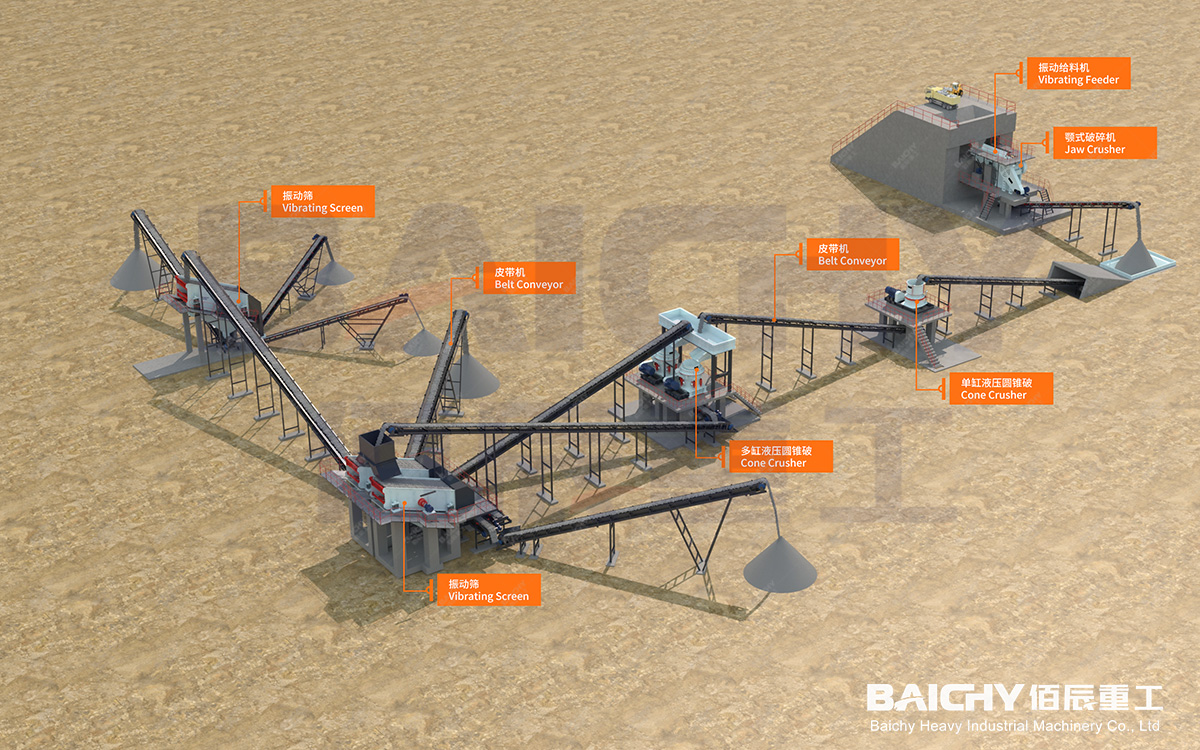
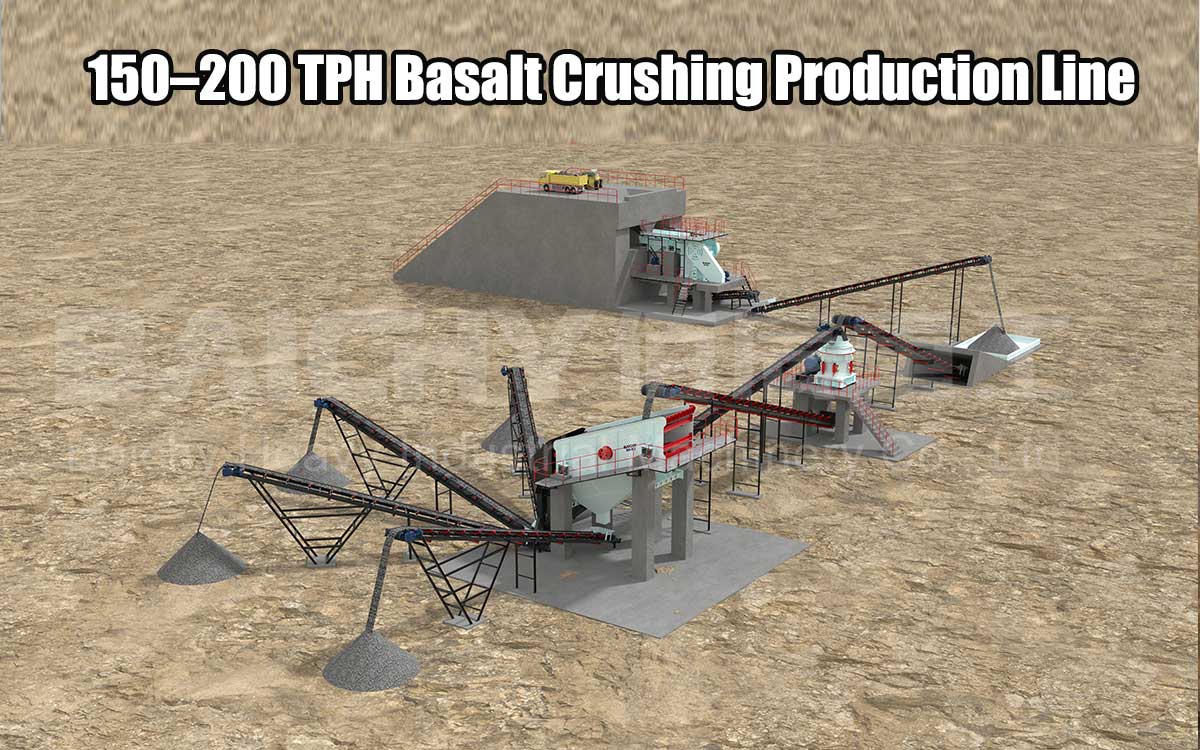
Schematic diagram of stone crushing production line
• PE750×1060 / PE900×1200 Jaw Crusher – First choice for coarse crushing, perfectly matched with PF1315
• PYB1200 / HPT300 Hydraulic Cone Crusher – Replacement or parallel impact crusher in high-hardness granite/basalt production lines, superior wear resistance
• VSI Series Vertical Shaft Impact Crusher (VSI7611/VSI8518) – Matching sand making and fine shaping, improving the gradation of manufactured sand
• 3YK/4YK Series Circular Vibrating Screen – High-efficiency multi-layer grading, ensuring the cleanliness of finished product
• ZSW Series Vibrating Feeder + Dust Removal System – Complete feeding, soil removal, and environmental protection system
VII. Frequently Asked Questions (FAQ)
Q1: Can the PF1315 impact crusher crush granite or basalt?
A: It can crush materials with a compressive strength ≤350MPa, but for high-hardness, highly abrasive granite/basalt, the wear of the hammer plates will be significantly accelerated, resulting in a decrease in production capacity. For such hard rocks, it is recommended to use a hydraulic cone crusher for medium crushing after coarse crushing, or to reserve the PF1315 as a primary shaping unit. The specific method needs to be calculated based on the hardness of the raw materials and operating costs.
Q2: Is one PF1315 sufficient for a 250-ton-per-hour production line? Is it necessary to connect two in parallel?
A: For medium-hard rocks such as limestone, with uniform feeding and reasonable closed-circuit screening return, a single PF1315 can reach a full load of 200-250 t/h, which can meet the demand. If the raw material is harder, requires a margin, or is for future expansion, two PF1214 units can be configured in parallel, or a larger rotor model (such as PF1320/PF1520) can be selected. The specific method depends on the process design.
Q3: How to adjust the output particle size of the PF1315 impact crusher? Can the finished product ratio be controlled?
A: The discharge particle size can be controlled by adjusting the gap between the impact frame and the rotor (screw or hydraulic) and changing the rotor speed (frequency conversion optional); in conjunction with the closed-loop circulation of the multi-layer vibrating screen, the proportions of 0~5/5~10/10~20/20~31.5mm can be flexibly adjusted to meet the different gradation requirements of commercial concrete or asphalt mixing plants.