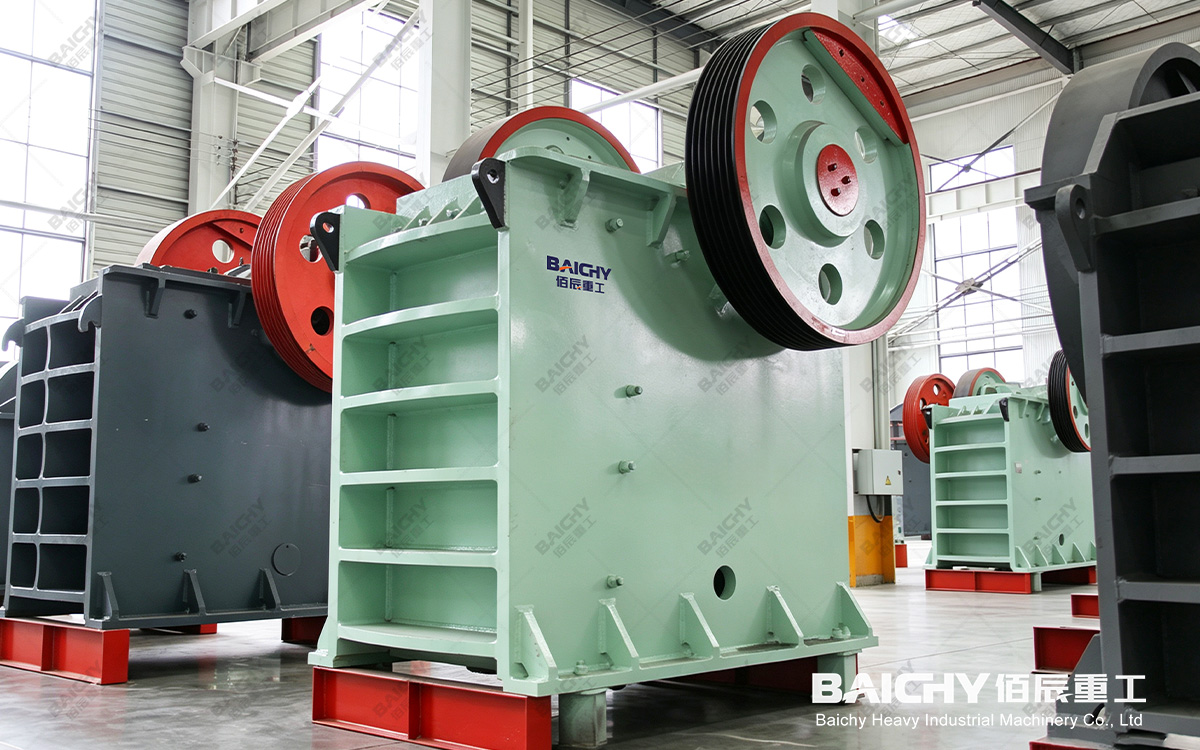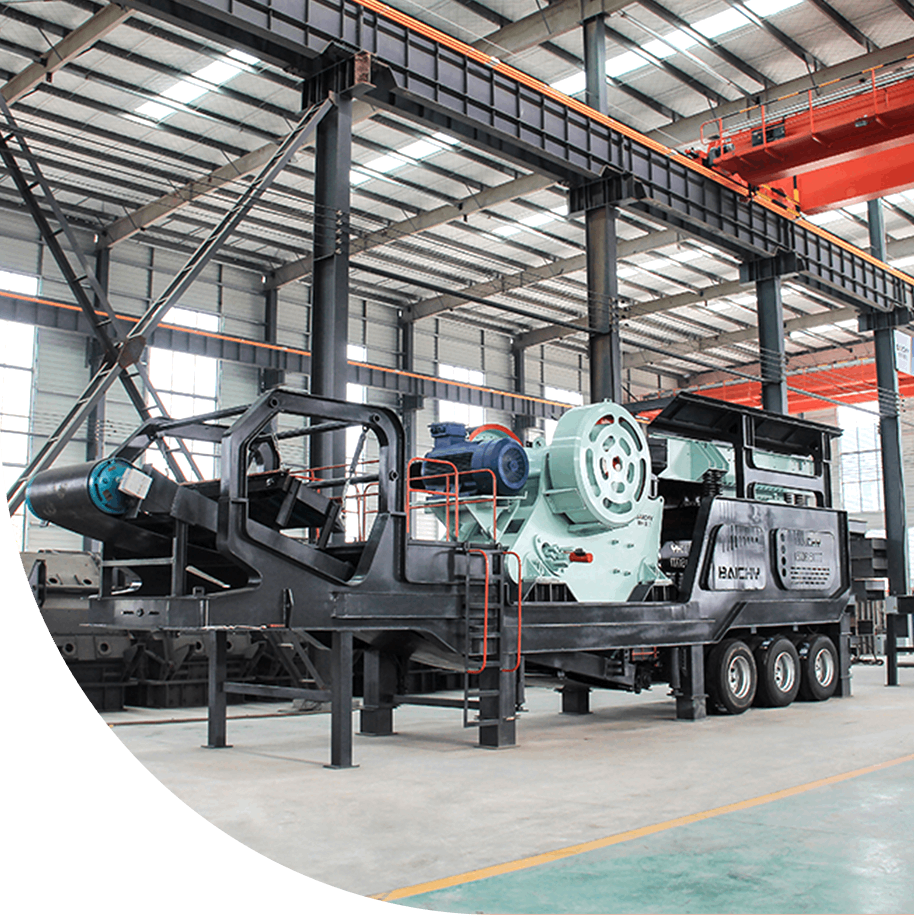

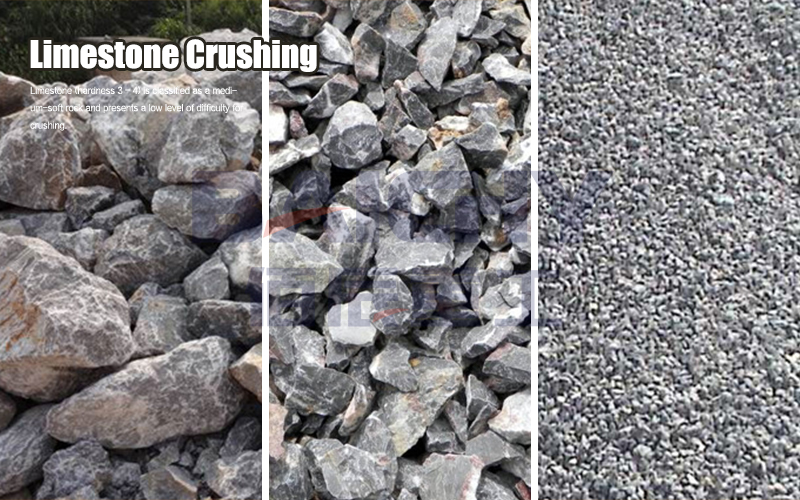
Limestone crushing
Limestone is the backbone raw material of cement plants, quarries, aggregate yards and lime producers around the world. But before it can feed a mill, a kiln or a concrete batching plant, the raw rock — often blasted straight off the quarry face at up to 1,200 mm — must be reduced to precise fractions. That job belongs to the limestone crusher, the heart of every high-efficiency limestone crushing production line.
If you are building a new plant, upgrading an old one, or simply looking for the right crusher model, this guide walks you through every crusher type, a real specification table, selection criteria and practical efficiency tips — all backed by Baichy Heavy Industry's two decades of experience in mining, milling and mineral processing equipment.
What Is a High-Efficiency Limestone Crushing Production Line?
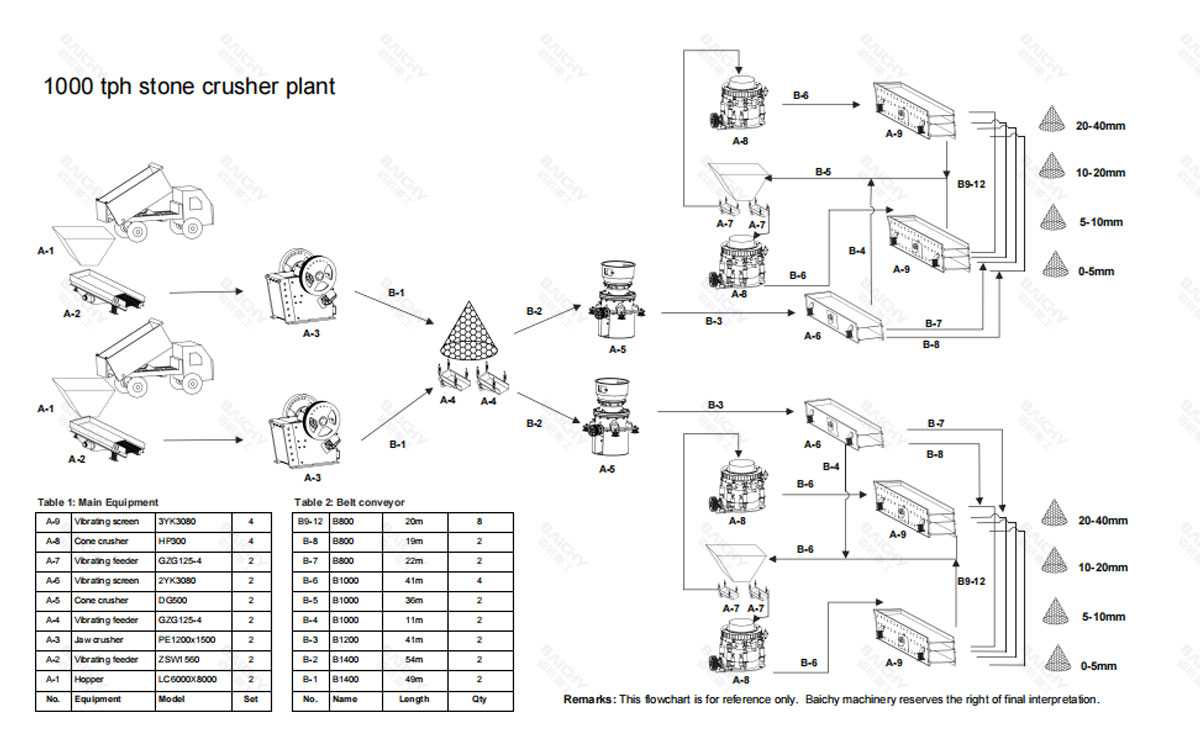
A limestone crushing production line is a complete, interlinked system that turns raw limestone boulders into graded aggregates and sand. It typically combines a vibrating feeder, a primary crusher, a secondary or tertiary crusher, vibrating screens, belt conveyors and a dust collection system. "High-efficiency" means more than high tonnage — it means low energy consumption per tonne, minimal downtime, a cubical and uniform product, and a fully automated, continuous flow from hopper to stockpile.
Typical process flow of a limestone crushing plant:
1. Feeding — A vibrating feeder (e.g. ZSW series) meters raw rock into the primary crusher and removes fines and clay.
2. Primary crushing — A jaw crusher or heavy hammer crusher reduces feed of ≤1,000–1,200 mm to 150–350 mm.
3. Secondary / tertiary crushing — An impact crusher, cone crusher or fine hammer crusher brings material down to 0–50 mm or the exact fraction you need.
4. Screening — Vibrating screens separate the product into grades (0–5 mm, 5–15 mm, 15–30 mm, etc.), with oversized material returned to the crusher in a closed loop.
5. Conveying & stockpiling — Belt conveyors carry finished aggregates to stockpiles, while dust collectors and spray systems keep emissions in check.
Note: For raw limestone (medium-hard, low abrasiveness, compressive strength ≤150 MPa), the industry-standard "jaw + impact" or "heavy hammer + impact" two-stage configuration delivers the best cost-per-tonne performance.
Types of Limestone Crushers for Your Production Line
Choosing the right limestone crusher stage by stage is the single biggest factor in line efficiency. Here are the four main types and exactly where each belongs.
Jaw Crusher — The Primary Workhorse
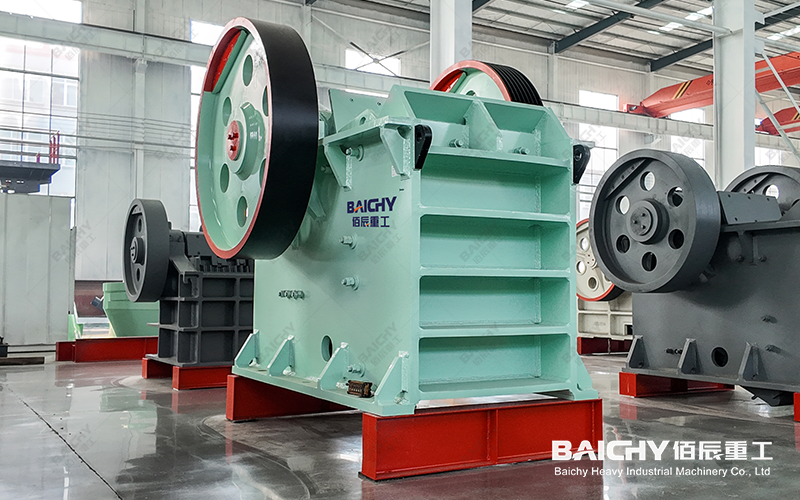
Primary crusher machine - jaw crusher
The jaw crusher is the classic first-stage limestone crusher. Its deep crushing cavity, high-manganese steel jaws and robust eccentric shaft crush large limestone blocks against a fixed jaw plate, delivering a high reduction ratio (4:1–8:1) and reliable, non-stop operation even with hard inclusions. Because it works by compression rather than impact, it tolerates high-moisture or clayey feed far better than impact machines.
- Best for: primary crushing of raw, oversized limestone.
- Capacity range: 5 – 1,000 t/h depending on model.
- Feed size: up to 1,200 mm on large models.
- Why choose it: highest reliability, simplest maintenance, lowest operating cost per tonne.
Impact Crusher — The Shape Perfector
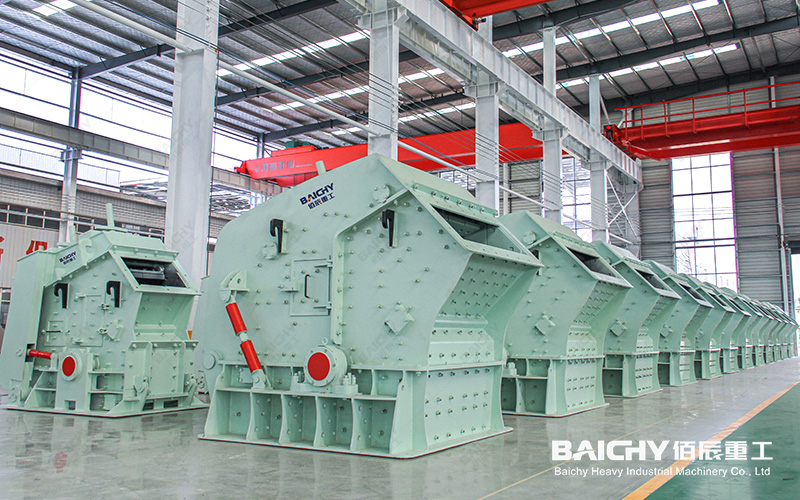
PF Impact Crusher
The impact crusher (PF / PFW series) uses high-speed rotors and impact plates to shatter limestone. It produces an excellent cubical particle shape and a high yield of fine fractions, which is why it dominates secondary and tertiary stages in aggregate production. It is energy-efficient on soft to medium-hard rock, easy to adjust the discharge opening, and ideal when you need 0–50 mm aggregates with a clean, even shape.
- Best for: secondary crushing and shaping limestone into cubical aggregates.
- Capacity range: 30 – 800 t/h.
- Feed size: up to 500–700 mm.
- Why choose it: best particle shape, high reduction ratio, easy size adjustment.
Hammer Crusher — One-Stage Economy
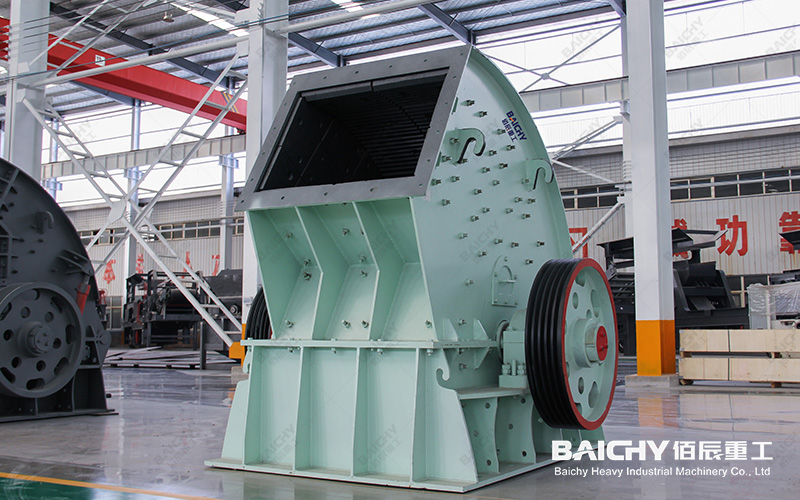
Heavy Hammer Crusher
The heavy hammer crusher (PCZ series) and hammer crusher (PC series) can crush large limestone directly down to finished aggregate in a single pass — no separate secondary stage needed. For cement plants and quarries that process only limestone, this one-stage design dramatically simplifies the line, cuts capital cost and lowers total power consumption.
- Best for: single-stage crushing of limestone in cement and aggregate plants.
- Capacity range: 50 – 1,000 t/h (PCZ series).
- Feed size: up to 1,200 mm.
- Why choose it: lowest equipment cost, compact footprint, fewer conveyors and screens.
Cone Crusher — For Harder or Finished Sand
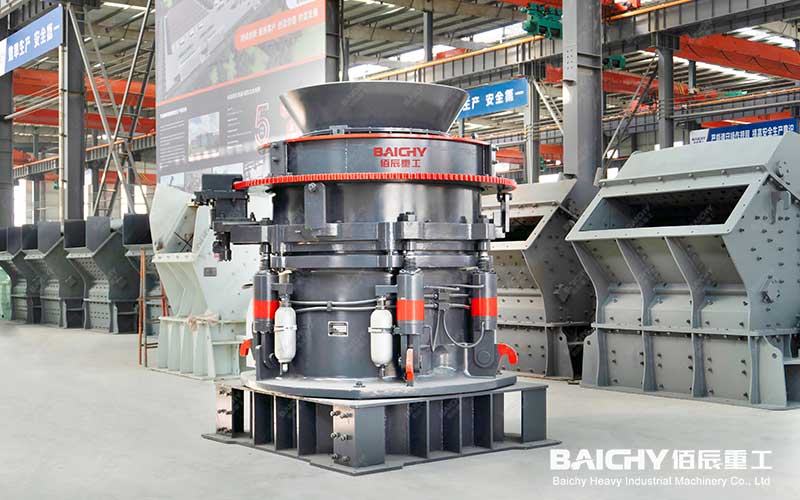
Hydraulic Cone Crusher
The cone crusher is your choice when limestone contains high silica content, or when you need very fine fractions for manufactured sand. It uses a gyrating mantle against a concave bowl to compress material, producing a well-graded, cubical output with low flakiness.
- Best for: fine/tertiary crushing, high-hardness limestone, manufactured sand.
- Capacity range: 20 – 500 t/h.
- Why choose it: precision grading, low operating cost on hard rock, durable wear parts.
Limestone Crusher Parameter Comparison Table
Below is a practical parameter table of representative Baichy limestone crusher models, so you can size your equipment against your actual requirements.
| Stage | Model | Max. Feed Size (mm) | Discharge Range (mm) | Capacity (t/h) | Motor Power (kW) | Core Advantage |
|---|---|---|---|---|---|---|
| Primary | PE400×600 Jaw Crusher | 340 | 40–100 | 16–64 | 30 | Reliable primary crushing, simple maintenance |
| Primary | PE600×900 Jaw Crusher | 500 | 75–200 | 50–180 | 55–75 | High reduction ratio, deep cavity |
| Primary | PCZ1510 Heavy Hammer Crusher | 1,000 | ≤75 | 200–350 | 2×132 | One-stage crushing, low cost per tonne |
| Primary | PCZ1615 Heavy Hammer Crusher | 1,000 | ≤75 | 350–500 | 2×200 | Highest single-stage output |
| Secondary | PF1214 Impact Crusher | 350 | 30–80 | 90–180 | 132 | Cubical particle shape, high yield |
| Secondary | PFW1318 European Impact Crusher | 400 | 25–80 | 200–350 | 200 | Heavy-duty rotor, energy saving |
| Tertiary | PEX300×1300 Jaw Crusher | 250 | 25–60 | 30–105 | 55 | Fine crushing, low flakiness |
| Tertiary | CS160 Cone Crusher | 165 | 16–64 | 90–220 | 160 | Precision grading, durable wear parts |
Note: Actual capacity varies with feed size, moisture, silica content and discharge setting. Contact Baichy for a line design matched to your specific limestone.
How to Choose the Right Limestone Crusher
No single limestone crusher fits every project. Use these four criteria to shortlist your equipment.
1. Feed Size and Target Capacity
Start from your quarry's biggest boulder and your daily output target. If raw rock exceeds 800 mm, you must begin with a jaw or heavy hammer crusher; if your feed is already ≤350 mm, you can skip straight to an impact crusher. Multiply target capacity by a 1.1–1.2 safety factor so the line keeps running through peak loads.
2. Moisture and Abrasiveness of the Limestone
Wet, clayey limestone clogs impact crushers quickly — use a jaw crusher with a chute and bar grizzly instead. If your limestone is high in silica (abrasive), choose wear parts in high-chrome alloy or high-manganese steel, and consider a cone crusher for fine stages to control wear cost.
3. Required Product Size and Shape
Aggregate customers pay a premium for cubical, well-graded stone. If flakiness must stay below 12–15%, the impact crusher is your best shaping tool. For manufactured sand (0–5 mm), add a fine crusher or a sand-making machine in the tertiary stage.
4. Energy Consumption and Automation
High-efficiency limestone crushing means less power per tonne. Modern Baichy lines use variable-frequency drives, centralized PLC control and remote monitoring to trim energy bills by up to 20–30% while protecting operators.
6 Practical Tips to Boost Crushing Line Efficiency
1. Smooth the feed — A well-matched vibrating feeder prevents surges that starve or overload the crusher.
2. Keep the setting tight — Check and adjust the discharge opening daily; a loose setting wastes energy on oversized recirculating material.
3. Match screen apertures to the product — Correct screening reduces recirculating load from 40% down to 15–20%.
4. Pre-remove fines and clay — A grizzly or wet screen ahead of the crusher protects wear parts and boosts throughput.
5. Schedule wear-part rotation — Rotate jaw plates and hammers in batches to avoid uneven wear and unplanned downtime.
6. Invest in dust control — Baghouse filters and spray systems improve safety, extend equipment life and keep you compliant.
Why Choose Baichy Heavy Industry for Your Limestone Crushing Plant
Baichy Heavy Industry is a professional manufacturer of crushing, grinding and mineral-processing equipment. Every limestone crushing production line we deliver is engineered for high efficiency, backed by a complete spare-parts network, and supported by free line design and on-site installation guidance. From a 50 t/h compact plant to a 1,000 t/h quarry line, we configure the jaw, impact, hammer or cone crusher stages that match your rock, your budget and your product spec — and we stand behind them with responsive after-sales service worldwide.
FAQ — Limestone Crusher and Crushing Production Line
Q1: What is the best limestone crusher for primary crushing?
A: For oversized blasted rock (≥800 mm), a jaw crusher or a heavy hammer crusher is best. The jaw crusher offers maximum reliability and handles clayey or moist feed well, while the heavy hammer crusher delivers one-stage crushing at the lowest cost per tonne when the rock is clean.
Q2: How much does a limestone crushing production
A: Cost depends on capacity, configuration and automation level. A 50–100 t/h line is far cheaper per tonne than a 500–800 t/h line because the crushers, screens and conveyors scale non-linearly. Contact Baichy with your capacity and product spec for an accurate quotation.
Q3: What is the difference between an impact crusher and a hammer crusher for limestone?
A: Both use impact force, but an impact crusher has multiple crushing chambers and gives a more uniform, cubical product with adjustable output, while a hammer crusher is simpler, lower-cost and often used for one-stage crushing in cement plants. For high-quality aggregates, the impact crusher wins on shape.
Q4: Can one limestone crusher handle both primary and secondary crushing?
A: Yes — a heavy hammer crusher (PCZ series) can crush large limestone directly to finished aggregate in one pass, eliminating the secondary stage. However, for very large tonnage or demanding product shape, a two-stage "jaw + impact" configuration is still more efficient.
Q5: How do I reduce the recirculating load in my limestone crushing line?
A: Match the vibrating screen apertures to your target product, keep the crusher discharge setting correct, and add a pre-screening grizzly to remove fines before the crusher. Cutting recirculating load from 40% to under 20% can raise line throughput and cut energy use noticeably.
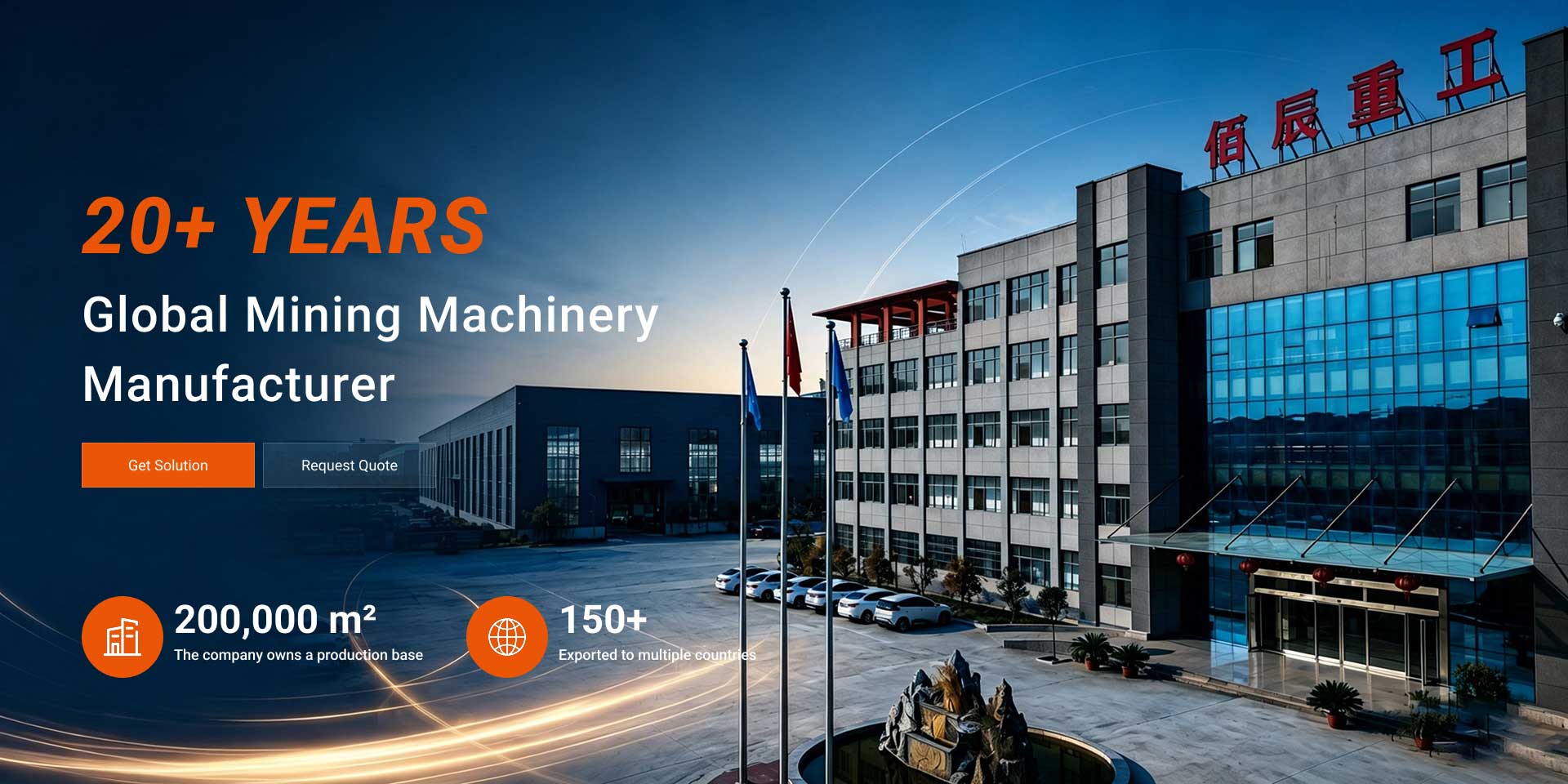
Baichy Heavy Industry
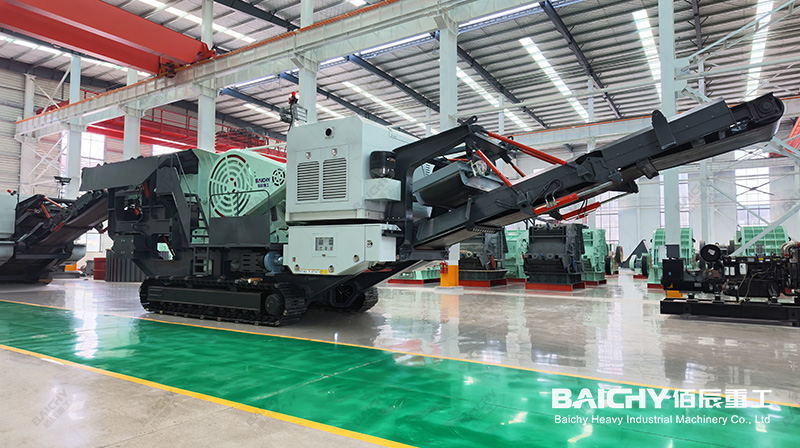
Baichy Heavy Industry is a high-tech mining equipment company integrating R&D, manufacturing, sales, and after-sales service. Focusing on crushing, grinding, and mineral processing equipment, we provide professional solutions to our customers. We are ISO9001:2015 、certified, and our products include mobile crushing palnts, crawler crushing plant, construction waste crushing plants, jaw crushers, sand making machines, cone crushers, fine crushers, grinding mills, ball mills, etc., all with reliable performance to meet diverse project needs.
Baichy Heavy Industry – Your Trusted Partner
To ensure optimal performance of your equipment, Baichy Heavy Industry offers:
- Professional on-site installation guidance
- Comprehensive operator training
- 24/7 technical support & maintenance services
Our complete after-sales service system guarantees long-term, stable operation of your machinery with minimal downtime.
Protect Your Rights – Only Use Official Channels
To avoid scams and ensure authentic support, contact us exclusively through:
• Official Website: www.baichychina.com
• WhatsApp: +8615093222637
• Email: [email protected]
Your satisfaction is our priority – expect prompt, professional service every time.
(Note: Beware of unauthorized third parties claiming to represent Baichy. Always verify through official contacts.)