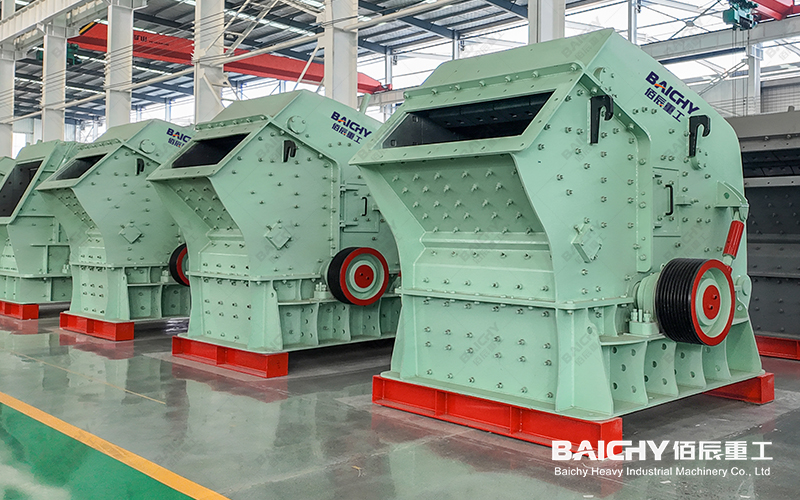
Impact Crusher
What Is an Impact Crusher?
An impact crusher is a high-efficiency crushing machine that uses rapid impact force rather than pressure to reduce materials such as limestone, gypsum, coal, and various ores. As a leading impact crusher manufacturer, Baichy Heavy Industry produces both horizontal shaft (HSI) and vertical shaft (VSI) impact crushers that deliver exceptional reduction ratios and a cubical finished product.
Unlike jaw or cone crushers that compress material between fixed surfaces, an impact crusher accelerates material to high speed and shatters it through repeated collision. This design makes it ideal for medium-hard and brittle rocks with a compressive strength generally up to 350 MPa. Because of its simple structure, low operating cost, and excellent shaping capability, the impact crusher is widely used in mining, quarrying, construction aggregates, and cement industries.
How Does an Impact Crusher Work? Working Principle Explained
Understanding the impact crusher working principle is essential for operators, buyers, and maintenance teams. The crushing process relies entirely on kinetic energy and collision, which can be broken into five clear steps.
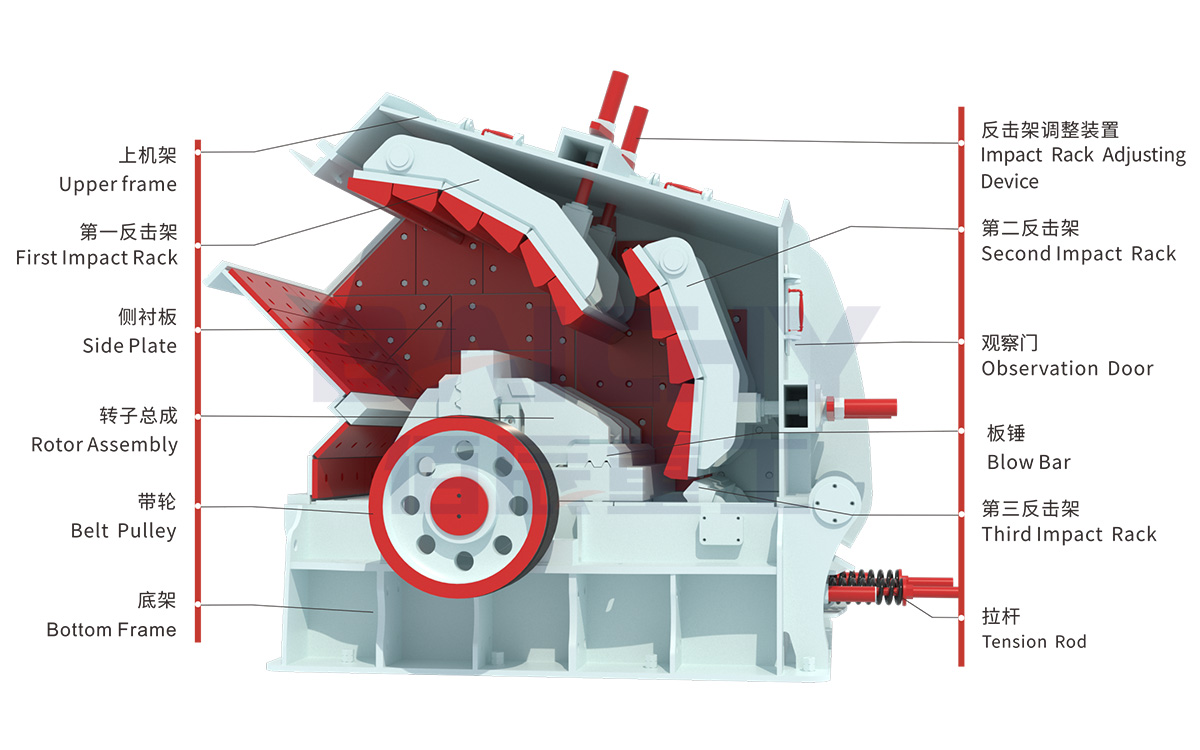
Impact Crusher Working Principle
Step-by-Step Crushing Process
1. Feeding – Raw material enters the crusher through a feed hopper and falls onto the high-speed rotating rotor.
2. Acceleration – The rotor, fitted with blow bars (hammers), spins at high speed and flings the material outward with tremendous kinetic energy.
3. Impact against breaker plates – The accelerated material strikes the impact plates (breaker plates) mounted inside the crushing chamber, breaking along natural fractures.
4. Rebound and re-crushing – Fragments bounce back onto the rotor and are struck repeatedly until they are smaller than the discharge gap.
5. Discharge – Finished particles pass through the adjustable discharge opening between the rotor and the breaker plates.
The impact crusher working principle is essentially "material hit, rebound, and re-hit." This continuous collision produces a well-graded, cubical product with fewer elongated or flat particles, which is a key reason the machine is favored for aggregate production.
Key Components of an Impact Crusher
To select and maintain a reliable impact crusher, you should understand its main parts:
| Component | Function | Material / Feature |
|---|---|---|
| Rotor | Spins at high speed to hurl material | Cast steel, dynamically balanced |
| Blow Bars (Hammers) | Strike and accelerate material | High-chrome / manganese steel, reversible |
| Impact Plates (Breaker Plates) | Break material on collision | Wear-resistant alloy, adjustable angle |
| Feed Chute | Directs material into the chamber | Wear-lined, angled entry |
| Frame / Casing | Supports all components | Heavy-duty welded steel |
| Discharge Opening | Controls final product size | Hydraulic or mechanical adjustment |
| Adjusting Device | Sets gap between rotor and plates | Hydraulic jack / wedge system |
| Drive System | Provides rotor power | Electric motor + V-belt / coupling |
These eight core parts determine throughput, product size, and wear life. High-quality blow bars and impact plates are especially critical because they absorb the most wear during operation.
Types of Impact Crushers: HSI vs VSI
An impact crusher generally falls into two categories, each suited to different applications.
Horizontal Shaft Impact Crusher (HSI)
The HSI impact crusher uses a horizontal rotor and is typically used for secondary and tertiary crushing of soft to medium-hard materials. It delivers high reduction ratios (up to 20:1) and produces a good-shaped product. It is the most common impact crusher type for quarry and recycling applications.
Vertical Shaft Impact Crusher (VSI)
The VSI impact crusher uses a vertical rotor and works as a sand maker or final shaping machine. It is ideal for producing fine aggregates, manufactured sand, and high-quality cubical particles. Although its throughput per pass is lower, its shaping ability is unmatched.
Impact Crusher Parameter Table (Baichy PF Series)
Below is a typical parameter table for Baichy PF-series horizontal shaft impact crushers to help you size your selection:
| Model | Rotor Diameter × Width (mm) | Max Feed Size (mm) | Capacity (t/h) | Motor Power (kW) | Weight (t) |
|---|---|---|---|---|---|
| PF-1007 | 1000 × 700 | 300 | 30–70 | 37–55 | 9.5 |
| PF-1010 | 1000 × 1050 | 350 | 50–90 | 55–75 | 12.2 |
| PF-1210 | 1250 × 1050 | 350 | 70–130 | 110–132 | 15.8 |
| PF-1214 | 1250 × 1400 | 350 | 100–180 | 132–160 | 18.6 |
| PF-1315 | 1320 × 1500 | 350 | 130–250 | 180–220 | 24.8 |
| PF-1320 | 1320 × 2000 | 400 | 160–350 | 250–300 | 32.5 |
*Note: Actual capacity varies with feed size, hardness, and moisture. Contact Baichy for a custom impact crusher solution.*
Applications of the Impact Crusher
An impact crusher is a versatile machine with broad industrial use:
- Mining and ore dressing – crushing limestone, dolomite, gypsum, and iron ore
- Construction aggregates – producing gravel, crushed stone, and manufactured sand
- Cement plants – pre-crushing limestone feed before the raw mill
- Recycling – processing concrete, asphalt, and construction demolition waste
- Coal and chemical industries – handling brittle materials and coke
Because of its strong shaping ability and high reduction ratio, the impact crusher is the preferred choice wherever a high-quality, cubical end product is required.
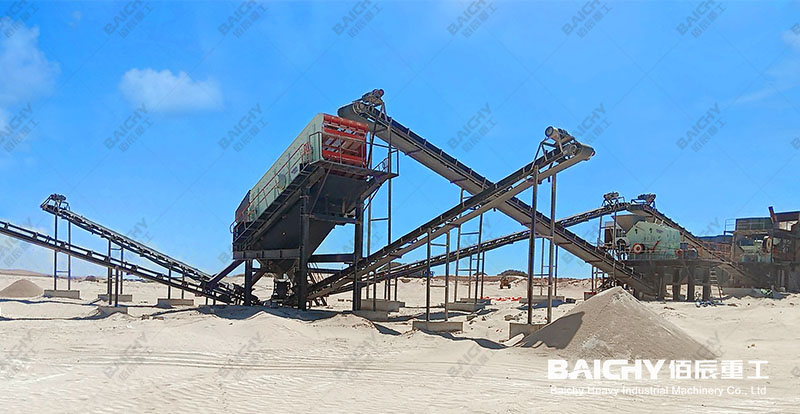
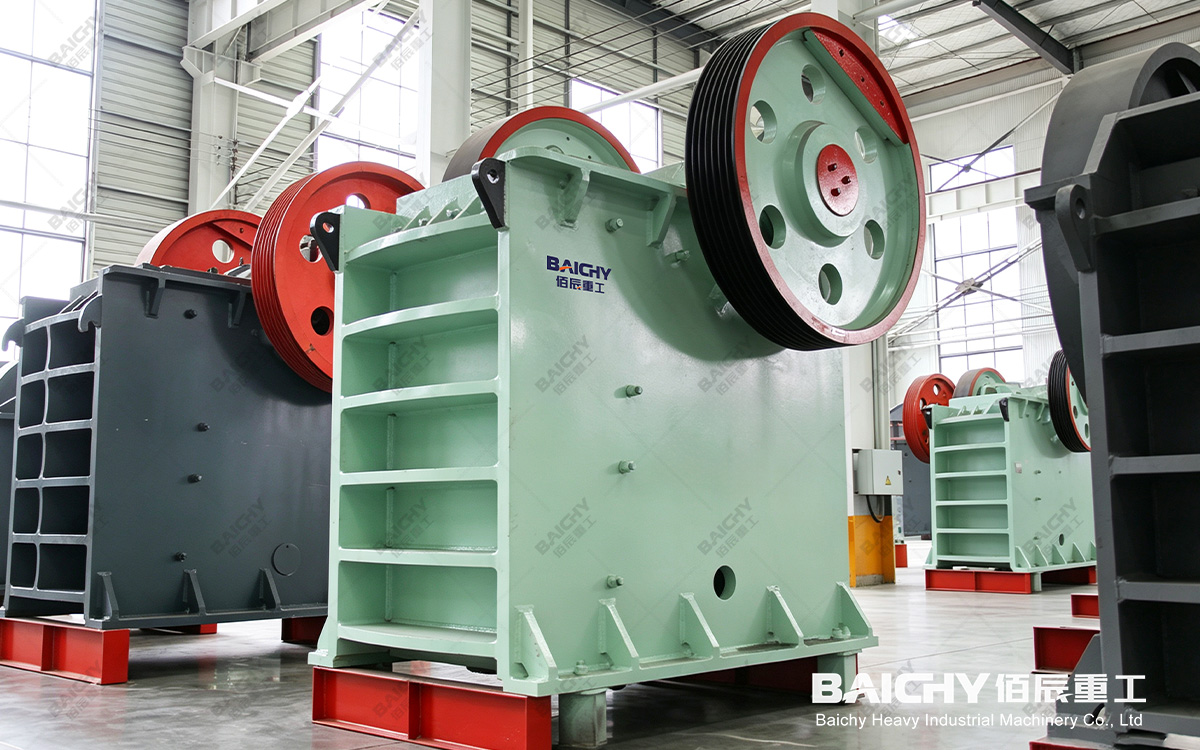
Impact Crusher
Impact Crusher vs Jaw Crusher: Key Differences
Choosing between an impact crusher and a jaw crusher depends on your material and stage:
| Factor | Impact Crusher | Jaw Crusher |
|---|---|---|
| Crushing Principle | Impact force | Compression |
| Feed Hardness | Soft–medium (≤350 MPa) | Hard rock (up to 400+ MPa) |
| Reduction Ratio | High (up to 20:1) | Lower (3:1–6:1) |
| Product Shape | Cubical, well-shaped | Flaky, more elongated |
| Wear Cost | Higher on abrasive rock | Lower |
| Best Use | Secondary/tertiary, shaping | Primary crushing |
In many crushing plants, a jaw crusher performs primary crushing while an impact crusher handles secondary and tertiary stages.
Advantages and Limitations of the Impact Crusher
Advantages:
- High reduction ratio and throughput
- Excellent cubical product shape
- Simple structure and easy maintenance
- Lower capital and operating cost than cone crushers
- Flexible adjustment of output size
Limitations:
- Not ideal for highly abrasive, hard materials (fast blow bar wear)
- Higher noise and dust generation
- Requires regular inspection of wear parts
Understanding these trade-offs helps you decide whether an impact crusher fits your crushing circuit.
How to Choose the Right Impact Crusher
When selecting an impact crusher, evaluate five factors:
1. Feed material hardness and moisture – soft, dry, brittle rock suits impact crushing best
2. Required capacity – match the parameter table to your target tons per hour
3. Desired product size and shape – VSI for fine shaping, HSI for general aggregate
4. Budget and operating cost – compare wear-part replacement frequency
5. After-sales support – choose an experienced impact crusher manufacturer like Baichy
A properly matched impact crusher maximizes uptime and minimizes cost per ton.
Maintenance Tips for Long Service Life
Regular maintenance extends the life of your impact crusher:
- Inspect blow bars and impact plates weekly for uneven wear
- Reverse or replace blow bars before they wear below safe limits
- Check rotor balance after replacing wear parts
- Lubricate bearings on schedule and monitor temperature
- Verify the discharge gap and hydraulic adjustment system periodically
A well-maintained impact crusher delivers consistent output and reduces unplanned downtime.
Impact Crusher FAQs
1. What materials can an impact crusher crush?
It handles medium-hard and brittle materials such as limestone, gypsum, coal, dolomite, concrete, and recycled asphalt, generally with compressive strength up to 350 MPa.
2. Is an impact crusher suitable for hard rock like granite?
It is not the first choice for highly abrasive hard rock because blow bar wear becomes excessive. A jaw or cone crusher is better for granite, basalt, and quartz.
3. What is the difference between HSI and VSI impact crushers?
HSI uses a horizontal rotor for secondary/tertiary crushing and high output; VSI uses a vertical rotor for fine shaping and manufactured sand production.
4. How do I reduce wear on an impact crusher?
Use wear-resistant blow bars, control feed size and hardness, remove metal contaminants, and follow a strict inspection and reversal schedule.
5. How much does an impact crusher cost?
Price depends on model, capacity, and configuration. Small PF-1007 units are affordable for small quarries, while large units require higher investment. Request a quotation from Baichy for accurate pricing.
Baichy Heavy Industry
Baichy Heavy Industry is a high-tech mining equipment company integrating R&D, manufacturing, sales, and after-sales service. Focusing on crushing, grinding, and mineral processing equipment, we provide professional solutions to our customers. We are ISO9001:2015 、certified, and our products include mobile crushing palnts, crawler crushing plant, construction waste crushing plants, jaw crushers, sand making machines, cone crushers, fine crushers, grinding mills, ball mills, etc., all with reliable performance to meet diverse project needs.
Baichy Heavy Industry – Your Trusted Partner
To ensure optimal performance of your equipment, Baichy Heavy Industry offers:
- Professional on-site installation guidance
- Comprehensive operator training
- 24/7 technical support & maintenance services
Our complete after-sales service system guarantees long-term, stable operation of your machinery with minimal downtime.
Protect Your Rights – Only Use Official Channels
To avoid scams and ensure authentic support, contact us exclusively through:
• Official Website: www.baichychina.com
• WhatsApp: +8615093222637
• Email: [email protected]
Your satisfaction is our priority – expect prompt, professional service every time.
(Note: Beware of unauthorized third parties claiming to represent Baichy. Always verify through official contacts.)