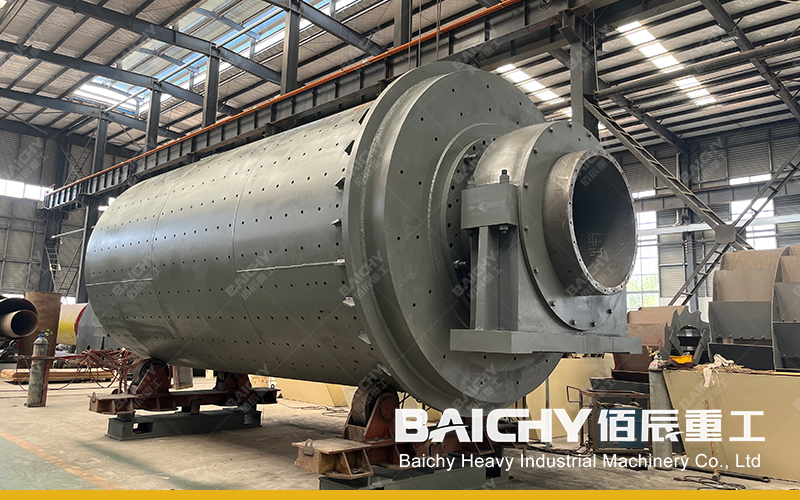
Differences Between Wet and Dry Ball Mills
Why Distinguish Between Wet Grinding and Dry Grinding?
In the mineral processing, building materials, and chemical industries, ball mills are key equipment for material crushing. Based on whether a liquid medium is used during the grinding process, they are mainly pided into wet ball mills and dry ball mills. These two types of equipment are not simply a matter of dry versus wet; their design concepts, applicable scenarios, process flows, and ultimate benefits are significantly different. As a manufacturer of mining crushing equipment with 20 years of experience, we understand that choosing the right grinding method for our customers is the first step towards efficient, energy-saving, and economical production. This article will delve into the core differences between the two, helping you make informed decisions.
Overview: Definitions and Basic Principles
Dry Ball Mill: No water or other liquid is added during the grinding process; the material is directly impacted and ground. The material enters through one end of the mill, is lifted and dropped by steel balls or other grinding media inside the cylinder, achieving a crushing effect through impact and friction. The finished product is discharged as a dry powder from the other end. The system is usually equipped with a high-efficiency dust collection device (such as a bag filter).
Wet Ball Mill: A certain proportion of water, alcohol, or other liquid is added during grinding, forming a slurry. The material is more easily dispersed in the liquid medium, and after being impacted and ground by the grinding media, it is discharged in the form of a slurry. Subsequent dewatering is usually required. The liquid plays multiple roles: assisting grinding, cooling, dust control, and acting as a transport medium.
Advantages Comparison: Detailed Analysis of the Pros and Cons of Wet and Dry Grinding
Advantages of Wet Ball Mills
1. High grinding efficiency and large output: The liquid medium reduces material viscosity and reduces the agglomeration of fine powders, resulting in more thorough grinding. The capacity is usually 20%-30% higher than that of a dry mill of the same specifications.
2. Excellent dust control: The entire process takes place in the liquid phase, completely eliminating dust pollution and safety hazards, resulting in a cleaner working environment.
3. Relatively lower energy consumption: When achieving the same fineness requirements, due to the liquid-assisted grinding, the energy consumption per unit of product is usually lower than that of a dry ball mill.
4. More uniform product particle size: Suitable for processes requiring ultra-fine grinding (below -200 mesh), resulting in a more concentrated particle size distribution.
5. Lower noise and temperature rise: The liquid provides good sound absorption and cooling effects.
Advantages of Dry Ball Mills
1. Simple process flow and lower investment: No need for supporting dewatering equipment such as concentration, filtration, and drying, resulting in a simpler system and smaller footprint.
2. Suitable for materials that are sensitive to water or require dry powder: Such as cement, gypsum, limestone powder, non-metallic minerals, etc., where the final product requires dry powder.
3. No wastewater treatment problems: Avoids the wastewater treatment costs and environmental pressure associated with wet grinding.
4. Potentially lower overall cost in specific fields (such as building materials): Although the energy consumption per unit may be higher, it eliminates complex subsequent processing steps.
Case Study: How to Choose Based on Materials and Process?
Case Study 1: Large Iron Ore Beneficiation Plant in Mexico
Choice: Wet Ball Mill.
Reason: Iron ore has high hardness and needs to be ground to -325 mesh for magnetic separation or flotation. Wet grinding is highly efficient, and the subsequent beneficiation process is inherently wet, eliminating the need for additional dewatering, resulting in a smooth process. Dust control is crucial for protecting worker health.
Case Study 2: Raw Material Preparation Workshop of an Ethiopian Cement Production Group
Choice: Dry Ball Mill (or vertical mill).
Reason: Cement raw materials ultimately need to enter a dry kiln system for calcination, and the material itself is sensitive to water. Using dry grinding directly obtains the required dry powder, avoiding the large drying process, and conforming to the mainstream trend of energy saving and consumption reduction in modern dry-process cement production.
Case Study 3: Ceramic Raw Material Processing Enterprise
Process Section Choice: After coarse crushing of raw materials (feldspar, quartz, etc.), a wet ball mill is used for fine grinding and mixing to obtain a uniform slurry, which is directly used in the pulping process.
Equipment Recommendations and Purchasing Advice
As a leading manufacturer of mining crushing equipment, we recommend that clients evaluate their needs from the following perspectives:
1. Material Properties: Is the material sensitive to water? What are the requirements for the final product form (dry powder or slurry)?
2. Production Scale and Fineness Requirements: Large-scale, ultra-fine grinding tends to favor wet grinding; small to medium-scale, medium-fineness grinding has advantages with dry grinding.
3. Environmental Requirements: The strictness of local regulations regarding dust and wastewater emissions.
4. Overall Process Flow: The compatibility of upstream and downstream processes, whether it's dry in, dry out or wet in, wet out.
5. Investment and Operating Costs: Consider equipment investment, energy consumption, auxiliary equipment (dust removal/dewatering), and operating and maintenance costs.
We can provide design and equipment support from single machines to complete production lines, ensuring maximum return on your investment.
Frequently Asked Questions (FAQ)
Q1: Is a wet ball mill always better than a dry ball mill?
A: Not necessarily. Both have their optimal application scenarios. Better depends on your specific needs. Wet grinding has advantages in efficiency and environmental protection, but dry grinding is irreplaceable for its process simplicity and suitability for water-sensitive materials. The key is suitability.
Q2: Can a dry ball mill be converted for wet grinding?
A: Strongly not recommended. There are differences in structural details (such as discharge end liners, transmission methods, etc.), sealing design, and anti-corrosion treatment between the two. Forcing a conversion will lead to shortened equipment life, low efficiency, and even safety accidents. A specially designed model should be purchased.
Q3: What solutions are available for moisture-sensitive materials that require very fine particle sizes?
A: In this case, we usually recommend using a dry ball mill combined with a high-efficiency classification system (such as an air classifier) to form a closed-loop system, or considering more advanced dry ultra-fine grinding solutions such as vertical grinding mills. We can conduct tests based on your material samples and provide customized solutions.
Perfect after-sales service
Baichy Heavy Industry provides professional on-site guidance for installation, training of workers, and other services to ensure that customers can use the equipment smoothly.
The company has a complete after-sales service system, which can provide customers with timely technical support and equipment maintenance services to ensure the long-term stable operation of the equipment.
To prevent the rights and interests of customers from being infringed, Baichy Heavy Industry reminds customers: please contact our customer service staff through the official website of Baichy Heavy Industry , or add WhatsApp: 15093222637 ; or send an email to: [email protected] , we will get in touch with you as soon as possible and provide you with the most professional service in the industry.

Baichy Heavy Industry
Baichy Machinery is a factory supplier of mining machinery, mainly focusing on stone crushers, powder grinding mills, and mineral beneficiation plants. We can offer you a free design and completed solutions according to your project.
Baichy Heavy Industry has grown into a high-tech mining equipment comprehensive enterprise, integrating R&D, manufacturing, sales, and after-sales service, Passing ISO9001:2015 quality management system certifications. The main products are mobile jaw crushing plants, construction waste crushing plants, PE jaw crushers, VSI sand-making machines, Symons cone crushers, single-cylinder hydraulic cone crushers, PCX high-fine crushers, grinding mills, ball mills, and full sets of beneficiation equipment with an excellent level.