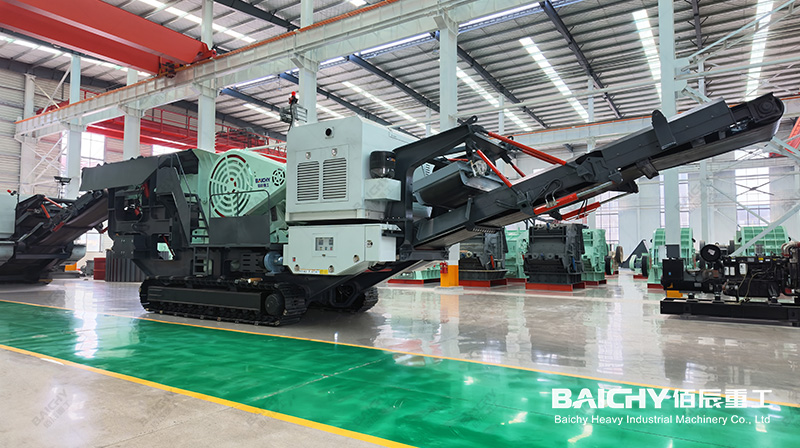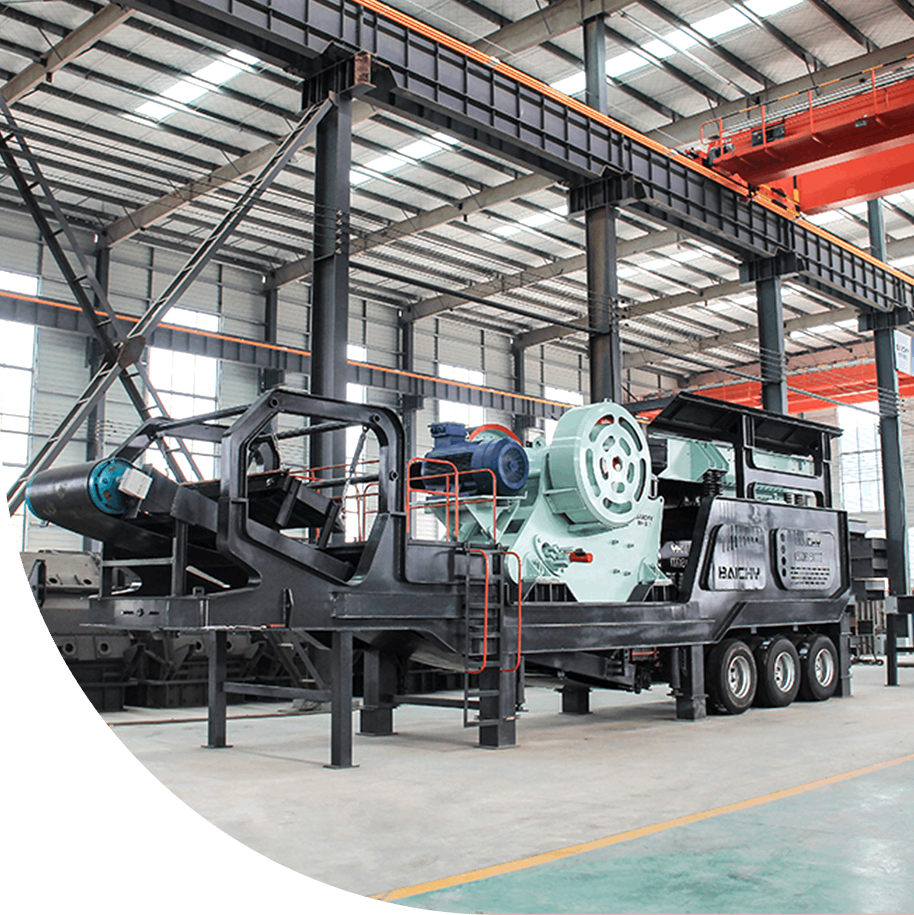

Malaysia has long been the world's leading tin producer, boasting a long history of tin mining and mature technology. In modern tin ore beneficiation processes, crushing is the first and crucial step, directly determining the efficiency of subsequent grinding and separation operations, as well as the final concentrate recovery rate. The cone crusher, as the core equipment in the medium and fine crushing stages, plays an irreplaceable role in Malaysian tin mines due to its unique working principle and superior performance. This article will analyze the application of cone crushers in Malaysian tin mining and discuss how to select suitable equipment to optimize production.
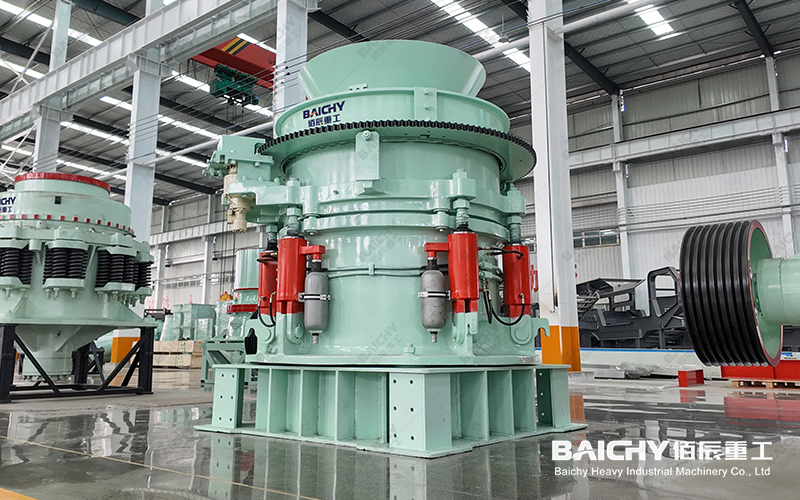
Cone Crusher | Essential for Tin Mining in Malaysia
The Role of Cone Crusher in Tin Ore Beneficiation Process
Tin ore is typically hard and comes in various sizes. The mined ore needs to undergo multiple crushing stages to reduce its particle size to a suitable size for ball mill feed (generally 10-20mm). In this process, jaw crushers are often used as coarse crushing equipment, while cone crushers are mainly responsible for medium and fine crushing operations. It further crushes larger pieces of ore from the primary crusher to the required particle size, acting as a "bridge" between primary crushing and grinding. It plays a decisive role in stabilizing the overall capacity and product particle size distribution of the crushing and screening system.
Working Principle Overview
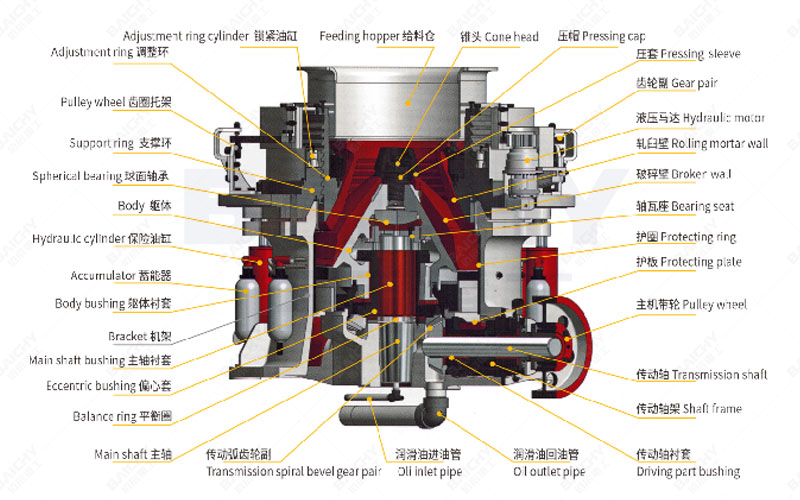
Structural diagram of a multi-cylinder hydraulic cone crusher
The cone crusher works by using an electric motor to drive a horizontal shaft to rotate. This horizontal shaft, via gears or belts, drives an eccentric sleeve to rotate, causing the moving cone to oscillate. The moving cone moves closer to and further away from the fixed cone, subjecting the ore entering the crushing chamber to continuous compression, impact, and bending, thus crushing it. Adjusting the discharge opening size controls the final product particle size.
Key Advantages of Cone Crusher Applications in Malaysian Tin Mines
1. High Crushing Ratio and Excellent Capacity
Compared to other medium and fine crushing equipment, the cone crusher has a higher crushing ratio, meaning fewer crushing stages are needed to achieve the target particle size, simplifying the process. Its layered crushing principle efficiently processes hard ores, offering excellent capacity per unit energy consumption (tons/hour), making it ideal for the continuous large-scale production needs of large tin mines in Malaysia.
2. Excellent Particle Shape and Uniform Particle Size
Laminated crushing subjectes the ore to multiple compressions within the crushing chamber, resulting in fewer flaky and needle-like products and predominantly cubic particles with a more uniform particle size distribution. This not only improves subsequent grinding efficiency and reduces grinding energy consumption but also creates favorable feeding conditions for gravity separation (such as shaking tables and jigs for tin beneficiation), contributing to improved liberation and recovery rates of cassiterite.
3. Stable Operation and High Reliability
Modern hydraulic cone crushers are generally equipped with hydraulic clearing systems, iron overload protection devices, and automatic control systems. When encountering uncrushable foreign objects (such as iron blocks), the hydraulic system can quickly release pressure and discharge the material, protecting the core components of the equipment from damage. This high reliability greatly ensures the continuous and stable operation of Malaysian mines in humid and hot environments, reducing unplanned downtime.
4. Relatively Convenient Maintenance and Controllable Operating Costs
Modular design makes the replacement of vulnerable parts (such as liners) easier. By selecting appropriate crushing chambers and controlling the process, the service life of wear-resistant parts can be effectively extended, thereby reducing the crushing cost per ton of ore. The long-term overall operating cost (OPEX) becomes more competitive.
Real-world application case study:
• Case location: A large open-pit tin mine in Perak, Malaysia
• Ore characteristics: Granite-type primary tin ore, Protodyakonov hardness f=12-14, maximum particle size approximately 500mm.
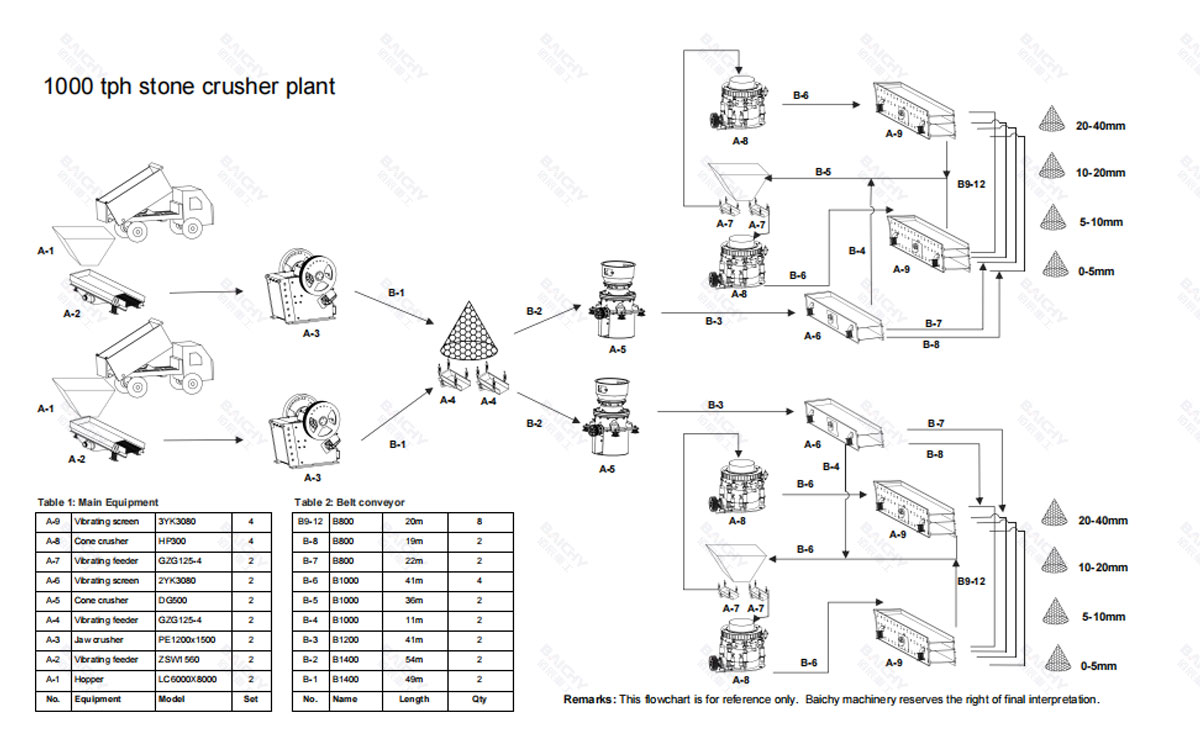
• Process flow: A three-stage closed-circuit crushing process is adopted, consisting of a jaw crusher (coarse crushing) + a single-cylinder hydraulic cone crusher (medium crushing) + a multi-cylinder hydraulic cone crusher (fine crushing).
• Equipment selection: One high-capacity single-cylinder hydraulic cone crusher is used for medium crushing, and two multi-cylinder hydraulic cone crushers focusing on particle shape control are used for fine crushing.
• Application results: The final crushed product particle size is stable at -12mm, and the fine particle content is controllable, providing ideal feed for subsequent ball milling. The system's hourly processing capacity met design requirements, the equipment operated smoothly, and the liner lifespan exceeded expectations, significantly reducing the crushing cost per ton of ore and helping the mine achieve its goals of high efficiency and economy.
Recommended Cone Crusher Selection for Malaysian Tin Mines
When selecting a cone crusher, it is necessary to comprehensively consider ore hardness, abrasiveness, feed particle size, required product particle size, expected capacity, and investment budget.
1. Single-cylinder hydraulic cone crusher: Compact structure, simple maintenance, high capacity, suitable for medium crushing operations or fine crushing stages where product particle shape requirements are not extremely stringent, offering excellent cost-effectiveness.
2. Multi-cylinder hydraulic cone crusher: Utilizes multiple hydraulic cylinders to provide crushing force, resulting in steeper crushing walls, achieving finer discharge and better particle shape. Ideal as a fine crushing device in closed-loop systems, it is an ideal choice for improving final product qualification rate and optimizing mill feed.
3. Fully hydraulic cone crusher: High degree of automation, rapid adjustment and overload protection response, suitable for modern large-scale mines with extremely high requirements for intelligent equipment control and stability.
It is recommended to conduct detailed ore and rock identification and crushing tests before selecting a crusher, and to fully communicate with the equipment supplier's engineers to determine the most suitable parameters such as chamber shape, eccentricity, and speed.
Frequently Asked Questions (FAQ)
1: Why does Malaysian tin mining tend to use cone crushers instead of other crushing equipment?
This is mainly due to the high hardness of tin ore and the requirements for product particle shape. Compared to impact crushers, cone crushers (especially multi-cylinder hydraulic types) have longer wear-resistant component life when crushing hard rock, lower operating costs, and produce more uniform particle size with less needle-like and flaky content, which is more beneficial for subsequent gravity beneficiation processes, resulting in better overall technical and economic performance.
2: How to extend the service life of the wear-resistant liners of a cone crusher when processing Malaysian tin ore?
The key is "full filling." Ensure the crushing chamber is fully filled with ore to form an effective material layer for crushing, reducing direct impact and sliding friction between the liner and the ore. Meanwhile, the liner material (such as high manganese steel, alloy steel, etc.) should be selected appropriately based on the abrasiveness of the ore, and the discharge port should be checked and adjusted regularly to maintain balanced wear.
3: Our mine's power supply is unstable. Can the cone crusher be adapted to a generator or different voltages?
Yes. Modern cone crushers' drive motors, hydraulic systems, and control systems are typically designed with a certain voltage fluctuation range in mind. However, to ensure equipment performance and lifespan, it is recommended to equip it with a suitable voltage stabilizer or transformer. When relying entirely on generator power, it is necessary to ensure that the generator has sufficient power margin (usually 1.3-1.5 times the equipment's rated power) and can provide stable frequency and voltage power. Specific technical details should be confirmed with the equipment manufacturer.
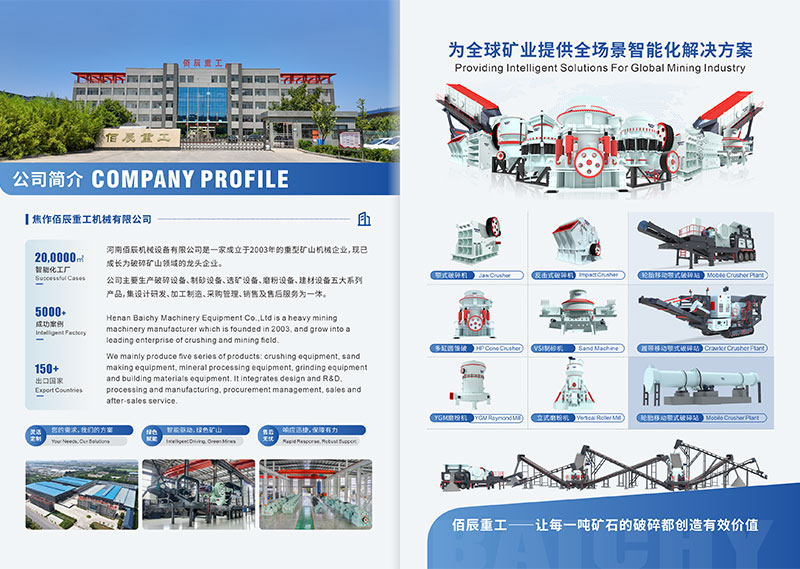
About of Baichy Heavy Industry
Baichy Heavy Industry is a high-tech mining equipment company integrating R&D, manufacturing, sales, and after-sales service. Focusing on crushing, grinding, and mineral processing equipment, we provide professional solutions to our customers. We are ISO9001:2015 、certified, and our products include mobile crushing palnts, crawler crushing plant, construction waste crushing plants, jaw crushers, sand making machines, cone crushers, fine crushers, grinding mills, ball mills, etc., all with reliable performance to meet diverse project needs.
Our advantages:
• Professional pre-sales support: Free project design and comprehensive solutions to help you accurately select the right equipment;
• Comprehensive on-site service: Providing installation guidance and worker training to ensure smooth equipment commissioning;
• Reliable after-sales guarantee: A complete after-sales system, timely response to technical inquiries and equipment maintenance, ensuring long-term stable operation.
To protect your rights, please contact us through the following official channels for professional service:
Official Website Customer Service
WhatsApp: 0086-15093222637
Email: [email protected]
We are committed to providing high-quality equipment and full-cycle services to deliver comprehensive intelligent solutions for the global mining industry!