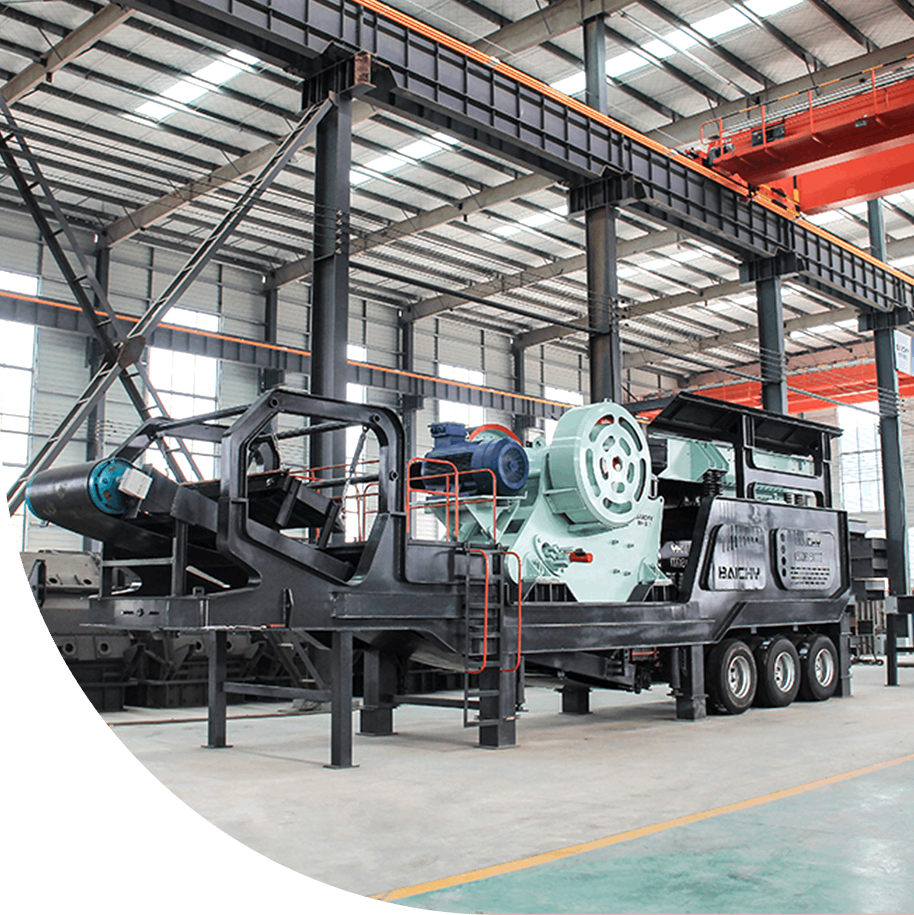

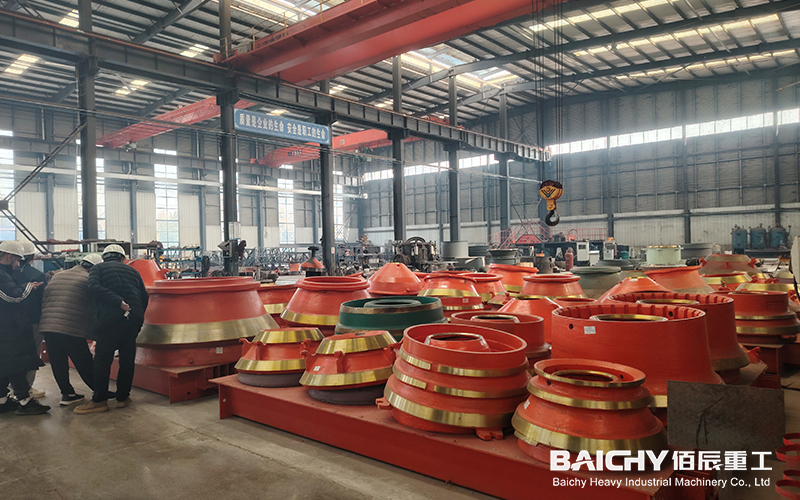
Cone crusher broken wall
In the field of ore crushing, the term "concave crusher" is frequently used to refer to a critical stationary component within a cone crusher—the concave liner—or, by extension, to the entire machine that utilizes this core design. It serves not only as the heart of the equipment's wear-resistant system but also as the pivotal factor determining crushing efficiency, product particle shape, and overall equipment stability. As a professional manufacturer of mining equipment, we will delve into how the concave crusher has established itself as an indispensable tool for crushing hard rock.
I. Core Overview: More Than Just a Liner
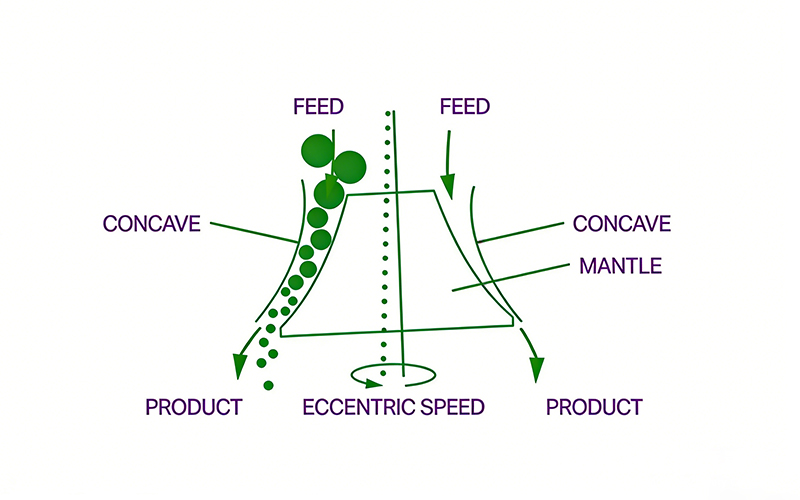
Typically, when people speak of a "concave crusher," they are primarily referring to the stationary crushing wall assembly of a cone crusher—specifically, the concave liner installed within the adjustment ring. Together with the moving cone liner (which performs an gyratory motion), it forms the crushing chamber. Within this chamber, raw materials are continuously compressed and impacted until they are broken down. A high-quality concave crusher liner signifies a superior chamber profile design, extended service life, and consistent output quality; consequently, clients often use this term to encapsulate their high expectations regarding the durability and performance of the equipment.
When viewed from the perspective of the complete machine, a superior cone crusher is invariably equipped with an optimally designed concave structure. This ensures the efficient realization of the "inter-particle crushing" (or lamination) principle, thereby producing aggregates with excellent particle shape and minimal needle-like or flaky content.
II. Core Advantages: Why Focus on Concave Design?
Concave Crusher
Selecting equipment that prioritizes the design and material composition of the concave crusher yields multiple significant advantages for the production line:
1. Exceptional Wear Resistance and Longevity: By utilizing high-manganese steel, ultra-high-manganese steel, or composite alloys—and further optimizing these materials through heat treatment processes—the concave liner achieves exceptional hardness and toughness. This enables it to withstand severe abrasive wear, thereby drastically reducing the frequency of replacements and minimizing downtime.
2. Optimized Crushing Chamber Profile: The chamber profile curves are meticulously designed to suit specific crushing stages (coarse, medium, or fine). This ensures that materials undergo the most effective compression and impact between the concave liner and the moving cone, resulting in high throughput and an ideal crushing ratio.
3. Consistent Output Granularity: A robust and uniformly wearing concave liner maintains the integrity of the crushing chamber profile over extended periods. This guarantees a stable discharge opening size, ensures a tight distribution of product particle sizes, and simplifies overall quality control.
4. Higher Cost-Effectiveness: Although the initial investment may be slightly higher, the extended service life of the concave crusher liners significantly reduces the cost of wear parts per ton of output, thereby enhancing the overall Return on Investment (ROI) in the long run.
III. Key Parameters and Application Scenarios
The performance of a concave crusher is inextricably linked to the specific machine model and the design of its crushing chamber. The table below presents several cone crusher models tailored to meet varying production capacity requirements, along with their key parameters; at the core of each model lies a set of high-performance concave crusher components.
| Equipment Model | Recommended Feed Size (mm) | Processing Capacity Range (t/h) | Main Motor Power (kW) | Compatible Concave Liner Type | Typical Application Materials |
| HCC-160 | 130 | 60–180 | 160 | Standard Coarse/Medium Chamber | Limestone; Secondary Crushing of Medium-Hardness Ores |
| HCP-400 | 290 | 220–580 | 315 | High-Efficiency Coarse/Fine Chamber | Granite, River Pebbles, Basalt; Secondary & Tertiary Crushing |
| HCS-500 | 330 | 450–1200 | 400 | Super-Coarse/Extra-Fine Chamber | Large-scale Sand & Aggregate Production Lines; Secondary Crushing in Metal Mines |
Wide-Ranging Application Fields:
• Sand & Aggregate Production: Serving as the core secondary and tertiary crushing equipment in production lines for granite, basalt, and river pebbles, ensuring the high quality of the final construction aggregates.
• Metal Mining & Beneficiation: Crushing materials such as iron ore, copper ore, and gold ore to provide ball mills with feed material of uniform particle size, thereby improving the efficiency of grinding and beneficiation processes.
• Cement & Building Materials Industry: Crushing limestone, clinker, gypsum, and similar materials to meet the requirements for raw meal preparation and cement production.
• Engineering & Construction: Providing a stable and ample supply of high-quality crushed stone for infrastructure projects such as highways, railways, ports, and dams. IV. Proven Success Stories
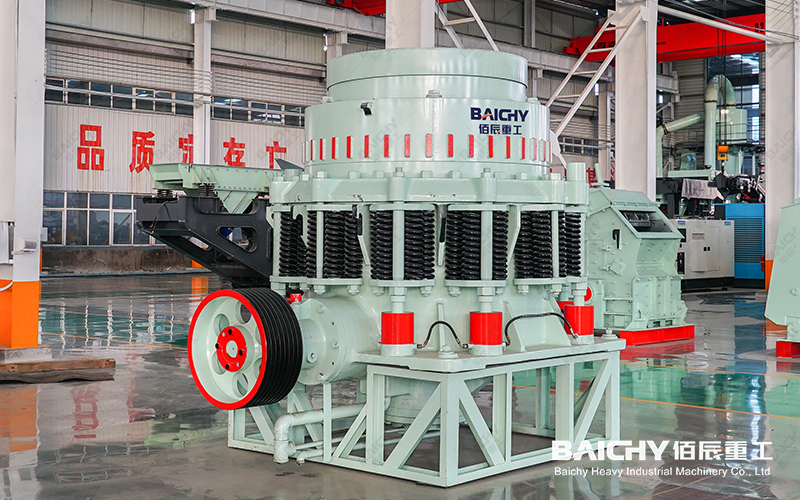
Symons Cone Crusher
Case Study 1: A Large-Scale Granite Aggregate Project in Vietnam
The concave liners on the client's original production line's cone crusher experienced extremely rapid wear, requiring a shutdown for replacement every two weeks—a situation that severely disrupted production. After upgrading to our HCP-400 crusher—equipped with our new, ultra-high manganese steel concave liners—the liner service life under identical granite processing conditions extended from 15 days to over 45 days. Consequently, the cost of wear parts per unit of output dropped by more than 50%, while annual production volume increased by approximately 25%.
Case Study 2: Iron Ore Crushing System Upgrade in Southwest China
The equipment in this iron ore mine's crushing plant was aging, leading to severe over-crushing of the product. We provided a comprehensive, end-to-end solution—including our HCS-500 cone crusher—featuring a specially designed concave crushing chamber profile. This design effectively minimized the generation of fine dust, resulting in a more optimal feed size for the subsequent grinding stage. Ultimately, this led to an 18% increase in the hourly throughput of the beneficiation plant's ball mills, alongside a significant reduction in energy consumption per ton of ore processed.
V. Recommended Ancillary Equipment
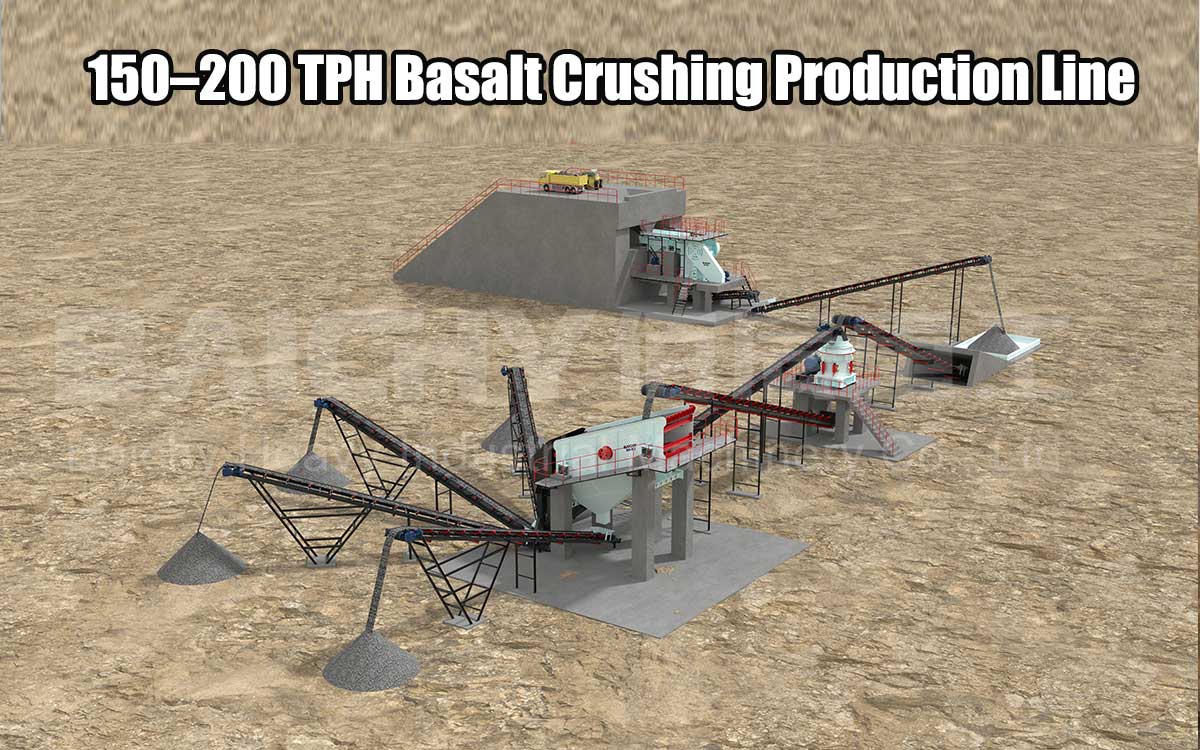
To complement a high-performance concave crusher (cone crusher), an efficient crushing production line typically comprises the following components:
1. Heavy-Duty Vibrating Feeder: Ensures a continuous, uniform, and controllable feed into the concave crusher—a prerequisite for achieving optimal performance.
2. Jaw Crusher (Primary Crushing): Serves as the primary crusher, reducing large blocks of raw ore to a size suitable for feeding into the cone crusher.
3. Multi-Deck Circular Vibrating Screen: Precisely classifies the crushed material, enabling closed-circuit operation or the simultaneous production of finished products in various size specifications.
4. Belt Conveyor System: Connects the various processing stages, serving as the vital artery for continuous, automated production.
5. Centralized Electrical Control and Intelligent Monitoring System: Provides real-time monitoring of key parameters—such as the concave crusher's main motor power, oil temperature, and oil pressure—to facilitate intelligent operation and maintenance.
VI. Frequently Asked Questions (FAQ)
Q1: Must the concave liner and the mantle (moving cone liner) be replaced simultaneously?
A1: It is strongly recommended that they be replaced at the same time. Although wear rates may sometimes be uneven, replacing only one side of the liners alters the geometry of the crushing chamber. This severely compromises crushing efficiency and product shape, and may even accelerate the uneven wear of the new liner—making it an uneconomical choice in the long run. Maintaining a matched chamber profile is critical to the efficient operation of a cone crusher.
Q2: How can one determine if a concave liner needs to be replaced?
A2: The decision is primarily based on three factors:
1) Decreased Throughput: With the discharge setting remaining constant, the main motor amperage drops significantly, or the material output declines noticeably;
2) Deteriorated Product Shape: The proportion of flaky or needle-like particles in the discharge increases, and the particle size distribution becomes unstable;
3) Physical Inspection: Periodically shut down the crusher to measure the remaining thickness of the liners; when the thinnest section has worn down to 60%–70% of its original design thickness, a scheduled replacement should be considered.
Q3: Are there more wear-resistant solutions available for cone crusher concaves when processing highly abrasive materials?
A3: Yes. In addition to selecting higher-grade special alloy steels (such as the TIS series of ultra-high manganese steel), one can opt for composite-cast liners or liners embedded with carbide inserts. When processing materials with high quartz content—such as granite or certain types of iron ore—these reinforced concave liners can offer a service life that is 50% to 100% longer than that of standard liners.