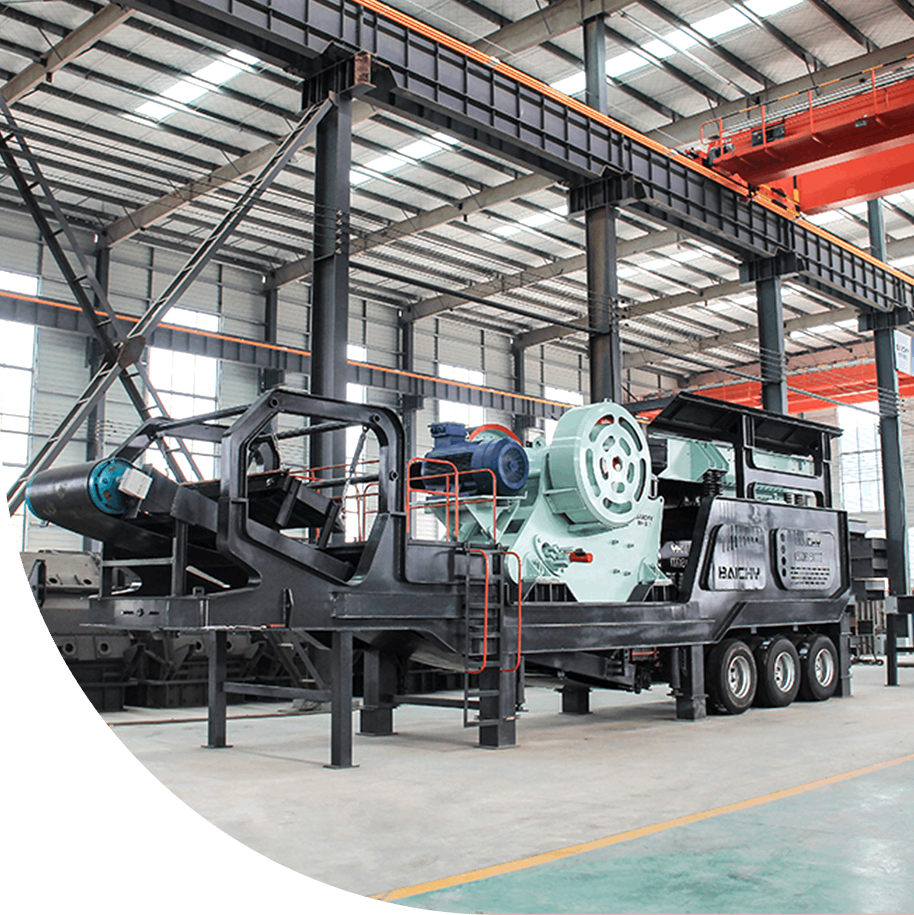

In industries such as building materials, metallurgy, and chemicals, limestone is a crucial basic raw material, and its efficient crushing is the cornerstone of efficient production line operation. For customers planning to build a limestone crushing production line with an annual output of 100,000 tons (approximately 300-350 tons per day), selecting suitable crushing equipment is paramount. This not only relates to initial investment costs but also profoundly impacts long-term production efficiency, operational stability, and overall benefits. This article will provide an in-depth analysis of the process and core equipment for limestone crushing at this production scale, offering professional reference for your investment decisions.
Overview of a 100,000-ton-per-year Limestone Crushing Production Line
A 100,000-ton-per-year limestone crushing project is a medium-scale stone processing production line. Its core objective is to process large raw ore (typically ≤500mm in size) through multi-stage crushing and screening into various specifications of finished aggregates suitable for downstream applications, such as 0-5mm, 5-10mm, 10-20mm, and 20-31.5mm.
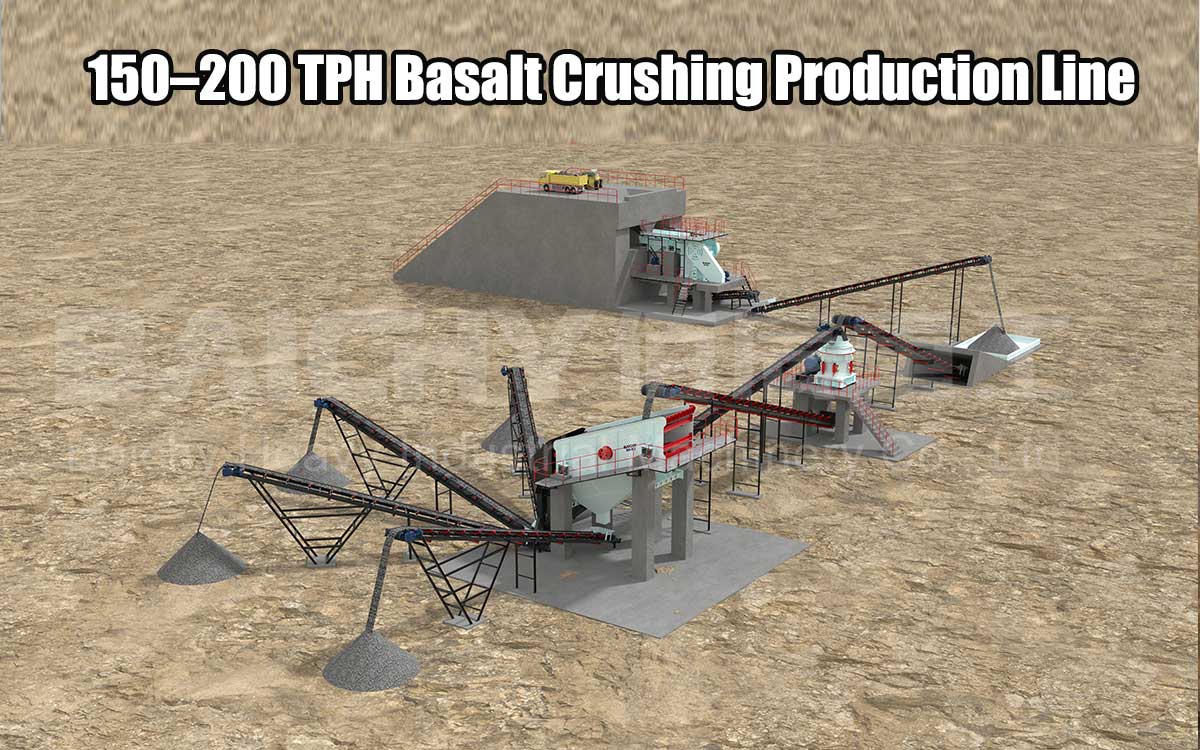
To achieve this goal, a typical process flow usually includes: feeding, coarse crushing, medium and fine crushing, screening, and conveying. The core of equipment selection lies in matching production capacity, controlling product particle shape, and reducing energy consumption and wear costs. Given the medium hardness and relatively brittle nature of limestone, equipment selection should prioritize efficiency and yield while ensuring crushing force.
Core Crushing Equipment Recommendations and Advantages Analysis
Based on the principles of "more crushing, less grinding" and energy efficiency, we have designed the following core equipment configuration scheme for a 100,000-ton-per-year limestone crushing production line.
Primary Crushing Stage: Jaw Crusher
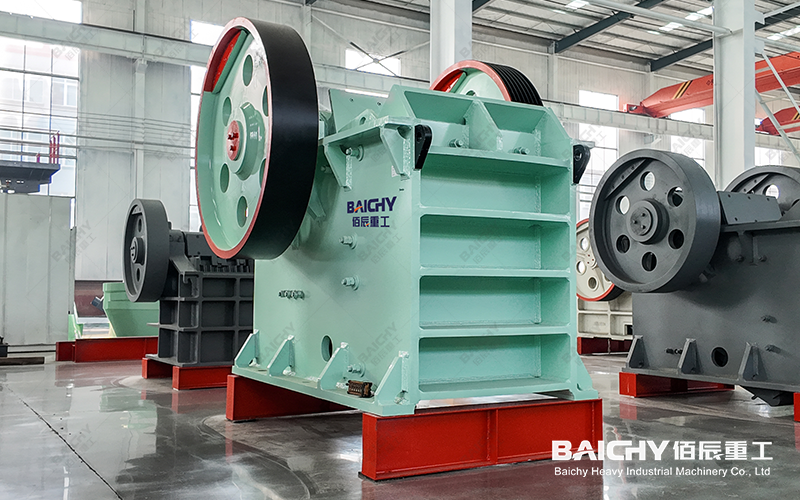
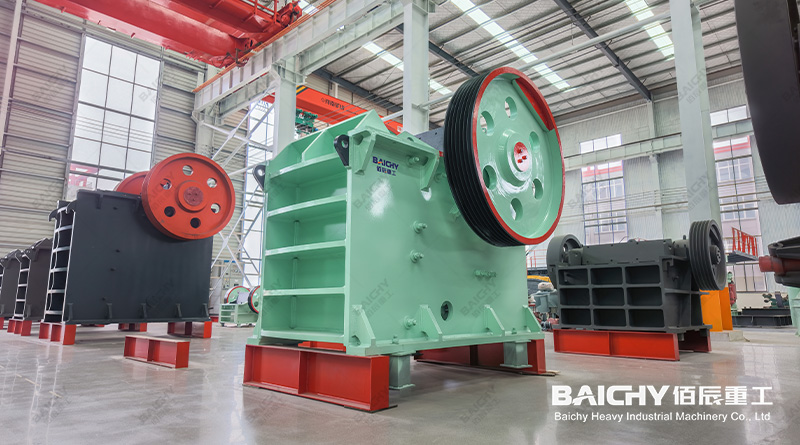
Primary Jaw Crusher
As the "pioneer" of the crushing line, it is responsible for the first crushing of the raw ore.
• Recommended Model: PE-600×900 or PE-750×1060 Jaw Crusher
• Feed Size: ≤500mm
• Discharge Size: 100-180mm (adjustable)
• Key Advantages:
◦ Robust structure and strong adaptability: Capable of handling larger particle sizes of raw ore, insensitive to material moisture and mud content, and reliable operation.
◦ High crushing ratio: A high initial crushing ratio reduces the load on subsequent crushing stages.
◦ Easy maintenance: Simple structure, easy replacement of core wear-resistant parts, and controllable operating costs.
Medium and fine crushing stage: Impact crusher or high-efficiency hydraulic cone crusher
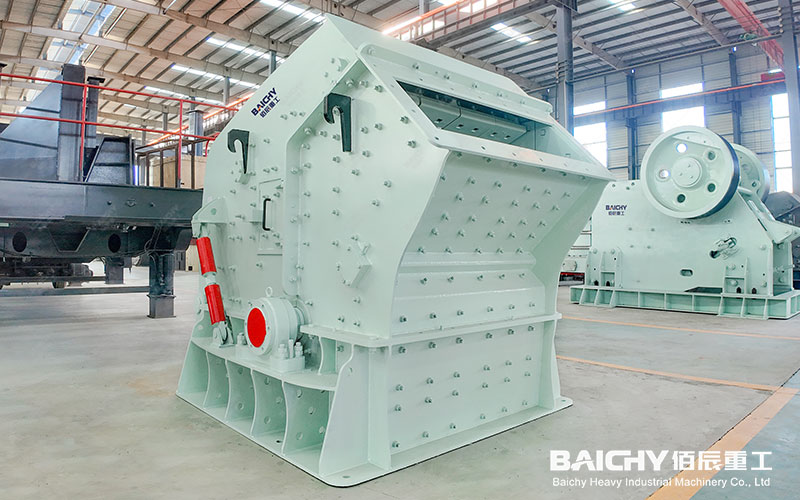
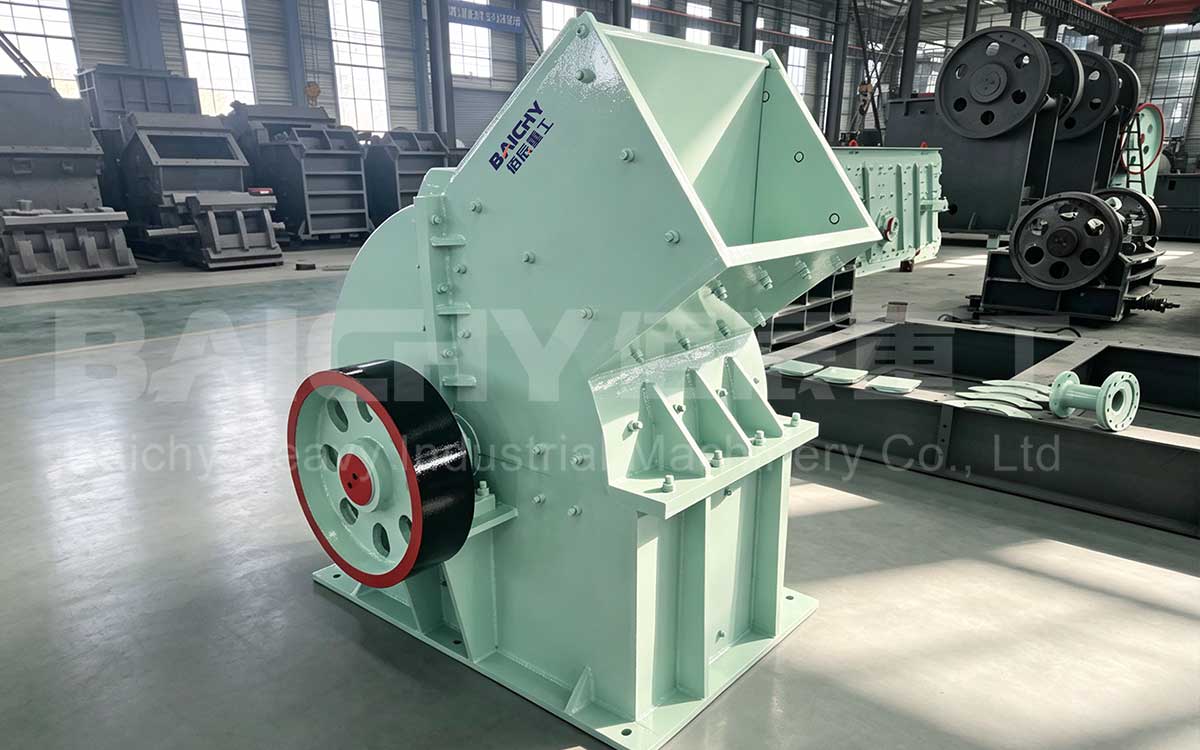
PF Impact Crusher
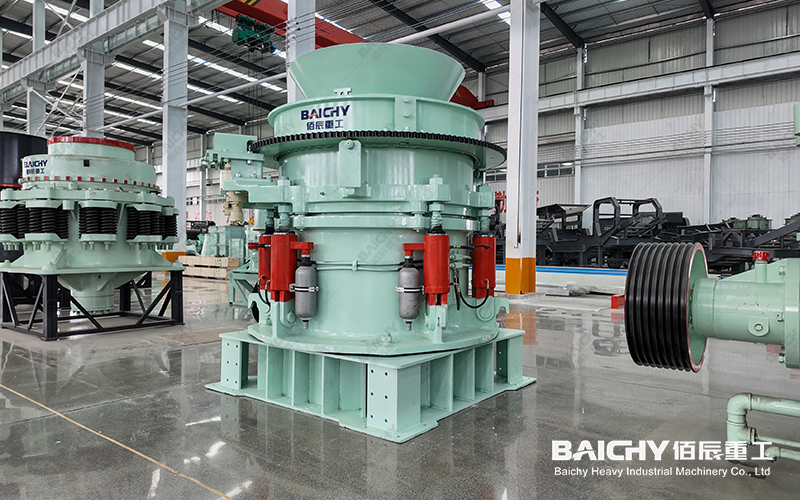
Hydraulic Cone Crusher
This stage is crucial in determining the final product's particle shape and gradation.
• Option A (Focusing on particle shape and multi-functionality): Impact crusher
◦ Recommended models: PF-1214 or PF-1315
◦ Advantages: Utilizes impact crushing principles, producing cubic particles with excellent shape, particularly suitable as building aggregate. Relatively simple structure, easy to maintain. Suitable for scenarios requiring high stone particle shape and where limestone has moderate abrasiveness.
• Option B (Focusing on wear resistance and adaptability to high-hardness materials): High-efficiency hydraulic cone crusher
◦ Recommended model: HPT200 or HST160 single-cylinder hydraulic cone crusher
◦ Advantages: Utilizes the principle of layered crushing, resulting in high production efficiency and low unit energy consumption. Long service life of wearing parts, suitable for long-term continuous operation. Hydraulic adjustment of the discharge port and clearing chamber ensures high automation and more stable product particle size.
Key Auxiliary Equipment: Vibrating screen and conveyor system
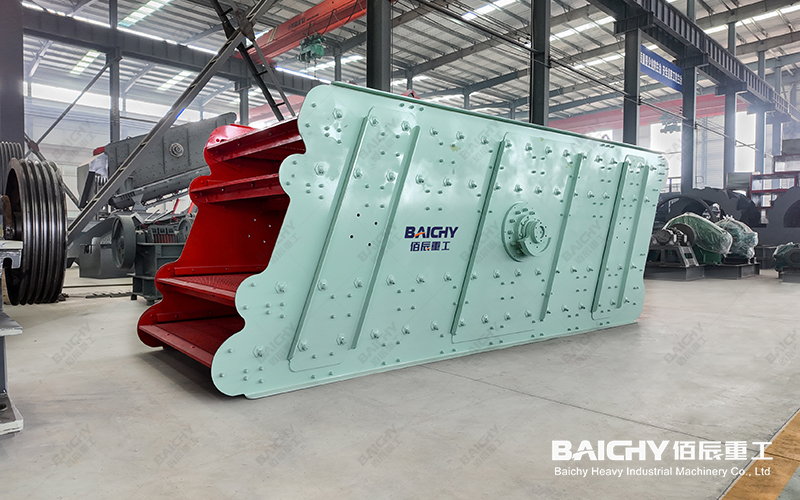
YK Vibrating Screen
• Vibrating screen: A 2-3 layer heavy-duty circular vibrating screen (such as 3YK1860, 2YK2160) is recommended for efficient grading, ensuring accurate finished product specifications.
• Conveyor belt: The belt width and speed are designed according to the process flow to connect each process section and ensure smooth material flow.
Equipment Configuration Schemes and Performance Comparison
The following table shows a core comparison of the two mainstream medium and fine crushing schemes to help you choose according to your needs.
| Comparison Items | Option 1: Jaw Crusher + Impact Crusher | Option 2: Jaw Crusher + Cone Crusher |
| Core Process | Impact Crushing | Laminar Crushing |
| Finished Product Particle Shape | Excellent, mostly cubic, high added value | Good, needle-like and flaky content slightly higher than impact crusher |
| Wear of Vulnerable Parts | Relatively fast, especially for limestone with slightly high silica content | Relatively slow, long service life of wear-resistant parts, low long-term operating cost |
| Energy Consumption Level | Medium | Low, high energy efficiency ratio |
| Investment Cost | Relatively low | Relatively high |
| Applicable Scenarios | High requirements for aggregate particle shape in construction, moderate abrasiveness of raw materials | Pursuit of long-term continuous and stable production, low overall operating cost |
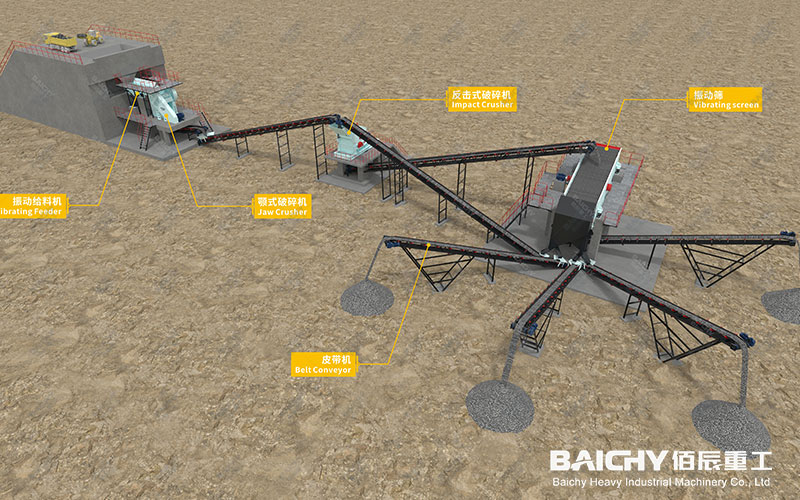
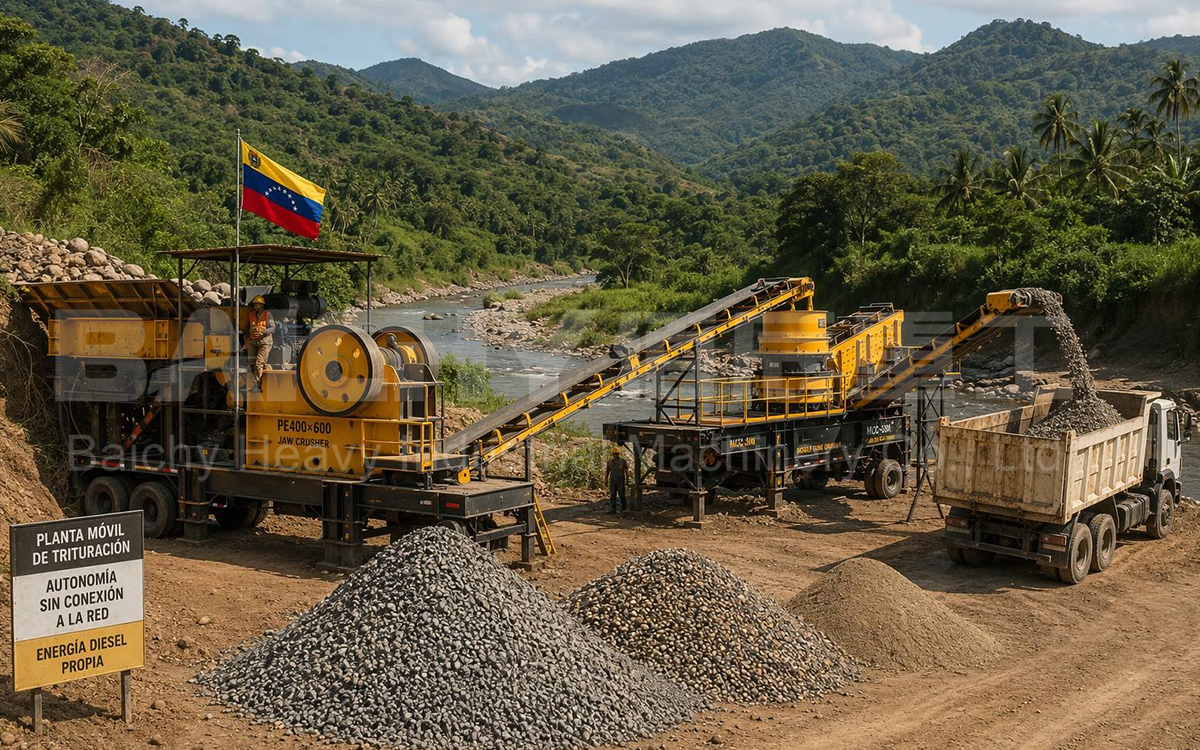
Limeatone crushing plant
Successful Case Reference
• Case 1 (Indonesia): Using a configuration of "PE750×1060 jaw crusher + PF1315 impact crusher + 3YK2160 vibrating screen", limestone was processed, with an hourly output of 120-150 tons. The finished product was mainly used in commercial concrete plants and dry-mixed mortar, with excellent particle shape, and was highly favored by the market.
• Case Study 2 (Uzbekistan): The production line utilizes a configuration of "PE600×900 jaw crusher + HPT200 cone crusher + 2YK1860 vibrating screen," achieving a high degree of automation, continuous operation year-round, significantly reduced equipment maintenance frequency, and outstanding overall benefits.
Recommended Equipment and Process Optimizations
1. Pre-screening and Soil Removal: When the raw material has a high mud content, it is recommended to add a vibrating feeder or roller screen before coarse crushing to pre-separate mud and fine materials, improving the efficiency of the main crusher and reducing blockages.
2. Centralized Electrical Control System: It is recommended to equip the system with a PLC central control system, enabling one-button start/stop, fault alarms, and remote monitoring, significantly improving management efficiency and safety.
3. Dust Removal and Noise Reduction: Pulse bag filters should be installed at dust-generating points such as the crusher inlet, outlet, and screening tower, and soundproof enclosures or workshops should be constructed to meet environmental protection requirements.
Frequently Asked Questions (FAQ)
Q1: What size plant and site are needed for a production line with an annual output of 100,000 tons?
A1: This depends on the process layout (linear, L-shaped, or multi-level). Typically, a complete production line including a material yard, crushing, screening, and finished product stockpile requires approximately 3000-5000 square meters of space. Compact modular designs can save space.
Q2: What is the approximate power consumption of the entire production line?
A2: Power consumption mainly depends on the equipment selection (e.g., cone crushers are generally more energy-efficient than impact crushers) and the hardness of the material. For a 100,000-ton-per-year limestone production line, the comprehensive power consumption per ton of stone is typically between 2.5 and 4.0 kWh. High-efficiency motors and a reasonable process design are key to energy saving.
Q3: How long does it take from installation to commissioning?
A3: The time is affected by foundation construction conditions, equipment delivery time, and the installation team. Generally, the cycle from equipment arrival to completion of installation and commissioning is approximately 1.5 to 3 months. Choosing a manufacturer that provides turnkey engineering services can effectively shorten the cycle and ensure project quality.