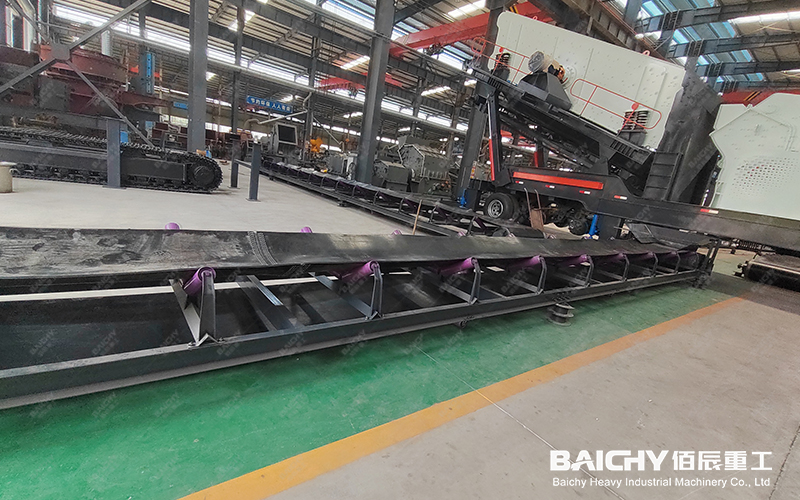
Gravel and Sand Conveyor Belts
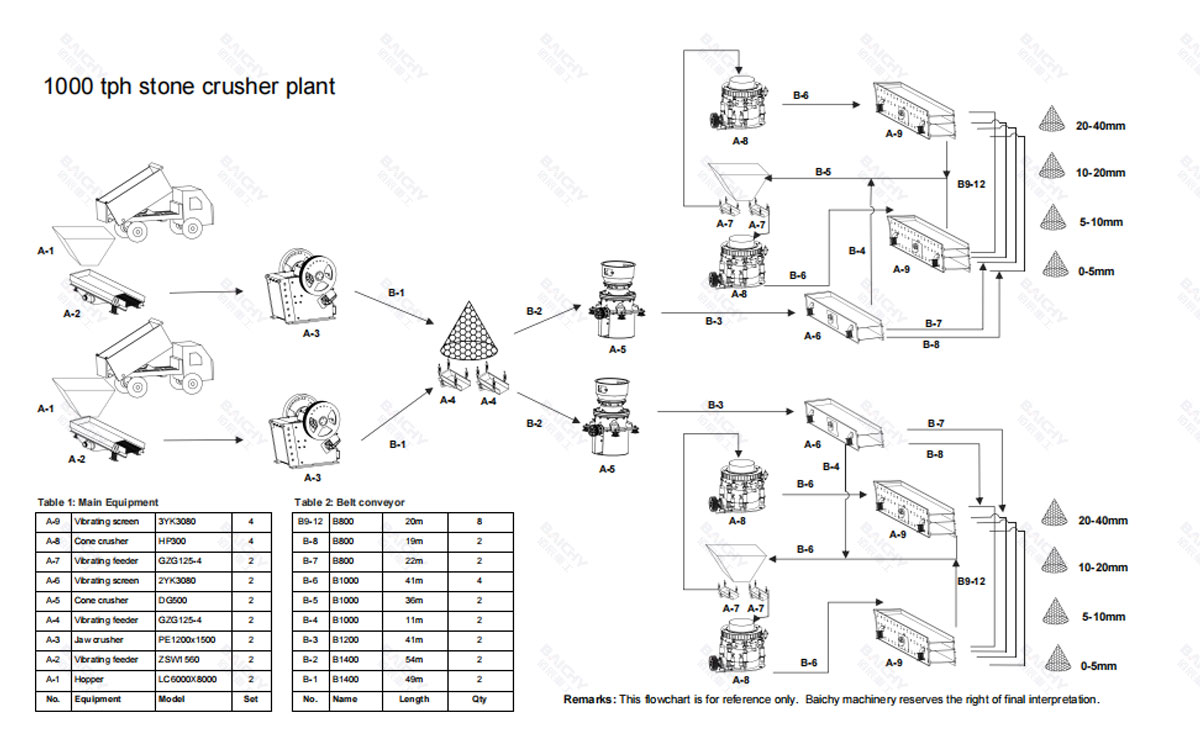
In modern mining, aggregate production lines, and large-scale engineering construction, conveyor belts for transporting gravel and sand are indispensable core equipment. Like the "main artery" of the entire production process, they efficiently and continuously transfer raw materials and semi-finished products from one location to another, directly impacting production efficiency and operating costs. As a professional manufacturer of mining crushing and grinding equipment, we deeply understand the importance of a reliable and suitable conveyor belt for the stable operation of the entire production line. This article will delve into the key elements of this type of conveyor belt to help you make a more informed choice.
What is a Gravel and Sand Conveyor Belt?
A conveyor belt for transporting gravel and sand is a mechanized device that continuously transports bulk solid materials (such as crushed gravel, manufactured sand, natural sand, and crushed stone). It mainly consists of a conveyor belt (the load-bearing and traction component), a drive unit, idlers, redirecting rollers, a tensioning device, and a frame. Its working principle is based on the friction between the drive rollers and the conveyor belt, which drives the circular conveyor belt and the material it carries to move together, achieving long-distance horizontal or inclined transport.
Key Operating Characteristics
These conveyor belts are specifically designed to handle highly abrasive and impact-intensive materials. Unlike belts used for conveying lightweight, powdery materials, they have higher requirements for belt strength, wear-resistant layer thickness, impact resistance, and cleaning efficiency to ensure long-term stable operation in harsh mining and building material production environments.
Unique Advantages of Gravel and Sand Conveyor Belts
Choosing a professional gravel and sand conveyor belt can bring multiple significant advantages to your production line:
1. Extremely High Conveying Efficiency: Enables 24-hour continuous operation with a large conveying capacity far exceeding intermittent transport methods (such as trucks), greatly increasing overall output.
2. Significantly Reduced Operating Costs: Automated conveying reduces significant labor, vehicle fuel, and maintenance costs, with particularly noticeable unit cost advantages for long-distance transport.
3. Flexible Adaptability to Complex Terrain: Through proper design, it can traverse complex terrain over long distances, achieving continuous transport from the mining point to the crushing station and then to the finished product storage yard, optimizing the layout.
4. Environmental Protection and Safety: Enclosed or semi-enclosed designs effectively reduce dust emissions and noise, while also preventing material spillage and vehicle safety risks during transportation.
5. Robust and Durable: Utilizing high-strength skeleton materials and a specially formulated wear-resistant rubber cover layer, it is tear-resistant, impact-resistant, and has a long service life.
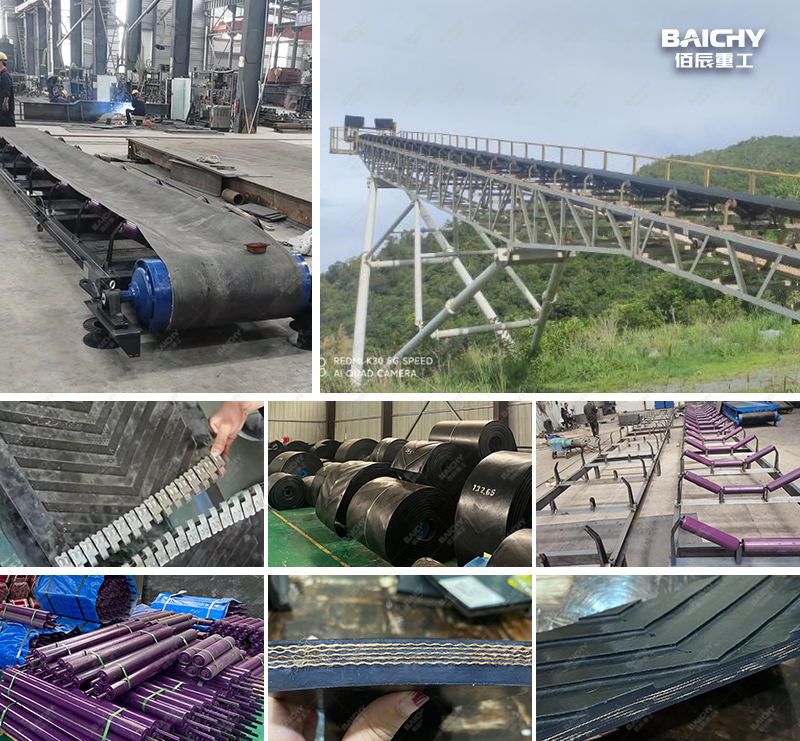
Gravel Conveyor Belts
Key Selection Parameters and Technical Considerations
Selecting the right conveyor belt requires comprehensive consideration of multiple factors. The following table summarizes the core selection parameters:
| Parameter Category | Specific Item | Description and Considerations |
| Material Characteristics | Material type, particle size, bulk density, moisture content, abrasiveness | Determines belt type, cover rubber thickness, and belt speed. Gravel has high abrasiveness, requiring a thick cover layer. |
| Conveying Capacity | Hourly conveying capacity (tons/hour) | The core basis for determining belt width, belt speed, and drive power. |
| Railway Design | Horizontal length, lifting height, inclination angle, layout | Affects tension calculation, power requirements, and whether anti-slip textures are needed. |
| Belt Structure | Skeleton Material (EP, Steel Rope), Number of Layers, Cover Rubber Thickness | EP canvas belts are economical and versatile, while steel rope belts are suitable for long-distance, high-volume transport. The upper cover rubber is usually thicker than the lower cover rubber. |
| Environmental Conditions | Temperature, Humidity, Outdoor Exposure, Corrosivity | These determine the rubber formulation (cold resistance, heat resistance, ozone resistance, etc.) and equipment protection level. |
Practical Application Case Sharing
Case Study: Indonesian Granite Aggregate Production Line
This customer has an annual production capacity of 5 million tons of sand and gravel aggregate. The production line has a distance of approximately 1.5 kilometers from primary crushing to the finished product screening and stockpile yard, requiring a 35-meter elevation difference.
• Challenges: Traditional truck transportation is costly, generates significant dust, and suffers from significant efficiency bottlenecks.
• Solution: We designed a 1000mm wide, 2.5m/s steel rope core high-strength conveyor belt as the main line. The system employs a high-strength steel wire rope core structure to withstand immense tension, with an 8mm thick rubber cover to resist severe abrasion from granite gravel. Buffer beds are added at transition points to reduce impact.
• Results: After the conveyor system was put into operation, it achieved fully continuous automated conveying, with a stable conveying capacity of 1200 tons/hour. It completely replaced the need for dozens of trucks, saving over one million yuan in transportation costs annually, and fundamentally improving the on-site environment.
Related Equipment Recommendations
A complete conveyor line is not only about the conveyor belt itself, but also about the performance of the supporting equipment. We offer:
• High-performance drive unit: Variable frequency drive, smooth start-up, energy-efficient.
• Heavy-duty idler sets: Excellent sealing, low rotational resistance, and deep-groove idler sets prevent sand spillage.
• High-efficiency sweepers: Multi-stage composite sweeping (alloy scraper, polyurethane blade, V-shaped rotary brush) effectively removes adhering fine sand, protecting rollers and belts.
• Intelligent monitoring system: Includes anti-deviation, anti-slip, longitudinal tear, and pull-cord switches to ensure operational safety.
Frequently Asked Questions (FAQ)
Q1: When conveying wet, sticky sand, the conveyor belt often experiences material sticking and incomplete cleaning. How can this be solved?
A1: This requires a systematic solution. First, use trough liners with PTFE or polyethylene coatings to reduce material adhesion. Second, a high-efficiency multi-stage cleaning system must be installed, including heavy-duty polyurethane scrapers at the head roller and V-shaped rotary brushes or empty section cleaners on the return belt. Additionally, adjusting the belt speed appropriately and ensuring the trough is sealed to prevent spillage will also help alleviate this problem.
Q2: What is the maximum recommended inclination angle when conveying gravel at an inclined angle?
A2: The maximum safe inclination angle depends on the particle size, shape, and moisture content of the material. For dry, free-flowing, round gravel, the maximum inclination angle is generally no more than 16-18°. For crushed gravel with many sharp edges and a rough surface, this can be increased to 20-22°. If the material has a high moisture content, the inclination angle needs to be further reduced to prevent material slippage. When the angle exceeds the recommended range, consider using a large-angle sidewall conveyor belt or other types.
Q3: How to extend the service life of conveyor belts used for conveying highly abrasive gravel?
A3: Extending service life requires focusing on "prevention" and "protection":
• Impact prevention: Install impact beds or impact idlers at all material drop points to disperse impact force.
• Belt misalignment prevention: Ensure proper installation and use self-aligning idlers to prevent belt edge wear.
• Optimal maintenance: Regularly inspect and replace damaged idlers, maintain efficient cleaning, and prevent sharp materials from getting caught between the drum and the return belt, causing damage.
• Belt selection: Choosing a sufficiently thick cover rubber with a high abrasion resistance index based on the material characteristics is fundamental.
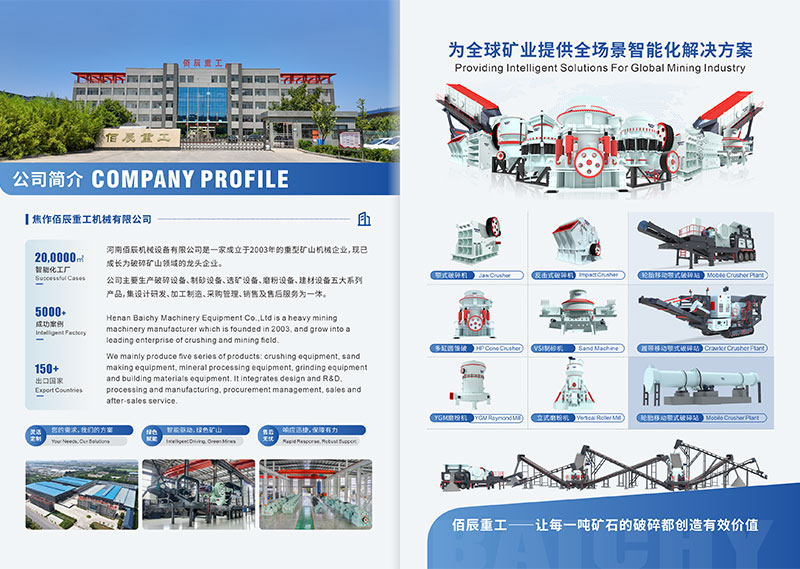
About of Baichy Heavy Industry
Baichy Heavy Industry is a high-tech mining equipment company integrating R&D, manufacturing, sales, and after-sales service. Focusing on crushing, grinding, and mineral processing equipment, we provide professional solutions to our customers. We are ISO9001:2015 、certified, and our products include mobile crushing palnts, crawler crushing plant, construction waste crushing plants, jaw crushers, sand making machines, cone crushers, fine crushers, grinding mills, ball mills, etc., all with reliable performance to meet diverse project needs.
Our advantages:
• Professional pre-sales support: Free project design and comprehensive solutions to help you accurately select the right equipment;
• Comprehensive on-site service: Providing installation guidance and worker training to ensure smooth equipment commissioning;
• Reliable after-sales guarantee: A complete after-sales system, timely response to technical inquiries and equipment maintenance, ensuring long-term stable operation.
To protect your rights, please contact us through the following official channels for professional service:
Official Website Customer Service
WhatsApp: 0086-15093222637
Email: [email protected]
We are committed to providing high-quality equipment and full-cycle services to deliver comprehensive intelligent solutions for the global mining industry!