
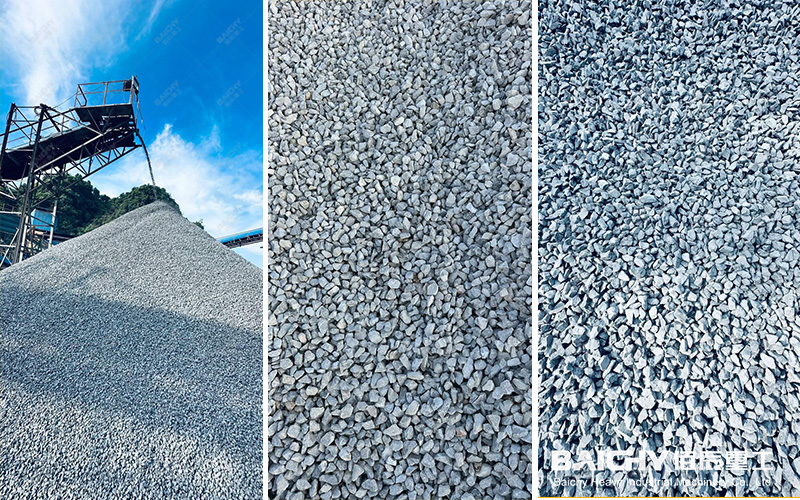
Ballast stone display
Regarding a 200-ton-per-hour (TPH) basalt jaw crusher: Basalt is a rock characterized by its high hardness and abrasiveness (Mohs hardness 6–7), which places stringent demands on the equipment's wear-resistant components and structural integrity.
I. Equipment Selection Recommendations
For basalt crushing operations with a capacity of 200 tons per hour, the following configuration is typically adopted:
• Standard Models: PE-750×1060 or PE-900×1200.
▫ PE-750×1060: Features a feed opening size of 750×1060 mm and a throughput capacity ranging from 110 to 320 tons per hour; it serves as the standard primary crushing unit for a 200 TPH production line.
▫ Key Feature: When processing basalt, this unit must be equipped with high-manganese steel or specialized alloy jaw plates to ensure an extended service life.
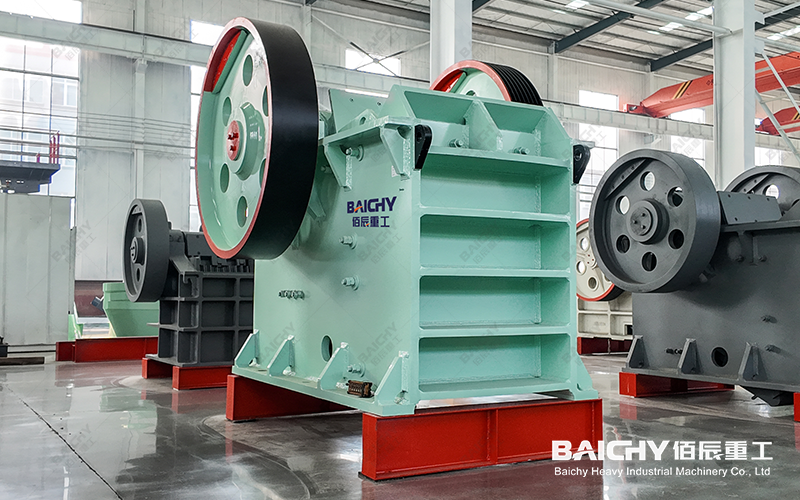
Basalt Jaw Crusher
II. Stationary vs. Mobile Crushers: Which to Choose?
The decision between a stationary and a mobile crusher depends primarily on your project's duration, site conditions, and budgetary constraints. For a basalt crushing requirement of 200 tons per hour, the specific advantages of each option are compared below:
1. Stationary Crusher
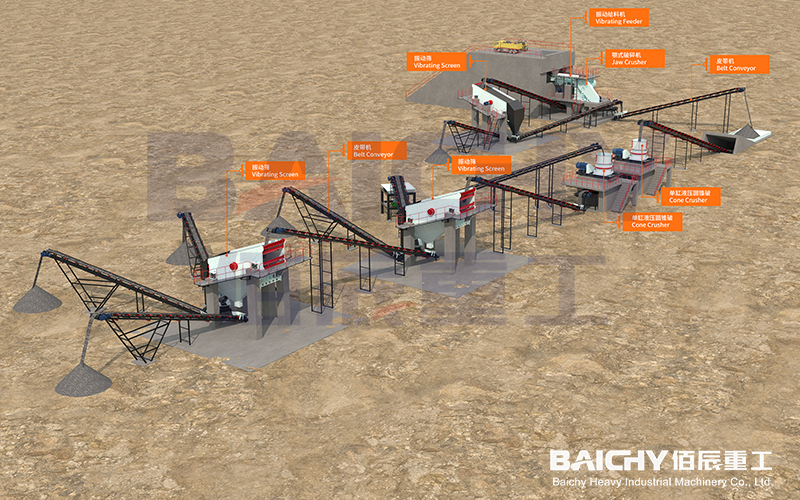
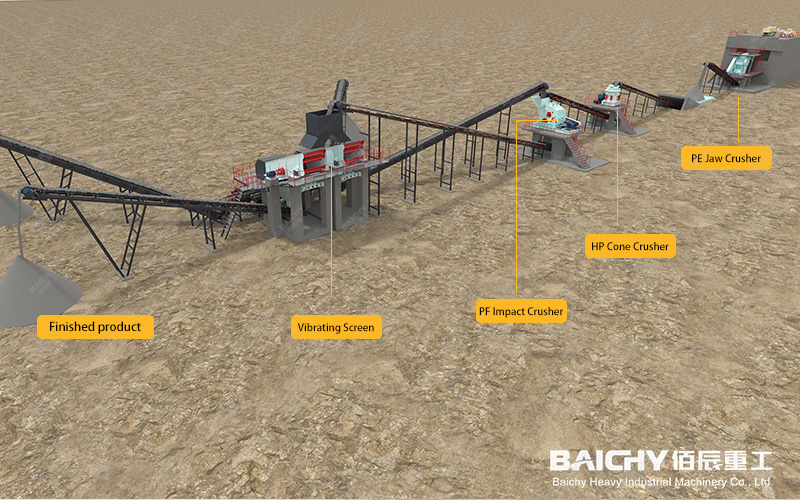
A stationary system involves equipment installed on a permanent or semi-permanent concrete foundation, with the various modules interconnected via belt conveyors.
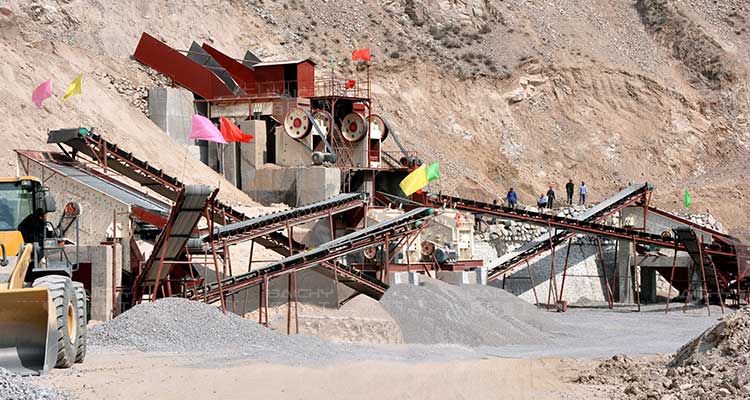
200 T/H Basalt Jaw Crusher
• Core Advantages:
▫ Exceptional Cost-Effectiveness: For equivalent production capacities, the initial equipment acquisition cost for a stationary system is typically only one-third to one-half that of a mobile system.
▫ Extreme Operational Stability: Supported by a robust concrete foundation, the equipment experiences significantly less vibration when performing high-intensity crushing of hard rocks (such as basalt); this minimizes structural fatigue on the machine body and extends the overall service life of the equipment.
▫ Ample Maintenance Space: The various equipment units are spaced out across the site, providing spacious work areas for maintenance personnel, thereby making the replacement of heavy components—such as jaw plates and bearings—much more convenient.
▫ High Customizability: The production line layout can be flexibly designed to adapt to the specific terrain (e.g., utilizing natural elevation drops on a hillside to reduce the required length of belt conveyors).
• Ideal Applications:
▫ Privately owned mines and large-scale quarries.
▫ Projects with a long production cycle (typically exceeding two years). ▫ Sites with ample open space, particularly for projects requiring environmentally compliant enclosure (e.g., fully enclosed plant buildings).
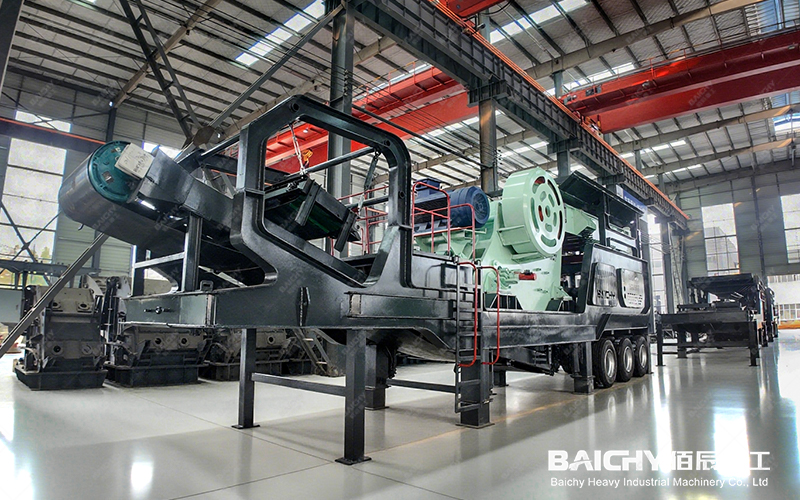
2. Mobile Crushing Station (Mobile Crusher)
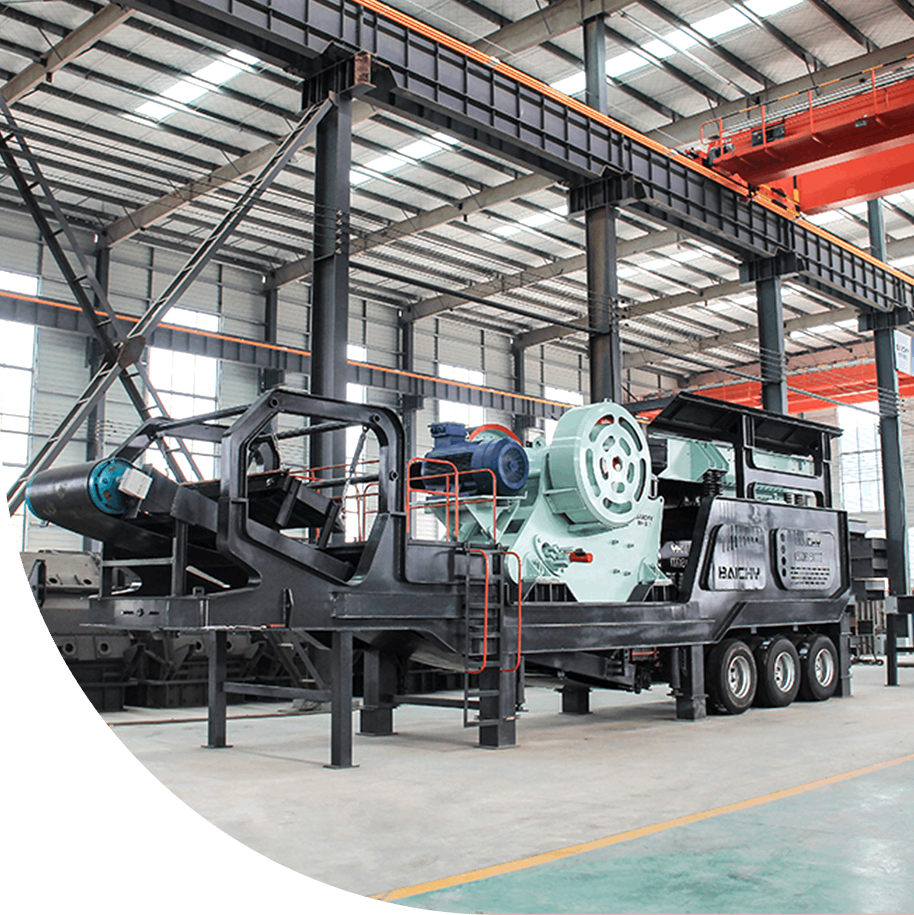
Mobile crushing stations integrate feeding, crushing, and screening functions onto a wheeled or crawler chassis, effectively serving as a "mobile crushing plant."
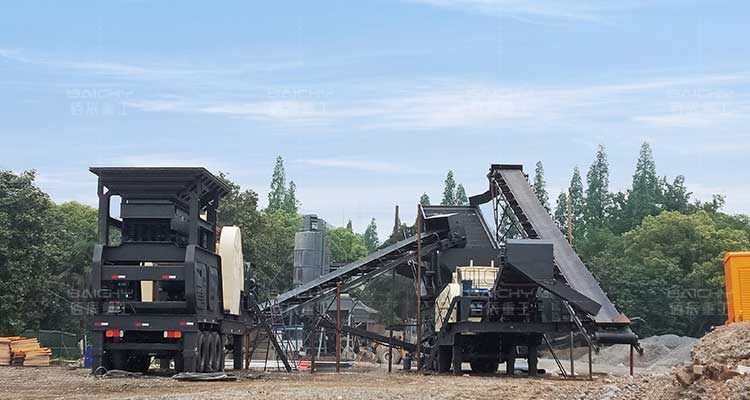
Mobile Crushing Station (Mobile Crusher)
• Core Advantages:
▫ Rapid Deployment (No Infrastructure Required): Eliminates the need for foundation excavation or concrete platform pouring. Once the equipment arrives on-site, it requires only simple commissioning and can commence production within as little as 24 hours.
▫ Significant Savings on Transport Costs: "The machine goes wherever the mine is." By operating directly at the blasting face and being fed via excavators, it eliminates the trucking costs associated with transporting raw ore over long distances to a fixed plant (a major source of profit for bulk materials).
▫ Exceptional Flexibility: As the mining face advances, the equipment can be easily relocated at any time; once a project concludes, the unit can drive directly to the next site, offering high asset liquidity.
▫ Compact Footprint: The highly integrated structure makes it ideal for operations in confined spaces or at urban demolition sites for processing construction waste.
• Applicable Scenarios:
▫ Road construction, high-speed rail projects, and other linear infrastructure projects requiring crushing operations along the route.
▫ Short-term leasing or contract operations (typically with a duration of 6 to 12 months).
▫ Sites with spatial constraints that preclude large-scale civil engineering construction.
3. Comprehensive Comparison Summary
| Dimension | Fixed Crushing Line | Mobile Crushing Station |
| Initial Investment | Lower (Equipment is less expensive, but infrastructure costs apply) | Higher (Automation and chassis systems are costly) |
| Installation Cycle | Longer (Requires 1–3 months of civil engineering work) | Extremely Short (Installed and operational on the same day) |
| Relocation Costs | Extremely High (Requires disassembly; foundations become obsolete) | Extremely Low (Can be driven away or transported directly) |
| Logistics Expenses | High (Requires transporting raw ore to the plant site) | On-site operation; significantly reduces raw ore transport costs |
| Depreciation & Residual Value | Moderate residual value rate | High residual value rate; rapid turnover in the secondary market |
Decision Recommendation:
• If you hold long-term, stable mining rights (e.g., for 5–10 years) and prioritize achieving the lowest possible cost per ton of production, choose a fixed crushing line.
• If you are engaged in contract crushing work, or if your projects are distributed across various locations and you prioritize rapid capital recovery and operational flexibility, a mobile crushing plant is the recommended choice.
Since you will be crushing basalt, the vibration and wear experienced by a mobile plant will be significantly greater than when crushing limestone. If you opt for a mobile unit, it is imperative to verify that the structural steel of the chassis and the vibration damping system have been reinforced.
III. Purchasing Recommendations
Quality of Wear Parts: When consulting with manufacturers, you must explicitly state that you will be crushing basalt. Request that the manufacturer provide reinforced jaw plates; otherwise, standard jaw plates designed for limestone will wear out very rapidly when crushing basalt.
Second-hand Options: For 200 TPH mobile jaw crushers, there is a substantial selection of second-hand equipment available on the market—often in 80–90% new condition—typically priced at 50–70% of the cost of a new machine.
System Configuration: Basalt crushing operations typically employ a "jaw crusher + cone crusher" combination. If you rely solely on the jaw crusher for the final output, the content of flaky and needle-shaped particles may be excessively high, failing to meet the stringent requirements of high-standard engineering projects.
If you require specific manufacturer contact details or a more precise system design proposal, please provide your specific requirements regarding the final product particle size (e.g., 0–5 mm, 10–20 mm, etc.), and I can further refine the configuration plan for you.
About of Baichy Heavy Industry
Baichy Heavy Industry is a high-tech mining equipment company integrating R&D, manufacturing, sales, and after-sales service. Focusing on crushing, grinding, and mineral processing equipment, we provide professional solutions to our customers. We are ISO9001:2015 、certified, and our products include mobile crushing palnts, crawler crushing plant, construction waste crushing plants, jaw crushers, sand making machines, cone crushers, fine crushers, grinding mills, ball mills, etc., all with reliable performance to meet diverse project needs.
Our advantages:
• Professional pre-sales support: Free project design and comprehensive solutions to help you accurately select the right equipment;
• Comprehensive on-site service: Providing installation guidance and worker training to ensure smooth equipment commissioning;
• Reliable after-sales guarantee: A complete after-sales system, timely response to technical inquiries and equipment maintenance, ensuring long-term stable operation.
To protect your rights, please contact us through the following official channels for professional service:
Official Website Customer Service
https://wa.me/+8615093222637
Email: [email protected]
We are committed to providing high-quality equipment and full-cycle services to deliver comprehensive intelligent solutions for the global mining industry!
IV. Frequently Asked Questions (FAQ)
Q1: What motor power is required for a jaw crusher to process 200 tons of basalt per hour?
A1: For the PE-750×1060 model, the motor power typically ranges from 90 kW to 110 kW; for the PE-900×1200 model, the motor power is approximately 110 kW to 132 kW. The specific requirement depends on the manufacturer's design and the characteristics of the material being processed; however, when crushing hard rock such as basalt, it is advisable to select a motor at the upper end of the power range to ensure stable output.
Q2: What is the typical replacement cycle for jaw plates when crushing basalt?
A2: The service life of jaw plates depends on their material composition, the specific characteristics of the basalt (e.g., SiO2 content), and the production load. When using standard high-manganese steel jaw plates under a full load of 200 TPH, their service life may be as short as 1 to 3 months. If high-wear-resistant jaw plates—made from special alloys or featuring ceramic inserts—are utilized, their service life can be extended to 3–6 months or even longer. It is recommended to consult with the supplier to confirm the specific material composition of the wear parts and the duration of their warranty.
Q3: Can a mobile crushing station truly achieve an output of 200 TPH when processing basalt?
A3: Yes, it can; however, certain conditions apply. A mobile jaw crusher rated at 200 TPH typically meets this standard when crushing materials of medium hardness. When processing basalt, the actual output may decrease slightly (e.g., to 180–190 TPH) due to factors such as the material's hardness, lump size, and moisture content. To ensure the required production capacity, it is advisable to select a model rated one capacity level higher than your target (for instance, a model rated at 250 TPH) and to ensure that the material feed is continuous and uniform.