


1. Hard Rock Shaping — From Flaky to >93% Cubic
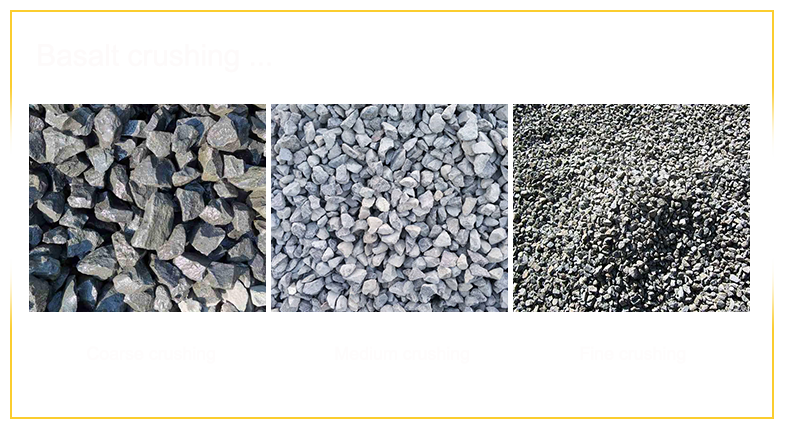
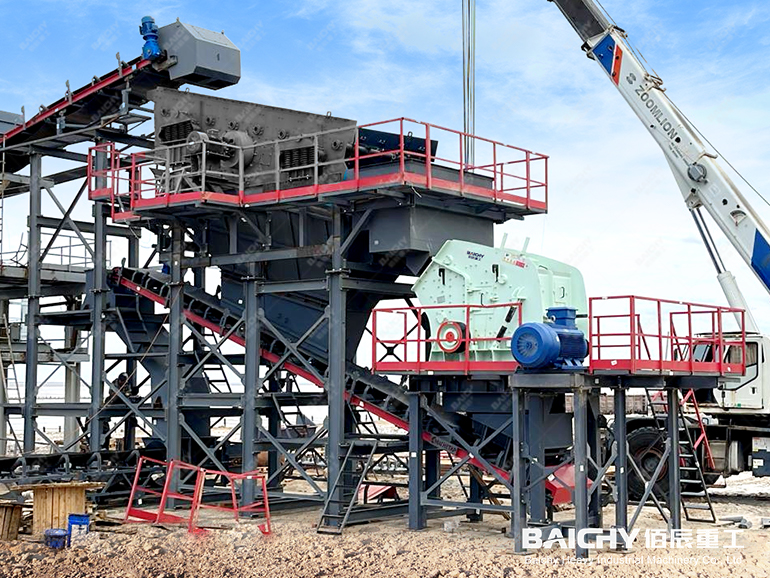
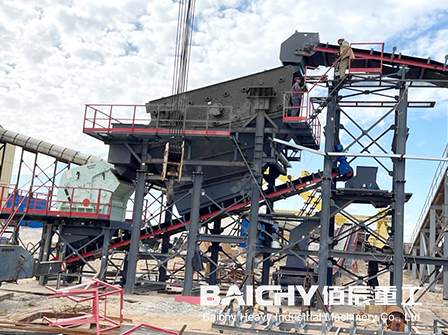
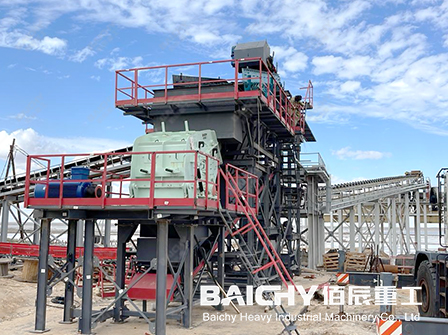
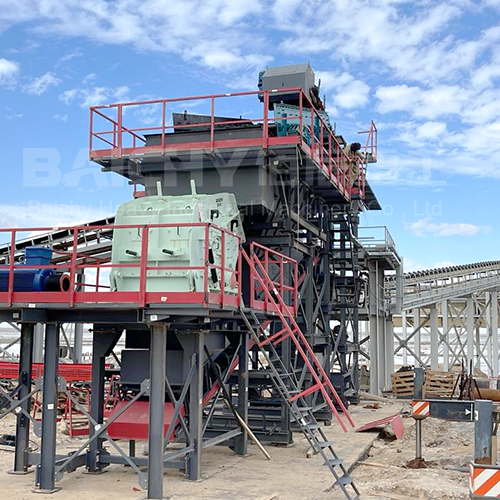
In a standard two-stage jaw + cone circuit, basalt (Mohs 6–7) typically exits with 15–20% flaky and elongated particles — unacceptable for high-grade concrete. By inserting the PF1214 impact crusher as a dedicated closed-circuit tertiary unit, the production line achieved 93.5% cubic particle ratio, exceeding the contract requirement of >90%. The PF1214's four blow bars (Cr26 high-chromium alloy) deliver multiple high-speed impacts per particle pass, progressively eliminating needle-shaped and flaky grains.
2. Stone Powder Control — Fines Reduced to 4.2%
Excessive 0–5 mm stone powder reduces the market value of aggregate products and increases cement consumption in concrete batching. Through optimized rotor linear speed (32–38 m/s depending on feed moisture) and a two-stage impact plate with adjustable gap settings (15–60 mm), the PF1214 circuit reduced stone powder content from an industry-typical 12–18% to just 4.2%. The yield of premium 5–20 mm aggregate rose to 52% of total output, directly increasing per-ton revenue.
3. Operating Cost — 31% Reduction per Ton
The PF1214's 132 kW energy-saving motor consumes 0.8–1.2 kWh per ton of finished basalt aggregate — 31% lower than the 1.3–1.6 kWh/ton typical of a VSI-based shaping circuit at comparable throughput. Combined with Cr26 blow bars that deliver 500–600 hours of service life on basalt before rotation (at a replacement cost of approximately $2,800 per set), the per-ton crushing cost settled at $0.31 — well below the industry benchmark of $0.42–$0.48 for similar hard-rock shaping operations.