Baichy Heavy Industrial Machinery Co., Ltd

Phone/Wechat/Whatsapp:+008615093222637

Email:[email protected]
24 hours online

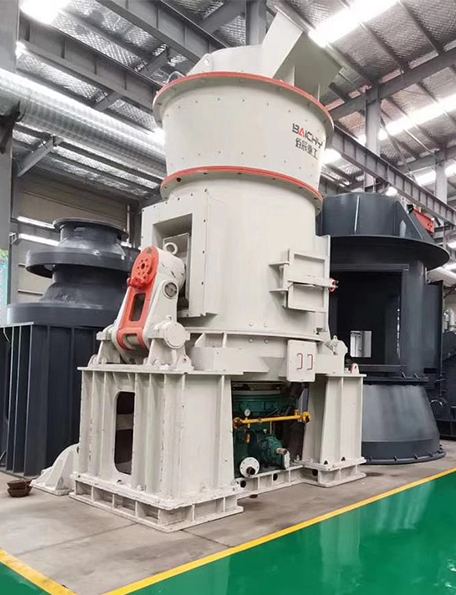
Faced with ever-increasing energy costs and increasingly stringent environmental requirements, has your grinding production line reached a bottleneck? Vertical grinding mills, with their revolutionary bed grinding technology, offer a one-stop solution. Integrating crushing, drying, grinding, and grading, they achieve remarkable efficiency, saving up to 50% on energy, drying moisture content to 20%, and reducing floor space by 30%. Choosing a vertical grinding mill is not just about replacing equipment; it's about infusing your company with high-efficiency, low-carbon, and intelligent industrial genes, driving productivity forward.
✔ Energy Saving Expert: Reduces power consumption per ton of product by 20%-50%, directly translating into profits.
✔ Drying Master: Fully utilizes waste heat to easily handle high-moisture materials.
✔ Particle Size Master: Dynamic grading, one-button fineness adjustment, and strong product adaptability.
✔ Space Manager: Compact design significantly saves infrastructure and operating space.
✔ Intelligent Heart: Integrated intelligent control system enables unmanned, predictive operation and maintenance.
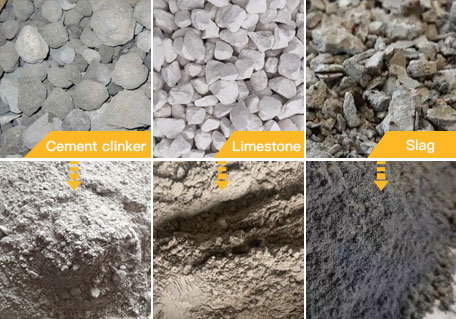
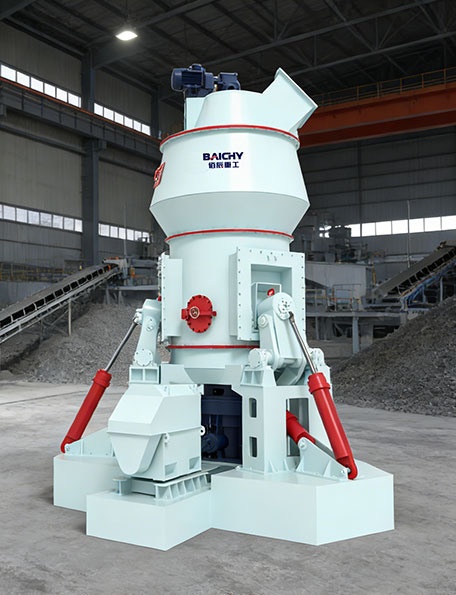
1. Medium hardness and below: They are most advantageous for materials with a Mohs hardness below 7, that are non-metallic, and not extremely abrasion-resistant.
2. Materials requiring drying: Ideal for processing materials with high moisture content (10%-20%) due to their powerful hot air drying capabilities.
3. Large-scale production: High single-machine capacity, typically used in production lines with annual outputs ranging from hundreds of thousands to millions of tons.
4. Medium product fineness requirements: Typical product fineness ranges from 80μm (180 mesh) to 325 mesh (45μm). With a high-efficiency classification system, ultrafine powders of 600 mesh (20μm) or even finer can be produced.
In summary, vertical grinding mills are the "main force" and "all-rounder" for large-scale grinding of cement, slag, coal powder, and non-metallic minerals. When selecting one, it is necessary to conduct targeted equipment selection and process design based on the specific characteristics of the material, such as hardness, abrasiveness, moisture content, and particle size requirements.
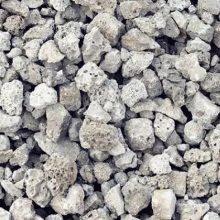
Slag
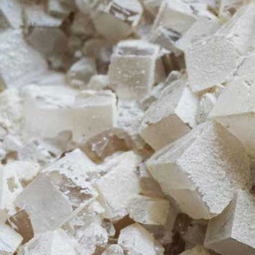
Calcite
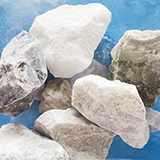
Dolomite
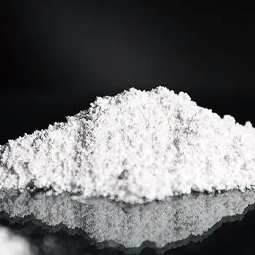
Talc
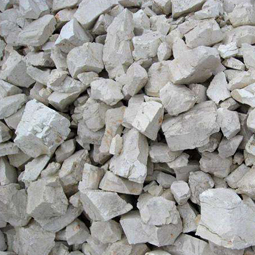
Kaolin
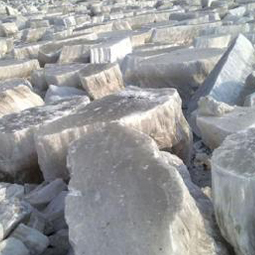
Gypsum
Vertical Grinding Mill - Industrial Grinding Equipment
Large-scale | Continuous
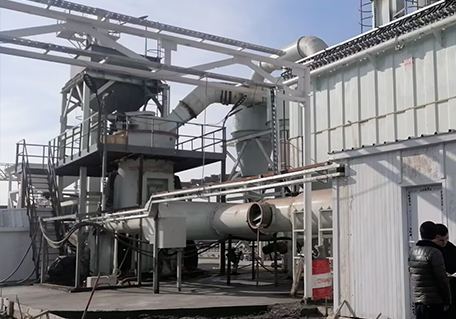
• Non-metallic minerals: Calcite, limestone, marble, barite, talc, potassium feldspar, quartz, etc.
• Industrial solid waste: Blast furnace slag, steel slag, fly ash, desulfurization gypsum, etc.
• Cement building materials: Cement raw meal, cement clinker, clay, etc.
• Others: Powdered coal, phosphate rock, etc.
Faced with the dual pressures of environmental protection and cost, the client successfully achieved a green transformation of its production line by introducing our slag vertical mill. The equipment not only significantly reduced power consumption and dust emissions by 42%, but also transformed industrial waste into high-value-added mineral powder products, generating annual profits exceeding 20 million yuan, proving that environmental investment can also bring substantial returns.
To overcome bottlenecks in production capacity and quality, the client chose our integrated vertical mill production line, resolving the pain points of fluctuating fineness and insufficient capacity. The new line achieved stable, large-scale production of 350,000 tons per year, with precise control over product fineness, successfully helping the client enter the high-end coatings market and transform from an ordinary supplier into a core raw material partner.
| Comparison Items | Traditional Ball Mill/Raymond Mill System | Our Vertical Mill | Your Advantages |
| System Power Consumption | Baseline 100% | Reduced by 20%-50% | Directly translates into profit, typically recovering equipment investment in 1-3 years. |
| Land Area | Baseline 100% | Reduced by 30%-50% | Saves land and factory construction costs, allowing for more flexible layout. |
| Drying Capacity | Requires a separate dryer, high energy consumption | Integrated hot air furnace waste heat, directly processes materials with 10%-20% moisture content | Shortened process, reduced investment and operating costs. |
| Labor Requirements | Requires multiple inspection points, relies on experience | Intelligent central control, one-button start/stop, predictive maintenance | Moving towards a "lights-out factory," reducing manpower and human error. |
| Environmental Performance | Complex system, multiple dust leakage points | Full negative pressure closed operation, near-zero dust emissions | Easily handles environmental inspections, shaping a green corporate image. |
Thank you for your interest in Our Industrial Grinding Mill. If you want to get help immediately, please chat online now.
At the same time, you can also fill in your requirements, we will reply you in 24hours.