Baichy Heavy Industrial Machinery Co., Ltd

Phone/Wechat/Whatsapp:+008615093222637

Email:[email protected]
24 hours online
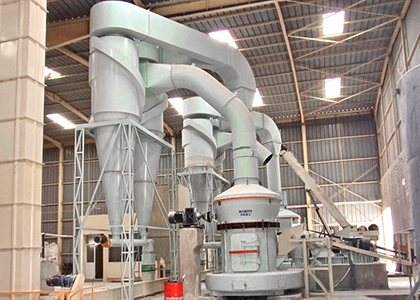
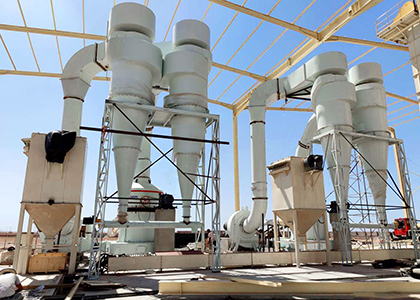
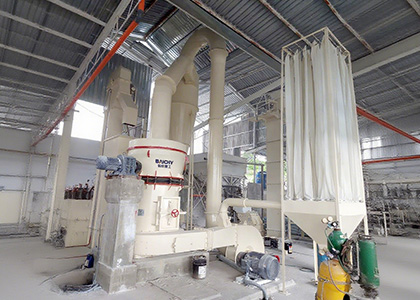
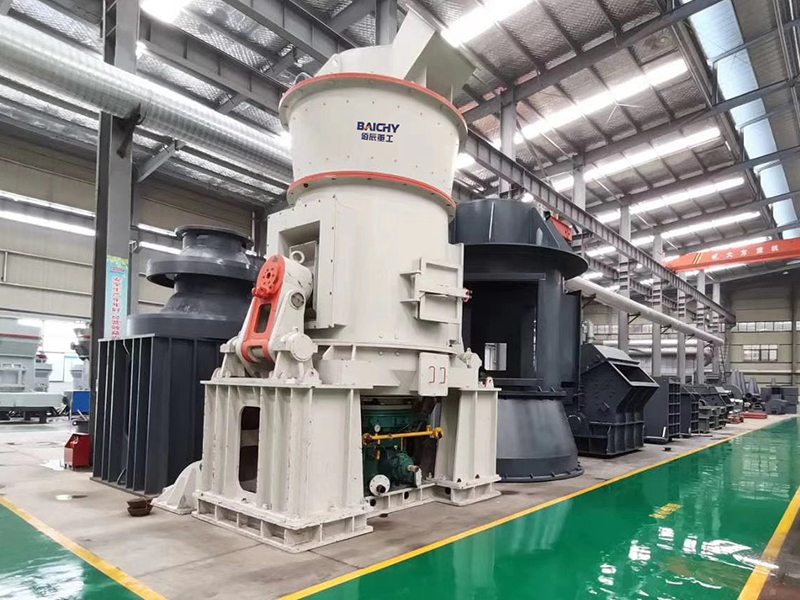
The Slag Vertical Roller Mill (abbreviated as Slag Vertical Mill) is a highly efficient and energy-saving grinding device specifically designed for pulverizing industrial waste residues—such as blast furnace water-quenched slag, steel slag, and nickel slag—by integrating the processes of grinding, drying, and air classification into a single unit. It is currently the mainstream choice for producing high-activity slag micro-powder (S95/S105 grades).
1. Superior Energy Efficiency (Cost Reduction & Efficiency Improvement): By utilizing "material bed grinding" technology, the mill effectively eliminates the energy waste associated with "steel ball-to-steel ball impact" that occurs in traditional ball mills. The system's electricity consumption is typically 30% to 50% lower than that of a ball mill, making it the preferred choice for establishing eco-friendly "green factories."
2. Powerful Drying Capability: Slag typically contains 10% to 15% moisture. The vertical mill allows for the introduction of a high-volume flow of hot air internally, which instantly reduces the moisture content to below 1% during the grinding process, thereby eliminating the need for a separate, standalone dryer.
3. Excellent Product Quality: The finished product features uniform fineness, optimal particle morphology, and high activity. The specific surface area of the finished product can typically be maintained stably within the range of 420 to 500 m²/kg, fully meeting national standards for S95 or S105 grade slag powder.
4. High Environmental Friendliness:
• Low Noise: The grinding rollers do not make direct contact with the grinding table; consequently, the mill operates smoothly, generating noise levels that are 20 to 25 decibels lower than those of a ball mill.
• Zero Dust Emission: The entire system operates under negative pressure, ensuring that no dust escapes or spills out into the surrounding environment.
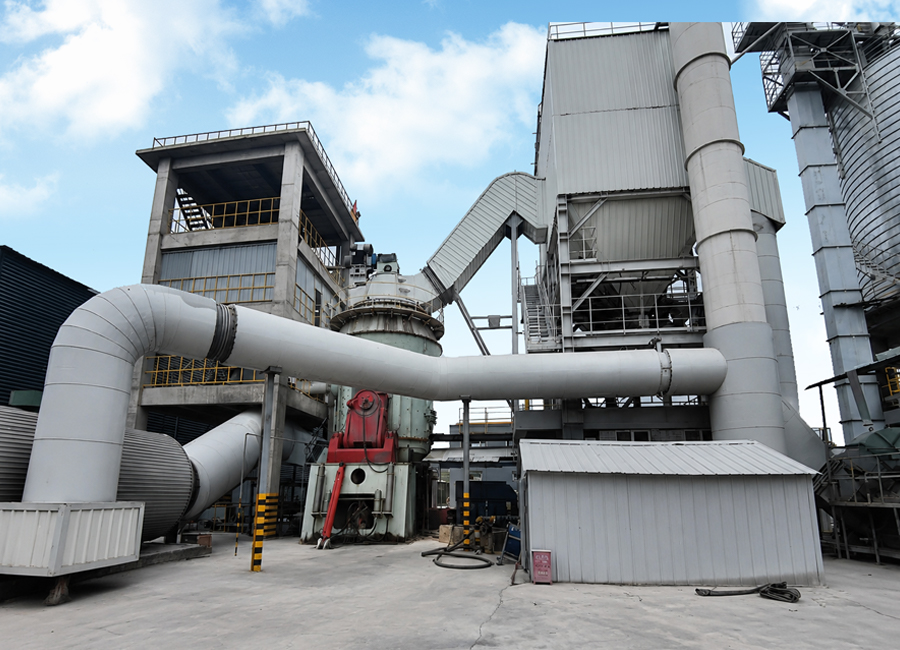
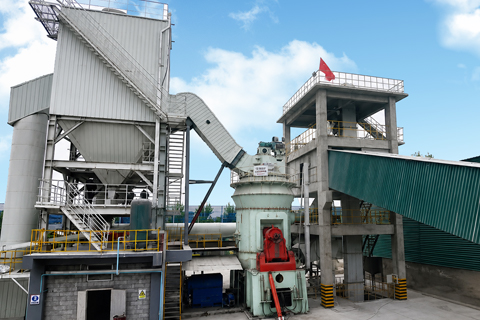
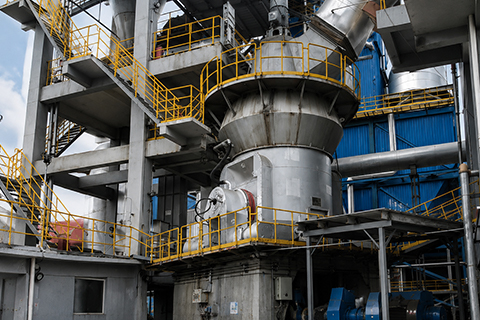
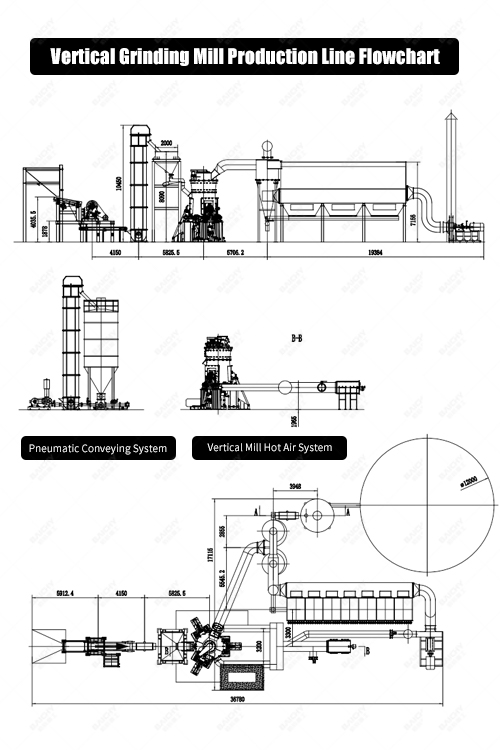
The Slag Vertical Roller Mill (VRM) is a highly efficient and energy-saving grinding system that integrates crushing, drying, pulverizing, classifying, and conveying functions into a single unit. Designed specifically to address the unique characteristics of slag—such as high moisture content (10%–15%), poor grindability, and the presence of metallic iron—its process flow features specialized design enhancements to maximize drying efficiency and ensure effective iron removal protection.
• High-Pressure Rolling: A hydraulic system drives the grinding rollers downward, exerting a pressure of up to several hundred kilonewtons upon the material bed. The material is pulverized through the combined compressive and shearing forces generated between the grinding rollers and the grinding table.
• Hot Air Drying: The hot air serves not only as the heat source for drying the material but also generates an upward airflow that carries the finely ground particles into the classifier.
• Airflow Conveying: The finely ground and dried particles rise along with the hot air, entering the high-efficiency dynamic classifier located at the top of the mill.
• Qualified Fine Powder: Micro-fine particles with a diameter smaller than the target fineness value experience a centrifugal force that is weaker than the aerodynamic drag force exerted by the airflow; consequently, they pass through the rotating cage rotor along with the airflow and enter the finished product collection system.
| Model | Grinding table dia.(mm) | Max feeding size(mm) | Discharge size(um) | Discharge size(mesh) | Air-in tempreture(℃) | Air-out tempreture(℃) | Max Input Material Moisture(%) | Final moisture(%) | Capacity(t/h) | Motor Power(kw) |
|---|---|---|---|---|---|---|---|---|---|---|
| SRM1300 | 1300 | ≤38 | 212-45 | 70-325 | ≤350 | 70-95 | 4 | ≤1 | 10-28 | 132-200 |
| SRM1500 | 1500 | ≤38 | 212-45 | 70-325 | ≤350 | 70-95 | 4 | ≤1 | 13-38 | 220-285 |
| SRM1700 | 1700 | ≤38 | 212-45 | 70-325 | ≤350 | 70-95 | 4 | ≤1 | 18-68 | 315-400 |
| SRM1900 | 1900 | ≤38 | 212-45 | 70-325 | ≤350 | 70-95 | 4 | ≤1 | 23-85 | 450-600 |
| SRM2200 | 2200 | ≤38 | 212-45 | 70-325 | ≤350 | 70-95 | 4 | ≤1 | 36-135 | 600-750 |
A: The slag vertical mill possesses exceptional drying capabilities; it can directly process wet slag with a moisture content ranging from 10% to 15% without the need for pre-drying, while keeping the final moisture content below 1%.
A: Taking a production line with an annual output of 600,000 tons as an example, the power consumption of a vertical mill is approximately 40% lower than that of a ball mill. Based on industrial electricity rates, electricity costs alone can be reduced by approximately 8 to 10 million RMB per year.
A: In principle, yes; however, steel slag is harder and has a higher iron content. It is recommended that steel slag processing lines incorporate enhanced magnetic separation for iron removal and utilize specially hardened materials for the grinding rollers to prevent damage to the equipment caused by metallic iron.
A: The vertical mill system operates under full negative pressure; when paired with a high-efficiency bag filter, dust emissions approach zero. Furthermore, operating noise levels are 20–25 decibels lower than those of a ball mill, fully meeting national environmental acceptance standards.
A: It is primarily used in the production of high-performance concrete, precast pipe piles, and blended cements. It significantly enhances the concrete's resistance to seawater corrosion as well as its long-term strength.
A: Under normal operating conditions, the service life of the grinding rollers and grinding table liners typically ranges from 8,000 to 12,000 hours, depending on the hardness of the processed material and adherence to operational protocols.
Have Any Questions!
Don't Hesitate To Contact Us AnyTime.
Thank you for your interest in Our Industrial Grinding Mill. If you want to get help immediately, please chat online now.
At the same time, you can also fill in your requirements, we will reply you in 24hours.


 +86-15093222637