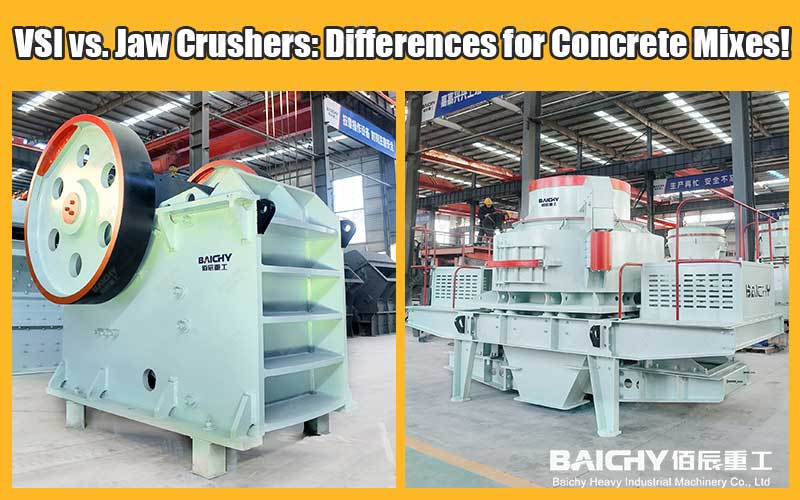
In concrete aggregate production lines, selecting the right crushing equipment is crucial to determining final product quality, production efficiency, and operating costs.
As a manufacturer of mining crushing equipment with 20 years of experience, we understand that jaw crushers and vertical shaft impact crushers are not simply substitutes, but rather complementary golden partners.
Key Differences Overview: Dramatically Different Functional Positions
Simply put, jaw crushers are coarse crushing experts, responsible for the initial, powerful crushing; while vertical shaft impact crushers are sand shaping masters, responsible for subsequent fine crushing and particle shape optimization. They play different but vital roles in the concrete aggregate production line, acting as upstream and downstream processes.
The table below summarizes the core differences between the two:
| Characteristics | Jaw Crusher | Vertical Shaft Impact Crusher |
| Core Functions | Coarse Crushing, Primary Crushing | Medium and Fine Crushing, Sand Making, Shaping |
| Crushing Principle | Compression Crushing | Impact Crushing (Stone-on-Stone, Stone-on-Iron) |
| Infeed/Discharge Size | Large feed (up to 1200mm), coarser discharge (usually >50mm) | Medium feed (usually <60mm), finer discharge (can produce 0-5mm sand) |
| Finished Product Particle Shape | Mostly flaky and needle-like, poor particle shape | Mostly cubic, excellent particle shape, continuous gradation |
| Typical Application Stage | First Crusher in Production Line | Secondary Crusher, Tertiary Crusher, or Sand Making Section in Production Line |
| Role in Concrete Materials | Crushing large raw ore to a size suitable for subsequent processing | Producing high-quality manufactured sand, improving coarse aggregate particle shape, and enhancing mixture performance |
In-depth Analysis: Comparison of Principle, Finished Product, and Application
1. Crushing Principle and Working Method
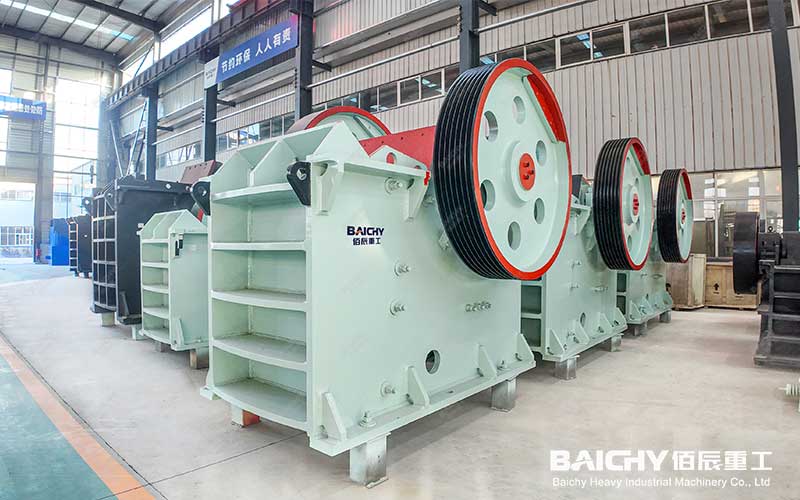
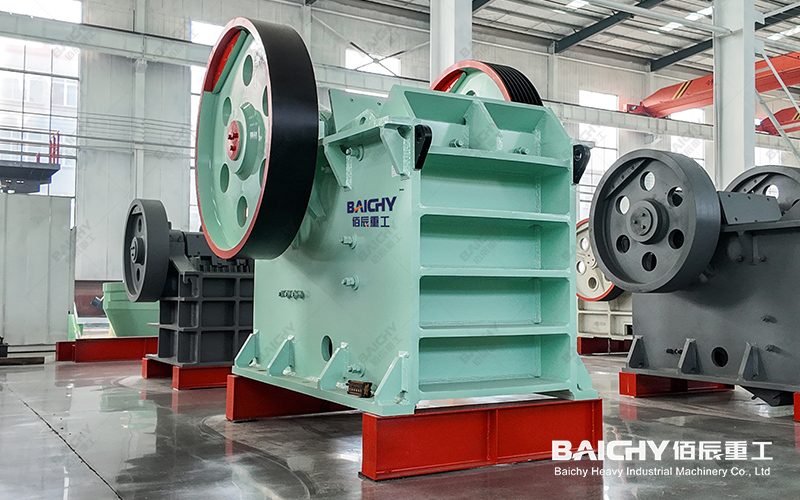
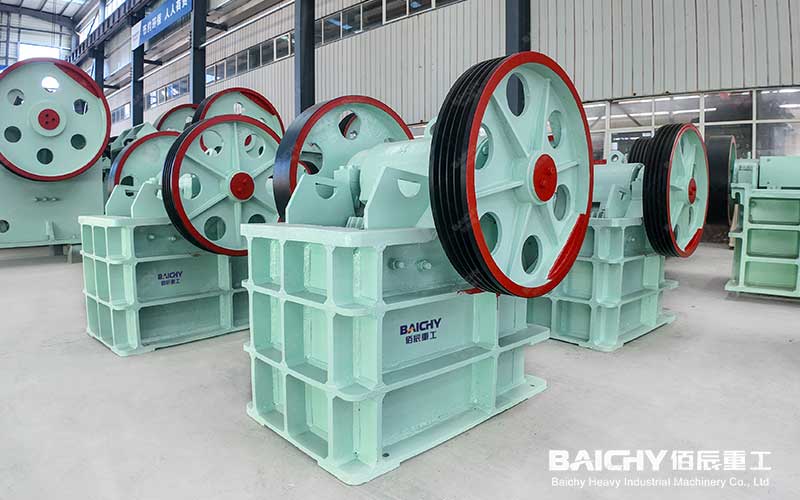
PE Jaw Crusher
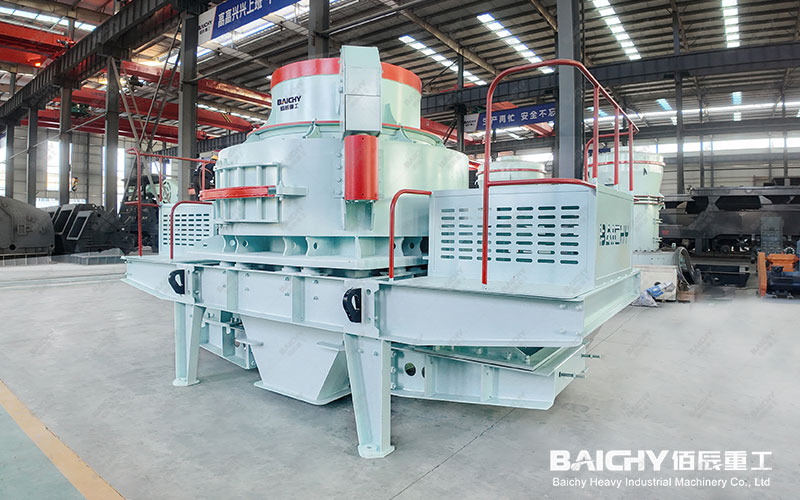
Vertical Shaft Impact Crusher
• Jaw Crusher: Employs the periodic squeezing motion between the moving and fixed jaws, crushing materials like two giant jaws. This process is primarily pressure-driven, resulting in immense crushing force, but the material fractures naturally, limiting control over particle shape.
• Vertical Shaft Impact Crusher: Material gains kinetic energy in a high-speed rotating rotor and is propelled onto surrounding anvils (stone-on-stone) or impact blocks (stone-on-iron), achieving crushing through high-energy impact. This collision method causes the material to crack along its weakest points, producing more cubic particles.
2. Comparison of Finished Aggregate Characteristics
This is crucial in determining concrete quality. High-quality concrete requires strong, clean aggregates with good particle shape.
| Finished Product Characteristics | Jaw Crusher Aggregate Characteristics | Vertical Shaft Impact Crusher Aggregate Characteristics |
| Particle Shape | Higher content of needle-like and flaky particles may lead to poor interlocking force of aggregates in concrete, increasing cement usage. | High proportion of cubic particles, sharp edges, rough surface, and strong bonding with cement paste. |
| Grading | A single crushing chamber produces a wide gradation distribution, but it is uncontrollable. | The fineness modulus and gradation of the finished sand can be flexibly controlled by adjusting the rotor speed, feed rate, and cascade method. |
| Powder Content | Produces relatively little stone powder. A certain proportion of stone powder (<0.075mm) will be produced. | | In concrete, an appropriate amount of stone powder can act as micro-aggregate filler, improving workability, but it needs to be controlled by powder classifiers. |
| Surface Texture | Relatively smooth surface. | Rough surface, strong adhesion. |
3. Synergistic Application in Concrete Production Lines
An efficient concrete aggregate production line usually combines the advantages of both:
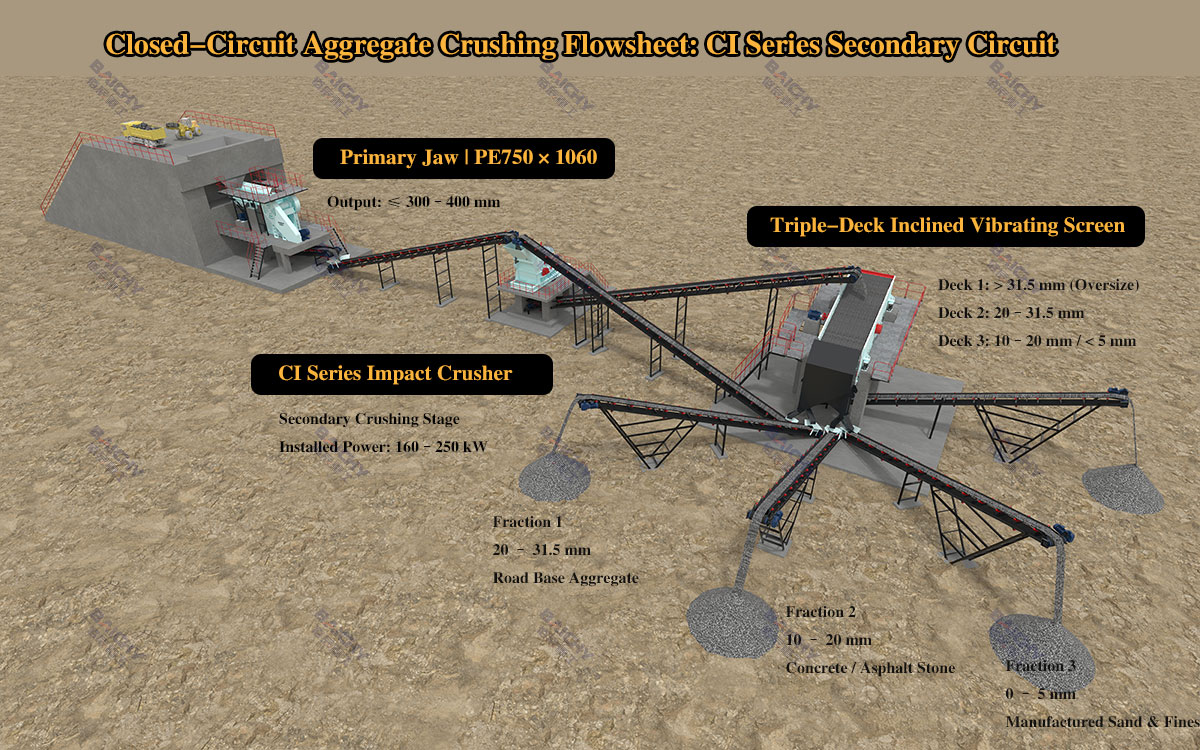
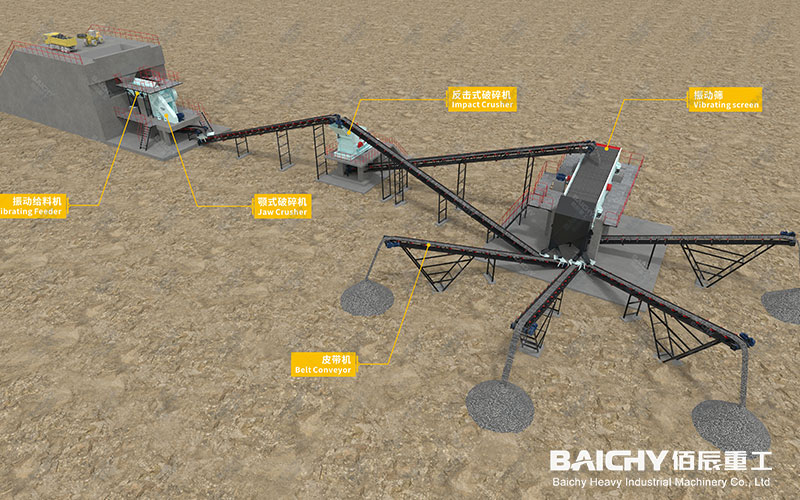
1. Primary Crusher (Jaw Crusher): Large raw materials such as limestone and granite are fed into the jaw crusher by a vibrating feeder and crushed into materials smaller than 150-300mm.
2. Medium and Fine Crushing (Vertical Shaft Impact Crusher or Other): Jaw crusher discharge is conveyed to the vertical shaft impact crusher (or first medium crushed by a cone crusher), where it is crushed and shaped to produce high-quality coarse aggregate of 5-40mm and high-quality manufactured sand of 0-5mm.
3. Screening and Circulation: The crushed mixture is classified by a vibrating screen. Qualified aggregate enters the finished product stockpile, while oversized particles are returned to the vertical shaft impact crusher for further crushing, forming a closed-loop circulation to ensure particle size and output.
This combination ensures a perfect balance between high output (the stable coarse crushing capacity of the jaw crusher) and high quality (the shaping and sand-making capacity of the vertical shaft impact crusher).
Selection Recommendations: Based on Your Core Needs
• If your core need is to process extra-large raw materials and pursue extremely high coarse crushing capacity, then a robust and durable jaw crusher is your best choice.
• If your core need is to produce high-standard commercial concrete aggregate, especially requiring high-quality manufactured sand and crushed stone with excellent particle shape, then a vertical shaft impact crusher is an essential piece of equipment. • For the vast majority of modern aggregate plants and ready-mixed concrete batching plants, the combination of a jaw crusher and a vertical shaft impact crusher has become the industry standard. It balances crushing efficiency, finished product quality, and economy.
Choosing equipment is essentially choosing a process solution. With 20 years of technical expertise, we not only provide standalone machines but also plan the most suitable jaw crusher + vertical shaft impact crusher production line configuration for you, ensuring you obtain the highest value concrete aggregate from raw rock. Welcome to contact our expert team for customized solutions and support.