
Vertical Roller Mill
Are you still struggling with the high energy consumption, excessive noise, and large footprint associated with traditional ball mills?
In the cement and mineral processing industries, electricity consumption is often the lifeline that determines profitability. With tightening environmental regulations and fierce market competition, finding a more efficient, intelligent, and eco-friendly grinding solution is no longer a matter of choice—it is an imperative.
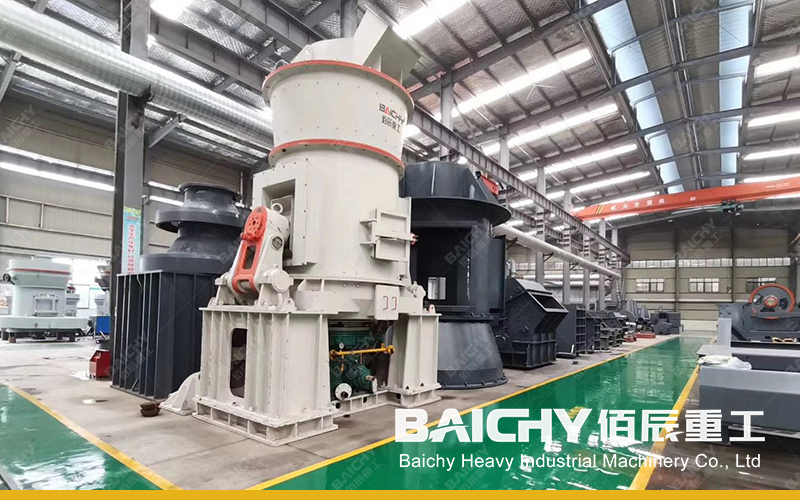
Today, we proudly introduce a game-changing "Efficiency Champion": the Vertical Roller Mill (VRM). It is more than just a piece of equipment; it is a strategic investment that lowers operating costs and boosts your core competitiveness.
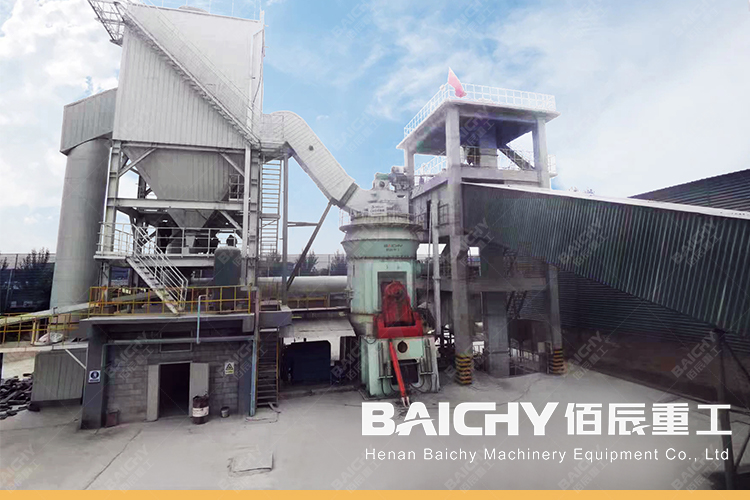
Vertical Mill Customer Site
Why are the world's leading building material companies choosing Vertical Roller Mills?
1. Superior energy efficiency that slashes electricity bills
Say goodbye to "energy-guzzling" machinery! The VRM utilizes the principle of material bed grinding, eliminating the need to lift heavy steel balls to great heights as required by ball mills. Compared to traditional ball mill systems, it saves up to 30%–50% on electricity. Furthermore, the system can fully utilize waste gas from the kiln-end preheater (even at temperatures as low as 150°C) for drying, significantly reducing coal consumption. Every kilowatt-hour of electricity and gram of coal saved translates directly into pure profit.
2. Multifunctional performance and versatile grinding capabilities
Whether processing hard limestone, sticky/damp clay, slag, or gypsum, the VRM handles it all with ease. It integrates five key functions into a single unit: crushing, drying, grinding, classifying, and conveying.
• Powerful drying capability: Capable of processing raw materials with moisture content up to 20% without the need for additional drying equipment.
• High-precision classification: Equipped with a high-efficiency dynamic classifier, it produces particles with optimal grading and higher reactivity, perfectly meeting the process requirements for cement and mineral raw materials.
3. Green production that protects the environment
• Low noise: Operates smoothly; compared to the deafening noise of ball mills, the VRM reduces operating noise by 20–25 decibels. • Low Wear: Metal loss is extremely low; this not only reduces contamination of the finished product by iron impurities but also lowers maintenance costs and the frequency of spare part replacements.
• Negative Pressure Operation: A fully sealed design combined with a high-efficiency bag-type dust collector ensures virtually no dust leakage into the workshop, creating a clean factory environment.
4. Intelligent Control, Consistent Stability
Modern vertical roller mills (VRMs) are equipped with advanced automation control systems (PLC/DCS). Everything is under precise control—from feed rate and grinding pressure to air temperature and velocity. The system responds rapidly, ensuring consistent product quality even when material grindability fluctuates, allowing your production line to operate efficiently 24 hours a day without interruption.
Frequently Asked Questions (FAQ)
Q1: While vertical roller mills (VRMs) save electricity, isn't the initial investment much higher than that of traditional ball mills? How long does it take to recoup the cost?
A: It is true that the purchase price of the main unit alone may be slightly higher for a VRM compared to a ball mill of the same capacity. However, consider the "total cost" picture:
• Lower System Investment: The VRM integrates crushing, drying, grinding, and classifying into a single unit. You no longer need to purchase separate dryers, classifiers, or elevators, and civil engineering costs are significantly reduced due to the smaller footprint.
• Impressive Payback Period: Thanks to 30%–50% energy savings compared to ball mills and reduced coal costs through waste heat utilization, most customers recoup the price difference in equipment investment within 1.5 to 3 years through electricity savings alone.
Q2: Our raw materials are very hard (e.g., containing quartz sandstone or iron ore); will the VRM's grinding rollers and table wear out quickly? Will frequent shutdowns for maintenance be required?
A: This is a very common misconception. In reality, the metal wear rate of a VRM is extremely low (typically only 5–15 g/t), far lower than the steel ball wear rate in ball mills.
• Material Assurance: Our grinding rollers and tables are made of high-chromium cast iron or Ni-Hard cast iron, featuring carbide studs or wear-resistant hard-facing layers specifically designed to handle highly abrasive materials.
• In-situ Maintenance Design: The equipment features a unique roller swing-out mechanism. During maintenance, grinding rollers can be swung out of the housing directly via hydraulic cylinders, eliminating the need to dismantle the separator or open large manholes. Routine inspections and roller replacements take only 1–2 days, significantly reducing downtime.
Q3: What are the feed size requirements for the vertical mill? Do we need to modify our crushing system to produce very fine feed?
A: No, you don't. This is a major advantage of the vertical mill—it accommodates large feed particles.
While ball mills typically require feed sizes below 25mm, our vertical roller mills accept maximum feed sizes of 80mm or even 100mm (depending on the grinding table diameter). This allows you to simplify upstream crushing processes and reduce investment and operating costs for crushers.
Q4: Do the particle shape and gradation of the finished product affect cement performance? Will they impact concrete workability?
A: Rest assured, the finished product from the vertical mill fully complies with industry standards and even offers advantages in certain areas.
• Optimal Gradation: Vertical mills utilize "material bed compression" rather than "impact crushing," resulting in a moderate fines content and a more continuous particle size distribution.
• Early-Stage Reactivity: Hot air drying inside the mill keeps the finished product temperature relatively low (typically 80–100°C). Additionally, the particles are rounded yet angular, which promotes cement hydration, improves raw meal burnability, and enhances the early-strength performance of the final cement product.
Q5: I’ve heard that vertical mills suffer from excessive vibration and frequent trips; does this mean they require highly skilled operators?
A: Early vertical mill models did face challenges regarding vibration control, but modern vertical mill technology is highly mature.
• Intelligent Hydraulic System: We utilize a patented hydraulic loading and damping system that automatically adjusts grinding pressure to accommodate variations in material bed thickness, effectively absorbing operational impact forces.
• User-Friendly Operation: The entire system is fully automated via PLC/DCS control. Simply set the desired output and fineness parameters, and the system automatically regulates airflow, feed rate, and pressure differential. Even non-specialists can operate the equipment proficiently after brief training.
Q6: What if we are retrofitting an old plant and have limited space?
A: This is where the vertical mill truly excels—offering exceptional space efficiency.
Vertical mills feature a vertical layout, occupying only about 50% of the footprint required by a ball mill system of equivalent capacity, while being highly compact. Our engineering team provides customized 3D plant layout plans to maximize existing space; the mill can even be installed within an existing ball mill facility, saving you significant civil engineering and renovation costs.
Q7: What about after-sales service? How are overseas projects handled if parts fail?
A: We fully understand that "downtime means lost money."
• Localized Inventory: We maintain spare parts centers in key markets, enabling shipment of common wear parts (such as seals and nozzle rings) within 48 hours.
• Remote Diagnostics: Equipment comes standard with IoT modules, allowing our technical experts to monitor operational data in real-time from afar, provide early fault warnings, and guide on-site troubleshooting.
• Full Lifecycle Service: We provide comprehensive, one-stop services ranging from installation guidance, commissioning, and staff training to major equipment overhauls.