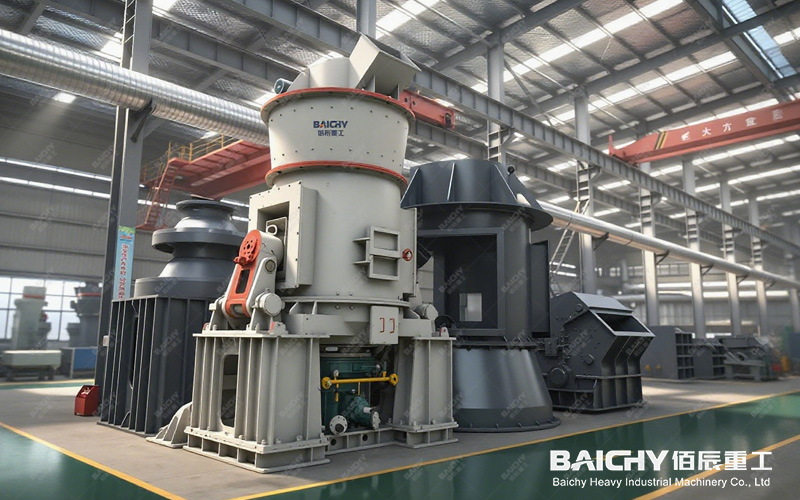
vertical roller mill
The Vertical Ultrafine Mill represents a high-end evolution of the SRM vertical roller mill technology. It serves as a pivotal piece of equipment in the field of mineral deep processing, enabling a transformative leap in value—specifically, the conversion of raw ore into high-value fine powders.
I. Technical Overview: Surpassing Traditional Processing Capabilities for Building Materials
As mineral deep processing emerges as a mainstream trend, the Vertical Ultrafine Mill has found widespread application in high-end sectors—such as non-metallic mineral processing and industrial solid waste recycling—thanks to its exceptional ability to produce materials with high specific surface areas and strictly controlled particle size distributions.
As a manufacturer of mobile mining and crushing equipment, our technological scope has long since expanded beyond the realm of traditional cement and building materials. The Vertical Ultrafine Mill is specifically engineered for the production of fine and ultrafine powders, capable of transforming ordinary ores into high-value-added products that meet the rigorous standards of industries such as chemicals, coatings, and electronic materials.
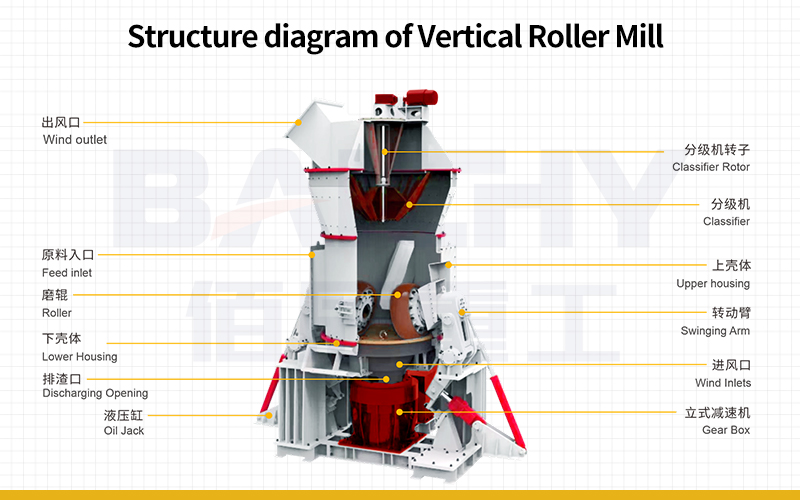
Structure diagram of Vertical Roller Mill
II. In-Depth Technical Analysis: Reconfiguring Value from Coarse Crushing to Ultrafine Grinding
By upgrading the three core systems of SRM technology—classification, pressure control, and airflow—the Vertical Ultrafine Mill leverages the principle of ultra-high-pressure material bed grinding to achieve a harmonious balance between low energy consumption and high-precision particle sizing.
| Core Technical Feature | Technical Principle & Parameters | Value Proposition |
| Material Bed Grinding Principle | Inherits SRM technology; grinding roller pressure is increased to several times that of standard raw material mills. | Significantly reduces energy consumption through compressive crushing rather than impact crushing. |
| High-Efficiency Classification System | Equipped with a high-speed vortex classifier / dynamic classifier. | Enables precise classification ranging from 325 mesh to 2500 mesh (D97: 5μm–45μm). |
| System Integration | Integrates five key functions: drying, crushing, grinding, classification, and conveying. | Simplifies the process workflow and reduces infrastructure investment costs. |
III. Core Competitive Advantages: Why Choose a Vertical Ultrafine Mill?
Compared to traditional Raymond mills, ball mills, and jet mills, the Vertical Ultrafine Mill possesses three distinct core competitive advantages for large-scale ultrafine powder production: low energy consumption, precise particle size control, and low maintenance costs.
1. Ultra-High Grinding Efficiency and Low Energy Consumption
• Data-Backed Performance: At equivalent product fineness levels, system energy consumption is reduced by 20%–40% compared to traditional tube mills or air-swept mills.
• Economic Value: In large-scale continuous production operations, electricity costs alone can be reduced by millions of dollars.
2. Precise and Controllable Product Particle Size Distribution
• Control Mechanism: Product fineness (D97) can be controlled in real-time by adjusting the classifier speed and the system airflow.
• Product Characteristics: Features a steep particle size distribution curve with a narrow distribution range, free from excessive coarse or fine particles—making it particularly suitable for high-end fillers and coatings.
3. Integrated Drying Capability and Broad Applicability
• Drying Capacity: Capable of directly processing materials with a moisture content of 6%–8% (or higher when utilizing high-temperature heat sources).
• Applicable Materials: Suitable for moisture-bearing non-metallic minerals (such as kaolin and bentonite) as well as industrial by-products (such as steel slag and blast furnace slag), requiring no pre-drying.
4. Low Wear Rate and Controllable Maintenance Costs
• Wear Mechanism: The metal wear rate associated with the material-bed extrusion and crushing mechanism is significantly lower than that of impact-based crushing methods.
• Component Design: The grinding roller and grinding table liner segments feature a modular design, offering extended service life and facilitating quick, convenient replacement.
IV. Product Specifications and Parameters
Baichy Machinery Vertical Roller Mills offer processing capacities ranging from 10 to 120 tons per hour, accommodate a maximum feed particle size of up to 38 mm, and support various international trade settlement methods.
| Item | Parameter/Description | Remarks |
| Keywords | Dolomite Grinding Equipment / Vertical Roller Mill | Core Application Scenarios |
| Brand | Baichy Machinery | Original Equipment Manufacturer (OEM) |
| Feed Size | 0–38 mm | Requires integration with upstream fine crushing equipment |
| Processing Capacity | 10–120 t/h | Varies based on material hardness and fineness |
| Product Fineness | 325 Mesh – 2500 Mesh (D97) | 5 μm – 45 μm |
| Packaging Method | Standard Container / Bulk / Wooden Crate | Customized based on shipping distance |
| Export Regions | Southeast Asia, Central Asia, South America, North America, Africa | Global Service Network |
| Payment Terms | T/T (Wire Transfer), L/C (Letter of Credit), PayPal | Supports various cross-border payment methods |
Note: The data in the table above is for reference only; specific configurations are subject to the terms of the contract.
V. Case Study: East China Calcium Carbonate Deep Processing Project
Through an integrated "Crushing – Ultrafine Grinding – Modification" solution, an enterprise in East China successfully produced 2000-mesh heavy calcium carbonate powder that meets the demanding requirements of high-end plastic masterbatches, while reducing unit energy consumption to 65 kWh/t.
• Project Name: Large-scale Calcium Carbonate Deep Processing Project in East China
• Process Flow:
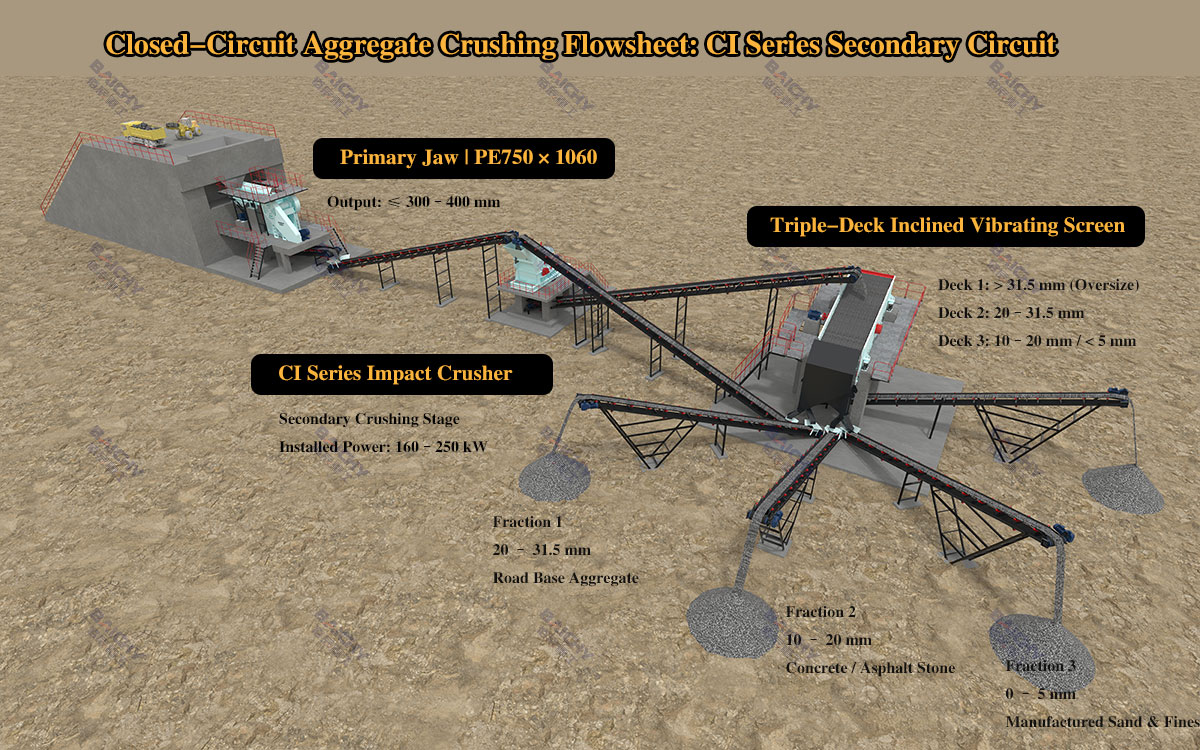
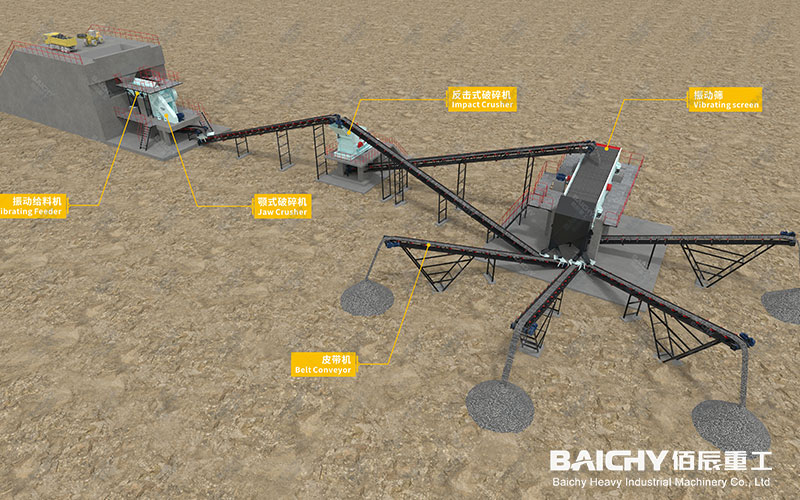
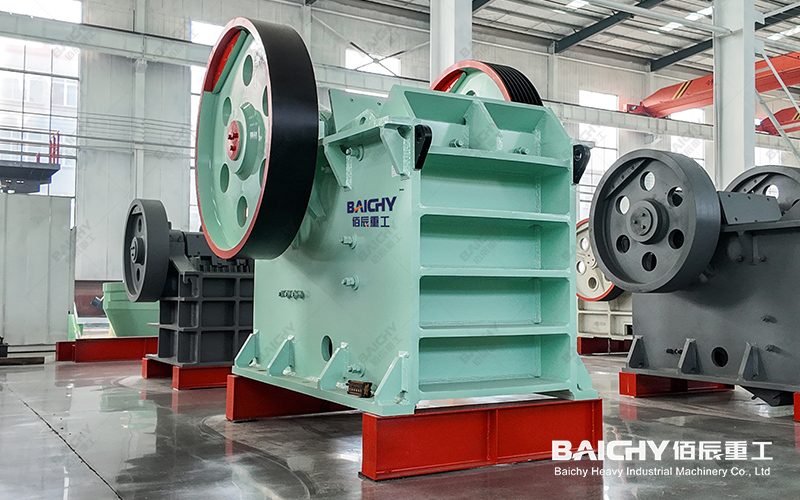
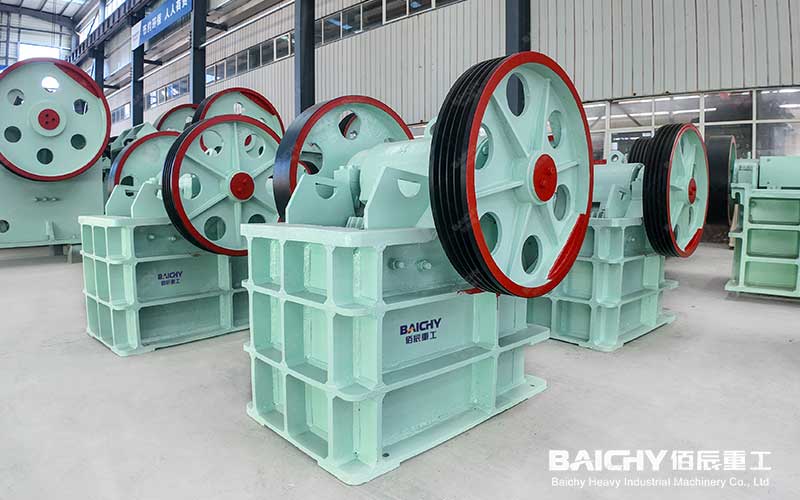
1. Upstream Crushing: European-style Jaw Crusher + Hydraulic Cone Crusher, crushing calcite down to 0–10 mm.
2. Core Grinding: Large-scale Ultrafine Vertical Roller Mill + High-efficiency Turbine Classifier.
• Output Results:
◦ 800 Mesh (D97 = 19 μm)
◦ 1250 Mesh (D97 = 10 μm)
◦ 2000 Mesh (D97 = 6.5 μm) — Successfully penetrated the high-end market.
• Key Data: The unit energy consumption for the 1250-mesh product is only 65 kWh/t, significantly lower than the industry average.
VI. Recommended Ancillary Processes and Equipment
To maximize the efficiency of the vertical ultrafine mill, we recommend integrating high-efficiency fine crushers, precision metering systems, and surface modification production lines to achieve the principle of "more crushing, less grinding."
1. High-Efficiency Fine Crusher / VSI Sand Maker
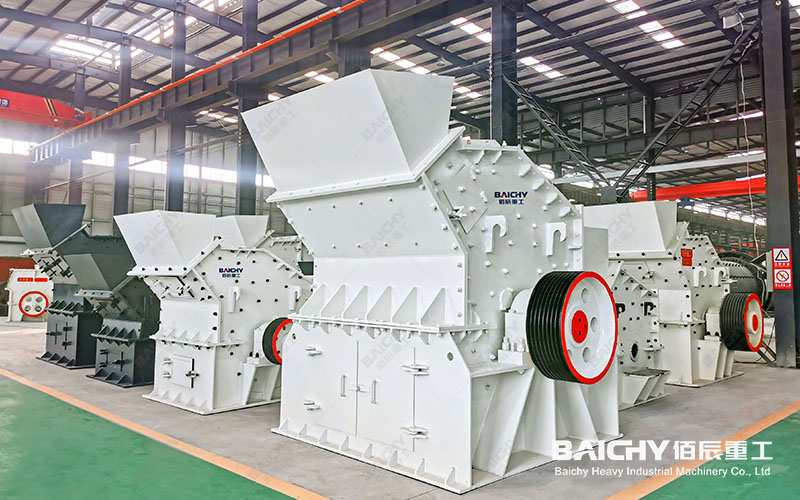
Fine Crusher
◦ Function: Pre-treats the feed material entering the mill to a particle size of 3–5 mm.
◦ Benefits: Increases mill throughput by 20%–50% and reduces specific energy consumption (kWh per ton).
2. Precision Feeding and Metering System
◦ Configuration: Loss-in-weight feeders or precision belt scales.
◦ Function: Ensures a uniform and stable feed rate into the mill, maintains a consistent material bed thickness, and guarantees product quality.
3. Surface Modification Production Line (Optional)
◦ Function: In-line or off-line surface coating and modification.
◦ Objective: Enhances the compatibility of the powder material with plastics and rubber, enabling a complete "turnkey solution."
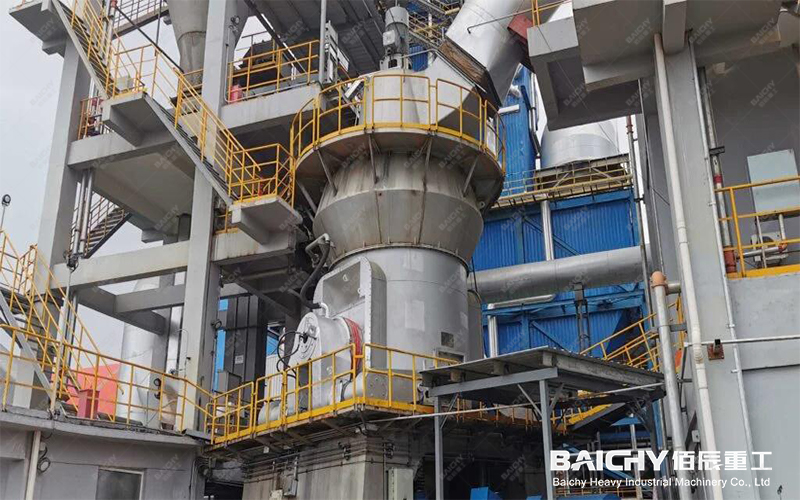
Vertical Roller Mill Grinding Site
VII. Frequently Asked Questions (FAQ)
Q1: What types of materials are suitable for processing with the vertical ultrafine mill? Is there a limit on material hardness?
A: It is primarily suitable for non-metallic minerals and industrial raw materials with a Mohs hardness of less than 7—such as limestone, calcite, kaolin, bentonite, gypsum, slag, etc. For materials with higher hardness, a specialized assessment regarding wear economics is required.
Q2: What is the finest particle size achievable with this equipment? What is the particle size distribution like?
A: Through optimized configuration, the fineness of the finished product can be adjusted within the range of D97: 5 μm to 45 μm (approximately 325 mesh to 2500 mesh). The particle size distribution curve is steep with a narrow distribution range, effectively minimizing the presence of residual coarse particles.
Q3: Why is the selection of upstream crushing equipment emphasized so strongly?
A: The principle of "more crushing, less grinding" is central to energy efficiency. By reducing the mill feed size from 10–20 mm down to 3–5 mm, the mill's hourly output can be significantly increased (by 20%–50%), while simultaneously reducing power consumption. We provide comprehensive, optimized solutions covering the entire process from crushing to fine grinding.
Q4: How do the investment and operating costs of the vertical ultrafine mill compare to those of a jet mill?
A: For medium-to-large-scale production projects (capacity > 5 t/h), vertical ultrafine mills entail a lower initial investment. In terms of operation, their energy consumption and wear-part costs are superior to those of jet mills, making them better suited for large-scale, continuous production.
Q5: Does the equipment include a dust removal and environmental protection system?
A: Yes. The standard configuration includes multi-stage high-efficiency cyclone separators and nano-coated fabric bag filters, ensuring that dust emissions meet regulatory standards and comply with "Green Mine" construction criteria.
If you are planning a high-standard production line for ultrafine powders, we invite you to contact Baichi Heavy Industry. We provide expert guidance on equipment selection, process design, and on-site installation and commissioning services.
👉