The Underestimated "Unsung Hero": The World of Crushed Stone You Never Knew
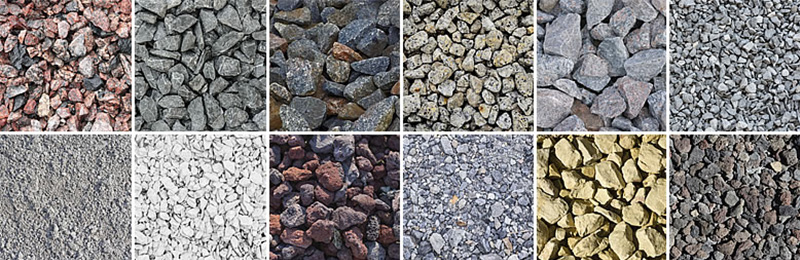
Crushed Stone
From the smooth highways beneath our feet to the reinforced concrete skyscrapers we inhabit, there exists a seemingly ordinary material that is ubiquitous—silently supporting every inch of modern civilization's fabric. It is neither a glittering precious metal nor a sophisticated microchip; it is crushed stone. Geologist Dewey Kirstein once dubbed it the "Unsung Mineral Hero." This article will take you on a deep Pe into the wonders of this "cornerstone" material—one we tread upon every day, yet about which we know so little.
Part I: The Ubiquitous "Cornerstone"—Astonishing Statistics
Let us begin with a staggering figure: in 2020, the United States produced approximately 1.46 billion tons of crushed stone. This means that, on average, every American citizen "consumed" four tons of crushed stone. Try to imagine that: it is equivalent to having 20 pounds of crushed stone working for you every single day. Whether you are driving, working, or simply at home, these unassuming fragments of rock are silently underpinning your daily life.
Crushed stone is one of the most fundamental and abundant mineral products globally, yet it is by no means a standardized commodity. Its properties are infinitely variable, depending entirely on its source—the rock itself. From limestone to granite, from basalt to quartzite, various types of rock are quarried, crushed, and screened to ultimately become the "building blocks" that construct our world.
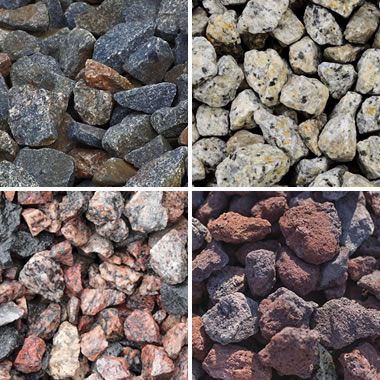
trap rock, white granite, lava rock, and red granite
Part II: What Is Crushed Stone? The Journey from Rock to Roadbed
First, let us clarify a common misconception. In the eyes of geologists, "crushed stone" and "gravel" are two distinct entities:
• Crushed Stone: Angular fragments formed by mechanically crushing rock that has been artificially quarried.
• Gravel: Rounded pebbles formed by natural water currents transporting and abrading rock fragments over time.
However, in everyday parlance, people often lump both categories together under the general term "gravel." The protagonist of our story today, however, is primarily the former—crushed stone. Its manufacturing process is straightforward: a suitable quarry is selected for extraction; large blocks of rock are crushed; and the material is then screened into various particle sizes based on its intended application. The specific use dictates the choice of rock type and particle size—a factor that lies at the very root of crushed stone's remarkable Persity.
Part III: The Rock Family Tree—Who Are the Stars That Build Our World?
The raw materials used for crushed stone in the United States are highly Perse, primarily comprising limestone, granite, dark igneous rocks, sandstone, quartzite, and dolomite, among others. Each possesses its own unique strengths, as well as its own specific limitations.
1. Limestone: The Undisputed King
As the most common raw material for crushed stone, limestone (composed primarily of calcium carbonate) holds an unshakable position. It is abundant in supply and incredibly versatile in application: it serves not only as a core ingredient in the production of cement and concrete but also as a foundational base material for highways, buildings, and railways. Furthermore, it is utilized to produce agricultural lime, neutralize acidic industrial wastewater, and is even processed into products such as poultry grit and soil conditioners.
Limestone also possesses a certain "soft power" that contributes to its popularity: it is softer than the steel used to construct crushing equipment and truck beds. This means that the extraction and processing of limestone inflict significantly less wear and tear on machinery, resulting in lower operational costs. Imagine a truckload of incredibly hard quartzite being unloaded; it would abrade the bed of the truck much like sandpaper. Limestone, by contrast, is a far more forgiving material.
2. Granite and "Dark Igneous Rocks": The Resilient Workhorses
In the construction industry, the term "granite" is often used broadly to refer to all light-colored igneous rocks, while "dark igneous rocks" typically denote darker varieties such as basalt and gabbro. These materials outperform limestone in acidic environments or high-abrasion scenarios, making them an excellent choice for producing durable concrete aggregates.
3. Quartzite: The "Tough Guy" You Love to Hate
Quartzite is a type of metamorphic sandstone characterized by its extreme hardness (ranking 7 on the Mohs scale) and exceptional durability. However, this very attribute constitutes its primary drawback: it is harder—and therefore tougher on—the teeth of crushers, the mesh of screens, and the beds of trucks! The use of quartzite leads to rapid wear and tear on expensive heavy machinery, significantly driving up production costs. Consequently, despite its exceptional performance characteristics, it is often utilized with caution.
4. Other Notable Varieties:
• Dolomite: Similar to limestone but harder and more resistant to abrasion.
• Scoria and Pumice: Porous and lightweight, these materials are ideal for manufacturing lightweight concrete, landscaping materials, and even anti-slip surfacing for ski slopes.
• Marble: High-purity marble can be processed into high-value-added chemicals and fillers, and is even utilized in cosmetics and dietary supplements.
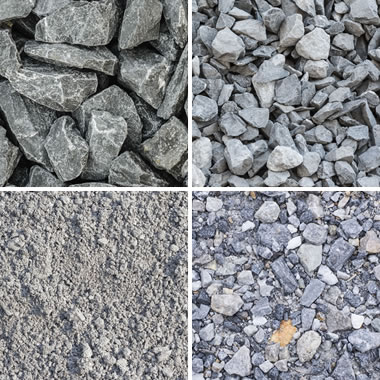
coarse aggregate, crushed limestone, mine run limestone
Part Four: The Economics of Weight—Massive Rocks, Massive Costs
The crushed stone industry is massive in scale, yet its economics are dominated by a simple fact: the product is extremely heavy. This results in transportation costs accounting for a disproportionately large share of the final price.
In the United States, the vast majority of crushed stone is transported by truck, incurring a freight cost of $0.12 to $0.15 per ton-mile. This means that if a quarry is located 20 miles from a job site, transportation costs alone add $2.40 to $3.00 per ton to the price. Consequently, crushed stone is a quintessential locally consumed commodity—provided that a suitable rock source exists nearby, buyers will rarely look further afield. While rail and barge transport offer lower unit costs, only a select few quarries have direct access to such networks, and even then, final delivery still requires short-haul trucking.
This also explains why the United States imports virtually no crushed stone—the associated transportation costs would render its price completely uncompetitive. Every major metropolitan area relies heavily on the rock resources available within its immediate vicinity.
Part Five: A Sustainable Future—Recycling and Resource Planning
As environmental awareness grows and urban areas continue to expand, the crushed stone industry faces both challenges and opportunities for transformation.
1. Recycling: Turning Waste into Value
Recycling construction waste has emerged as a significant trend. Discarded concrete, asphalt, and bricks can be crushed and screened to serve as substitutes for virgin crushed stone in applications such as road bases and backfill. This practice not only reduces the volume of waste sent to landfills but also offers both environmental and economic benefits, as the selling price of recycled material is typically only 50% to 80% that of newly quarried stone.
2. The Greatest Challenge: Resources Are "Vanishing"
Although the total volume of rock resources is immense, the locations available for extraction are rapidly diminishing due to urban development, environmental protection measures, and land-use planning. A community might suddenly discover that there are no longer any mines available nearby, and that the nearest suitable quarry lies 60 miles away—a situation that would cause construction costs to skyrocket.
The solution lies in proactive planning. Geological survey agencies—such as those in Arizona—have begun creating "aggregate resource maps" for metropolitan areas, identifying and safeguarding potential rock resource zones during the early stages of land-use planning. This approach not only guarantees a supply of construction materials for decades to come but also helps stabilize the costs of infrastructure development.
Conclusion: Rediscovering the Greatness in the Ordinary
From an unassuming rock to the very physical foundation of our modern civilization, the journey of crushed stone embodies the concept of "greatness found in the ordinary." It is unpretentious, yet it bears the weight of everything; it is inexpensive, yet utterly indispensable. The story of this "unsung hero" reminds us that the most enduring prosperity is often built upon the most solid of foundations. The next time you speed down a highway or step into a high-rise building, perhaps you might pause to consider that it is precisely these rocks beneath your feet—carefully crushed, screened, and laid into place—that silently support all our distant horizons and our cherished homes.