
Industrial Rotary Dryer Troubleshooting Guide
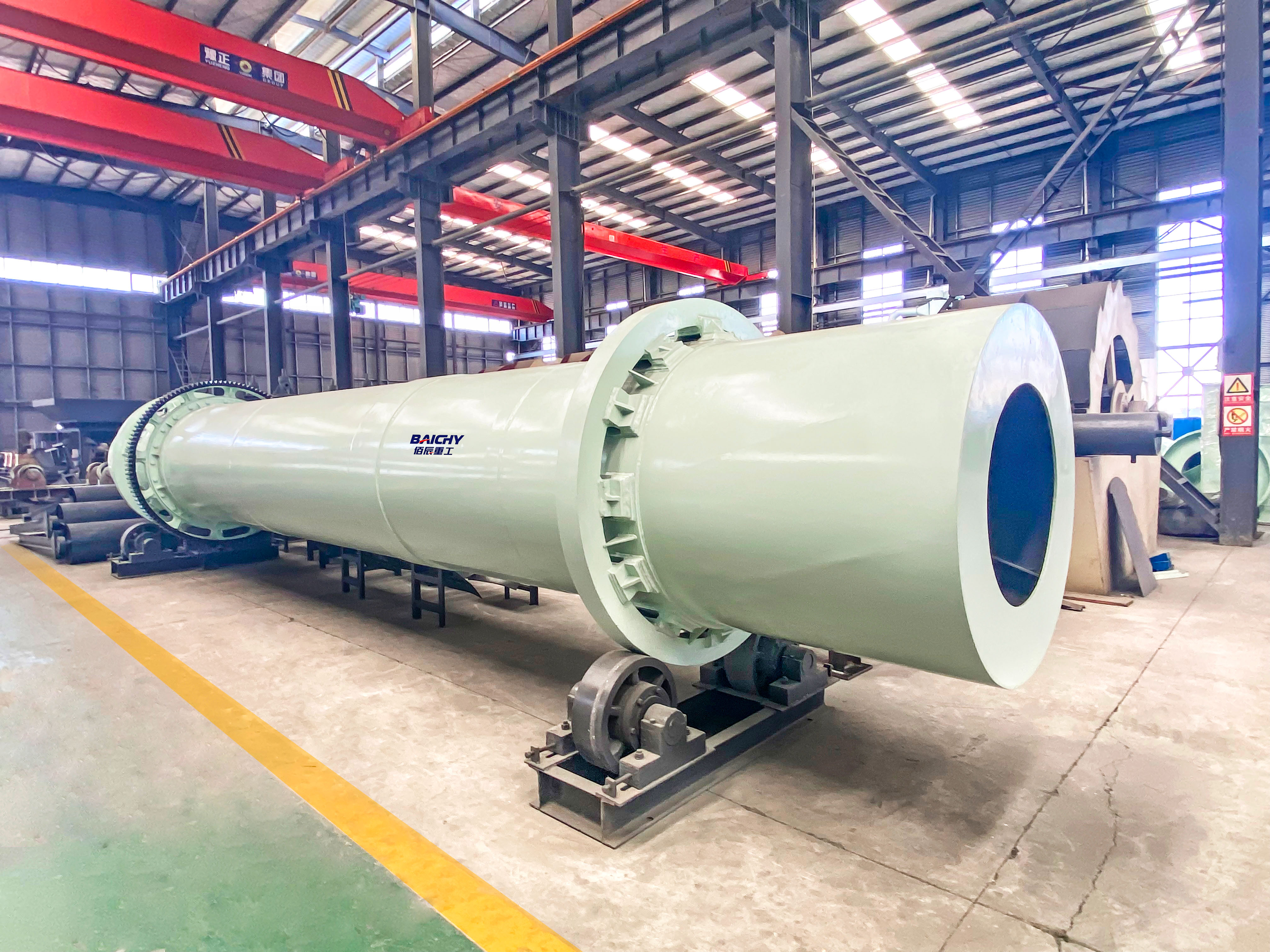
In the mineral processing, building materials, metallurgy, and chemical industries, rotary dryers are core equipment for achieving large-scale, continuous material drying. As a manufacturer with 20 years of experience in crushing and grinding equipment, we have witnessed countless production lines experiencing downtime and reduced efficiency due to malfunctions in the drying process. Therefore, mastering systematic rotary dryer troubleshooting methods is crucial for ensuring production continuity and reducing maintenance costs. This article, based on our field experience, provides a practical troubleshooting guide from symptoms to underlying causes.
I. Overview of Rotary Dryer Troubleshooting
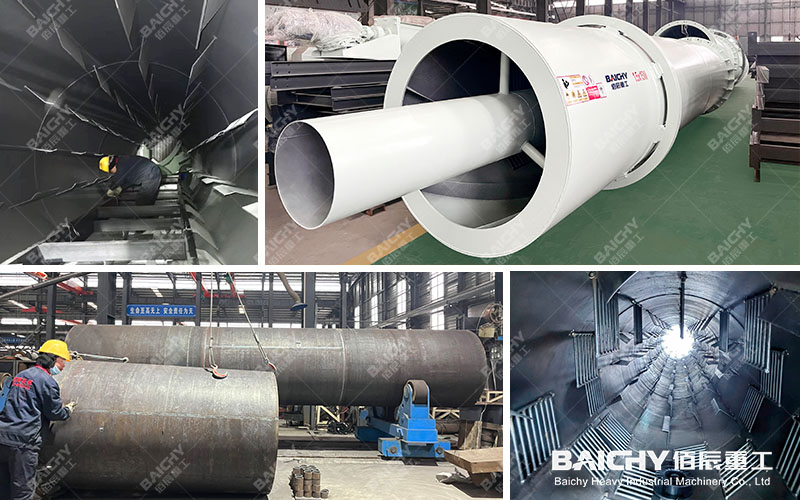
Troubleshooting a rotary dryer (also known as a rotary air dryer) is not a simple matter of treating the symptoms, but a process requiring systematic thinking and step-by-step troubleshooting. It involves multiple aspects, including mechanical transmission, thermal systems, fluid mechanics, and automatic control. Efficient troubleshooting not only quickly restores production but also significantly extends equipment lifespan and reduces energy consumption per ton of product through preventative maintenance.
Rotary dryer malfunctions
II. Our Solution Advantages
As your upstream equipment supplier, we not only provide the main equipment but also offer in-depth support from a production line coordination perspective:
• Systematic Diagnostic Thinking: We focus not only on the dryer itself but also analyze the impact of related systems such as feeding, heat sources, and dust removal, providing root cause solutions.
• Abundant Field Data: Over 20 years, we have accumulated dryer operating data for various materials (such as slag, clay, quartz sand, and metal powder) under different operating conditions, providing a benchmark for your abnormal conditions.
• Spare Parts and Retrofit Support: We can quickly match high-quality wear-resistant parts (such as lifting plates and gear rings) and provide targeted retrofit solutions (such as seal upgrades and lifting plate optimization) to fundamentally improve equipment reliability.
III. Common Fault Diagnosis and Case Analysis
Below are two typical cases encountered in our services:
Case 1: Sudden Drop in Drying Efficiency of Slag Dryer in Southeast Asian Cement Plant
• Fault Symptoms: Continuously high discharge moisture content, decreased dust collector inlet temperature, and slightly lower main unit current than normal.
• Troubleshooting Process: The hot air furnace temperature was normal, ruling out heat source issues. Subsequent inspection of the dust collector fan revealed that the damper opening was automatically closing due to a malfunction in the actuator, resulting in insufficient system airflow.
• Solution: The damper actuator was repaired, and the system airflow was adjusted to the rated value. Drying efficiency returned to normal within 4 hours. This case emphasizes the critical importance of system airflow in the balance of "air, heat, and material".
Case Study 2: Abnormal Vibration of Quartz Sand Dryer Cylinder in a South African Chemical Plant
• Symptom: Periodic vibration of the cylinder during operation, accompanied by a metallic friction sound.
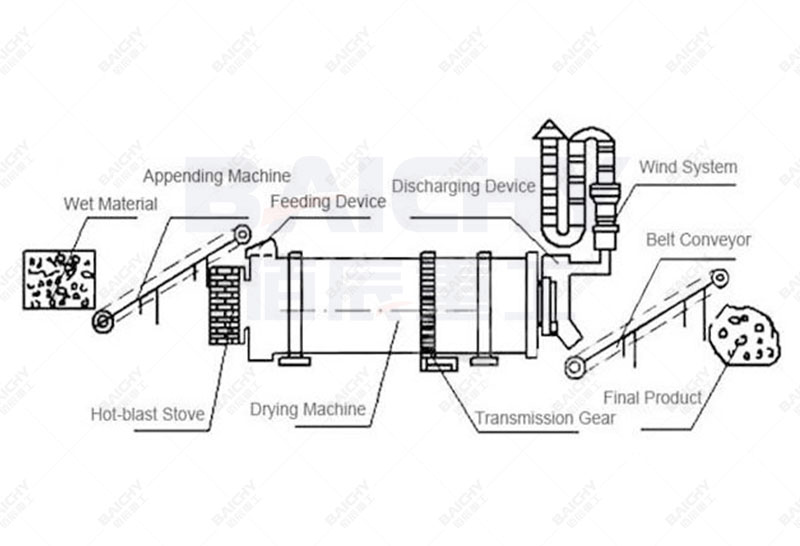
• Troubleshooting Process: Inspection after shutdown revealed excessive backlash in the transmission gears due to slight foundation settlement, and uneven wear pits on one of the support rollers, causing unstable operation of the roller rings.
• Solution: First, adjust the support roller base to correct the gear meshing clearance to the standard range. Repair the worn support roller surface on-site by machining. After restarting, the vibration and abnormal noise disappeared. This demonstrates the importance of regularly inspecting transmission and support components.
Dryer structure diagram
IV. Core Steps and Prevention for Troubleshooting
An efficient troubleshooting process should include: 1. Safe shutdown → 2. Recording phenomena and parameters → 3. Troubleshooting from the outside in (electrical/lubrication → mechanical transmission → internal structure) → 4. Comprehensive analysis and handling. More importantly, establish a preventative maintenance system, such as regularly checking gear lubrication, the contact surface between the support rollers and the roller rings, and seal wear, and maintaining a proper operating log. V. Recommended Related Equipment
A high-efficiency raw material processing line requires more than just drying. Perfectly complementing a rotary dryer are our:
• Jaw crusher/hammer crusher: Used for primary crushing of raw materials, resulting in more uniform particle size entering the dryer.
• Bucket elevator/belt conveyor: Used for material transport before and after drying, ensuring continuous feeding.
• Ball mill/Raymond mill: Used for fine grinding of dried materials. We can provide you with complete equipment solutions and technical support from crushing and drying to grinding.
VI. Frequently Asked Questions (FAQ)
Q1: What are the most common malfunctions of rotary dryers? How can they be prevented?
A1: The most common problems are decreased drying efficiency and abnormal bearing/gear transmission systems. Prevention hinges on standardized operation and regular maintenance: consistently control feed rate and moisture content; regularly check and replenish lubricating oil; and monthly check the wear of support rollers and bearing rings, as well as the tightness of anchor bolts.
Q2: The seals at the head and tail of the dryer always leak air and material, and repeated attempts to fix it haven't been effective. What could be the underlying cause?
A2: If the seals fail quickly after replacement, the underlying cause may be excessive radial runout of the drum or excessive positive pressure inside the system. First, check and adjust the support rollers to ensure smooth drum operation; then check if the dust removal system is clogged, causing excessive air resistance. Increased internal positive pressure will exacerbate air leakage.
Q3: The equipment is running normally, but the product pulverization rate has increased, and particle size is severely damaged. How can this be adjusted from an equipment perspective?
A3: This is usually related to the "falling motion" of the material inside the drum. Adjustments can be made in two ways: 1. Appropriately reduce the drum speed to reduce the number and height of material impacts after lifting; 2. Consider modifying the lifting plate structure, such as changing the "lifting" type to a "fan-shaped" or "honeycomb" type, to convey and scatter the material more gently.