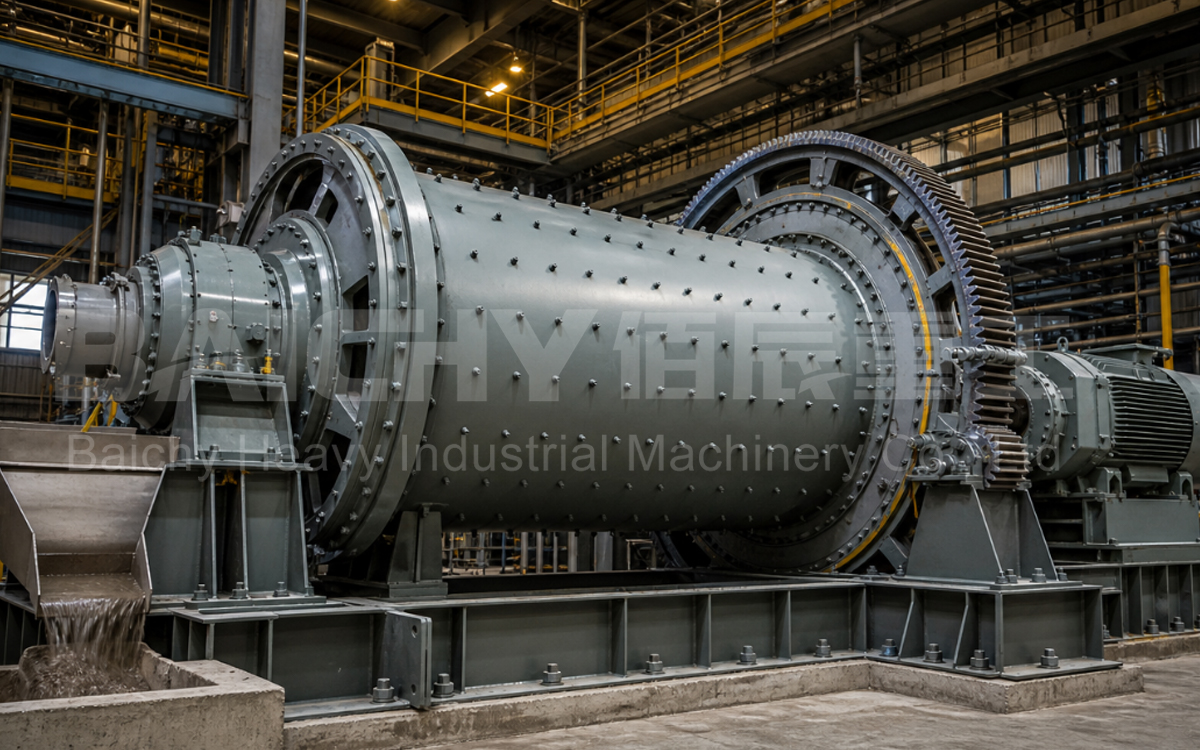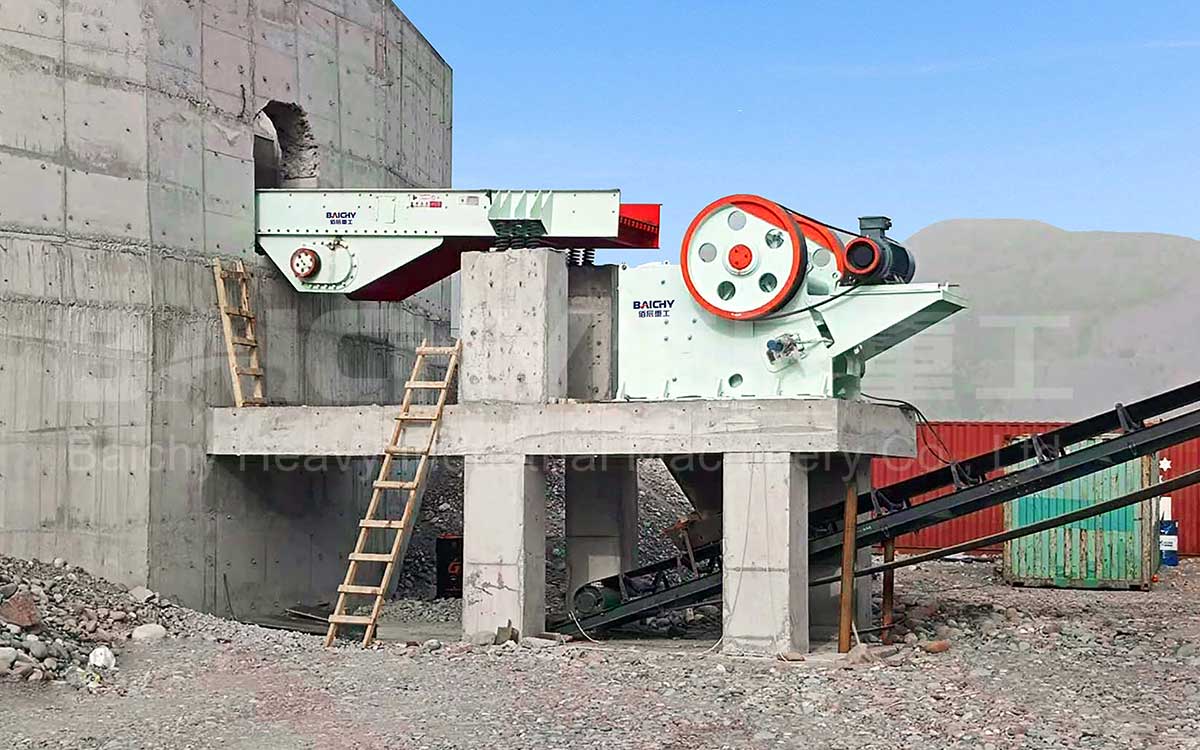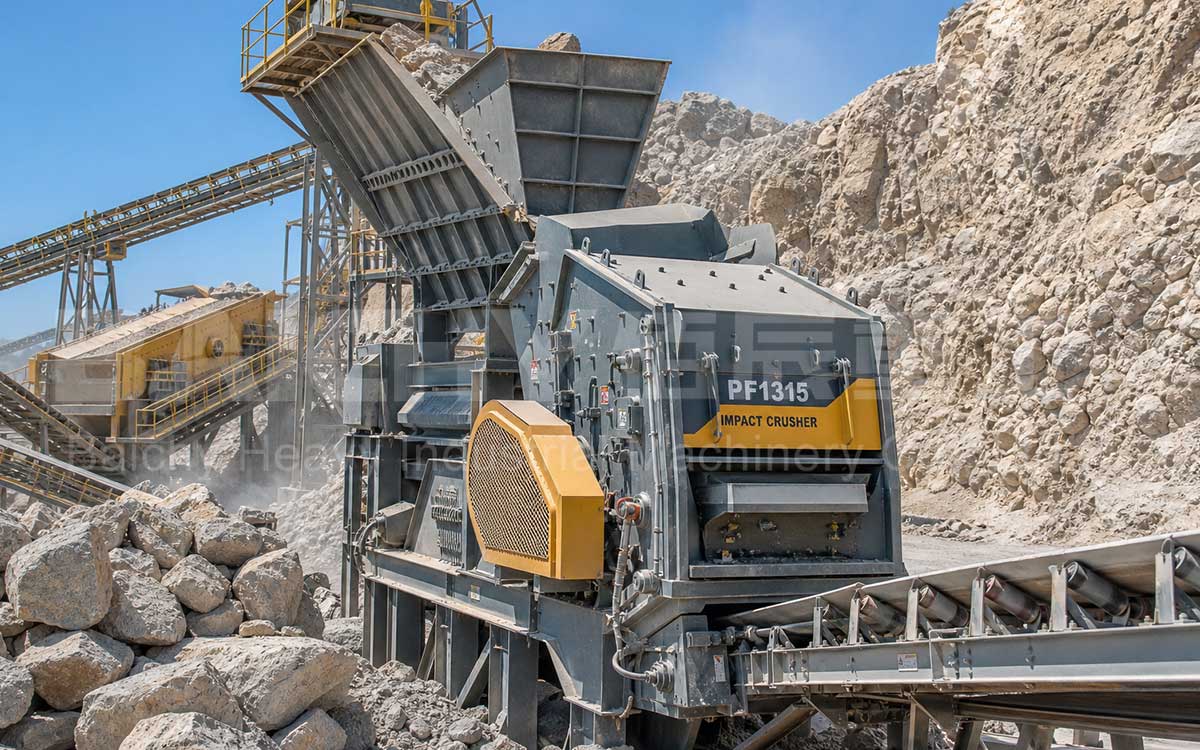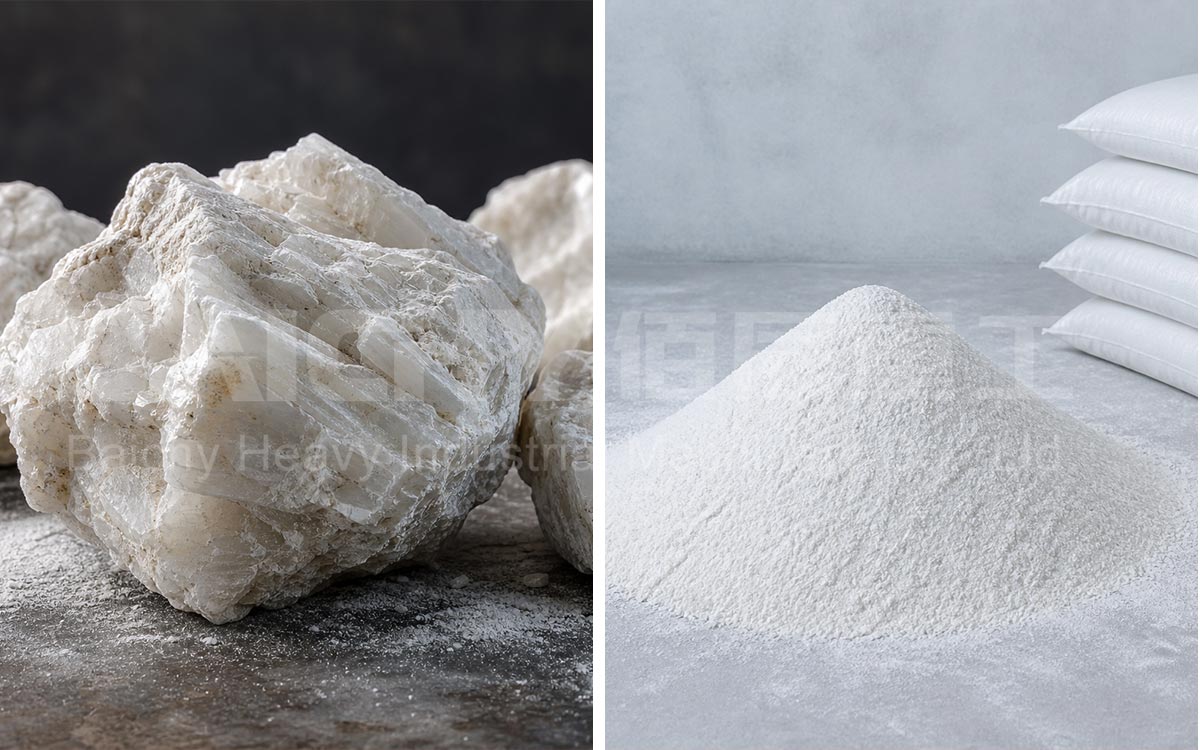
Display of Finished Ground Barite Products
Barite (barium sulfate, BaSO₄) has a true density of 4.2–4.5 g/cm³ and serves as a core powdered raw material for the global oil and gas drilling mud, coatings, and chemical industries. When processing barite, the MTW Heavy-Duty Trapezium Mill can grind raw lumps (≤40 mm) into finished products ranging from 80 to 425 mesh in a single pass; it consistently produces API drilling-grade powder (≥97% passing 200 mesh) as well as chemical-grade powder (325 and 400 mesh), with a typical capacity of approximately 3–30 t/h (within the 200–400 mesh range, depending on the model). Bottom line: If the product is intended for use as a drilling mud weighting agent or a medium-to-coarse filler, the MTW Heavy-Duty Trapezium Mill is the mainstream choice, balancing capacity, power consumption, and flexibility in fineness adjustment. However, if the target fineness exceeds 1250 mesh (for high-end coatings or plastic masterbatches), an HGM Ultrafine Mill should be installed at the end of the production line.
I. Three Major Challenges in Barite Grinding: High Specific Gravity, perse Specifications, and Strict Whiteness Requirements
1. High Specific Gravity: Equipment Selection Cannot Simply Copy "Limestone Capacity Charts"
Barite’s true density is more than 1.6 times that of limestone, yet its Mohs hardness is only 3–3.5, making it a classic "heavy yet soft" material. Most mill capacity charts are calibrated based on limestone processing conditions; when processing barite, the weight corresponding to a given feed volume is significantly higher. Consequently, the main mill motor current, powder classifier load, and volume of recirculated material must all be calculated based on the material's high density. Ample margins must be allowed for hopper volume, conveying capacity, and dust collection airflow; otherwise, a scenario where the mill can grind the material but cannot be fed or discharged effectively will become a genuine bottleneck.
2. Wide Specification Range: Multi-purpose Capability is Key to Profitability
Downstream specifications for barite powder are perse: drilling-grade products typically fall into the 200-mesh and 325-mesh categories (common API 13A standards require ≥97% passing rate for 200-mesh/75μm and a density ≥4.2 g/cm³), while chemical filler applications usually require 325–400 mesh.
The USGS *Mineral Commodity Summaries* consistently lists oil and gas drilling mud as the largest consumer of barite—meaning much of the production capacity is dedicated to cost-sensitive drilling powder, whereas high-whiteness fine powder commands a premium price. Production lines capable of rapidly switching between specifications demonstrate significantly greater resilience against market fluctuations.
3. Sensitivity to Both Whiteness and Impurities
Barite powder used in coatings and plastics typically requires a whiteness level of ≥90. Iron contamination within the system or overheating in the grinding chamber can reduce whiteness and increase return rates; iron and silicon impurities compromise both whiteness and the service life of grinding rollers. These represent hidden costs unique to barite grinding (compared to limestone grinding) and serve as the deciding factor in whether the "high-whiteness product premium" is actually realized.
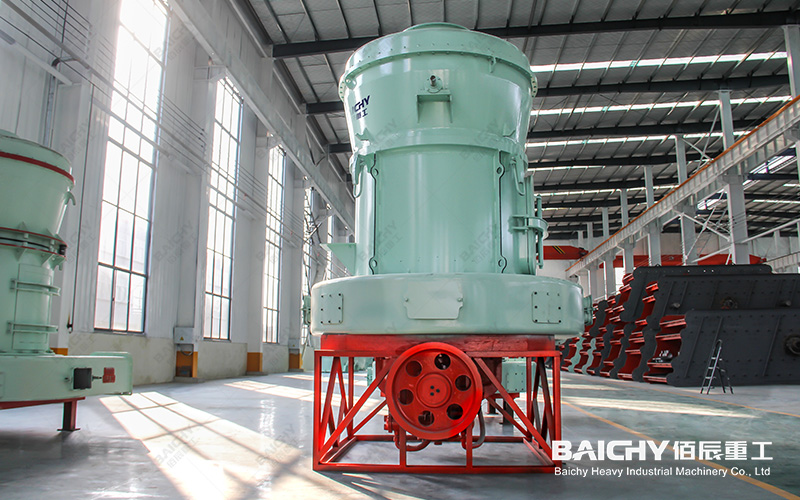
MTW Heavy-Duty Trapezium Mill for Barite Processing
II. Why the MTW Heavy-Duty Trapezium Mill? Translating Specifications into Profit
Trapezium-shaped grinding roller and ring contact surfaces: Large grinding contact area and orderly material retention in the grinding zone → Lower specific energy consumption and higher output capacity compared to traditional Raymond mills for the same fineness; long-term electricity savings translate into hidden profits.
Variable-frequency speed-controlled classifier: Switch between 200, 325, and 400 mesh on demand without changing classification components → Ability to fulfill both drilling-grade and chemical-grade orders, leading to higher equipment utilization.
Negative-pressure system + pulse-jet bag dust collector: No powder leakage → Ensures workshop environmental compliance while minimizing whiteness loss caused by the intrusion of external iron dust.
Integrated drive structure: Fewer points of failure and rapid installation/commissioning → Minimal downtime losses, making it ideal for continuous grinding operations. The "heavy yet soft" material advantage: Barite is easy to grind; the actual processing capacity of the MTW Heavy-Duty Trapezium Mill when handling barite often meets or exceeds the rated capacity for limestone models of the same size, resulting in a shorter return on investment (ROI) period.
Additionally, the MTW series features established calibration curves for grinding roller clearance, airflow, and material recirculation ratios, ensuring a short commissioning period for barite applications. For export projects, electrical configurations (e.g., 400V/50Hz, 440V/60Hz) can be customized to match local power grids, allowing for immediate installation and production upon arrival and reducing on-site trial-and-error costs.
III. Core Parameter Table for MTW Heavy-Duty Trapezium Mill (Barite Processing)
| Parameter Item | Typical Range (MTW Series) | Key Considerations for Barite Processing |
|---|---|---|
| Feed Particle Size | ≤30–40 mm | Pair with a primary jaw crusher; large ore blocks are crushed before grinding |
| Finished Product Fineness | Continuously adjustable (80–425 mesh) | 200, 325, and 400 mesh are the mainstream market specifications |
| Processing Capacity (Barite) | Approx. 3–30 t/h (200–400 mesh) | Capacity decreases as fineness increases; calculated based on actual operating conditions |
| Roller/Ring Material | Wear-resistant materials (e.g., high-chrome alloy) | Wear primarily caused by hard impurities (e.g., quartz), not the barite itself |
| Classification Method | Variable-frequency speed-controlled powder separator | Switch specifications without changing parts; rapid response to orders |
| Dust Collection System | Pulse-jet bag filter | Negative pressure operation; balances whiteness preservation with environmental emission standards |
| Drive & Lubrication | Integrated bevel gear drive / Thin-oil lubrication (depending on configuration) | Critical for continuous operational reliability |
| Power Supply Compatibility | Customizable (380V / 400V / 440V / 60Hz, etc.) | Configured to match local power grids for export projects |
Note: The values in the table above represent typical ranges based on publicly available data; specific capacity and configuration details are subject to the specifications provided by Baichy engineers following raw material analysis.
IV. Configuration Selection Based on End-Product Specifications: MTW System Scope and Line Combinations
| Product Positioning | Target Fineness | Key Indicators | Recommended Configuration |
|---|---|---|---|
| Drilling Mud Weighting Agent | 200 mesh / 325 mesh | Pass rate ≥97%; Density ≥4.2 g/cm³ | MTW110 / MTW138 dedicated single-unit line |
| Chemical, Rubber, & Coating Fillers | 325–400 mesh | Whiteness ≥90; Stable particle size distribution | MTW138 / MTW175 + Variable-frequency classifier |
| High-end Ultrafine Coatings & Masterbatches | >1250 mesh | High whiteness and high fineness | MTW (base powder) + HGM Ultrafine Mill |
Two typical production scenarios are worth noting:
First, high-volume drilling powder production—using stable raw materials to produce only 200-mesh powder; the MTW110/MTW138 connects directly to the finished product silo, offering the shortest process flow and lowest electricity consumption per ton.
Second, flexible multi-specification production—producing 200, 325, and 400-mesh grades; the MTW175 is equipped with a variable-frequency classifier and dual product silos, allowing for drilling powder production during the day shift and chemical-grade powder production at night to maximize equipment utilization. Bottlenecks in barite grinding lines often occur in the feeding and packaging stages rather than the main mill itself; these aspects should be planned concurrently during system design.
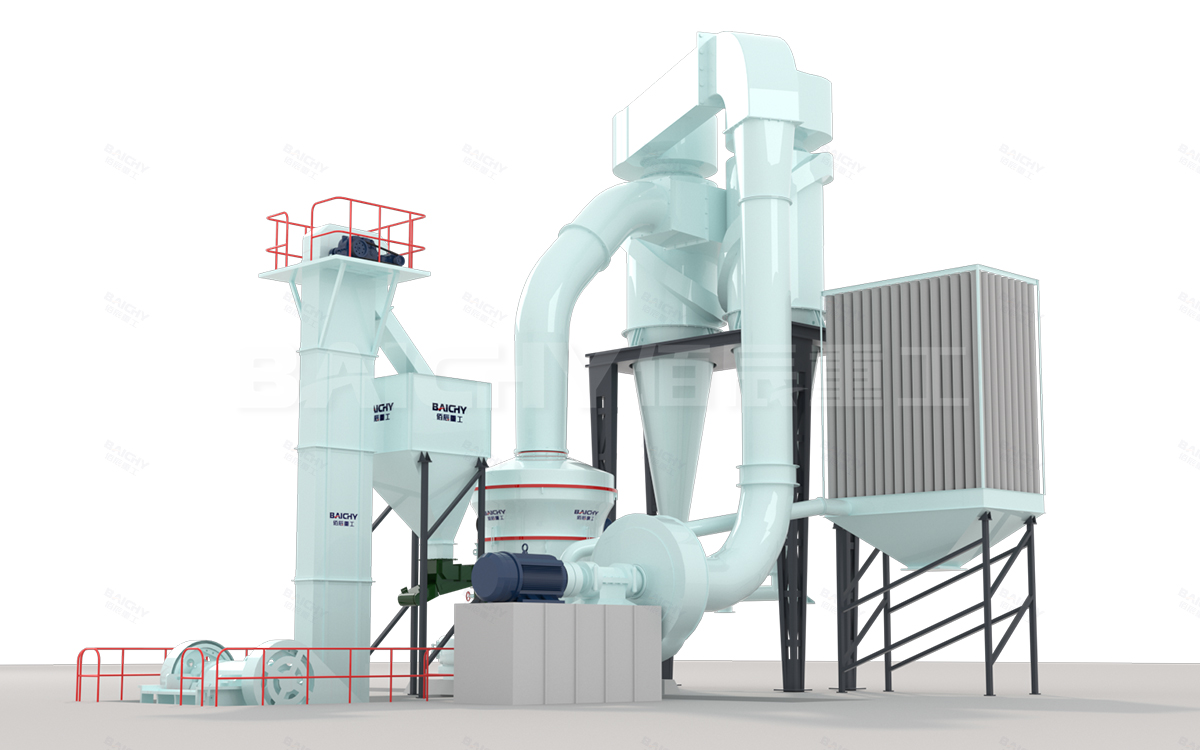
MTW Grinding Production Line Flowchart
Production Line Recommendation: Jaw Crusher (reducing material to ≤40mm) → Impurity Removal (manual sorting or magnetic separation to remove iron-bearing minerals) → Feed Silo → MTW Heavy-duty Trapezium Mill → Pulse Dust Collection & Finished Product Silo. If raw material moisture is high, incorporate a drying stage or natural air-drying beforehand to prevent "clogging" (material sticking to the grinding components). To simultaneously cover both high-volume drilling powder and high-premium ultrafine powder markets, use an "MTW + HGM" tandem setup rather than forcing a single mill to grind to ultra-high mesh counts—the latter is inefficient in terms of both power consumption and production capacity.
V. Pitfall Avoidance Checklist: Three Key Recommendations
Look beyond nominal capacity; focus on guaranteed capacity under actual operating conditions: Require the manufacturer to provide capacity and power consumption data based on barite (density 4.2–4.5) at the target fineness, and include these figures in the contract's acceptance criteria.
Conduct small-scale test grinding for whiteness-sensitive products: Verify that iron contamination is controllable and dust-removal airflow is properly matched before proceeding with the full production line; this prevents batch returns caused by substandard whiteness after commissioning.
"Easy to grind" does not mean "zero wear": While barite itself is soft, associated minerals like quartz and pyrite accelerate wear on grinding rollers; removing impurities before feeding the material into the mill is the most cost-effective way to extend the service life of wear parts.
VI. FAQ
FAQ1: What fineness (mesh size) can the MTW Heavy-Duty Trapezium Mill achieve when grinding barite? Does it meet API drilling-grade standards?
The finished product fineness of the MTW series is continuously adjustable between 80 and 425 mesh. It covers the common drilling mud specifications of 200 mesh (≥97% passing 75μm) and 325 mesh, enabling stable batch production when paired with a variable-frequency powder classifier; it is also suitable for producing 400-mesh chemical filler-grade powder. If customers require ultra-fine powder exceeding 1250 mesh, it is recommended to place an HGM Ultra-Fine Mill in series after the MTW, rather than forcing the MTW to grind finer at the cost of reduced capacity.
FAQ2: What is the approximate capacity of the MTW Heavy-Duty Trapezium Mill when processing barite? How does it compare to the Raymond mill?
In the 200–400 mesh range, the typical capacity of a single unit is approximately 3–30 t/h, depending on the model and target fineness. Compared to traditional Raymond mills, the MTW offers three main advantages: high grinding efficiency (thanks to the trapezium-shaped rollers and rings) and low power consumption per ton; rapid specification switching via the variable-frequency classifier, reducing downtime for part changes; and a low failure rate for the overall drive structure. Since barite is soft and easy to grind, actual capacity often matches or even exceeds the rated capacity for limestone on the same model.
FAQ3: Does barite cause significant wear on the grinding rollers and rings? How can the service life of wear parts be extended?
Barite has a Mohs hardness of only 3–3.5, causing minimal wear to the grinding rollers and rings themselves; the primary wear stems from hard impurities—such as quartz and pyrite—associated with the ore. Three measures can extend component lifespan: removing impurities via manual sorting or magnetic separation prior to milling; using wear-resistant materials (such as high-chromium alloys) for the rollers and rings; and maintaining service records based on cumulative tonnage to facilitate timely inspection and replacement of scraper blades and liners, rather than waiting for a breakdown. For production lines sensitive to whiteness, it is also crucial to consider how iron abrasion within the grinding chamber degrades whiteness—an often-overlooked hidden cost in barite grinding operations.
Baichy Heavy Industry
Baichy Heavy Industry is a high-tech mining equipment company integrating R&D, manufacturing, sales, and after-sales service. Focusing on crushing, grinding, and mineral processing equipment, we provide professional solutions to our customers. We are ISO9001:2015 、certified, and our products include mobile crushing palnts, crawler crushing plant, construction waste crushing plants, jaw crushers, sand making machines, cone crushers, fine crushers, grinding mills, ball mills, etc., all with reliable performance to meet diverse project needs.
Baichy Heavy Industry – Your Trusted Partner
To ensure optimal performance of your equipment, Baichy Heavy Industry offers:
- Professional on-site installation guidance
- Comprehensive operator training
- 24/7 technical support & maintenance services
Our complete after-sales service system guarantees long-term, stable operation of your machinery with minimal downtime.
Protect Your Rights – Only Use Official Channels
To avoid scams and ensure authentic support, contact us exclusively through:
• Official Website: www.baichychina.com
• WhatsApp: +8615093222637
• Email: [email protected]
Your satisfaction is our priority – expect prompt, professional service every time.
(Note: Beware of unauthorized third parties claiming to represent Baichy. Always verify through official contacts.)